
Clean Energy 101: Renewably Powered Minigrids
The what, why, how, and where of solar powered minigrids and battery storage to keep the lights on and people safe
Access to energy is crucial to every dimension of the world’s economy from health and education to jobs and innovation. Unfortunately, more than 1 billion people don’t have access to reliable power or lack access to power at all. And, even in places with reliable grid service, more extreme weather events can lead to power outages.
Minigrids offer an affordable solution to all these challenges. From Africa to the Caribbean to the United States, solar and battery-powered minigrids are multiplying quickly, providing reliable power to keep lights on, hospitals humming, factories running, and people safe and healthy.
What are minigrids?
Renewably powered minigrids (also called microgrids) consist of a renewable energy source, such as solar panels or wind turbines, battery storage, and, sometimes, a backup generator. They can be stand-alone, where they are not connected to the wider electricity grid, or they can be connected to and share power with the larger grid. Microgrids are usually smaller than minigrids and power specific applications such as a school, a health clinic, or a hospital. Minigrids are typically larger and can power entire communities or regions. In this article, we use the terms interchangeably.
Minigrids lead to climate resilience as they can power critical facilities when extreme weather causes the main grid to go down. They can provide power to rural communities not connected to a national or regional electric supplies. And they can provide reliable power to those that receive intermittent supply from the main grid in urban or semi-urban areas.
What RMI is doing
Working with utilities, solar developers, and local communities, RMI is helping to develop and implement minigrids around the world. We are piloting innovative renewable energy minigrid solutions across sub-Saharan Africa. Across the Caribbean, we are working with local stakeholders to power critical facilities with renewable microgrids. And across the United States our Microgrids for Resilient Communities Cohort worked with a dozen leaders from churches, tribes, and school districts to help them learn how to best implement microgrids in their communities.
How do they work?
Renewably powered minigrids come in many different sizes and configurations.
Isolated minigrid: An isolated minigrid is a stand-alone electricity generation and distribution system, unconnected to the wider grid, that provides power at the community level. Isolated minigrids are typically developed in rural areas where there is no national grid infrastructure and usually consist of a combination of solar panels, battery storage, and a backup diesel generator.
Undergrid minigrid: An undergrid minigrid is installed in an area where existing distribution grid infrastructure may not be sufficient or reliable. The minigrid produces power from solar panels or other energy sources and uses the existing distribution network to send that power to customers. Like an isolated minigrid, it does not receive power from or feed power to the main grid.
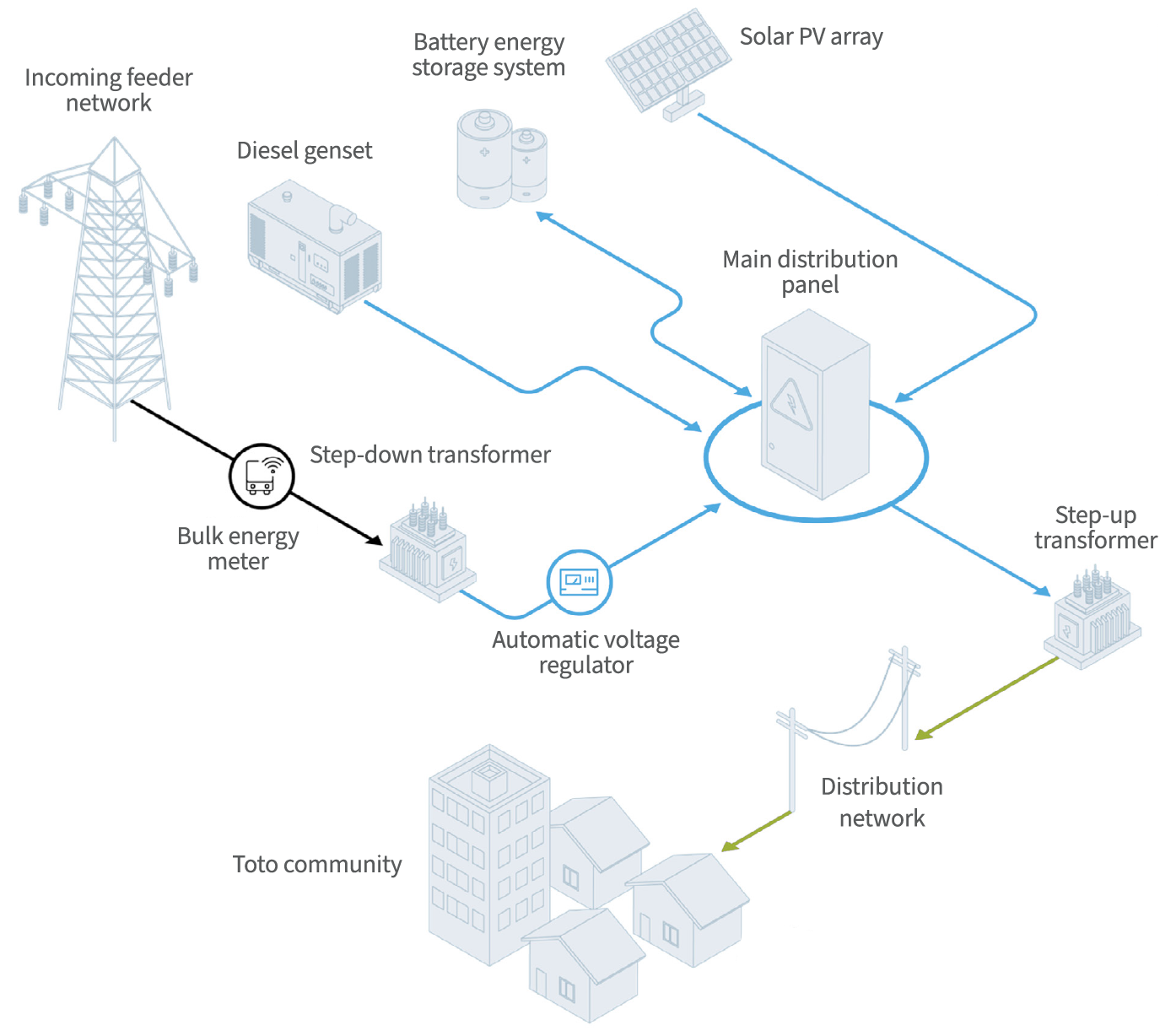
Interconnected minigrid: An interconnected minigrid produces power from solar panels and may have battery storage, but is also connected to the main electric system. The minigrid powers users that previously had unreliable or intermittent power from the main distribution grid. It uses its locally produced power but can purchase energy from the main grid when needed, especially at night to reduce the cost of battery backup.
Toto interconnected minigrid in Nigeria
Where are they powering communities?
Minigrids can be found all over the world. Below are some examples from the Caribbean, Africa, and the United States.
The Caribbean
In the Caribbean, minigrids are powering critical facilities during hurricanes and other extreme weather events. In 2017, after Hurricane Irma battered Ragged Island in the southern Bahamas — destroying homes, power lines, and utility infrastructure — RMI worked with Bahamas Power and Light to design, develop, and install a 390 kilowatt solar microgrid. The microgrid is built to withstand a Category 5 hurricane, and powers 93 percent of the island’s energy needs.
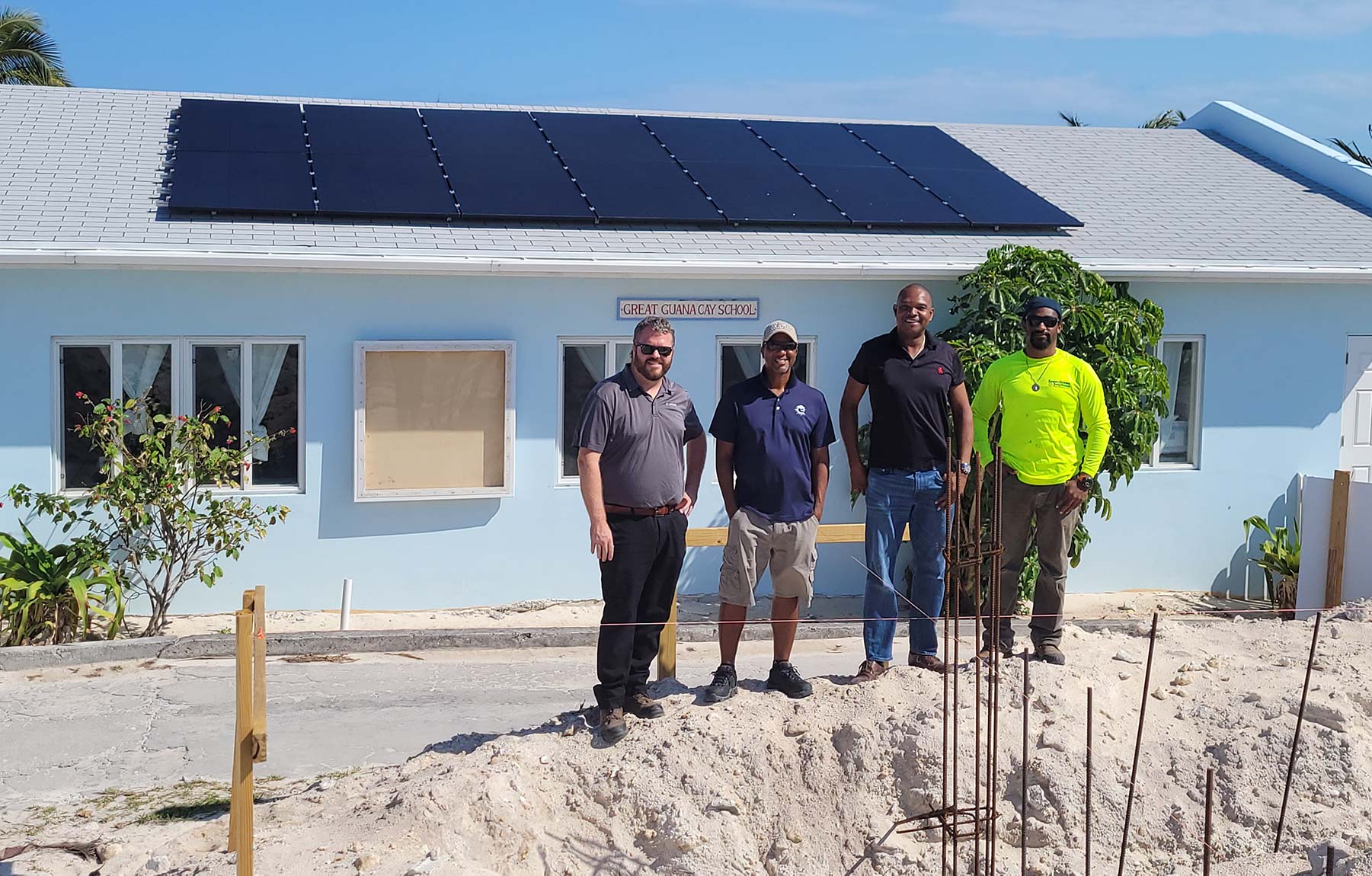
In Abaco, three primary schools that were damaged two years later by Hurricane Dorian, now have solar microgrids. These microgrids allow the schools to continue providing classes after a hurricane and also act as emergency shelters for the surrounding community. And two schools on the Island of Dominica — Morne Prosper and Paix Bouche — both have 10 kilowatt solar microgrids with 76 kilowatt-hours of battery energy storage. These schools, which were severely damaged after Hurricane Maria in 2017, now provide safe learning environments for their students and act as reliable hurricane shelters for the communities.
Africa
In Africa, minigrids are powering businesses and homes that previously had unreliable power. For example, in Nigeria, the Zawaciki interconnected minigrid powers more than 1,000 homes and businesses and two large commercial customers. It has 1 megawatt of solar power, 1 megawatt-hour of battery storage, and diesel generator backup. Connected to the main utility grid, the minigrid can draw power from the solar panels, batteries, or the main grid depending on the available resources. Aheji Ghembo, who runs a small shop with cold drinks out of his home in Zawaciki, says before the minigrid he had about four hours of power a day. “Sometimes we even spent two days without light [power],” Ghembo said. “But now that we have this minigrid… they give us at least 16 to 20 hours of light a day, every day.”
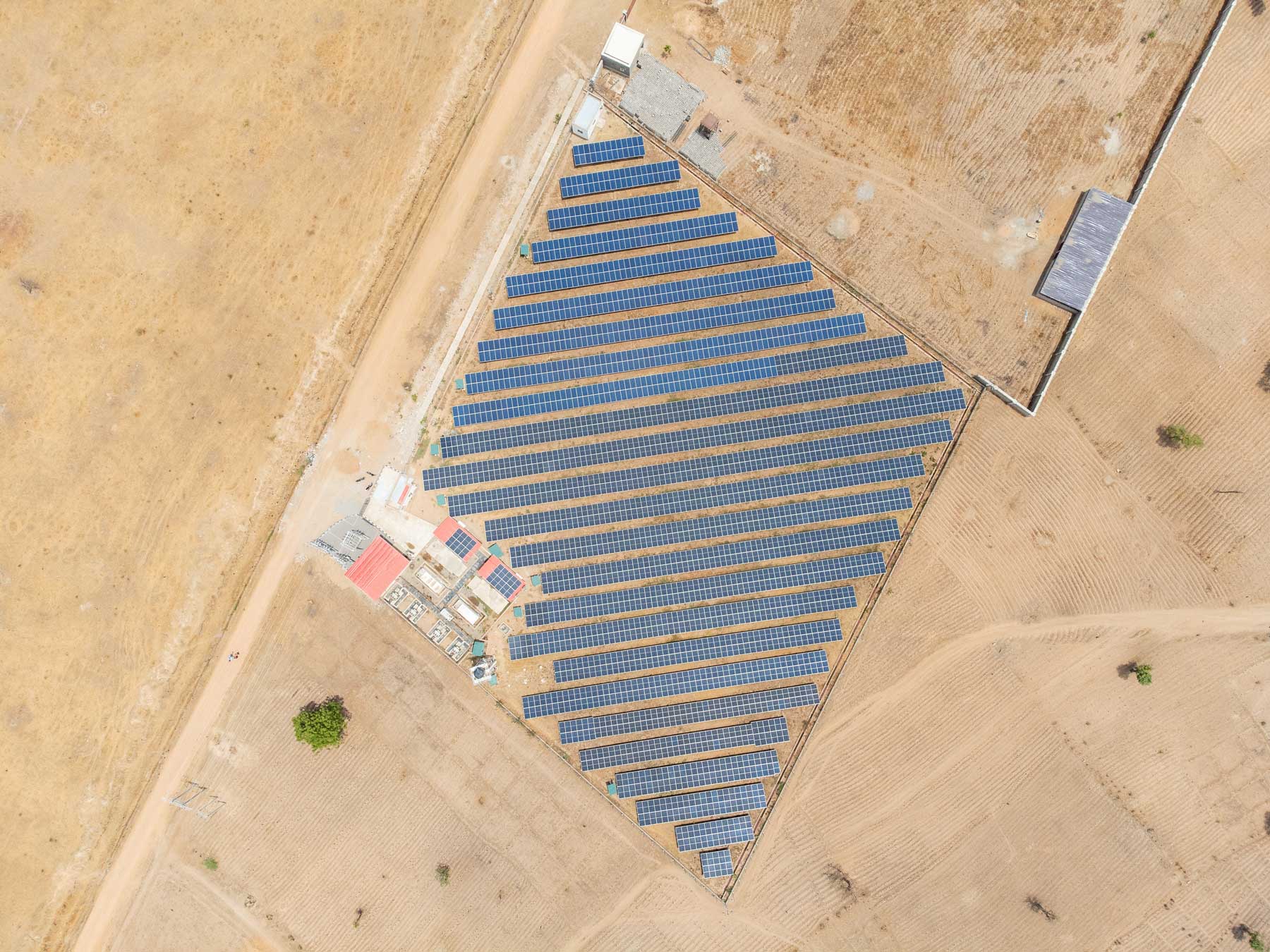
And an undergrid minigrid in Mokoloki, Nigeria, powers the local health clinic, water purification, metalworks, a bakery, a hotel, and numerous other small shops. The minigrid has 100 kW of solar PV, 194 kWh of battery storage, and an 88 kW diesel backup generator, and uses the existing distribution lines to power the community, which previously had minimal service from the utility. Oba Ademola Joseph Ogunbona, the leader of Mokoloki, says, “When there is light, there is always life… those that are using [the minigrid] for business — using it for freezers, using it for selling drinks — are enjoying it. The minigrid is a pride to me. I am happy to have it in my community here.”
United States
In Alaska, minigrids are powering remote towns and villages that were previously reliant on expensive imported diesel. Kotzebue, a city of 3,000 people inside the Arctic Circle, is so remote it is only accessible by air. It had long relied on diesel generators for power, until 20XX, when it installed a renewably powered microgrid. The 2 MW of wind turbines, 1 MW solar array, and 1.2 MW of battery storage is allowing Kotzebue to displace 350,000 to 400,000 gallons of diesel annually. “The more we decrease the amount of diesel that have to burn to generate electricity, the more we create greater energy independence,” says Tom Atkinson, the general manager and CEO of Kotzebue Electric Association.

Minigrids are even helping the US military with resilience. Natural disasters can hit anywhere, and minigrids can help keep the power on in critical facilities. Fort Hunter Liggett (FHL) in California is the US Army’s largest training center. To increase the resilience of the facility and protect against power disruptions, in 2024, the army installed a minigrid with 2.5 MW of solar and a 5 MWh battery. It provides 14 days of coverage if there is a grid outage. “From the electricity that powers our facilities to the fuel that powers our vehicles, energy touches nearly every aspect of the Army Reserve’s mission,” said Col. Stephen Trotter, FHL garrison commander, said in a US Army news article. “The biggest take-away is that this microgrid system enables us to meet the resilience requirement to power critical facilities and support troop training until the local power grid can be restored.”
Resilience, reliability, and affordability
Around the world, minigrids are doing more than keeping the lights on. They’re strengthening local resilience, powering economic development, and even lowering energy costs. In many locations, minigrids are often the fastest, most cost-effective way to deliver clean, dependable power.
“Minigrids are at the heart of the energy transition providing reliable, clean energy that is transforming lives today,” says Alberto Rodriguez, manager on RMI’s Africa program. “Minigrids also build electricity awareness and strengthen ownership in the communities they serve. Now is the moment to take what works and scale it with the speed and ambition the world deserves.”
Top image: 100 kW microgrid on Mayreau Island in the Grenadines