

Learn how we are working to transform how we use and produce energy.
Driving Electric — 10 Ways Cities Can Move on Electric Mobility in a Changing Landscape
Through permitting, codes, e-bike programs, electric carshare, and more, cities across the United States are striving to make electric mobility accessible to all.
Why we share this work for free
RMI is an independent nonprofit working to accelerate the clean energy transition. We publish research like this to inform decision-makers and drive real-world impact.
Our work is supported by philanthropy as well as partnerships, including fee-for-service engagements. This support makes it possible for us to share our independent insights for free.
If you find this work valuable, you can support it anytime.
Get more insights like this
Stay up to date with the latest research, analysis, and tools from RMI by opting in to receive occasional emails below. You’ll get new reports, event invitations, and practical insights to help us all accelerate the clean energy transition.
Loading form...
Your download should start automatically. If it doesn’t, click the download button below.
This work is made possible by philanthropy
RMI is a nonprofit supported by donors and partners. Philanthropy enables us to produce independent research and make resources like this freely available.
If you find this report valuable, please consider supporting our work. You can also explore how we partner with organizations to drive impact.
Jump to Section
Seeing the air quality, fuel savings, and public health benefits of going electric, cities continue to lead the charge for an inclusive electric vehicle (EV) transition. Rather than focusing solely on private EV ownership, many cities’ e-mobility investments center on creating and maintaining affordable mobility and charging access programs for those without access to a private vehicle or home charging.
However, limited municipal budgets, rising infrastructure costs, and a significant reduction in federal funding have slowed equitable EV deployment and charging access in the United States, particularly for lower-income communities. In the face of those headwinds, here are 10 ways cities can continue to successfully plan, finance, and roll out EV options and charging around affordability, convenience, and longer-term mobility goals.
1. Standardize, centralize, and digitize local EV charging permitting and resources
With limited staff time, review times keep growing. Where possible, automating processes can help to achieve a greater level of efficiency. For instance, Drive Electric Chicago offers a one-stop shop to navigate the EV charger permitting and installation process. The searchable database lists Chicago Department of Buildings and ComEd-endorsed EV-ready infrastructure, all potential EV charger rebates, and Illinois Commerce Commission Certified EV charging station installers and registered contractors. Even for multifamily buildings, EV permit applications handled by a licensed electrical contractor and in line with the city’s design and siting standards, which are also outlined in the portal, often turn around approval in a day.
2. Write EV-readiness for multifamily housing into the building code
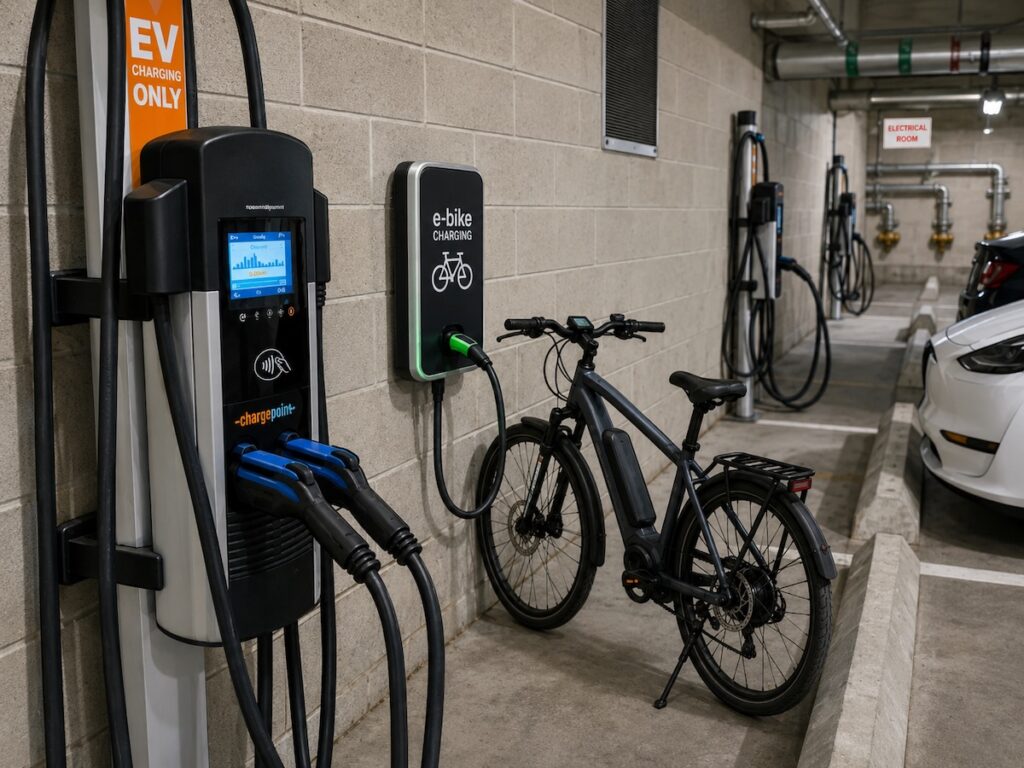
Rather than requiring a charger for every parking space allotted to a new unit, EV readiness mandates installation of the electrical infrastructure — conduit, panel capacity, and wiring — during construction so chargers can be added later at much lower cost, making EV adoption for residents much easier.
Tucson kicked off a growing trend among Arizona cities in 2022 when it mandated EV readiness in multifamily and commercial buildings. New multifamily developments are now required to provide active EV outlets for at least 10% of their parking spaces with an additional 20% pre-wired with conduit to allow for easy expansion of EV outlets as demand grows. Scottsdale and Phoenix have since adopted their own multifamily EV capable regulations. “EV capable” typically means only electrical panel capacity and conduit to the space are required, while “EV ready” means a space has a live electrical outlet or junction box ready to serve a future L2 charger. Mesa has gone one step further, requiring at least 5% of new multifamily units with designated parking to have a fully operational, hardwired L2 EV charger before occupancy.
Local government-led multifamily EV-readiness policy helps build momentum for statewide action. Chicago’s 2020 multifamily EV-readiness ordinance laid the groundwork for the Illinois Electric Vehicle Charging Act four years later. Now statewide, all local zoning codes require that 100% of the designated parking spots for new builds of 5+ units have EV-capable spots. Two to four unit buildings must have at least one EV-capable spot, while affordable housing developments must meet a more staggered, gradually increasing minimum.
3. Target city-led public charger siting, utility-led EV charger rebates, and other incentives to serve those without access to home charging
Clean transportation efforts, like all city priorities, compete for limited municipal funds. Layering residents’ travel patterns, prevalence of off-street parking, public charging deserts, neighborhood dependence on private car ownership, and other data points helps cities identify and prioritize public investments.
Honolulu, for example, takes the planner’s approach, assessing availability of public transportation, street-level and neighborhood-scale air pollution, and charging access gaps to identify where EV charging investments are most needed. In close coordination with the Hawaii State Energy Office, Hawaiian Electric, Hawaii Associations of Apartment Owners, property managers, EV workforce partners, and community organizations, Honolulu strives to deploy charging in underserved areas, continuously refining strategies through data and resident feedback.
4. Allow EV charging in the public right-of-way
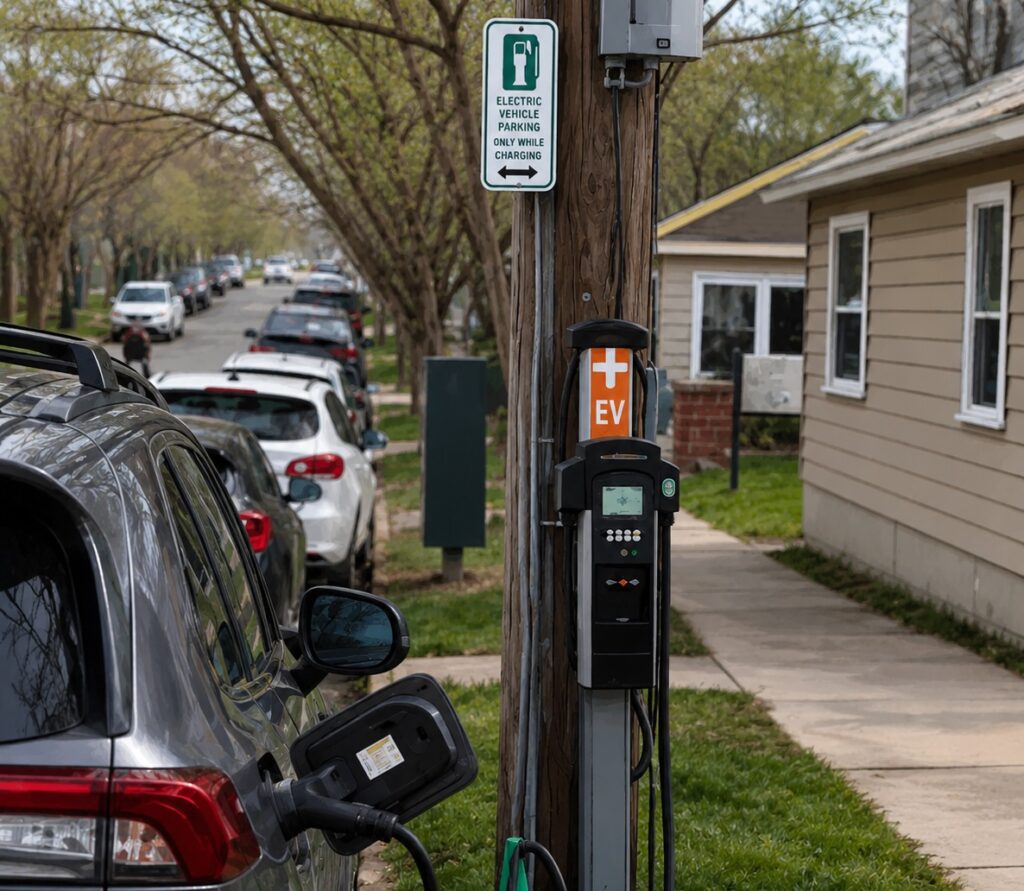
While the public right of way is a tangle of programs and competing priorities, Portland’s pole-mounted EV charging project is a great example of how to expand neighborhood EV charging by using existing infrastructure in the public right-of-way. Mounted on existing utility poles and streetlights, the chargers bring charging closer to residents who lack access to private driveways or garages. Residents can request electrical outlets or charging equipment be installed near on-street parking spaces and use their own portable charging cords when parked nearby.
Rather than identifying a fixed list of approved charging sites, the city established location and siting criteria that enable the two local utilities and certified charging companies to evaluate and select suitable locations for pedestal- or pole-mounted L2 chargers. Streetlight-integrated and DC fast charging are allowed on a pilot basis until regulations are revised.
These kind of bring-your-own-plug models work particularly well in dense urban neighborhoods where many residents park on the street and cannot easily install home chargers. By leveraging existing utility infrastructure and public curb space, Portland reduces installation costs, minimizes streetscape impacts, and fills gaps in the public charger coverage.
5. Integrate EV shared modes and charging into the city’s wider transportation system
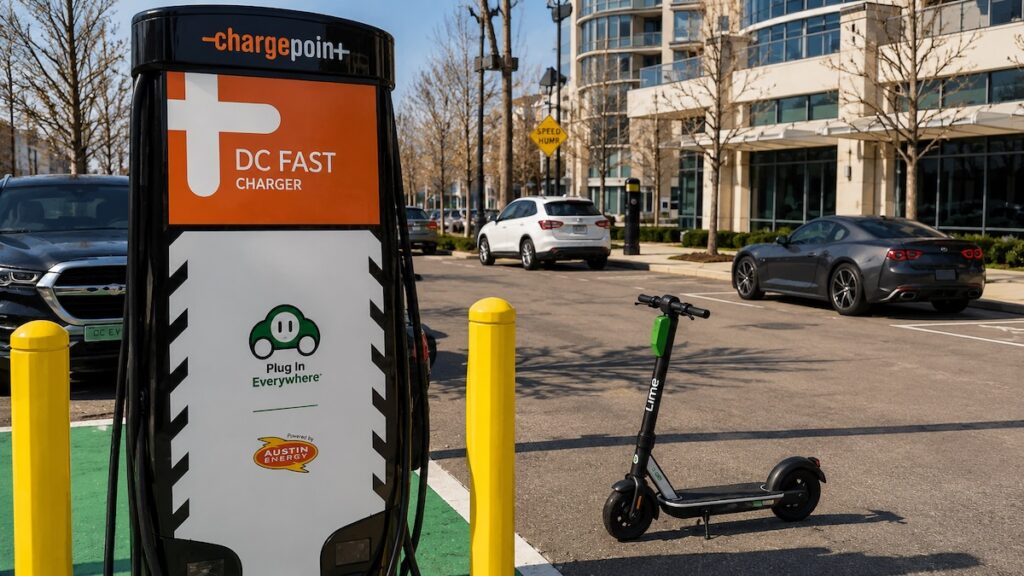
Given transportation is the second highest expense for most households, cities are exploring solutions that reduce reliance on personal vehicles. For instance, Austin’s Mobility Hubs Program creates neighborhood centers where residents can easily walk to and connect between multiple transportation options, including public transit, CapMetro Bikeshare and e-bike share, dockless Lime and Bird e-scooters, short-term carshare through Zipcar, or pick-up from the Circuit electric shuttle.
One of Austin’s two inaugural mobility hubs, and all of its future planned hubs, are in communities that have historically faced transportation disadvantages. These neighborhoods have some combination of low vehicle ownership rates, limited transit connectivity, low and high density multifamily buildings, and low-to-moderate income housing. In addition to providing EV charging and other e-mobility services, the hubs often include amenities such as shaded waiting areas, real-time transit information, wayfinding signage, and improved pedestrian and bicycle connections. By co-locating these services, Austin reduces first- and last-mile barriers to help residents reach jobs, schools, healthcare, and other destinations more easily, and expands access to clean transportation options.
6. Unlock ownership of the most affordable EVs — e-bikes
Replacing a car trip with a trip via an electric bike reduces congestion, road maintenance costs, and of course personal transportation costs, especially for low- and moderate-income households. Rebates can reduce the up-front cost of buying an e-bike, helping to expand mobility options for people who may not have access to a car or reliable public transit.
Fueled by a $1 million investment from the City of Atlanta and managed by the Atlanta Regional Commission, the Atlanta E-Bike Rebate Program offers point-of-sale rebates for residents. Income-qualified residents can receive $1,500 for a standard e-bike or $2,000 for a cargo e-bike, three times and twice as much respectively as non-income-qualified residents can receive. By lowering the cost barrier to e-bike ownership, the program encourages residents to replace short car trips with cycling, which reduces personal transportation costs and and the number of cars on the road. About to release its second round of $1 million in funding, the initiative also supports broader transportation goals by helping residents access jobs, schools, transit stations, and essential services without needing a personal vehicle, making e-bikes a practical transportation option rather than just a recreational one.
7. Deploy affordable shared electric micromobility
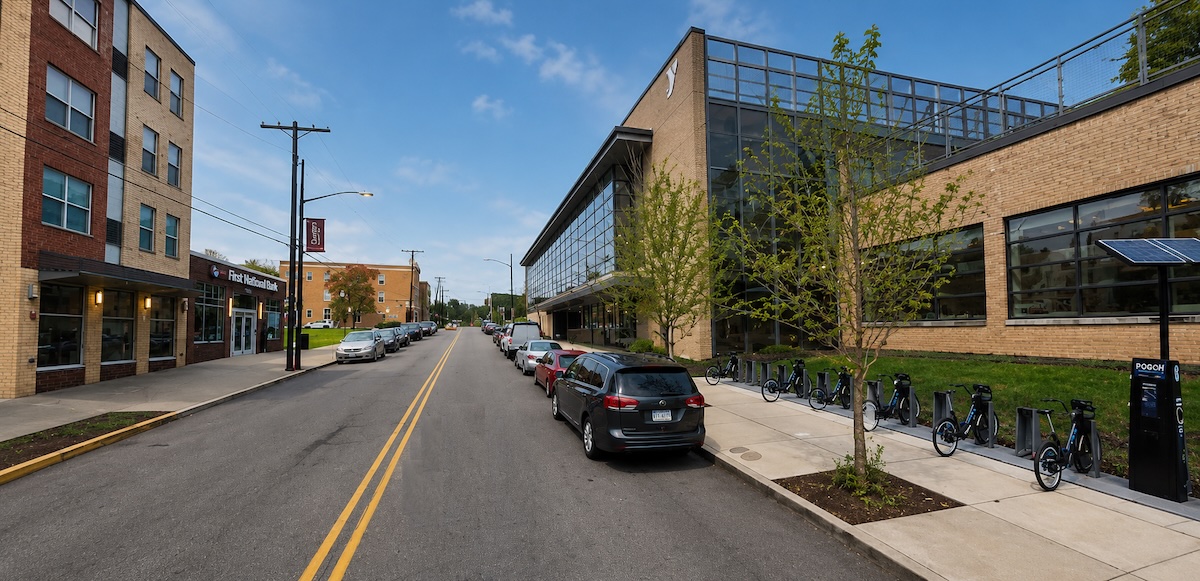
Owning an e-bike is not always a practical solution, especially for multifamily residents who may lack convenient access to charging outlets or secure storage space and so risk theft. Many multifamily buildings, concerned about the electrical safey, outright ban e-bike charging. E-bike sharing programs help overcome these challenges by providing on-demand access to e-bikes without requiring residents to store, charge, or maintain them. Pittsburgh’s nonprofit bike and e-bikeshare, POGOH offers a Mobility Justice rate. The rate offers a heavily reduced cost for residents who receive government assistance, veterans or active-duty military, and affiliates of its academic partners, like the University of Pittsburgh and Carnegie Mellon. There is also a cash payment option that allows non-credit card holders to participate.
As cities experience a rapid surge in e-bikes and other forms of e-micromobility, establishing a structured framework for operation and safety is incredibly important. A prime example is Massachusetts, where lawmakers are actively advancing legislation to enhance the safe use of micromobility devices. The proposed e-bike regulation classifies devices like e-bikes based on speed rather than simply type, allowing rules and requirements to be tailored to the level of risk associated with each category. The regulation includes minimum age requirements, helmet mandates, and crash data collection. It also lays out clear guidance on where different devices may operate like bike lanes, sidewalks, and roadways minimizes conflicts with pedestrians and e-motorists.
8. Deploy affordable EV carshare
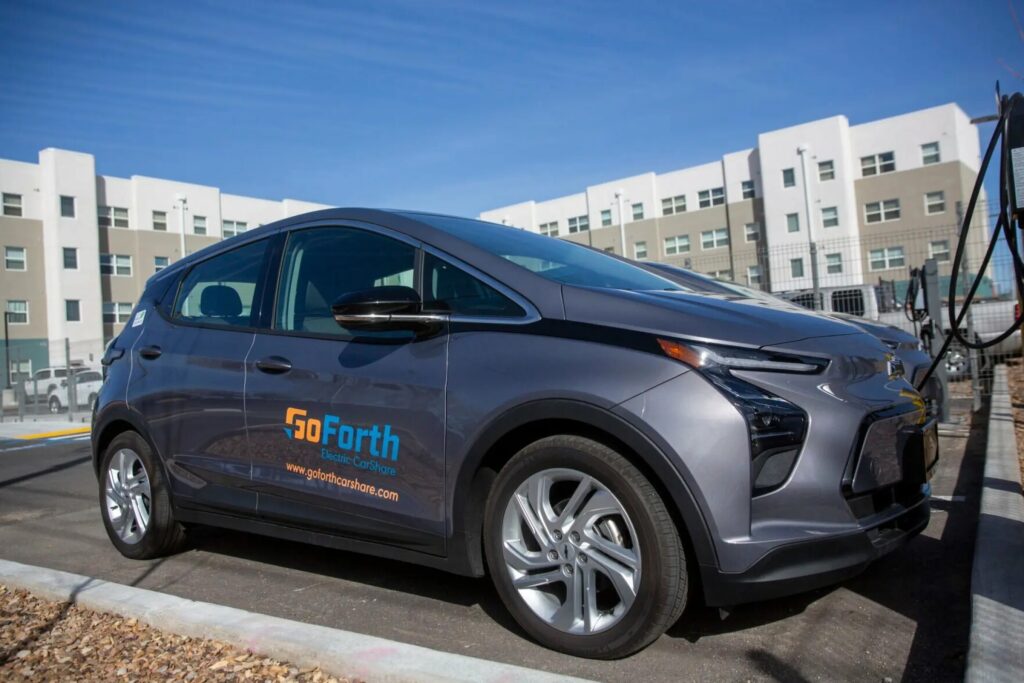
Cities are investing in EV carsharing because it expands access to clean transportation for residents who cannot afford or do not need to own a personal vehicle. Albuquerque’s EV community carsharing, managed by GoForth, offers shared EVs to expand affordable transportation options in neighborhoods where residents may not own a car or have reliable access to transportation.
Rather than focusing solely on private EV ownership, community carsharing places EVs in accessible neighborhood locations like near affordable housing, community centers, or transit hubs where residents can reserve vehicles for short trips at a low cost. These programs are designed to reduce transportation costs, improve access to jobs, healthcare, and essential services, and ensure that the benefits of transportation electrification reach lower-income communities. By combining EVs with community-based mobility services, Albuquerque demonstrates how cities can advance both equity and climate goals, providing clean transportation options without requiring households to purchase and maintain their own vehicles. Community EV carsharing can also reduce overall vehicle ownership needs while increasing utilization of each vehicle, maximizing the environmental and economic benefits of electrification.
9. Support ridehailing drivers to electrify
RMI analysis identifies ridehailing as one of the leading transportation solutions utilized in lower-income neighborhoods where transit options are limited. This means that as ridehailing companies work to electrify their fleets, some routes are in danger of being skipped if charging infrastructure is not available.
Key to Minneapolis’ and St. Paul’s strategy to help ridehailing drivers electrify is investing in fast-charging infrastructure at the airport, transit hubs, and the neighborhoods where drivers live and work but lack charging. The Twin Cities also participate in Drive Electric Minnesota’s EV Fleets program, giving cities collective purchasing power to lower the cost of EV adoption. Rather than having individual drivers, nonprofits, or local governments negotiate separately, the program aggregates EVs and charging infrastructure demand, creating a larger, more attractive market for manufacturers, utilities, and charging providers.
Both Minneapolis and St. Paul responded to the state’s Request for Information to better understand municipal and fleet demand for EVs, charging equipment, and related services across Minnesota. By signaling future purchasing needs and coordinating procurement across their public agencies and nonprofit organizations, they secure more competitive pricing and identify infrastructure gaps. This also reduces barriers for members of fleets who rely on their vehicles for income, like ridehailing drivers, to make the switch to electric and charge along key routes.
10. Invest in Low-Emission Zones (LEZ) or Zero-Emission Zones for Freight (ZEZ-F)
Transportation accounts for 25%–40% of emissions in most major US cities. Emissions are especially bad where traffic volume tends to be highest and congestion is the worst. Santa Monica, California, is tackling that with its Zero Emissions Delivery Zone (ZEDZ). The ZEDZ was designed to reduce air pollution, emissions, and truck-related impacts by encouraging or requiring cleaner freight vehicles in designated areas, and it was the first one-square-mile area within the United States to receive zero emissions zone (ZEZ) designation.
The zone, falling within the downtown and Main Street commercial core, was used to test clean, last-mile delivery solutions to reduce urban congestion, lower emissions, and cut down on double-parking in retail areas. It mandated delivery vehicles operate outside the high-pedestrian commercial corridor or just within a few low-traffic hours. Santa Monica elevated its curb management, last-mile delivery options, EV charging infrastructure, and partnerships with e-micromobility solution providers.
Several additional zero emission zones are in planning as the wider Los Angeles area prepares for the 2028 Summer Olympics. LA County is exploring how to support local businesses within the zero emission zones by investing in battery-electric vans, cargo bikes, and electric trucks. The goal is to reduce diesel truck traffic, improve local air quality, reduce noise, and create safer, more walkable streets while maintaining efficient deliveries for businesses and residents.
Expanding access to e-mobility and charging infrastructure is not a one-time effort but an ongoing commitment to creating cleaner, more affordable, and more connected communities. Cities do not need to implement every strategy at once; meaningful progress can begin with small, achievable steps that align with local priorities and resources. By making a commitment, building on early successes, and maintaining momentum over time, cities can expand transportation options, improve access for residents, and help accelerate the transition to a more sustainable mobility future.


Related Insights


Building Charging Networks That Meet Drivers’ Needs Without Breaking the Bank
Help build the clean energy future. Donate today.
Independent research. Real-world solutions. Supported by donors.
RMI can pursue the highest-impact climate and energy solutions because we’re supported by people who believe change is possible. Every gift helps advance the work needed to make clean energy the default choice worldwide.
For other ways to give to RMI, including checks or gifts of stock, please visit Other Ways to Give.
