

Learn how we are working to transform how we use and produce energy.
Driving Electric – Making EV Charging More Accessible Through Curbside Charging
How stakeholder engagement and partnerships drive successful curbside charging rollout
Why we share this work for free
RMI is an independent nonprofit working to accelerate the clean energy transition. We publish research like this to inform decision-makers and drive real-world impact.
Our work is supported by philanthropy as well as partnerships, including fee-for-service engagements. This support makes it possible for us to share our independent insights for free.
If you find this work valuable, you can support it anytime.
Get more insights like this
Stay up to date with the latest research, analysis, and tools from RMI by opting in to receive occasional emails below. You’ll get new reports, event invitations, and practical insights to help us all accelerate the clean energy transition.
Loading form...
Your download should start automatically. If it doesn’t, click the download button below.
This work is made possible by philanthropy
RMI is a nonprofit supported by donors and partners. Philanthropy enables us to produce independent research and make resources like this freely available.
If you find this report valuable, please consider supporting our work. You can also explore how we partner with organizations to drive impact.
Jump to Section
As electric vehicle (EV) sale prices begin to match those of their gas-powered counterparts, EV charging access continues to be a barrier to households successfully transitioning to EVs. This is why cities are leveraging the most ubiquitous publicly owned and managed asset: the curb.
For many, housing type translates into charging access. Installing a Level 2 charger in a private home garage or carport is typically easier than a parking lot or shared community garage and requires a 240-volt outlet, demanding the same electrical capacity as an electric dryer. This makes single-family home charging one of the easiest retrofits and the most convenient and affordable way to charge.
Yet this model does not translate easily to denser urban areas where private off-street parking is less common. For renters and residents of multifamily housing, the absence of off-street parking alone can make at-home charging infeasible; that’s when the curb becomes a critical alternative to explore.
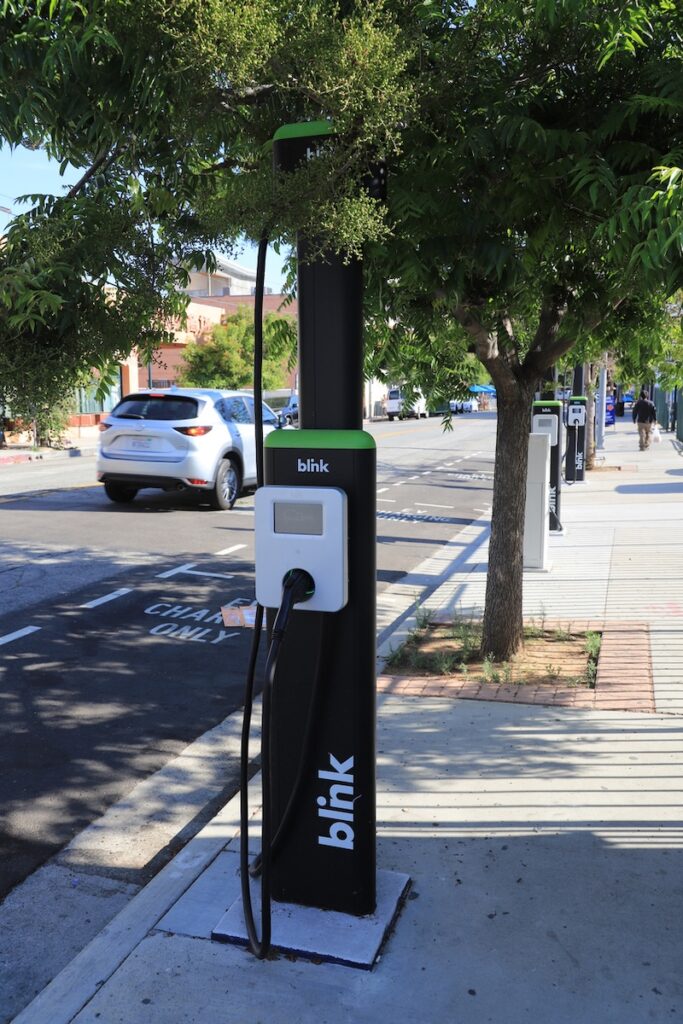
Curbside charging, as its name suggests, entails EV charging at the roadside. It can include pedestal, streetlight pole, or utility pole mounted chargers, placed strategically to meet public demand for charging. Adding curbside charging to a city’s menu of charging options, especially to make charging more accessible in dense urban areas, can be the key to helping multifamily residents and others without home charging shift to EVs.
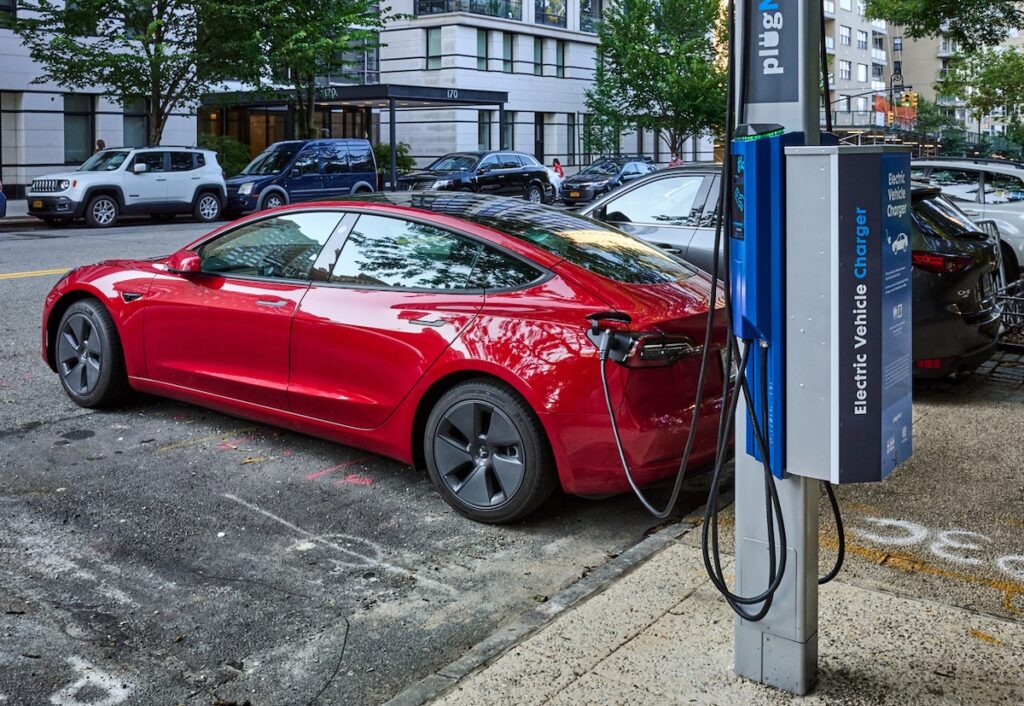
Because the curb is a hive of activity, deploying new infrastructure is complex. It must fit within an intricate network of bike lanes, bus stops, ADA compliant sidewalk space, deliveries, signage, and green and stormwater infrastructure. As a result, developing, launching, and managing a curbside charging program requires input and support from many different stakeholders. These stakeholders each play a valuable role throughout the installation of curbside charging, providing feedback and insights to inform successful charging infrastructure installation.
Identifying and engaging stakeholders up front
A successful curbside charging program centers on engaging stakeholders in discussions about the location/need, design, and deployment of chargers, with integration into wide-ranging city infrastructure (e.g., bike lanes, bus stops, etc.) in mind.
Exhibit 1
Program stakeholders include government and private sector entities, while community stakeholders include individuals who live and work near charging sites, and those who may use or be impacted by charging infrastructure. The difference comes down to the role the stakeholder plays throughout the engagement process:
- Program stakeholders identify feasible locations, execute construction and electrical projects, implement policies and other enabling structures for charger installation. For example, collaborating with the Department of Urban Forestry can be valuable to learn about how trees on the curb may or may not be impacted by the decision to install chargers.
- Community stakeholders are individuals or organizations who the program is designed to benefit or indirectly affect. For example, bike organizations may be concerned about how curbside charging may impact existing or proposed bike lanes.
- Program participants benefit through the ability to charge at the curb, while other community stakeholders may benefit from reduced transportation emissions in the area or increased foot traffic at businesses and nearby locations. For instance, delivery and rideshare drivers may seek to charge in convenient locations between their trips.
Gathering insights and feedback from stakeholders is critical for supporting successful charger rollouts.
Refining program stakeholders and program goals before selecting a business model
Identifying key government departments and private sector stakeholders to consult begins with determining which entity is the authority having jurisdiction (AHJ) over the curb. Clarifying roles and lines of communication can help to avoid delays, mistrust, and other complications. A clear AHJ should be able to support bringing together many program stakeholders, reducing friction during program development and deployment. For example, in Los Angeles, the Department of Transportation has jurisdiction of the curb and works closely with other agencies on curb use.
AHJs can also work with stakeholders to understand what success will look like for the curbside charging program and how it will interact with existing city infrastructure and priorities. The goal of a curbside charging program will help identify the appropriate business model to meet that goal. For instance, will charger siting be prioritized to address EV charging deserts? To enable charging near multifamily housing? Or where utilization will be highest and most profitable?
These goals need not be mutually exclusive, but programs may have more success in achieving these goals depending on the business model selected. For example, prioritizing charging for residents of multifamily housing may entail placing chargers near areas of concentrated multifamily buildings, as opposed to placing chargers based on an analysis of where they are likely to be most utilized and generate the largest profit, as these locations may not be the same.
Cities need to evaluate which business model is best suited to achieve their charging program’s goals given local conditions and resources (see Exhibit 2). The “own and operate” model provides a city with the greatest amount of program control, but also greater liability since they need to install, manage, and maintain chargers. The “lease” model shifts financial risk to an external provider. Although such providers typically seek to recoup costs as quickly as possible and may prefer site charging for highest utilization, the city can prescribe ideal locations to plug access gaps. The “external operator” and “concession” models allow for shared investment between the city and an external provider but face similar tradeoffs as the lease model (recouping costs and monetization).
Exhibit 2
The below questions can help cities assess which business model best fits their needs:
- What are the goals of the charging program and which business model best supports these goals?
- What capacity and resources does the city have available to support charging infrastructure on an ongoing basis? How should that be factored into the business model selection process?
- How will permit lengths impact the success of different business models? (E.g., private entities may not want to invest in infrastructure development if they will need to reapply for permits after one year.)
- How can processes be developed to ease administrative burdens (e.g., permit applications and review) and timelines given complex stakeholder engagement?
- How are policies and regulations currently structured for the curb and what changes may be needed to enable curbside charging?
Securing community buy-in and program success simultaneously
Buy-in from and coordination with community members, local businesses, and other interest groups increases program uptake and success. Engagement with the community, learning how they may be impacted by the development of new charging infrastructure, and understanding their questions, concerns, and ideas will enhance the resulting charging program.
Engagement tools
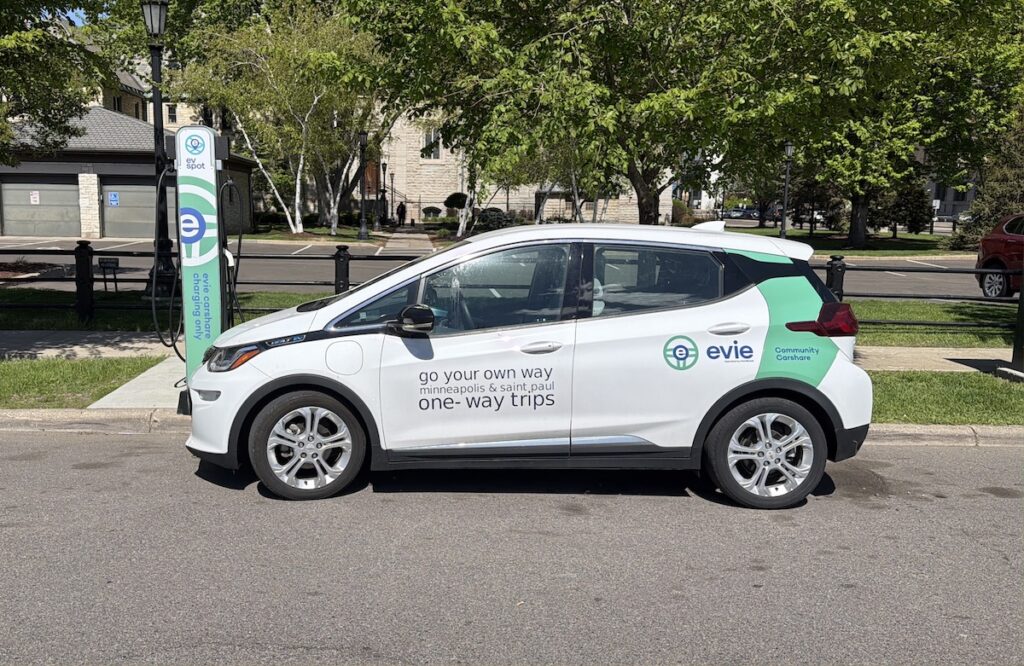
A community engagement strategy can yield insights while rectifying EV misconceptions. Both feedback and EV myth-busting can increase charger usage. Engagement can occur actively through surveys, site visits, meetings, and pop-ups, or passively through flyers and mailers. Different engagement strategies will work better for specific audiences, circumstances, and information. In Minneapolis and Saint Paul, Minnesota, a website hosts all the potential charger locations and the process for selection, as well as information on city-wide open houses to engage community members.
Earning trust
Trust can be built through early and often engagement, welcoming questions and responses that are informative and respectful. Community members will have questions that relate to parking constraints and enforcement, the overall mobility vision of the region, and access. Some cities have chosen to include “FAQ” sections on their websites with details on common questions asked by the community. Exhibit 3 contains a few questions commonly raised by community stakeholders.
Exhibit 3
Meeting community needs
Access to charging strongly influences whether someone chooses to switch to an EV. Curbside charging offers a strong, practical solution for those without charging at home, especially multifamily housing residents. However, launching a successful curbside charging program requires deliberate and sustained engagement with program and community stakeholders. Involving stakeholders early and often in siting and design decisions will help to ensure chargers are deployed efficiently, equitably, and in ways that meet community needs.
Meet Members of RMI's Curbside Charging Cohort
-
By prioritizing areas of interest and high density housing, we're able to support EV owners and future EV owners by providing opportunities for convenient charging in places that they're already parking.
Erin Kayser
Program Coordinator, EV Charging and Electric Carshare Programs at the City of Saint Paul
Erin Kayser
Program Coordinator, EV Charging and Electric Carshare Programs at the City of Saint Paul -
DDOT installed curbside chargers about a decade ago outside the Reeves Center and Canal Park, and learnings from that installation helped us understand the challenges behind operation and maintenance for curbside charging. Our result from that is developing a permit program for vendors to apply for a public space permit to install, operate, and maintain curbside chargers in the District.
Tasin Malik
Transportation Planner, Washington, D.C., District Department of Transportation
Tasin Malik
Transportation Planner, Washington, D.C., District Department of Transportation -
Even before we had installed our first curbside charging stations, we knew from residents that curbside charging was one of the most requested charging solutions and some of the most requested charging locations that residents had voluntarily submitted to us. So we knew there was this pent-up demand for more charging at the curb.
Jordan Henderson
Energy Program Specialist, Washington, D.C., Department of Energy and Environment
Jordan Henderson
Energy Program Specialist, Washington, D.C., Department of Energy and Environment
Authors

Gabriella Broga
Associate
Hannah Lindsell
Senior Associate
Anna Zetkulic
Manager
Ellen Kennedy
PrincipalRelated Insights


Building Charging Networks That Meet Drivers’ Needs Without Breaking the Bank
Help build the clean energy future. Donate today.
Independent research. Real-world solutions. Supported by donors.
RMI can pursue the highest-impact climate and energy solutions because we’re supported by people who believe change is possible. Every gift helps advance the work needed to make clean energy the default choice worldwide.
For other ways to give to RMI, including checks or gifts of stock, please visit Other Ways to Give.
