

Learn how we are working to transform how we use and produce energy.
Driving Electric: Designing EV Carshare to Expand Access to Affordable, Reliable, Clean Transportation
A guide to help cities and other local partners learn best practices and develop successful business models for EV carshare programs
Why we share this work for free
RMI is an independent nonprofit working to accelerate the clean energy transition. We publish research like this to inform decision-makers and drive real-world impact.
Our work is supported by philanthropy as well as partnerships, including fee-for-service engagements. This support makes it possible for us to share our independent insights for free.
If you find this work valuable, you can support it anytime.
Get more insights like this
Stay up to date with the latest research, analysis, and tools from RMI by opting in to receive occasional emails below. You’ll get new reports, event invitations, and practical insights to help us all accelerate the clean energy transition.
Loading form...
Your download should start automatically. If it doesn’t, click the download button below.
This work is made possible by philanthropy
RMI is a nonprofit supported by donors and partners. Philanthropy enables us to produce independent research and make resources like this freely available.
If you find this report valuable, please consider supporting our work. You can also explore how we partner with organizations to drive impact.
Jump to Section
As demand for affordable, reliable, clean transportation continues to grow, cities are looking to complement existing transportation offerings with more flexible alternatives. An emerging mobility solution, electric vehicle (EV) carshare, provides flexible, short-term access to clean vehicles. Like any carshare model, an EV carshare program bundles the car’s sale price, insurance, maintenance, and other expenses into subscription or rental pricing. With fuel, insurance, and all costs associated with car ownership rising — owning and maintaining a personal car typically costs about $12,182 per year on average — EV carshare offers an affordable, lower-emissions alternative.
A growing number of cities are deploying this solution to address local mobility, transportation affordability, and air quality challenges. However, there are many considerations that must be included in program design. Equitable mobility objectives must be balanced with financial sustainability. Site locations must be carefully chosen to support key program goals. It is critical that cities identify which community goals to prioritize and how to meet those objectives.
Throughout the past year, RMI worked with three US cities with very different built environments and populations to help identify successful business models to launch (or expand) and maintain EV carshare. In the lead-up, the RMI team surveyed over two dozen existing carshare programs from across the country and directly interviewed eight. Through the interviews and working directly with the cities, the team identified lessons on site selection, insurance, operational challenges, and solutions. This guide is intended to help cities and other local partners learn best practices for EV carshare programs and evaluate the business models that may work well in their unique operating and built environments.
EV Carshare Serves a Range of Mobility Needs
EV carshare differs from traditional on-demand car rentals in several ways. Renting a car through a private company typically requires visiting a brick-and-mortar business, renting for a full day at minimum, returning with a full tank or paying for it, and securing additional insurance or applying one’s personal insurance. EV carshare offers more flexibility and often builds these factors into membership in the carshare program. Additionally, unlike app-based ridehailing services where a driver picks up a passenger, with EV carshare, the user drives themselves, likely picking up and dropping off the vehicle at a charge point.
Cities are investing in EV carshare for many reasons. The first is to expand community mobility and transportation affordability. Many EV carshare providers design their programs to serve low- to moderate-income households, students, communities with limited transit access, and renters and multifamily residents without access to home charging. By strategically locating vehicles in areas where mobility options are limited and transportation cost burdens are disproportionately high, carshare providers can introduce a more reliable, affordable option to residents seeking better connectivity with their most frequented destinations, including work, school, healthcare, parks, and grocery stores. This service is especially appealing in areas where providing bus service may be impractical or where trip distances may be too long to be taken by shared e-bikes and e-scooters.
Another challenge that EV carshare is uniquely suited to solve? Limited space. Privately owned vehicles take up valuable public space, spending about 95% of their time parked. On average, a single carshare vehicle takes fifteen privately owned vehicles off the road, reducing congestion and the amount of parking space needed. While parking drives up the cost of development, EV carshare introduces efficiency. One parking space per unit in a multifamily housing complex increases the development costs 12.5% on average, while two spaces can increase the overall cost 25%.
Reducing these costs through carshare programs can yield significant savings at a city level. The City of Austin, Texas, amended their codes such that on-site carshare vehicles can reduce off-street parking requirements by 20 spaces per shared vehicle, up to 40% of the required spaces. In its first three years, this incentive eliminated the need for 1,100 parking spaces, saving $38.5 million in housing development costs.
Choosing the Right EV Carshare Service and Business Model
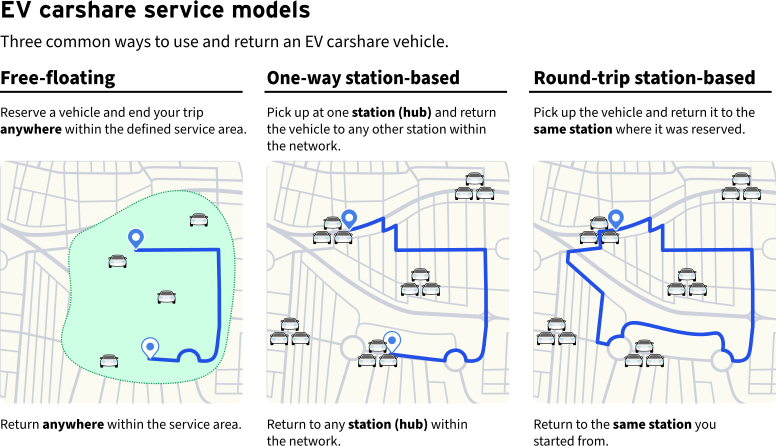
The most common EV carshare service models are free-floating, one-way station-based, or round-trip station-based service. Free-floating allows reserved vehicles to end their trips anywhere within a defined service area. Similarly, one-way station-based programs allow cars to be returned to any hub within the network. Round-trip station-based models require users to return the car to the same site where they were reserved. Although this limits users’ trip flexibility, round-trip services have shown to be more effective than free-floating for reducing private auto ownership, because they encourage more intentional, planned use of vehicles and make it easier for users to rely on carshare as a consistent alternative rather than a convenience for occasional, spontaneous trips. on carshare as a consistent alternative rather than a convenience for occasional, spontaneous trips.
Most established EV carshare programs offer one type of service and operate through one type of business model. When choosing an EV carshare business model, the city should consider the objectives of the program, as well as the organizational and financial needs of sustaining it long-term. Each structure has pros and cons and varying degrees of flexibility, subsidy needs, and alignment with local priorities.
Exhibit 1 – EV Carshare Overview
Cooperative Models
Cooperative models are owned by the members they serve or a community-governed body. Typically, they emphasize local control with decisions about pricing, service areas, vehicle types, and operations made by community members or a locally accountable board. They also offer affordable pricing to best serve community needs. Often smaller fleets, they prioritize the user experience within their core community over servicing a large geographic area. One advantage of this approach is repeat users tend to provide stability and high utilization for the service, providing longer-term viability.
Pros:
- The service is more likely to advance city goals and resident needs, which take priority over financial success.
- Acutely informed by and designed for the community, the program often possesses large public support, even among those who do not use the service themselves.
Cons:
- Having less of a central leadership structure, securing buy-in and enacting any operational change takes more time.
- Without pricing structures designed to generate profit, these programs have less access to capital. This makes expanding the fleet or services harder. It can also mean downed chargers or vehicles can take longer to fix or replace, as limited funding reduces the ability to maintain spare parts, retain maintenance staff, or quickly contract repair services.
For-Profit Operators
For-profit carshares operate more like a typical business. Fee structures are set up in a way that ensures operations are fully paid for by user revenue while also generating profit for program expansion. Sites are typically in places where there is significant user demand that can keep vehicles in use as frequently as possible.
Pros:
- These services have more operational efficiency since it is easier to implement changes and adapt to market conditions.
- Established services often have robust technology platforms, improving user experience while also tracking vehicle utilization and other performance metrics.
Cons:
- Because this model prioritizes locations that will ensure profitability, lower-income or disadvantaged communities may have a harder time accessing the service.
- Profitability can be difficult when user behavior is inconsistent and revenue margins are small.
Nonprofit Carshare Organizations
As they are mission-driven, nonprofit models tend to be most consistent with community goals and focus on equity and improved mobility for the communities they serve. Their pricing structures usually reflect the lowest possible cost to keep vehicles running while maintaining continuity of service. In some cases, direct public or philanthropic funding maintains the financial viability of a program, especially in its pilot years. Common forms of indirect fiscal support included city-backed fare subsidies for lower-income residents or colleges covering a student’s first trips.
Pros:
- The service is more likely to advance community goals, which take priority over profitability.
Cons:
- Without ongoing external support or sufficient user uptake, funding can be more challenging to source and sustain for these programs.
- When the fleet is spread widely, servicing logistics and staff capacity can be spread thin (e.g., when a snowstorm triggers the need to shovel out the entire fleet).
Positioning EV Carshare for Success
Key Considerations for EV Success
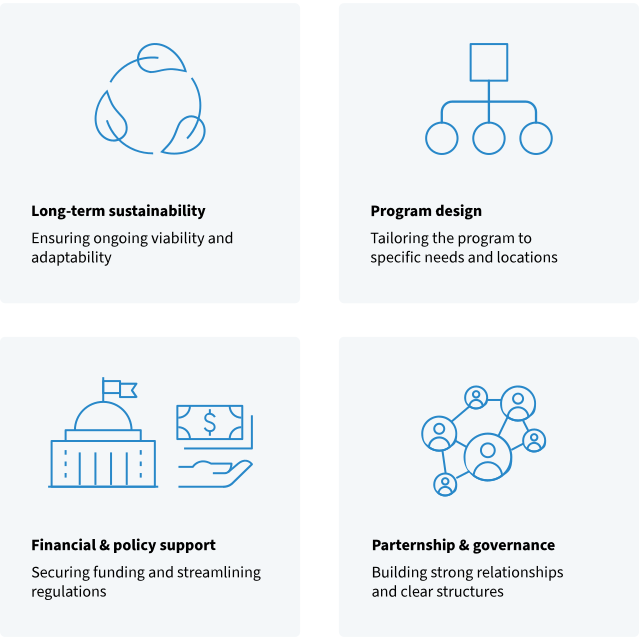
Program Design
Cities should consider program design carefully prior to launch. This includes clearly defining who the program is intended to serve and the long-term outcomes it seeks to achieve, such as improving mobility access, reducing transportation costs, and advancing environmental and public health objectives. Because priorities vary by community, cities should seek to articulate and invite public input on their specific program goals as early as possible. This will allow programs to set success metrics from program inception and measure whether the service is meeting those targets.
Cities should also consider siting. EVs should be placed in highly visible, accessible locations like transit hubs, grocery stores, employment centers, community facilities and/or near major roadways. Proximity to public transportation can enhance first- and last-mile connectivity, making carshare a more attractive and practical option for users. Mixed-use neighborhoods are particularly well-suited for carshare, as they generate trips throughout the day and attract a diverse range of users, helping to maintain consistent utilization.
Like site locations, the structure of the reservation system also influences user choices and benefits. For example, programs aimed at reducing local air pollution strive for shared EVs to replace as many vehicle miles traveled (VMT) as possible that otherwise would have been made via a gas-powered vehicle. Some programs encourage this by allowing longer reservations. The impact of targeting air quality goals can be sizeable; a study of Los Angeles County’s EV carshare BlueLA found that the presence of shared vehicles reduced community VMT by 34% and greenhouse gas emissions by 48%.
However, extended reservations have knock-on effects. It is not guaranteed that a long reservation will electrify more miles driven than multiple shorter sessions among more users. Additionally, when users are unable to access an EV at their preferred sites, such as when they are consistently reserved for long time periods, they become less confident they can rely on the service. Systems that allow for in-advance reservations can help mitigate that risk, but balancing maximum electrified VMT and community access remains a core consideration.
Strategic Partnerships
Although rarely the direct service operator, cities play a critical role in establishing carshare initiatives. They often lead on assigning and defining decision-making authority, program oversight, performance monitoring, and other key responsibilities early in the process. Having the city involved can also add credibility, which generally speeds up the launch process. The selected business model should align not only with the city’s goals, but also with its internal capacity to manage and support the program over time. These priorities help inform both the choice of business model and the roles different partners play.
Regardless of the selected business model, strong partnerships are needed to expand program reach and build community trust. Local government officials likely already have relationships and processes for engaging different stakeholders such as local businesses, houses of worship, property managers, or other local groups. Strategic partners might host vehicle and charging sites at their properties, support user recruitment, or manage and assist community engagement in other ways. Organizations with established relationships in priority communities, such as affordable housing, social service, or other frontline organizations, can be particularly valuable in ensuring the program is accessible and responsive to local needs.
Universities and other large employers can promote EV carshare among their workforce and student body to help improve demand. Usage in these communities can support lower-cost carshare access for other income-qualified users, making partnership a compelling way to support program viability. Further strategies such as offering opt-out rather than opt-in enrollment for students and employees in the carshare program can reduce marketing and onboarding costs as well as facilitate higher usage throughout the academic year.
Financial and Policy Support
EV carshare may need sustained funding rather than one-time startup support. Cities should weigh these investments against their broader equity and climate goals. EV purchase costs vary depending on geography, vehicle model, age, and mileage, but cities can expect adding a used EV to their carshare fleet will cost at least $20,000 and a new EV at least $30,000. Leasing offers an alternative to ownership, especially when testing the financial viability of new sites, but can be insurance dependent. Monthly operating costs often total $1,500–$2,000 per car, inclusive of insurance, maintenance, and staff oversight time.
Insurance by itself is a major barrier to establishing a carshare provider, with high costs disproportionately affecting small or nonprofit operators. Of the providers interviewed by RMI, 75% described obtaining and affording insurance as a make-or-break issue. Most car insurance companies do not write policies for carshare fleets, and among the insurance companies that do, many are unwilling to work with nonprofit operators or fleets with just a handful of vehicles. One provider interviewed experienced a 300% price increase in 2025 for insurance on their fleet of 15 vehicles.
To defray costs, cities and operators should identify and diversify sources of revenue to reduce dependence on subsidies. One approach is placing cars in profitable, high-density, commercial areas that support other sites that may have less vehicle usage. Other opportunities may include selling advertising space on vehicles or partnering with local businesses to subsidize employee access. Cities themselves can incorporate EV carshare into municipal operations. For example, carshare vehicles can be used for infrequent staff trips instead of maintaining underutilized fleet vehicles.
While community access and financial stability are not opposing goals, cities need to consider how they define programmatic success and then build a roadmap to financial viability. Grants, low-interest loans, or other financing mechanisms for vehicle procurement and charging infrastructure help lower barriers to entry and growth for operators. Public investment in charging infrastructure also reduces the financial burden on EV carshare providers and enables expansion into underserved areas.
Policies that support EV carshare operations more broadly can also significantly benefit new programs. Supportive policies include dedicated curb space for carshare vehicles, reduced or waived parking fees, and integrating carshare into transportation demand management strategies by reducing private vehicle ownership, encouraging the shift to shared and sustainable transportation, and lowering overall vehicle miles traveled. Clear, predictable, and streamlined pathways for charger permitting and installation are also beneficial. Together, these financial and policy tools create an enabling environment for EV carshare programs to launch and scale.
One important note on evaluating financials, however, is that programs do not need to immediately be deployed at a large scale. Many successful programs began with a small number of vehicles and expanded over time as user demand, funding, community support, and operational capacity grew. Key to this growth period is allowing operators to test how well certain sites perform, understand user needs, adjust pricing and reservation systems, and generate public support. This flexibility allows for program resiliency and optimization before making larger investments.
Long-Term Project Planning
Programs should be designed to adapt over time. Regularly evaluating performance through user feedback and data informs adjustments to vehicle placement, pricing, service areas, and partnerships. This can be achieved through tracking the number of unique users and trips taken, user satisfaction via surveys, and other metrics indicative of how the community uses and values the service. An iterative approach allows programs to respond to changing community needs and market conditions, supporting long-term success and scalability.
Additionally, to ensure an EV carshare program remains reliable and financially viable over time, cities can help set vehicle replacement cycles. Vehicles need to be replaced after a certain threshold depending on mileage and wear. These timelines should be established early and coordinated with insurance providers, as vehicle age and condition affect coverage and cost, as well as user safety and satisfaction.
Conclusion
EV carshare represents a powerful tool for cities seeking to expand equitable access to clean, affordable, reliable transportation while advancing broader climate and mobility goals. As demonstrated by existing programs, success depends not only on technology or vehicle deployment, but also on thoughtful program design, strong partnerships, and a clear understanding of local needs and priorities.
Cities play an essential role as conveners and champions for these programs. Through targeted policy interventions, funding mechanisms, and stakeholder coordination, they can de-risk early implementation and create an enabling environment for long-term viability. This process requires balancing utilization and revenue with broader outcomes like improved mobility access, reduced emissions, and community impact, but identifying clear goals allows programs to tailor their approaches accordingly.
There is no one-size-fits-all approach. EV carshare programs must be tailored to the unique characteristics of each community and designed with flexibility to evolve over time. However, with sustained commitment, adaptive management, and a focus on equity, EV carshare can become a durable and scalable component of the modern transportation system.
Authors

Bryn Grunwald
Senior Associate
Nocona Sanders
Senior Associate
Rollins Baird
Associate
Ellen Kennedy
Principal
Anna Zetkulic
ManagerRelated Insights

For Clean Energy Projects, How Community Benefits Are Delivered Matters

Tracking WestTEC: Where 100+ Transmission Projects Stand and What Comes Next


Help build the clean energy future. Donate today.
Independent research. Real-world solutions. Supported by donors.
RMI can pursue the highest-impact climate and energy solutions because we’re supported by people who believe change is possible. Every gift helps advance the work needed to make clean energy the default choice worldwide.
For other ways to give to RMI, including checks or gifts of stock, please visit Other Ways to Give.
