

Learn how we are working to transform how we use and produce energy.
Understanding FERC’s Large Load Orders
An RMI summary of the Federal Energy Regulatory Commission's orders on large load interconnection and transmission service
Why we share this work for free
RMI is an independent nonprofit working to accelerate the clean energy transition. We publish research like this to inform decision-makers and drive real-world impact.
Our work is supported by philanthropy as well as partnerships, including fee-for-service engagements. This support makes it possible for us to share our independent insights for free.
If you find this work valuable, you can support it anytime.
Get more insights like this
Stay up to date with the latest research, analysis, and tools from RMI by opting in to receive occasional emails below. You’ll get new reports, event invitations, and practical insights to help us all accelerate the clean energy transition.
Loading form...
Your download should start automatically. If it doesn’t, click the download button below.
This work is made possible by philanthropy
RMI is a nonprofit supported by donors and partners. Philanthropy enables us to produce independent research and make resources like this freely available.
If you find this report valuable, please consider supporting our work. You can also explore how we partner with organizations to drive impact.
Jump to Section
Rising load growth from large energy users, particularly data centers, has strained grid planning processes around the country. Over the past year, grid operators and regulators have convened stakeholders to discuss these challenges and develop new processes to better integrate large load customers into the bulk power system.
The Federal Energy Regulatory Commission (FERC) recently directed six regional grid operators to propose reforms to address large load interconnection issues. In this summary, we describe what FERC is requiring grid operators to address and what they will need to consider.
Context and timeline
In October of 2025, Secretary of Energy Chris Wright directed FERC to issue an advanced notice of proposed rulemaking (ANOPR) to address several concerns regarding the interconnection of large loads to the transmission system.
FERC then invited comments on the proposed ANOPR for consideration and final action by the Commission. Nearly 200 stakeholders submitted robust comments and proposals covering large load interconnection concerns.
In June of 2026, FERC issued separate orders to six regional grid operators (RTOs/ISOs) to initiate show cause proceedings pursuant to section 206 of the Federal Power Act. With these orders, FERC found that the existing rates and tariffs are unjust and unreasonable and tasked the RTOs with updating their tariffs to resolve these concerns. FERC suggested several updates that could remedy the tariffs’ deficiencies. RTOs may update their tariffs to follow FERC’s suggestions or may submit alternative proposals that address FERC’s concerns.
Over the next six months, grid operators and stakeholders will need to meet several milestones:
- 21 days after issuance (on or by July 9): interested parties must file a notice of intervention or motion to intervene.
- 30 days after issuance (on or by July 20): Each RTO/ISO must file a report describing how it intends to ensure resource adequacy for existing and new large loads.
- 45 days after issuance (on or by August 3): RTOs/ISOs may file a request for abeyance (a suspension) and ask for additional time (up to 90 days) to develop its filings to address the deficiencies raised in the show cause order.
- The request should include information on the RTO’s plan to develop tariff modifications and an expected filing date.
- 60 days after issuance (on or by August 16): RTOs/ISOs must file a show cause response explaining why their tariffs are just and reasonable or propose tariff revisions to address FERC’s concerns.
- If RTOs/ISOs request the 90-day suspension, they must file those updates by November 15.
After the RTOs/ISOs make their filings, interested parties will have 30 days to respond and address whether the modifications make the tariffs just and reasonable or propose further revisions. These deadlines would be 30 days after original filing deadline (on or by September 16) or 30 days after the suspended filing deadline (on or by December 15).
FERC’s show cause orders apply only to RTOs. FERC encourages other utilities to respond as well.
The show cause orders apply to the six regional grid operators (PJM, MISO, SPP, CAISO, ISO-NE, NYISO). FERC has not issued orders to transmission owners outside of these regions but stated that non-RTO/ISO utilities are encouraged to submit tariff revisions that address these concerns.
FERC identifies 5 reform categories
FERC requires the RTOs/ISOs:
- Develop standardized transmission service applications and study processes for large loads
- Prevent cost shifting among transmission customers and require transparency on transmission costs
- Establish rules and rates to accommodate co-location agreements and behind-the-meter generation
- Provide new transmission services for co-location arrangements and flexible large loads
- Develop a process to study generating facilities that serve electrically proximate and co-located large loads
Note: PJM previously addressed rules, rates, and transmission services for co-location arrangements as part of its show cause proceeding on co-location (EL25-49-000). SPP previously addressed standard service agreements and studies and established a process to study electrically proximate generation and large loads with its high impact large load (HILL) and high impact large load generation assessment (HILLGA) reforms (ER26-247-000). Consequently, FERC did not order PJM and SPP to respond to those issues.
We describe these reforms below.
Develop standardized transmission service applications and study processes for large loads
FERC ordered RTOs/ISOs to develop standardized procedures that clarify how large load interconnection requests will be treated and studied. In most cases, a load-serving entity (LSE) or utility will request interconnection to serve specific large load customers. FERC suggested defining a large load as a new facility over 50 MW, seeking transmission service above 69 kV, and not part of co-located arrangements. Furthermore, FERC instructed RTOs/ISOs to develop processes to study flexible large loads that can lower their power withdrawals and reduce the need for new transmission infrastructure.
FERC proposed a timeline of 60–90 days for grid operators to complete these studies. To increase efficiency in the study and planning process, FERC proposed:
- Load interconnection process should include financial deposits or milestone requirements as well as data disclosure requirements to reduce the risk of duplicative requests from LSEs to serve the same load customer.
- Grid operators must include alternative transmission technologies in their planning studies to identify efficient alternatives that may reduce the need for traditional transmission network upgrades.
Furthermore, FERC ordered RTOs/ISOs to develop standard agreements between the grid operators and LSEs to ensure that the RTO/ISO has sufficient information and operational control to maintain grid reliability. These agreements will contain details about telemetry and equipment requirements, including remote disconnect capabilities.
Large Load Interconnection
In our Path to Power series, RMI describes current large load interconnection processes, identifies their inefficiencies, and suggests potential solutions.

Prevent cost shifting among transmission customers and require transparency on transmission costs
FERC directed RTOs to publicly track network upgrade projects and associated costs for large load network upgrades on a searchable platform. FERC also directed grid operators to include information regarding aggregated large load requests for each transmission zone within the RTO’s footprint. This increased transparency is intended to provide state regulators and consumer advocates with sufficient information to inform state-jurisdictional retail cost allocation.
FERC has not modified or altered wholesale cost allocation among transmission customers or transmission owners at the regional level. However, FERC directed the RTOs to establish standardized cost recovery agreements to reduce cost shifting associated with stranded assets among wholesale transmission customers if the large load customer fails to materialize.
These agreements involve three parties: the LSE hosting the large load facility, the transmission owner, and the RTO. In a cost recovery agreement, the host LSE agrees to provide sufficient financial security to make a minimum contribution toward the transmission owner’s revenue requirement, commensurate with the costs of any network upgrades needed to serve the large load addition.
Establish rules and rates to accommodate co-location agreements and behind-the-meter generation
FERC directed five of the RTOs/ISOs to develop rules to clarify the rates, terms, and conditions of service to connect co-located generation and load, where load and generation are physically connected on the same side of a point of interconnection. Grid operators must develop standardized processes for studying the impact of co-located load and generation. RTOs must decide how to charge customers even if they never (or rarely) withdraw energy from the bulk grid, given that the customers would still benefit from ancillary services such as black start and frequency regulation. PJM was not ordered to make this reform, having already made a compliance filing in its co-location show cause proceeding (EL25-49-000).
Provide new transmission services for co-location arrangements and flexible large loads
FERC ordered RTOs to develop three new types of transmission service, which were previously described in PJM’s show cause proceeding on co-location (EL25-49-000):
- Interim network integration transmission service (NITS): LSEs can take non-firm transmission service temporarily to serve large load customers while waiting for network upgrades to be built. Service will convert to firm NITS once the upgrades are complete.
- Non-firm contract demand service: LSEs can reserve non-firm transmission service to serve new large loads that can be curtailed when transmission capacity is constrained. This permanent product is curtailed before firm transmission service.
- Firm contract demand service: LSEs can reserve a contracted amount of firm transmission service for a portion of a large load facility’s load; this product receives equal prioritization as other firm transmission services. The large load customer may meet the remainder of its load with co-located generation or non-firm contract demand.
LSEs may use these transmission products on behalf of co-located large load facilities (or flexible large loads) which can limit the power they draw from the grid. For all cases, LSEs and large loads will need control equipment and protection schemes to limit withdrawal from the bulk power system.
Develop a process to study generating facilities that serve electrically proximate and co-located large loads
FERC directed five RTOs to develop policies to study generation projects that are near a large load and willing to limit generation output to match load. These arrangements are distinct from co-location projects since the load and generation do not need to be on the same side of a point of interconnection. With this proposed reform, load and generation projects that are sited in proximity may reduce the need for network upgrades to interconnect both facilities, thereby allowing both facilities to come online faster than existing processes allow.
FERC suggested that facilities may be considered electrically proximate if they are within two substations of each other or co-located. SPP has previously satisfied this reform through its high impact large load generation assessment (HILLGA) reforms (ER26-247-000).
FERC indicated that multiple possibilities, both interim and permanent, may address its concerns regarding electrically proximate load and generation.
[1] NRIS allows new resources to interconnect and receive guaranteed deliverability but often requires more network upgrades, thereby taking longer and costing more than receiving ERIS. ERIS is a more limited service, such that the generator can deliver power when transmission capacity is available but is curtailed when transmission is constrained.
[2] SIS allows new resources to interconnect at an existing generator’s point of interconnection without triggering network upgrades. Provisional interconnection service is available in some regions to allow a resource to temporarily acquire ERIS while waiting for network upgrades to be completed; once upgrades are complete, it converts into an NRIS resource.


Related Insights
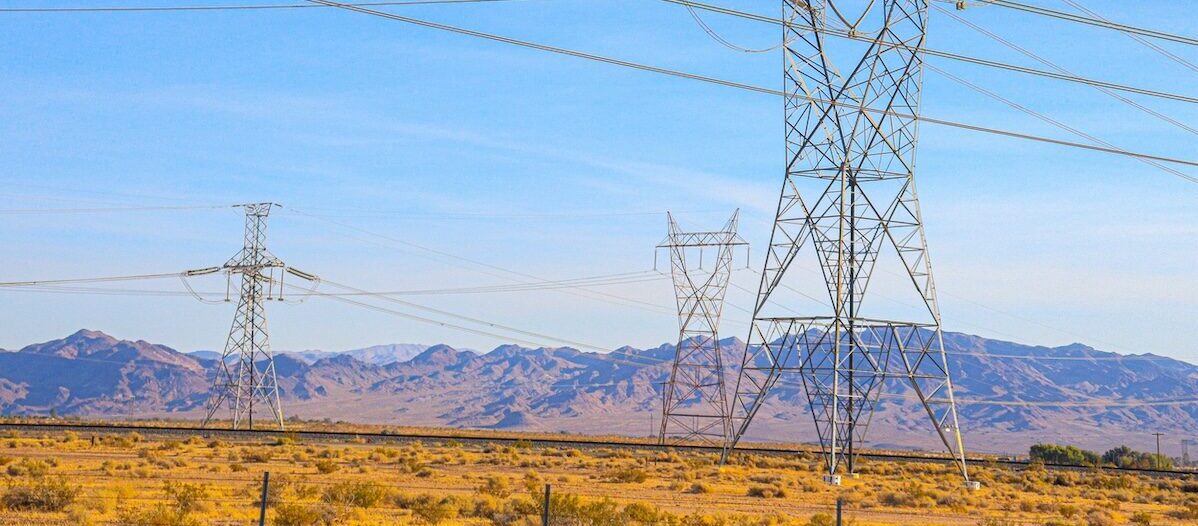
Tracking WestTEC: Where 100+ Transmission Projects Stand and What Comes Next

Rural Electric Co-ops and the Future of American Energy
Help build the clean energy future. Donate today.
Independent research. Real-world solutions. Supported by donors.
RMI can pursue the highest-impact climate and energy solutions because we’re supported by people who believe change is possible. Every gift helps advance the work needed to make clean energy the default choice worldwide.
For other ways to give to RMI, including checks or gifts of stock, please visit Other Ways to Give.
