

Learn how we are working to transform how we use and produce energy.
Clean Energy 101: How Rising Demand Is Driving a Grid Tech Revolution
Once a stable, slow-moving system, the US grid is running up against its ability to meet demand. An unprecedented set of dynamics is driving a wave of investment: soaring demand growth, rapidly falling prices for clean energy, and outdated rules to update the grid.
Why we share this work for free
RMI is an independent nonprofit working to accelerate the clean energy transition. We publish research like this to inform decision-makers and drive real-world impact.
Our work is supported by philanthropy as well as partnerships, including fee-for-service engagements. This support makes it possible for us to share our independent insights for free.
If you find this work valuable, you can support it anytime.
Get more insights like this
Stay up to date with the latest research, analysis, and tools from RMI by opting in to receive occasional emails below. You’ll get new reports, event invitations, and practical insights to help us all accelerate the clean energy transition.
Loading form...
Your download should start automatically. If it doesn’t, click the download button below.
This work is made possible by philanthropy
RMI is a nonprofit supported by donors and partners. Philanthropy enables us to produce independent research and make resources like this freely available.
If you find this report valuable, please consider supporting our work. You can also explore how we partner with organizations to drive impact.
Jump to Section
This is part II in a series of basic grid explainers. See part I, “The Changing Electricity Grid.”
Ensuring that supply meets demand is a fundamental concern of every electricity system. If not, blackouts may follow, which are not only inconvenient, but also life-threatening.
Yet it’s not as simple as adding more power plants to meet new demand. In the United States, as in most other mature energy markets, there are many layers of regional and national regulatory bodies that monitor the power system and ensure it is reliable and financially stable.
Within this system, electric utilities create periodic plans to forecast future electricity demand and to plan additional power plants, as well as maintenance and upgrades to the network of wires and devices that deliver that power.
Despite supply chain uncertainties for turbines and fuel, many utilities are turning to gas power as their first choice of generation, even where other cost-effective technologies can be deployed more quickly to support grid growth and reliability.
Upgrading the grid and incorporating new technologies are important because the grid affects all of us. Costs to customers can go down, blackouts during extreme weather can be reduced, and new homes, businesses, factories, and data centers can connect to electricity service more quickly.
Demand for electricity is soaring, not stable. Naturally, as more businesses and households electrify — whether with an electric vehicle in the driveway or a new high-efficiency heat pump in the home — and more large electricity users such as data centers connect to the grid, demand for electricity is increasing.
After over a decade of flat demand, US electricity demand is climbing, and generation is growing to match. US electricity generation grew 2.8% from 2024 levels to reach 4,430 TWh of electricity in 2025, according to the US Energy Information Administration (EIA). This growth is expected to continue, with the EIA anticipating total electricity consumption to increase an average of 1.7% per year, with commercial and industrial sectors leading the way at 2.6% and 2.1% per year, respectively. Large loads are driving 80% of forecasted US electricity demand. The US Department of Energy has directed the Federal Energy Regulatory Commission to accelerate the interconnection of large loads like data centers, making it vitally important to bring new generation online quickly so the grid can meet expected demand.
Clean energy has a growing cost edge. In most markets, new solar, wind, and battery projects are now cheaper than coal, gas, hydro, or nuclear — making clean energy consistently the lowest-cost option to add electricity supply. Despite political headwinds, utility-scale clean energy is still being deployed across the United States, and even more quickly around the world.
With gas turbines on backorder, wild price swings in oil and gas, and steadily falling costs to install solar, wind, and batteries, renewables are out-competing coal, gas, and nuclear as the first choice for new power supplies. In 2025, clean options accounted for most of the new generating capacity added to the US grid. Renewables have outpaced all other options for new additions to the US grid for more than a decade.
However, connecting new resources takes too long. More renewable projects are planned for 2026, yet simply building is not enough. In today’s grid, they must connect to the transmission network to deliver power to users. Yet connecting new supplies to the grid is facing a growing backlog.
The US grid has around 1,400 gigawatts (GW) of installed capacity. Yet as of mid 2026, more than 2,200 GW of additional capacity, including new generation and storage plants, is stuck in the “interconnection queue,” waiting to be connected to the wider grid.
Modernizing the process by which electricity generation resources can connect to the grid to make it faster, more transparent, and cost-effective can help strengthen energy security and support industrial and technological growth.
How can we avoid grid gridlock?
In an era of rapidly rising electricity demand, established practices to expand the grid are moving too slowly to keep up. Planners, utilities, and investors are facing pressure to adapt their planning processes to be faster and more flexible to meet future needs. And increasingly, they’re looking beyond simply adding more power plants and transmission lines.
Indeed, we don’t need to rely solely on changes in generation and transmission for more reliable electricity. There are known, proven steps that utilities, grid operators, and customers can take to support the grid of the future.
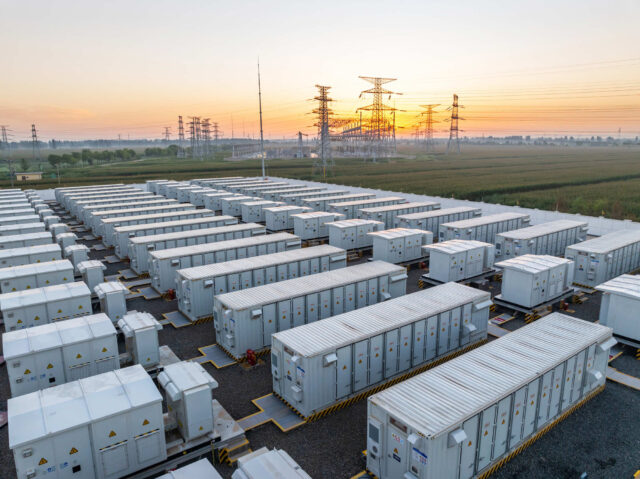
Store more electricity. Batteries help smooth out variable electricity production by storing renewable energy so that it is available when the sun doesn’t shine and the wind doesn’t blow. Grid-scale battery deployment is growing fast, with more than 40 GW added to the US grid over the past five years. These batteries fill up on cheap, plentiful, local electricity and can help manage demand spikes from data centers and other users.
Use existing resources more effectively. Beyond grid-scale deployment, the batteries in EVs, home solar systems, and other smart devices can also be linked to the grid to provide support when necessary, through virtual power plants (VPPs). When connected devices are aggregated and coordinated, they can help meet grid needs — if they are properly incorporated into grid planning. Because they incorporate existing technologies and do not require more transmission and distribution investment, VPPs can be launched quickly and cost-effectively to help maintain the reliability and resilience of the grid.
Make demand more flexible. Shifting when electricity is used is also a component of balancing supply and demand. Instead of running the dishwasher when they get home, folks can schedule smart appliances and other systems to run during the day, when solar is plentiful and electricity prices are lower. Demand response programs incentivize end-users to change when and how they use electricity to reduce strain on the grid. And it’s not only for individuals — data centers and other large electricity users can also be mindful of critical periods.
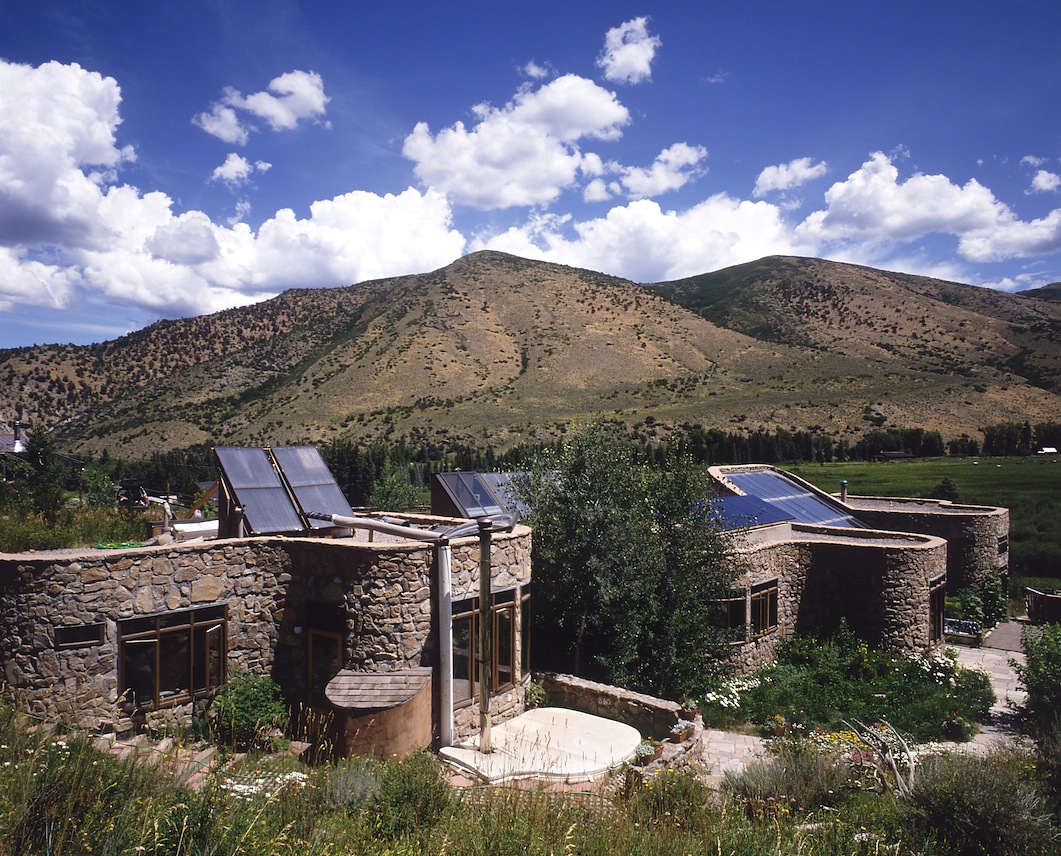
Reduce energy waste. Efficiency is a powerful, underutilized way to avoid building new power plants. Consider RMI cofounder Amory Lovins’ home in Colorado, a living laboratory demonstrating how holistic design can deliver years of reduced energy use and lower lifetime costs. Investing in super insulation and advanced windows today all but eliminates the need for furnaces and air conditioners for the lifespan of a building. And such practices are becoming more commonplace both in manufacturing and building design — for example, efficient use of floor space and passive housing design can go a long way too.
Bring your own energy. As the prices of solar panels, batteries, and other distributed energy gear continue to fall, big electricity users are beginning to see the benefits of bringing their own energy to the grid when they want to connect. This can be in the form of on-site generation and storage; building wind, solar, and batteries near existing grid connection sites (RMI calls these “power couples”); or tariffs that allow large electricity customers to fund generation resources in exchange for different rates and terms.
Make the grid smarter. Building new transmission lines remains important, but it can take years to plan and construct them. In the meantime, utilities can often get more from the grid they already have. Alternative transmission technologies and grid-enhancing technologies (GETs) help transmission lines carry more electricity safely and efficiently, making better use of existing infrastructure. Because they can often be deployed faster and at lower cost than major new construction projects, GETs can help improve reliability and support growing electricity demand while longer-term grid upgrades move forward. These technologies are widely available, but deployment remains limited due to regulatory structures and utility incentive misalignments.
What comes next?
The electricity system is changing — demand is rising, new technologies are providing more solutions, and customers are playing a larger role in how electricity is produced and managed.
To maintain reliability and affordability, grid planning processes must evolve as well. Faster interconnection processes, better transmission planning, greater use of distributed energy resources, and more flexible demand management can help ensure that electricity keeps flowing where and when it is needed.
Authors

Barbara Lantz
Social Content Lead
Help build the clean energy future. Donate today.
Independent research. Real-world solutions. Supported by donors.
RMI can pursue the highest-impact climate and energy solutions because we’re supported by people who believe change is possible. Every gift helps advance the work needed to make clean energy the default choice worldwide.
For other ways to give to RMI, including checks or gifts of stock, please visit Other Ways to Give.
