Technical Explainer: Orphaned Oil and Gas Well Carbon Credits
RMI experts analyze market trends, quality criteria, and risk implications for orphaned well carbon credits.
Executive Summary
Since 2023, the voluntary carbon market (VCM) has emerged as a growing financing tool for projects that plug orphaned oil and gas wells. These projects can be highly additional, with clear benefits to nearby communities and ecosystems, and they address an urgent and sizeable climate solution: limiting methane emissions from abandoned wells that have no identifiable owner. Orphaned wells account for up to 6% of methane emissions from abandoned wells in the United States. Quickly limiting methane emissions is vital: methane stays in the atmosphere for only 10–12 years but is 80 times more potent as a greenhouse gas than carbon dioxide.
Orphaned wells no longer produce oil and gas, have no responsible owner, and can emit methane, contaminated brine, volatile organic compounds, and hydrogen sulfide for decades. The United States and Canada have more than 120,000 documented orphan wells and 4 million abandoned wells (see Box 1) due to both the longevity of oil and gas production that pre-date policy requirements and persistent shortcomings in existing regulatory frameworks.
The VCM has issued approximately 8.3 million credits from 80 projects that plug orphaned wells. Projects are developed using methodologies that strive for a balance between existing uncertainties around how orphaned wells behave and what is feasible for project developers to implement. These uncertainties create some quality risks for how emissions impact is calculated, permanence is ensured, and leakage is estimated.
Despite these uncertainties, early analysis suggests orphaned well projects can be highly compelling, particularly for buyers who are seeking immediate climate impact with strong co-benefits. Credits from plugging orphaned oil and gas wells tend to perform well against three quality criteria:
-
Strong case for additionality: The scale of the problem and insufficient public funding means most projects show financial and regulatory additionality.
-
Emerging best practice: Developers should work closely with regulators and create the documentation needed to demonstrate that the wells targeted by the project were not going to be imminently plugged by the government.
-
-
Manageable risk of bias in emissions measurements: Methane emissions measurements are sensitive to environmental conditions, measurement protocol, and wellhead configuration.
-
Emerging best practice: Developers can maximize the length and number of measurement campaigns, transparently report their protocols and data collected, cross-check measured leak rates with historical data, and rely on third-party expertise in well behavior and measurement where feasible.
-
-
Significant co-benefits: Projects protect water quality, reduce public safety risks, and clean up toxic environmental pollutants and hazards.
-
Emerging best practice: Some project developers revegetate soils with diverse, native plants, and work with local partners to ensure long-term social and environmental impacts are monitored.
-
Background: The Climate Opportunity of Plugging Orphaned Wells
The urgency of limiting methane emissions
Halting or limiting emissions from “super pollutants” — greenhouse gases such as methane, nitrous oxide, black carbon, and refrigerants that are responsible for half of current warming — is the most immediate step we can take to slow the rate of climate change. Methane is especially critical: during its 12 years in the atmosphere, its warming impact is 80 times stronger than carbon dioxide. In 2023, 160 countries, including the United States and Canada, signed the Global Methane Pledge, which aims to reduce methane emissions 30% below 2020 levels by 2030. The oil and gas sector currently accounts for 20% of global methane emissions.
In 2023, the voluntary carbon market (VCM) emerged to finance and plug a persistent and uneconomical source of methane emissions from oil and gas: orphaned oil and gas wells.
Estimating the scale of the orphaned well problem
Orphaned wells are no longer producing oil and gas, have no responsible owner, and often have been ignored for decades. At least 120,000 documented orphaned wells (see Box 1) are emitting methane, contaminated brine, volatile organic compounds, and hydrogen sulfide near houses, schools, parks, and farms across the United States and Canada. Documented orphaned wells — the smallest sub-set of abandoned wells — account for up to 6% of methane emissions.
North America’s oil and gas industry has drilled close to 5 million wells in the United States and at least 850,000 in Canada over the past two centuries. Less than 40 percent — approximately 2 million in the United States and 310,000 in Canada — are actively producing. The remaining wells are non-producing “abandoned” wells (see Box 1), and are scattered across public, private, and tribal lands, frequently near parks, schools, hospitals, and homes. Orphaned wells — a subset of these wells — are unplugged or poorly plugged, and lack a solvent operator responsible for their closure, making them the legal wards of the state or provincial government (see Box 1).
Box 1. Oil and Gas Well Terminology
There is a wide range of terminology used to refer to oil and gas wells and their maintenance. This terminology is not used consistently across jurisdictions or even across the oil and gas industry. Here, we define how different terms are used throughout this document, drawing on definitions provided by the United States and Canadian governments, industry leaders, and RMI experts.
Well Production Status:
-
Active well: A well with a known owner or operator who is using the well to produce oil and/or gas.
-
Marginal well: A low-producing well (generally producing 15 barrels of oil equivalent or less daily on average, although this range varies by state) with a known owner or operator. Marginal wells can be at risk of becoming abandoned and orphaned but have a solvent operator that is legally responsible for plugging.
-
Abandoned well*: A well that is no longer maintained. These wells may be plugged or unplugged and may have a recognized solvent operator. Abandoned wells can be at risk of becoming orphaned.
-
Orphaned well*: An unplugged well that is no longer in production and that has no solvent owner or operator, making it the responsibility of the state or provincial government. There are known (documented) and unknown (undocumented) orphaned wells. In some jurisdictions or under some crediting protocols, a well must be documented to be formally recognized as “orphaned” by regulators.
Processes:
-
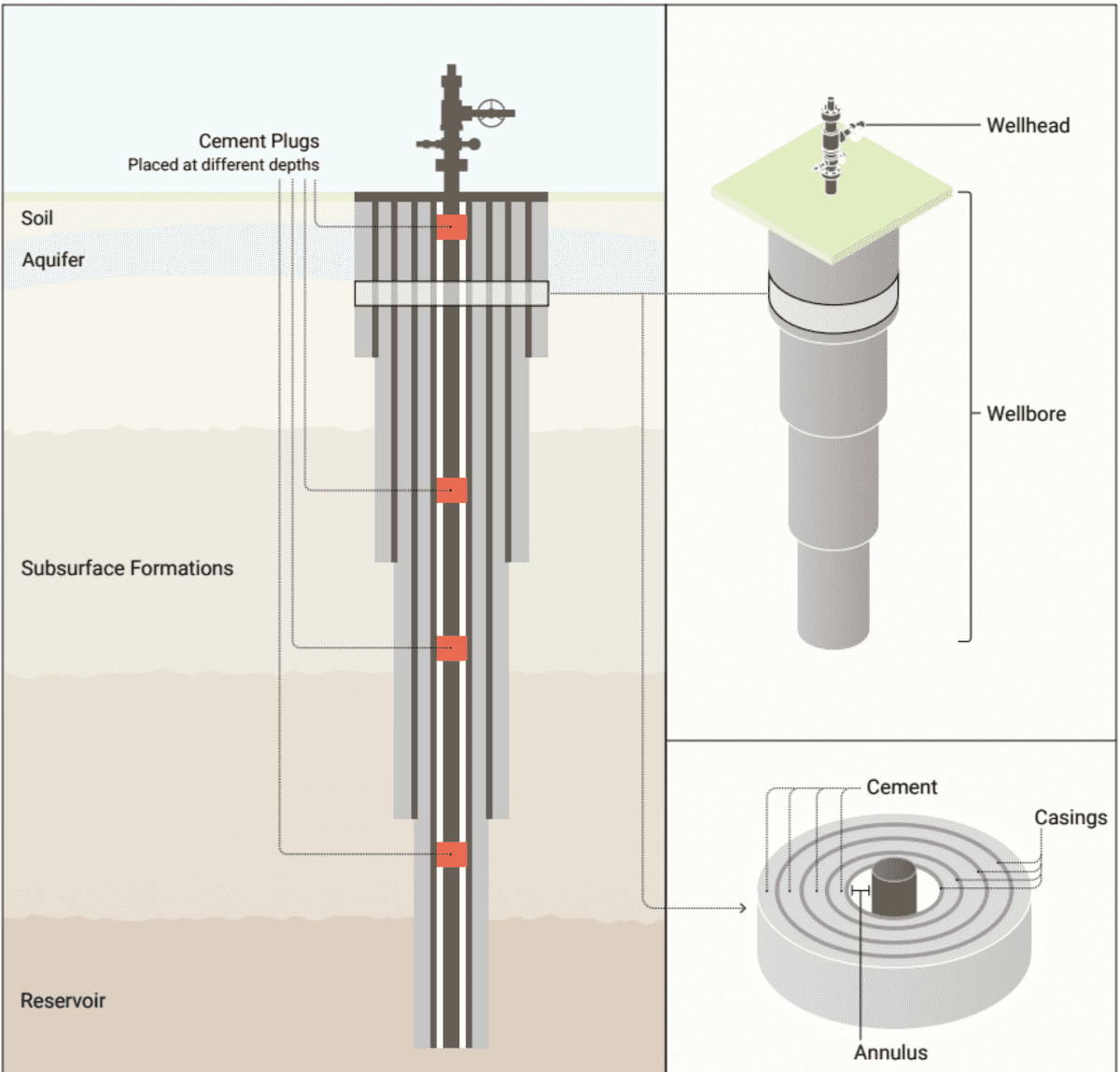
Plug and abandon (P&A): The process of permanently sealing a well. This process involves removing structural wellbore components and other associated equipment, placing cement plugs at appropriate depths, and removing surface equipment.
Development Types:
-
Conventional well: Also called a “traditional” well, this is a well where the operator targets oil and gas reservoirs in more porous and permeable rock formations. In general, conventional wellbores are vertical. Most orphaned wells today are conventional wells because commercial-scale unconventional development is a relatively new practice, and fewer unconventional wells have reached the end of their economic lives.
-
Unconventional well**: A well where the operator targets harder-to-reach oil and gas in lower permeability and lower porosity rock formations. The wellbores in unconventional wells often must be horizontal and require hydraulic fracturing to produce oil and gas economically. Plugging these wells can be more costly than conventional wells.
*Note that these terms are not used consistently across the oil and gas industry nor across crediting methodologies. In some jurisdictions, “abandoned” wells are equivalent to how we describe orphaned wells here. “Abandoned” wells are also not to be confused with the process of “plug and abandon.”
**“Unconventional” is a broad term that refers to oil and gas that are produced using non-conventional methods. In this document, “unconventional” refers to formations whose permeability is less than 0.1 millidarcies. Definitions of “unconventional” often also include extra-heavy crude oil and tar sands.
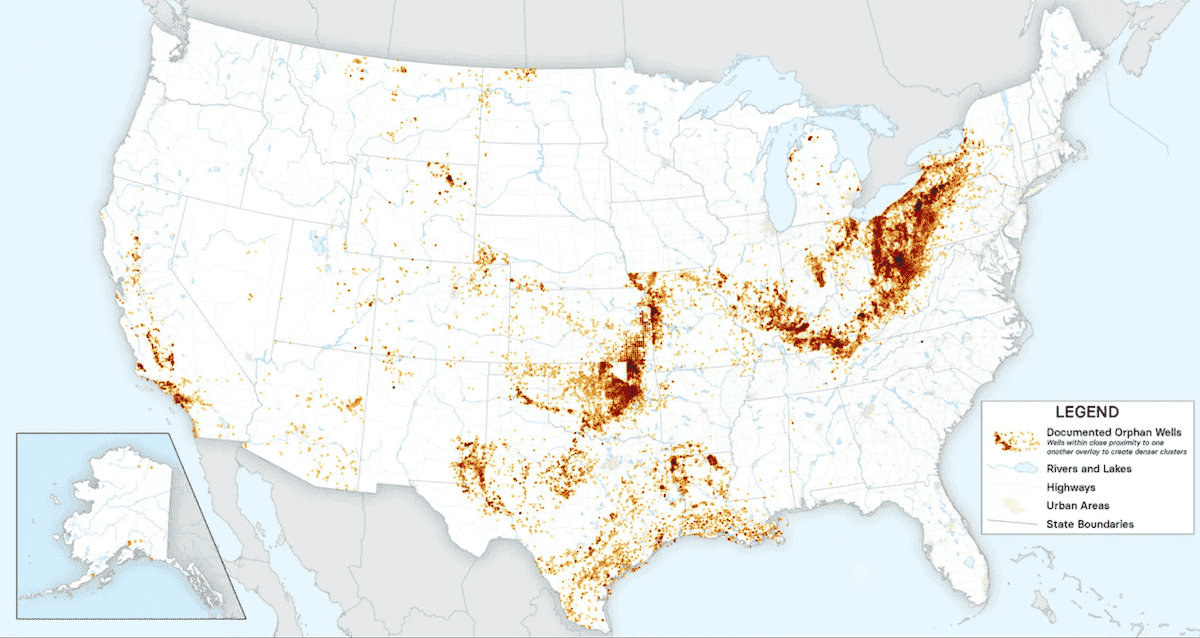
As of 2022, over 14 million people in the United States live within one mile of a documented orphaned well (see Exhibit 1). Researchers have identified over 120,000 documented orphaned wells in the United States and Canada and estimate 10 times more undocumented wells. However, these estimates quickly become outdated: every year, more wells become documented orphans (either because undocumented orphans become documented or because abandoned wells become orphaned).
Why orphaned wells aren’t going away any time soon
Orphaned well crediting projects address systemic gaps in well plugging efforts from existing policies and regulations, which require operators to “plug and abandon” a well once it has ceased production, permanently sealing the well with cement and returning the site to its original condition. In practice, the existing policy environment has failed to ensure all orphaned wells get plugged in the following ways:
-
Recordkeeping and inventories are inconsistent and fragmented: Some wells were drilled in the mid to late 1800s and thus lack ownership records, maintenance history, or coordinates to locate them. For example, estimates show there could be as many as 700,000 orphaned wells in Pennsylvania, but only 30,000 were documented by 2025. No single inventory exists to cover all orphaned wells in the United States and Canada, which hinders efforts to solve the problem.
-
Unwanted wells can legally change hands numerous times before finally becoming wards of the state: In the run of business, operators can go bankrupt or sell an unwanted well to another company with a slimmer cost structure. When this happens, most states require neither additional financial assurance from the new owner nor disclosure of the new owner. Such transactions can occur many times before a well is orphaned.
-
State and provincial governments have inadequate funding and capacity: Governments collect financial assurance from operators — largely through bonds — to fund well clean up. However, most regulators have inadequate funding, outdated bonding requirements, and limited capacity for enforcement. In some jurisdictions, the more wells an operator owns, the lower the bonding costs for each well. In other cases, an operator only needs to post a “blanket bond” to cover multiple wells. Ultimately, these policies severely limit the financial resources governments have to close wells. This shortage is most acute for wells that are remote, highly deteriorated, or dangerous, and thus more costly to plug.
-
Plugging costs and the scale of the problem exceed government resources: Plugging costs per well can range from thousands of dollars to hundreds of thousands of dollars and most regulatory agencies have decades-long backlogs of wells to plug. For example, Ohio has more than 21,508 known orphaned wells. In fiscal year 2025, it plugged 478 wells, only 1.3 wells per day. At that pace, Ohio will finish plugging its known orphans around 2070 without including wells that will be orphaned in the meantime. Orphaned wells are also competing with the many other priorities that regulators have, so jurisdictions triage well-plugging efforts based on the most urgent threats to communities, water sources, and livestock or wildlife, not solely based on methane emissions.
-
Even recent public infusions of funding have been a drop in the bucket: Since 2020, federal governments in the United States and Canada have provided roughly US$6 billion to plug orphaned wells. In November 2021, the US Infrastructure Investment and Jobs Act (IIJA) allocated US$4.7 billion for states to increase their capacity to find, monitor, and plug orphaned wells through 2030; US$1.5 billion has already been disbursed to states, which have plugged 10,257 wells as of June 2025. Yet, researchers estimate the cost to plug known orphaned wells in the United States will surpass this funding by 30%–80%. Similarly, the Canadian federal government allocated CA$1.7 billion for well clean up in 2020 but more than half of Alberta’s funding went to solvent oil and gas firms. Despite inadequate federal funding in both countries, the inventories of orphaned wells in both countries are expected to grow.
Imperfect understanding of orphaned well behavior
The oil and gas industry has decades of experience both managing the risks and economic tradeoffs of production, with standard practices that include:
-
maximizing revenue by continuously monitoring, modeling, and optimizing production volumes;
-
well-spacing requirements (also referred to as setback requirements) to ensure fair division of oil and gas resources among adjacent property owners and to protect correlative rights;
-
robust experience in identifying and managing production risks, including risks from inter-well fluid and gas communication during active operations; and
-
using cement to plug wells to control subsurface fluid migration.
However, by the time wells are orphaned, they have lost all routine monitoring, maintenance, and data collection. The VCM methodologies are thus an attempt to reconcile deep industry expertise in how to manage producing wells with profound uncertainty about how orphaned wells behave. The tradeoffs in this reconciliation are most acute in how the VCM establishes emission quantification (which affects over/under crediting), leakage, and permanence). We discuss how the methodologies approach these tradeoffs in subsequent sections, but this tension between the expertise from managing producing wells and the uncertainties in orphaned well behavior are critical context.
Uncertainty in emissions quantification: Orphaned well methane emissions are highly variable and hard to predict
Unlike active wells, orphaned wells have no economic value and their subsurface and emissions behavior has been largely understudied. Recent literature suggests that orphaned well emissions behavior is often intermittent and changes based on a wide range of factors such as well cement or casing degradation, subsurface pressure conditions, changing gas migration pathways, and the condition of wellhead equipment.
Uncertainty around physical leakage: The risk of emissions leakage between “connected” wells is unclear
Plugging’s impact on inter-well communication is not clear, and there are no peer-reviewed cases on the subject. In theory, plugging one well could mean the methane that would have been emitted migrates through the subsurface and out of a nearby unplugged well. Our consultation process uncovered anecdotes of wells showing increased methane emissions after the plugging of a nearby well, but it is unknown whether inter-well communication was responsible. It is also unclear whether modern-day well-spacing requirements would ensure that no inter-well communication occurs post-plugging. Compliance with well-spacing requirements are meant to limit pressure interactions and fluid pathways that would interfere with economical production and correlative rights, so may reduce this risk.
Limited empirical evidence on the durability of modern cement plugs
Neither the market nor industry have extensive data to identify how often and under what conditions cement plugs that meet current industry standards fail. The oil and gas industry has no need to monitor wells post plugging, so there’s no extensive data on plug failure. In addition, many wells have not been plugged for long enough to validate permanence claims up to the 20- or 50-year crediting period allowed by the available methodologies. Studies show that a non-trivial share of plugged wells can begin leaking again, indicating that plugging is not guaranteed to eliminate methane emissions permanently. But reported rates of leaking plugged wells vary widely, stemming from different study scopes and designs.
The carbon market expects methodologies to manage these uncertainties
The data gaps described here are not unique to orphaned well projects, but they are consequential in the context of crediting. VCM methodologies seek to manage these uncertainties through accounting protocols and safeguards, but each methodology is materially different (we compare their approaches in later sections). At the same time, the technical practices and knowledge of the oil and gas industry do not always align neatly with VCM accounting constructs or design expectations, which can lead to differing interpretations of risk and how risks should be mitigated for orphaned well carbon credits.
Project Activities for Orphaned Well Carbon Credits
The VCM has four issued methodologies for carbon credits from plugging orphaned oil and gas wells (see Exhibit 2).
Exhibit 2. VCM methodologies for plugging orphaned wells
| Standard | Methodology | Eligible Geography | Eligible Well Types |
|---|---|---|---|
| American Carbon Registry (ACR) | Plugging Orphaned Oil and Gas Wells in the U.S. and Canada, v1.0 (2023) [INACTIVE] | United States and Canada | Orphaned wells |
| BCarbon | Methane Emissions Elimination through Well Plugging (MEEWP), v2.1 (2025) | United States and Canada | Orphaned or abandoned* wells, must be non-producing for three months or more prior to project |
| CarbonPath | Methane Emission Removal Via Permanent Decommissioning of Orphaned and Abandoned Oil and Natural Gas Wellbores, v1.4 (2025) | United States and Canada | Orphaned wells** |
| Open Carbon Protocol (OCP) | Plugging Orphaned Oil and Gas Wells in the United States, v1.0 (2025) | United States | Orphaned wells |
Generating orphaned well carbon credits: How it’s done
An orphaned well project receives carbon credits for the methane emissions that would have occurred if the well had remained orphaned and unplugged. This means credits earned equal the difference between the emissions in the baseline scenario (where the well is left unplugged) and the project scenario (where the well is plugged).
All projects follow the same general steps from project initiation to completion:
-
Find an eligible well.
-
Search for an active leak and contain the leak when necessary.
-
Determine the baseline emissions from the well.
-
Plug the well and reclaim the well site.
-
Estimate avoided methane emissions by comparing baseline emissions to emissions in the project scenario.
-
Monitor for methane emissions post plugging.
-
Verify emissions reductions and claim carbon credits.
This section describes these processes and the different approaches explicitly required or permitted by the existing methodologies.
Step 1: Find an eligible well
Project developers must ensure each well they plug meets specific criteria to be considered “orphaned”:
-
The well must be unplugged or plugged poorly.
-
The well must have no solvent operator.
-
If targeting a documented orphaned well, the developer must ensure the well is on a state or province’s inventory of documented orphaned wells.
-
To confirm the well is an undocumented orphan, the project developer must check historical documentation, production records, well lists, and work with its state or provincial regulator to ensure no solvent operator is present. This can be time-consuming.
Step 2: Confirm the well is leaking and thus eligible for crediting
To begin step two, the developer must secure permission from the landowner to visit the site. To confirm that the well is eligible for crediting, the developer must confirm that the well is actively leaking methane in its unaltered state. The methodologies do not require developers to use specific technology to confirm a leak, but developers often use an optical gas imaging (OGI) camera or a methane “sniffer” to visualize methane or detect its presence in the air. Neither technology quantifies the size of the leak, which is done later.
The project developer notes the original conditions at the well site, such as where the leak is occurring and the state of the wellhead, then makes the site safe by securing the leak when required. Federal, state, and provincial regulations require the project developer to use short-term measures to control the flow of gases from the well if they are posing a significant risk to human health and safety.1 Working with oil and gas wells is dangerous and potentially fatal if the appropriate safety requirements are not followed.
Step 3: Determine baseline emissions from the well
The project developer must establish a baseline emissions scenario before plugging the well.
Each methodology uses a slightly different strategy for estimating baseline emissions, but all have three broad phases (see Exhibit 3). Some developers exceed the methodology requirements or have secured registry approval to use an alternative approach. These approaches are assessed further in the Risk Analysis and Mitigation Measures section.
Different baseline assumptions can lead to different crediting outcomes. For example, keeping all other factors constant, using a flat emissions rate over the crediting period would result in a higher volume of credits than a declining emissions rate. Similarly, baseline emissions derived from measurements of a current leak rate may produce lower initial emissions estimates compared to measurements of unconstrained flow potential. These methodological choices reflect different tradeoffs and assumptions about orphaned well behavior and are discussed in more detail in the Emissions Quantification section.
Step 4: Plug and remediate the well site
Once pre-project monitoring is complete, if the developer has not already, it must legally “adopt” the well as a bonded operator in certain jurisdictions and take responsibility for plugging the well. Then, the project developer permanently seals the well shut through a process called plugging and abandonment (P&A) (for more information on P&A, see Appendix A). Exhibit 5 shows a typical conventional wellbore after plugging.
Exhibit 5. Diagram of a typical conventional well After P&A.
RMI Graphic
Step 5: Estimate avoided methane emissions from plugging
Exhibit 6 summarizes how each available methodology calculates total emissions in the baseline and project scenarios, including which global warming potential (GWP) is used to estimate the climate impact of methane.
| Methodology | Description of Baseline Emissions | Description of Project Emissions2 | Crediting Period | GWP* |
|---|---|---|---|---|
| ACR [Inactive] | Flat extrapolation of current emissions rate or future (potential) emissions rate.3 | Includes fossil fuel emissions from well plugging. | 20 years | 100 year |
| BCarbon | Future (potential) emissions volume based on a production decline curve, and discounted based on BCarbon’s leak probability model. | Includes materials emissions from the plugging cement, fossil fuel emissions from well plugging, and any methane vented during well measurement. | 20 years | 20 year default (100 year allowed) |
| CarbonPath | Flat extrapolation of current emissions rate. | No emissions counted for project scenario. | 50 years | 100 year |
| OCP | Future (potential) emission rate extrapolated at a declining rate based on average terminal decline rates or a volumetric analysis informs emissions volume. | Includes materials emissions from the plugging cement and fossil fuel emissions from well plugging. | 20 years | 100 year |
* GWP is measured over either a 20-year or 100-year period. Over a 100-year period, methane is approximately 29.8 times more powerful than carbon dioxide. Over a 20-year period it is approximately 81.2 times more powerful than carbon dioxide.
Step 6: Monitor for plug leaks and failure
After plugging, the project developer must check for methane emissions from the well and confirm that the plugs are holding properly. Some standards require project developers to revisit the well for a second check 12 to 18 months after plugging (see Exhibit 7).
| Methodology | Post-Plugging Monitoring Requirements |
|---|---|
| ACR [Inactive] | One post-plugging test required. |
| BCarbon | Two post-plugging tests required, with second test conducted on or around one year after plugging. |
| CarbonPath | One post-plugging test required if using a measurement approach; if using standard credit volume approach, no post-plugging test required. |
| OCP | Two post-plugging tests required, with second test conducted 12–18 months after plugging. |
Step 7: Verify project and earn credits
Carbon standards differ in their approach to when credits are issued (see Exhibit 8).
| Standard | When Credits Are Issued |
|---|---|
| ACR [Inactive] | All credits issued upon verification of plugging. |
| BCarbon | 80% of total credits issued upon project plan review, and remaining 20% issued after the second post-plugging test. |
| Carbon Path | All credits issued upon verification of plugging. |
| OCP |
Upon verification: 70% of total credits issued, minus first 18 months of baseline emissions (a “holdback” in case of non-permanence). After plug performance test: remaining 30% of credits issued plus first 18 months of baseline emissions. Where a developer has plugging insurance, only the 18-month holdback is retained by OCP until after second post-plug test. |
Market Snapshot
ACR issued the first orphaned well methodology in 2023, and three new methodologies have been released since then. Together, the VCM methodologies have issued over 8.2 million credits in the United States and Canada, representing less than 1% of total credits from the energy sector (see Exhibit 9). In May 2025, ACR deactivated its methodology for orphaned wells, citing the need to “update requirements to ensure consistent and appropriate application across diverse project sites.” Verra and the Climate Action Reserve (CAR) are exploring whether to create their own methodologies for plugging orphaned wells.
| Standard | Credits Issued | Credits Retired | Registered Projects |
|---|---|---|---|
| ACR [Inactive] | 4,898,183 | 960,028 | 23 |
| BCarbon | 2,694,993 | 0 | 8 |
| CarbonPath | 577,689 | 2,888 | 47 |
| OCP | 115,594 | 0 | 2 |
| TOTAL | 8,286,459 | 962,916 | 80 |
Risk Analysis and Mitigation Measures
We analyzed the severity and prevalence of risks to credit quality based on the existing methodologies (see Exhibit 10). This analysis is not a replacement for project-level due diligence: each project is unique and some use practices that exceed methodological requirements (for more information on our analysis, see Appendix B). Today, virtually all orphaned well projects plug conventional wells, for which the risks and mitigation measures are better understood. As more unconventional wells become orphaned, the risk profile for this credit type may change.
Overall, orphaned well projects demonstrate strong quality profile (i.e., low risk) against three metrics:
-
Strong case for additionality: The scale of the problem and insufficient public funding means most projects show financial and regulatory additionality.
-
Emerging best practice: Developers should work closely with the regulators and create the documentation needed to demonstrate that the wells targeted by the project were not going to be imminently plugged by the government.
-
-
Manageable risk of bias in emissions measurements: Methane emissions measurements are sensitive to environmental conditions, measurement protocol, and wellhead configuration.
-
Emerging best practice: Developers can maximize the length and number of measurement campaigns, transparently report their protocols and data collected, cross-check measured leak rates with historical data, and rely on third-party expertise in well behavior and measurement where feasible.
-
-
Significant co-benefits: Projects protect water quality, reduce public safety risks, and clean up toxic environmental pollutants and hazards.
-
Emerging best practice: Some project developers revegetate soils with diverse, native plants, and work with local partners to ensure long-term social and environmental impacts are monitored.
-
The core quality challenge for these projects stems from the uncertainty and lack of established data to demonstrate the emissions profile and leakage potential of how orphaned wells behave over time.
| Quality Criteria | Risk Severity | Risk Prevalence |
|---|---|---|
| Additionality | Low Severity | Uncommon Prevalence |
| Leakage4 | Not Enough Information | Not Enough Information |
| Permanence5 | Medium Severity | Not Enough Information |
| Monitoring, Reporting, and Verification (MRV) | Low Severity | Common Prevalence |
| Emissions Quantification | Medium Severity | Very Common Prevalence |
| Social-Environmental Impacts | Low Severity | Uncommon Prevalence |
Additionality — Low severity, uncommon prevalence
Key takeaways for buyers:
Orphaned well plugging faces two additionality barriers: (1) existing policies are meant to prevent the creation of orphaned wells, and (2) once orphaned, the state or provincial government is responsible for plugging a well. In practice, these policies have significant gaps that provide limited financial coverage for plugging and allow more wells to become orphaned every year, creating a strong case for the additionality of these projects.
Buyers can alleviate any concerns about additionality by ensuring that the project developer communicates with the local regulator early and transparently. Buyers can also request documentation from the project developer demonstrating the well is ineligible for state or provincial funding, that the government authority had not prioritized the well, or that the government authority does not intend to plug the well.
Surety requirements are largely insufficient, and the problem is so vast and expensive that state and provincial governments cannot tackle it alone: As described in the context section, most jurisdictions have significant backlogs of orphaned oil and gas wells to plug that exceed the available funding and plugging capacity. While some states are reevaluating their surety requirements, most bonding requirements are not likely to be strengthened anytime soon and may be weakened. Moreover, strengthening bonding only addresses future liability; it neither helps regulators tackle their current backlogs nor allows them to find the hundreds of thousands of undocumented orphaned wells.
Savvy buyers should assess additionality on a case-by-case basis, ensuring the project developer has engaged the local regulator early, and targets wells not prioritized for plugging.
Plugging wells with high emissions rates may be less additional in jurisdictions where the regulator prioritizes plugging large methane emitters: A minority of orphaned wells leak methane at high rates and may trigger local health and safety concerns. In the abstract, these wells appear to be obvious candidates for government intervention without carbon finance. In practice, most government agencies are operating with multiyear backlogs and generally triage wells based on proximity to communities or other orphaned wells, potential water contamination, and impacts on livestock and wildlife, not solely based on the rate at which they leak methane. Some jurisdictions include methane emissions as one of many factors to consider in their effort to triage wells.
As every jurisdiction is different, diligent buyers should approach additionality on a case-by-case basis and look for one of the following to confirm additionality:
-
A statement or documentation from the relevant government authority demonstrating the well was not prioritized for plugging
-
Documentation that the well was not eligible for state or provincial funding
-
An attestation from the relevant government authority that it does not intend to plug the well or claim emissions reductions from its plugging
Leakage — Not enough information on severity, not enough information on prevalence
Theoretically, plugging one well may lead to physical “leakage” outside the project boundary, where methane escapes out of other nearby unplugged wells due to inter-well communication. However, there are no empirical studies that capture this issue post-plugging.
The standard-setters have taken different approaches to the significance of this potential risk and the required mitigation measures, but diligent buyers can look for one or more of the following:
-
The project’s wells meet the jurisdiction’s current well spacing requirements (this is an explicit OCP requirement)
-
The developer applies a leakage deduction of 5% (ACR and BCarbon require a standard 5% “uncertainty” discount; OCP requires a 5% leakage deduction when well distancing is unknown, or when a well occurs within setback distance)
-
The developer consults an experienced geoscientist or petroleum engineer to assess connectivity with other wells
-
The project developer monitors surrounding unplugged wells for increases in methane emissions, although this may not be financially or logistically feasible
There is virtually no risk of market leakage from orphaned well projects: In theory, market leakage would occur if plugging an orphaned well caused significant changes in oil and gas supply that leads operators to increase oil and gas exploration elsewhere. In reality, orphaned wells are stranded assets, unwanted by the oil and gas industry and at the end of their economic lives. Permanently plugging an orphaned well is not preventing operators from producing oil and gas, because if it were economical to do so, the well would not have become orphaned. Our analysis found no examples of orphaned wells being brought back into production.
Plugging’s impact on inter-well communication is unclear, but in theory, plugging one well could cause methane migration up and out of nearby unplugged wells due to subsurface inter-well communication: Petroleum engineers we consulted noted that plugging a well should not create a driving force for methane migration on its own. While we also uncovered anecdotes of wells showing increased methane emissions after the plugging of a nearby well, it is unclear if these instances were a result of inter-well communication or simply due to well integrity deterioration. To date, there are no peer-reviewed cases demonstrating that plugging one well causes methane migration from other wells, so neither the severity nor the prevalence of this risk is known. Ongoing research into the role of well spacing in preventing leakage from unplugged wells, including in relation to geological carbon dioxide storage projects, may inform best practices for orphaned well projects in time.
Without an empirical basis for methane migration risk post plugging, buyers should do one of the following:
-
Ensure the project orphaned well meets or exceeds local spacing requirements from other unsecured wells; this is explicitly required by the OCP methodology
-
Apply a 5% leakage deduction; a standard 5% “uncertainty” discount is required by ACR and BCarbon, while OCP requires an explicit 5% discount for leakage where spacing compliance is uncertain or when a well occurs within the setback distance
-
Consult an experienced geoscientist or petroleum engineer to assess the risk of inter-well communication where there is significant uncertainty
-
Monitor emissions of nearby unplugged wells; this is the most conservative approach but may be cost prohibitive or impossible due to land access restrictions
Permanence — Medium severity, not enough information on prevalence
Key takeaways for buyers:
Existing standards only require emissions monitoring post-plugging either immediately after plugging or up to 12–18 months after plugging. This approach risks missing a failing plug or failing wellbore integrity years or decades after project implementation, allowing methane emissions to re-start and project benefits to be reversed over time.
Buyers can mitigate risks of non-permanence by looking for projects that:
-
Follow the American Petroleum Institute (API) Recommended Practice 65-3 for permanent abandonment, if the jurisdiction’s requirements are less stringent,
-
Monitor for leaks throughout the crediting period where logistically possible, and
-
Use enhanced quality assurance/quality control during plugging (e.g., retaining mixing records, slurry testing, retention of cement samples for analysis).
There are no comprehensive studies of post-abandonment methane leakage rates, so our analysis cannot conclude how frequently orphaned well crediting projects face non-permanence risk.6 Regardless, plugged wells can still leak. Reasons include failure of the cement or cement bond, geological stressors and seismic shifts, and thermal and chemical stress, all of which can create gas migration pathways and allow methane to seep to the surface.
Current orphaned well-plugging methodologies require virtually no long-term leak monitoring after plugging (see Exhibit 11). Integrity failures occurring beyond 12–18 months after plugging would be missed by the project developer unless they exceed requirements. Longer-term monitoring would be consistent with established VCM practices for managing uncertainty in permanence when there is an established possibility of reversal. For example, land use and forestry, energy efficiency, landfill methane recovery projects, and many other project types must conduct repeated monitoring throughout the crediting period to detect reversals. While orphaned well credits do not face risks such as wildfire or land-use change, they do face long-term uncertainty in the durability of well barriers.
| Methodology | Post-Plugging Monitoring Requirements | Other Non-Permanence Mitigation Measures |
|---|---|---|
| ACR [INACTIVE] | One post-plugging test required. | 5% “uncertainty” discount (see Leakage). |
| BCarbon | Two post-plugging tests required, with second test conducted on or around one year after plugging. |
20% of credits held until second test. 5% “uncertainty” discount (see Leakage). |
| CarbonPath | One post-plugging test required if using a measurement approach; if using standard credit volume approach, none required. | N/A |
| OCP | Two post-plugging tests required, with second test conducted 12–18 months after plugging. |
30% of credits plus 18-month of baseline emissions held until second test. Project may purchase insurance that covers cost of replugging should plug fail in first year, then only the 18-month holdback is retained by OCP until after second post-plug test. |
Buyers can mitigate non-permanence risk by prioritizing projects that do the following:
-
Monitor for leaks throughout the duration of the crediting period: this may be achieved periodically with methane sniffers or OGI cameras, or ideally through continuous emissions monitoring to detect intermittent leaks. It should be noted this kind of monitoring is not always feasible, such as when the well is buried, or when the developer cannot obtain access to the site from the surface owner.
-
Follow the American Petroleum Institute (API) Recommended Practice 65-3 for permanent abandonment, if the jurisdiction’s requirements are less stringent.
-
Use enhanced quality assurance and quality control processes during plugging, such as retaining field logs, cement mixing records, and samples.
These additional measures show that non-permanence risk can be actively managed. Over time, orphaned well carbon projects can play a meaningful role in advancing our understanding of plug failure by generating data on when, where, and why post-plugging methane leaks occur.
Monitoring, reporting, and verification (MRV) for baseline emissions — Low severity, common prevalence
Key takeaways for buyers:
Most orphaned well projects face uncertainty in how their baseline emissions are measured and reported (excluding BCarbon projects, which are only required to model emissions [see Emissions Quantification]). Baseline emissions measurements rely on many conditions that can influence observed emissions rates, including wellhead configuration, environmental factors, and instrument performance.
Current methodologies mitigate these challenges by requiring developers to disclose wellhead condition prior to securing a well, manipulation of equipment or valves at the wellhead, measurement procedures, and requiring stable pressure and flow measurements over prescribed testing periods.
Buyers should look for projects that use calibrated instruments for measurement or third-party experts qualified in methane emissions measurement techniques (when feasible). Projects should also provide complete and transparent protocols for auditing wellhead manipulation and measurements, maximize the number and duration of measurements taken, and, when possible, apply conservative upper bounds to measured flow rates using well production history.
Methane emissions measurements are sensitive to wellhead configuration, valve settings, flow stabilization, the time and duration of measurement, and environmental factors such as ambient temperature or wind speed and direction. In addition, a project developer that has temporarily secured a well must reopen it for measurement, at which point pressure regimes may have temporarily changed. The goal of all measurements is to capture an emissions rate that is as representative of the well’s current and future emissions behavior as possible, but these uncertainties and sensitivities can make that challenging.
The ACR and OCP methodologies require measurements of emissions rates to be stable over prescribed testing periods. CarbonPath does not provide measurement requirements. To further reduce uncertainty, buyers can look for projects that exceed current requirements, recognizing these mitigants can increase effort and cost and may not always be feasible:
-
Use qualified third-party experts for securing and measurement when possible, such as independent methane measurement experts and licensed professional engineers with well integrity and emissions quantification expertise.
-
Provide thorough measurement protocols that document pre-secured well conditions, procedures for securing and reopening the wells, any manipulation of wellhead equipment, and measurement approaches. For the latter, there should be robust reporting on test duration, bursts of gas from pressure build-up, and any other noticeable changes prior to baseline measurements.
-
Maximize the number of measurements taken, take measurements over longer periods of time, and take measurements during different weather conditions and seasons, when possible, to reduce uncertainty.
-
When historical production data is available, compare baseline emissions rates with the daily average gas production rate to ensure baseline emissions do not exceed the gas volumes that the well produced.7
Emissions quantification — Medium severity, very common prevalence
Key takeaways for buyers:
The volume of credits a project earns depends on the baseline methane emissions estimation, how the project values methane’s climate impact (20- versus 100-year GWP), and how long baseline emissions are assumed to persist without intervention (20- versus 50-year crediting period).
Standard setters have not yet reached consensus on which baseline approach, GWP, and crediting periods to use. Conservative approaches can reduce over-crediting risk, and the most conservative approaches available use a declining baseline methane emissions rate, a 100-year GWP, and a shorter crediting period. However, being overly conservative risks under-crediting the project, thereby undercounting the climate impact of reducing orphaned well emissions, and limiting economic incentives to stop leaks.
There is currently no market consensus on which baseline methane emission estimation methods are most appropriate: The available methodologies (listed below) use different protocols with different assumptions about the future emissions from an orphaned well.
-
Measuring current emissions and extrapolating it at a flat rate across the crediting period (CarbonPath, and previously ACR 8) :
-
Benefits : Simple and grounded in direct measurement of a leak that is known to be occurring today.
-
Drawbacks : Does not account for fluctuations in methane emissions rates that can occur over time.
-
-
Measuring unconstrained emissions (“potential to emit” approach) and extrapolating at a terminal decline rate (primary OCP approach) :
-
Benefits : Captures the full potential of a well to emit methane rather than an instantaneous leak; likely realistic as one study shows that many orphaned wells settle into a steady annual production decline; more conservative than a flat extrapolation of unconstrained flow rate.
-
Drawbacks : Terminal decline is well understood in a production context but may not be appropriate for non-producing wells; there is uncertainty in how much of the “potential emissions” would actually leak over the crediting period.
-
-
Modeling future methane leak volume with a decline curve (BCarbon) :
-
Benefits : Grounded in decline curve analysis, a commonly used production volume estimation model, instead of relying on methane leak measurements that may be intermittent.
-
Drawbacks : Decline curve analysis is designed to forecast controlled production of gas and may not be applicable to forecasting a leak from a nonproducing well; decline curves have uncertainties tied to data quality and model assumptions; requires extensive production history, which orphaned wells do not always have.
-
-
Modeling methane emissions volume using a volumetric analysis of reservoir contents (alternative OCP approach where measurement is not feasible) :
-
Benefits : Grounded in volumetric analysis, a production estimation practice used by petroleum engineers, which provides a defensible upper boundary of methane available to emit.
-
Drawbacks : Designed to estimate volume of gas available to leak and may not be a suitable proxy for forecasting a leak from a nonproducing well.
-
In the absence of market consensus, buyers should recognize that all approaches predicting orphaned well baseline methane emissions involve uncertainty. Where feasible and safe, direct measurement approaches should be prioritized as they anchor estimates in observed behavior. Conservative accounting can also mitigate the risk of over-crediting: assuming a declining baseline emissions profile and choosing a shorter crediting period can limit credit volumes.
Finally, developers may incorporate the probability of a leak worsening over the crediting period to backstop forecasted baseline emissions under the “potential to emit” approach. This is required by the BCarbon methodology (called their “Leak Probability Model”), which asks the developer to make a deduction to the forecasted methane volume based on factors such as shut-in date.
There is an ongoing debate among methodology developers and researchers on which GWP is most appropriate: Methane stays in the atmosphere between 7 and 12 years, but causes intense warming in that time, which makes the choice of GWP crucial to estimating a project’s climate impact. Currently, developers can choose between two values:
-
GWP100: Measures methane’s warming potential over a 100-year period, where it is approximately 29.8 times more powerful than carbon dioxide. ACR, OCP, and CarbonPath only accept GWP100, and BCarbon allows the use of GWP100.
-
GWP20: Measures methane’s warming potential over a 20-year period, where it is approximately 81.2 times more powerful than carbon dioxide. Only BCarbon uses GWP20 as the default.
The debate between GWP20 and GWP100 is about which is a more accurate approximation of the project’s climate impact. Using GWP20 is considered a fairer way of valuing methane’s true climate impact, as it more directly reflects methane’s immediate impact on the atmosphere. But a project developer that uses GWP20 instead of GWP100 will yield nearly three times more credits for the same volume of avoided methane emissions, which can risk allegations of over-crediting. Until the market reaches a consensus, buyers will need to decide which GWP best aligns with their own valuation of the climate impact of methane.
The crediting period for orphaned well projects is essentially arbitrary, but changing it can significantly alter crediting volumes: Since orphaned well emissions are variable and unpredictable — with leaks lasting for a few years to potentially over 100 years — and the time it may take the regulator to plug any given well is difficult to predict, the crediting period can be thought of as an accounting construct that artificially “caps” the number of credits a developer can claim.
The ACR, BCarbon and OCP methodologies set 20-year crediting periods. CarbonPath allows for a 50-year crediting period, but this is based off a current leak rate rather than leak potential, which yields a lower starting baseline leak rate and could balance out the longer crediting period. There is no market consensus on what an “appropriate” crediting period might be for an orphaned well project, and our interviews with methodology developers indicate that more research is needed into how orphaned well leaks act over time.
Social and environmental impacts - Low severity, uncommon prevalence
Key takeaways for buyers:
Orphaned well-plugging projects have outsized benefits to communities and the environment. However, plugging carries some risk of negative impacts from occupational hazards and incomplete site remediation. There are also uncertainties in who rightfully owns the emissions reductions a project generates, but there are no documented cases of conflict occurring due to uncertain “carbon rights.”
Buyers can ensure the project developer mitigates these risks by engaging with the local community, landowner, all potential right title and mineral interest holder(s), and regulator(s) early and often. Buyers can also prioritize projects that go beyond standard requirements for environmental restoration, stakeholder engagement, and impact monitoring.
Although each jurisdiction has different requirements for site reclamation after plugging, few require robust ecological restoration: Regulators across the United States and Canada require that P&A ends with some level of site reclamation, with the goal of removing immediate hazards, eliminating significant pollutants, and returning the site to a sufficiently safe condition for humans and wildlife. However, reclaimed well sites often do not return to a thriving ecological state; instead, they have less biodiversity, more invasive species, and poorer soil quality even decades following restoration.
When and where possible (e.g., with landowner permission), buyers should look for projects that implement site-specific ecological restoration. This means removing contaminated soils, regrading soils to minimize erosion, and revegetating soils with diverse, native plants in consultation with an expert in local ecology. To ensure long-term success — or to secure additional certifications such as biodiversity credits — projects may conduct monitoring for biodiversity and species establishment throughout the crediting period.
Orphaned well projects have uniquely complex carbon rights: Orphaned wells can occur on private, state, federal, or Tribal lands where rights to underlying mineral resources, operating rights, leased minerals, land use, and land access can be complex. This creates ambiguity in who owns the carbon credits generated from well plugging emissions reductions, or in other words, who holds the “carbon rights.” Neither the United States nor Canada has a legal framework explicitly defining carbon rights, so in the case of an orphaned well project, the carbon rights could be interpreted as an extension of surface rights, mineral rights, or pore rights.
-
Surface rights include the right to use, access, and control the land’s surface, for example, the right to farm the land or build and maintain structures on land. In the United States and Canada, surface rights are held by whoever owns the title to the land (i.e., the landowner).
-
Mineral rights include the ownership of and right to produce hydrocarbons from the well. In the United States, the landowner typically owns the mineral rights and can lease them to oil and gas operators, but mineral rights can also be owned separately in “split estate” scenarios. In Canada, mineral rights are largely held by the provincial government and are leased to oil and gas operators. When an operator orphans a well, the mineral rights theoretically revert to the well’s original owner.
-
Pore rights include the rights to the pore space, the empty space between rock formations where gases can accumulate. In the United States, pore space is generally owned by the surface landowner with some exceptions. In Canada, pore rights are not always well-defined, but in Alberta, they lie with the government.
No standard-setter or regulator has explicitly tied surface rights, mineral rights, or pore rights to orphaned well carbon credits, and carbon rights remain an active area of debate, including among researchers of subsurface carbon storage projects. However, if carbon rights are not clear, the developer risks infringing on the rights of a landowner or mineral rights holder, especially where historical agreements are incomplete, outdated, or disputed. Standards have navigated this challenge by requiring developers to obtain “uncontested rights” to the emissions reductions generated by the project, generally through contracts with the landowner and/or regulating agency.
As more jurisdictions adopt explicit carbon rights frameworks, the question of who rightfully “owns” emissions reductions — and therefore who the project developer must contract with to implement a carbon credit project — may evolve. Until then, buyers should look for projects that engage early and transparently with the landowner, mineral rights owner, and regulating agency to obtain informed consent to implement a project.
The following are some minor hazards and other risks of environmental harm associated with well plugging activities:
-
Disturbance to nearby wildlife and habitats
-
Contamination of soil and water resources with drilling fluids, residual oil and gas, or other unintended spills
-
Occupational health and safety hazards associated with heavy machinery, pressurized equipment, chemical exposure, and rare accidents or explosions
-
Lack of engagement with communities around the well, who may be rural, low-income, isolated, and/or Indigenous.
All current methodologies require project developers to comply with local legal requirements for occupational health and safety. Some standards also set requirements to identify and consult with stakeholders, ensuring stakeholders can provide input or grievances to project developers. However, project developers are not generally required to monitor social and environmental impacts, nor involve communities in project design.
Diligent buyers can look for projects that go beyond registry and legal requirements for social and environmental safeguards by selecting projects that do the following:
-
Engage or partner with local businesses, universities, community members, regulators, and tribal governments: These partnerships can help a project developer identify and prioritize wells, identify safety or other concerns, reduce the risk of conflict, and build trust.
-
Implement multi-year environmental monitoring: Follow-up checks, where feasible, on relevant water sources, soil health, and flora and fauna health provide assurance that no delayed environmental issues are emerging.
These measures can add significant cost, time, and labor, and may not be reasonable for all projects. However, buyers willing to pay a premium for credits — especially through a forward offtake agreement — can support projects with measurable social and environmental benefits.
Future Direction
As current policy measures to address orphaned wells have largely proven inadequate, carbon finance remains a critically important tool to accelerate plugging across North America. Orphaned well projects offer a near-term, high-impact opportunity to reduce methane emissions from a key source — the oil and gas industry — for which methane reductions are both cost-effective and urgent. These credits can also complement longer-term decarbonization strategies by providing immediate emissions reductions while other avoidance and removal solutions scale. Finally, in addition to their climate impact, plugging orphaned wells delivers clear social and environmental benefits, protecting ecosystem services, reducing harmful pollution, and supporting rural and isolated communities that have long borne these environmental burdens.
The key challenge for this project type is that we lack robust data on orphaned well emissions, long-term plugging outcomes, and how plugging interacts with subsurface inter-well communication. Orphaned well carbon crediting projects can drive crucial data collection and the testing of novel approaches to bolster scientific understanding in these areas. The methodologies for orphaned well plugging are young, and methodologies under revision or development suggest that some of the largest standard-setters on the VCM are still finding their footing. As empirical data accumulates and both buyers and suppliers set expectations for project design, we can expect that standard-setters will coalesce around specific accounting and monitoring approaches, which will help bolster confidence in the integrity of this new credit type.
We are grateful to the Rao Foundation for their generous financial support for this project. We thank industry and technical experts who contributed insights and requested to remain anonymous. We are also grateful to the registries (OCP), project developers (CarbonX, Rebellion Energy Solutions, Tradewater, Well Done Foundation), regulators (Colorado ECMC, Pennsylvania Department of Environmental Protection), and industry participants and experts (AT&T, Brad Handler, Dan Romito, Dwayne Purvis, Environmental Defense Fund, Karl Haase, Mary Kang, MSCI, Nick Gianoutsos, and Nima Daneshvarnejad) who provided their expertise through interviews and comments.
Appendices
Appendix A: The plug and abandon (P&A) process
-
The wellbore is prepared for plugging: The developer prepares the site for safe and effective plugging, which may include removing wellhead components and other surface or subsurface obstructions that could compromise plug placement.
-
Plugs (also called barriers) are inserted at various depths in the wellbore: Permanent barriers are installed to isolate hydrocarbons, prevent the movement of fluids and gases, and protect groundwater. The number and location of required plugs vary across jurisdictions, but generally depend on well depth, fluid dynamics, and groundwater protection measures (see Exhibit 6). While most regulators require the placement of cement plugs at prescribed depths, the responsibility for designing barriers capable of gas isolation rests with the project developer. Most regulators explicitly require cement plugs, although jurisdictions vary in other accepted alternative materials or additives.
-
The placement and integrity of plugs is verified: Depending on jurisdiction requirements, the developer must use at least one of several available tests to ensure the depth and integrity of the plugs. Most regulatory bodies require confirming plug depth by "tagging" the plug with the weight of tubulars that were used for setting the plug. In some cases, developers may conduct a pressure test, applying hydraulic pressure above the plug and looking for changes in pressure that might indicate a leak, but testing beyond tagging is often at the discretion of the project developer.
-
The surrounding site is remediated: The regulating agency generally requires the project developer to remove remaining debris, surface equipment, and piping. In some cases, a jurisdiction may require the developer to move soil to restore a natural grade to the ground, clean up environmental pollutants, and install signage and fencing as needed to prevent access to the plugged well. Additional ecological restoration and monitoring is done at the discretion of the project developer.
-
Plugging is certified: The state or provincial government verifies that plugging has taken place, then issues a certificate of plugging to the project developer.
Appendix B: About the risk assessment
RMI reviewed resources from across the VCM and each credit type's sector to develop neutral, succinct risk profiles. We focused on the most crucial risks to quality, their drivers, how standards require projects to mitigate these risks, and how projects could mitigate these risks beyond the standard requirements. We mapped these factors to help stakeholders understand how to think about managing risk within a particular credit type.
We looked at both risk severity and prevalence, giving an average score for each based on all identified risks and their mitigation measures. Within each credit type, there may be multiple methodologies and activity types. We've generated risk profiles that provide the average risk severity and prevalence for the credit type broadly.
We define risk severity as the extent to which the identified risks threaten the integrity of the credit type. We reduce risk severity to match the effectiveness and feasibility of the current available and required mitigation measures in the literature. Our risk severity scoring options are as follows:
-
High severity means the identified risks seriously impact project credibility. These risks either do not have mitigation measures, lack effective mitigation measures, or the mitigation measures are difficult to access or apply on the part of the project developer.
-
Medium severity means the risks significantly impact project credibility, and mitigating the risks requires effort, going beyond basic methodology or standard requirements, on the part of the project developer.
-
Low severity means that the projects have some risk, but these risks are easily mitigated by the project, generally through methodology or standard requirements.
-
Negligible severity means there is little or no risk to a given criterion, and mitigation is not necessary.
-
Not enough information means there is no credible analysis or opinion in the literature on the relevant risks and mitigation measures that enable an informed decision.
We define risk prevalence as how likely it is that projects within the credit type encounter the risks we identified. To evaluate prevalence, we assessed the frequency with which credits would encounter each risk, regardless of whether the risk was mitigated. Our risk prevalence scoring options are as follows:
-
Very common means all or most credits in this type will encounter the risks identified (approximately 75% or more credits in the type).
-
Common means many credits (approximately 30%–75% of credits in the type) will encounter the risks identified.
-
Uncommon means fewer than half of all credits under the credit type will encounter the risks identified (approximately 10%–30% of credits in the type).
-
Rare means none or almost none of the projects/credits in the credit type will encounter the risks identified (approximately 10% or less of credits in the type).
-
Not enough information means there is no credible analysis or opinion in the literature on how often projects encounter these risks that enable us to make an informed decision.
Example of Risk Scoring
This can be put into perspective with an example: many nature-based credit types, like reforestation credits, face challenges with non-permanence, meaning it can be hard to guarantee that carbon stays stored in trees or soil over time. Factors like wildfires, extreme weather, and pests are often outside the project developer's control, and because these risks are inherent to nature-based projects, a typical assessment might flag “permanence” as "High Concern" and "Very Common."
Our analysis goes a level deeper, looking at how active methodologies and project developers work to address that risk. For example, this can be done through buffer pool contributions required by registries, or using additional tools like credit insurance and community-centered project design. If these mitigation measures are strong and widely adopted, we might downgrade risk severity to "Medium Concern," meaning the risk is still serious, but there are effective ways to manage it.