Report | 2026
An Introduction to Corporate Transition Assessments in India
A guide for bankers to assess the transition risks and opportunities of companies
CPI Authors: Neha Khanna, Gauri Tandon, Khaja Mohammad Haris, Divya Pinge, Kalpesh Gadha, Anjan Ghosh
Indian banks are critical to achieving our climate ambitions. Their actions can aid in the transition of hard-to-abate sectors and support the growth of green technology. This puts them in a unique position. As India progresses toward its net-zero target, policy changes and shifts in consumer demand may reduce the creditworthiness of the bank’s borrowers that are not climate-aligned.
At the same time, there is an opportunity to expand the loan book through investments in new green sectors and by having current borrowers institute transition efforts. Thus, as banks build the capabilities needed to manage the transition, their efforts must be informed by a deep understanding of how sectors and companies are evolving.
Corporate Transition Assessments (CTAs) offer a framework through which banks can build a bottom-up understanding of their client’s transition readiness. Banks have traditionally relied on historical data to structure products, do credit appraisals, and manage risk. However, climate change and transition are inherently uncertain. Historical factors may not always provide a representative picture of how sectors and clients are evolving. CTAs are designed to be forward-looking assessments that can help a banker piece together a company’s transition journey by assessing companies across three dimensions: i) strategy and ambition, ii) feasibility, and iii) accountability.
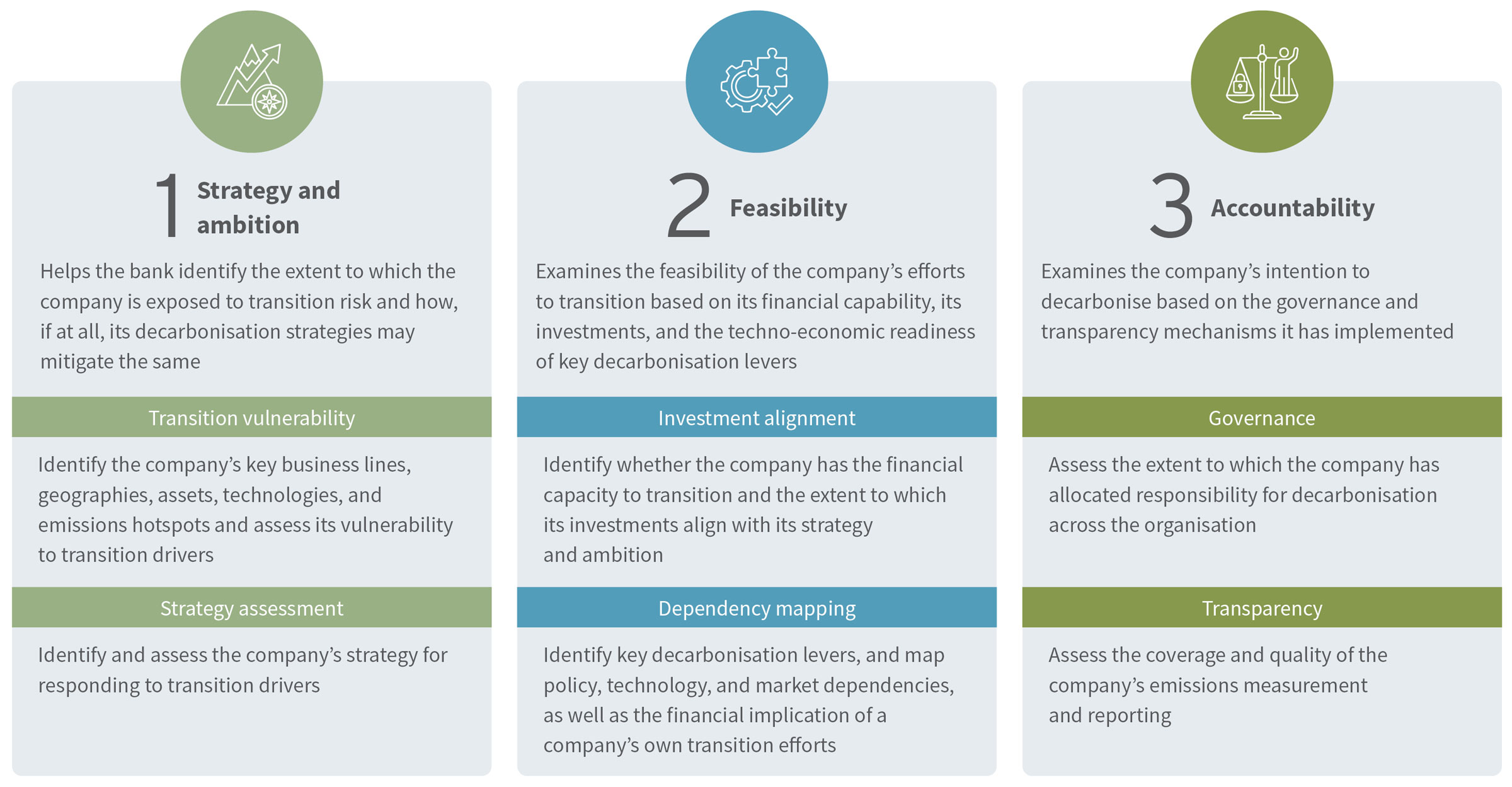
The CTA framework builds global approaches designed to help banks assess the credibility of transition plans. Since the Task Force on Climate-Related Disclosures framework, there has been a global push to codify the elements of a corporate transition plan and help regulators, banks and investors assess the credibility of transition plans. While useful and widely embraced, the CTA framework developed by RMI seeks to make these assessments more decision-focused through three measures described in the table below:
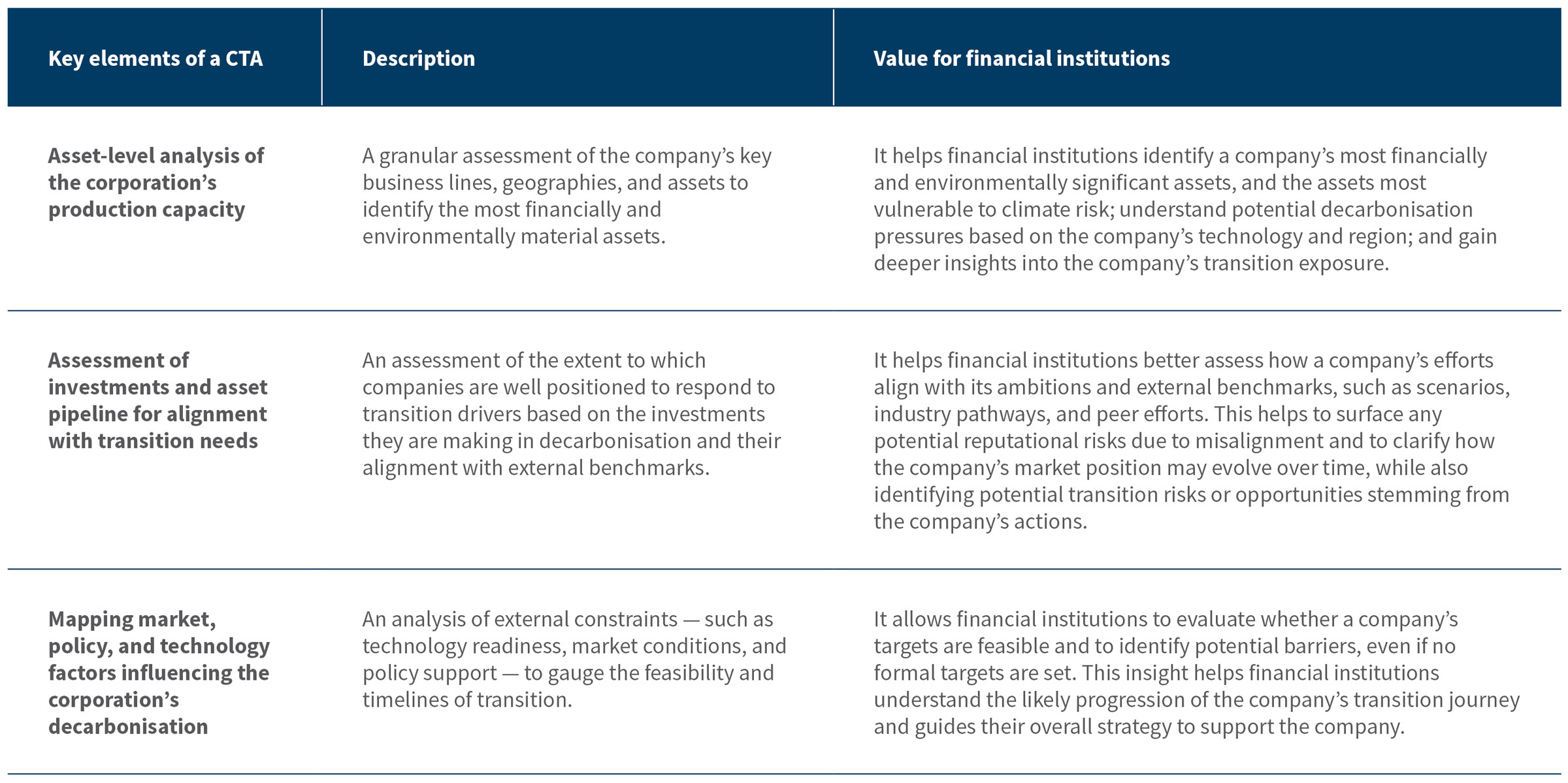
This ensures that CTAs offer useful insights across functions and banking teams. CTAs are intensive processes designed to help banks get deep insights into their clients, which can then be used by different teams to fulfill a variety of needs from decarbonization target setting and reporting to new product development, transition risk assessments, and client engagements. However given their intensive nature, CTAs are best done for priority clients and transactions.
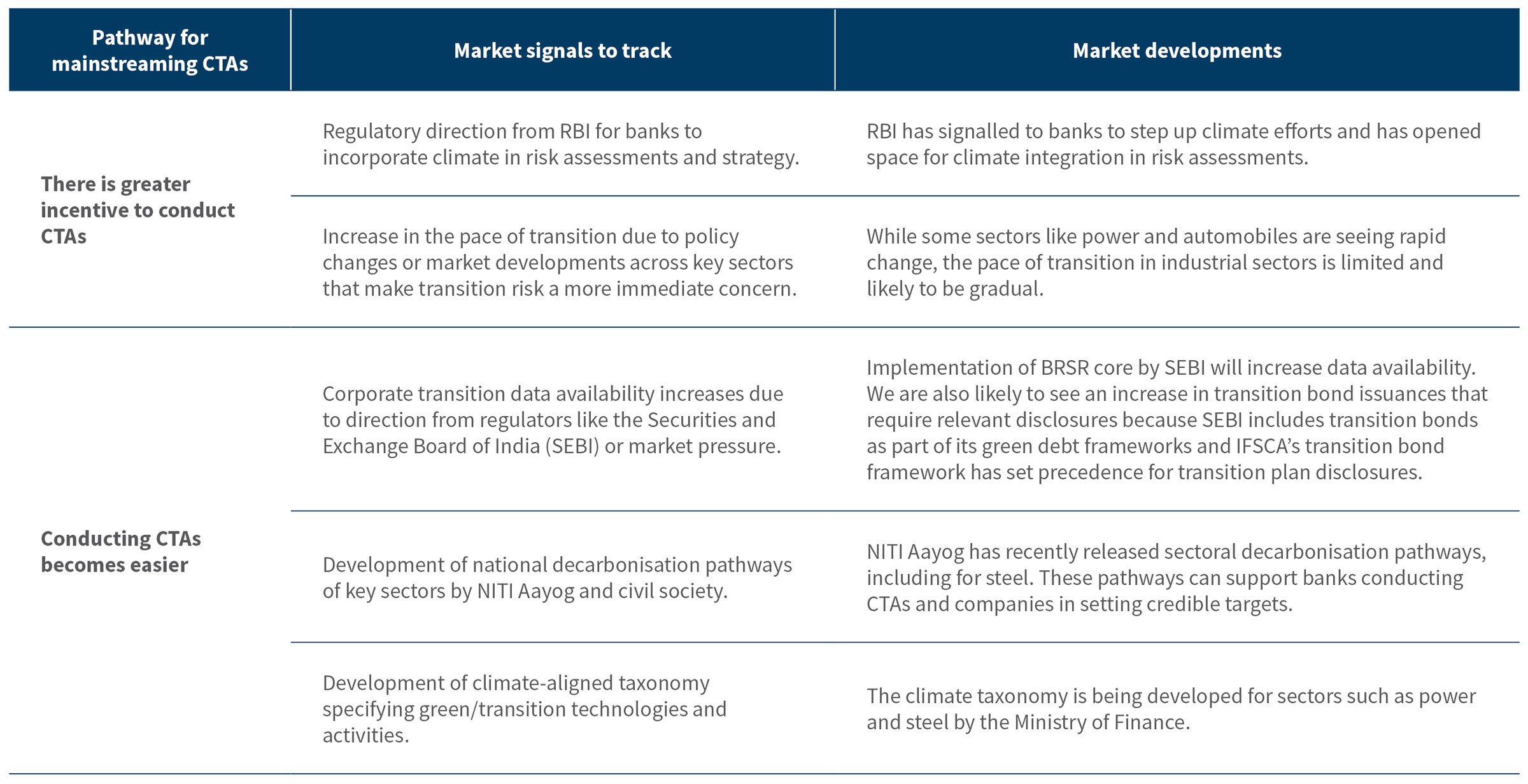
Looking ahead, we see the value and ease of conducting CTAs improving as regulatory and market enablers are established.