Skip to content
Book 2018

The Carbon-Free Regions Handbook: Electricity

By Jacob Corvidae, Laurie Stone, James Mandel, Matt Jungclaus, Peter Bronski, and Angela Whitney

Jump to Section

The future is electric. Buildings, vehicles, industrial processes, and consumer products are increasingly turning to electricity for power.

We must make sure that our sources for electricity come from renewable or zero-emission energy. Since utilities, electric grids, and rate design usually happen at a regional scale, this is a critical area to drive change.

Developed in partnership with the Under2 Coalition 

Action 10: Renewable Portfolio Standard

Description

Require electric utilities to secure a minimum percentage of their electricity from renewable generation sources, focusing on ambitious “reach” targets or even 100% renewable energy. This should be paired with an energy efficiency resource standard (See recommendation on Robust Regional Efficiency.

Action Documents

  • HB623. Hawaii state legislation enacting 100% RPS
  • Australian Capital Territory Next Generation Renewables Auction Request for Proposals

With 100% renewable electricity in 2020 locked in, we will reduce emissions by 40%. Our next challenge is net-zero emissions by 2045.

‐Shane Rattenbury, Minister for Climate Change, Justice, Corrections, Consumer Affairs, Mental Health, and Road Safety, Government of Australian Capital Territory, Australia

Action 11: Coal Plant Replacement

Description

Phase out coal-fired electricity generation through a combination of accelerated retirement for existing plants, emissions caps, a carbon tax, or other regulatory standards, and policies that prohibit financing of, and/or place an outright moratorium on, new coal-fired power plant construction. Provide viable alternatives in regions where coal-fired generation is expanding due to population and demand growth and rural electrification.

Action Documents

Action 12: Responsive Rate Design

Description

Require utilities to evolve from legacy “block” rates to technology-agnostic, modernized rate designs—such as granular time-of-use pricing and real-time dynamic pricing—that better reflect the reality of today’s and tomorrow’s grid, and that appropriately value the costs and benefits of distributed energy resources, energy efficiency, and flexible demand.

Action Documents

Action 13: Responsive Grid Planning

Description

Make distributed energy resources (DERs)—including customer-sited renewables, behind-the-meter storage, energy efficiency, and flexible demand—a central part of an integrated, modernized grid and resource planning process. Revise legacy processes that make sweeping assumptions about demand growth and meet that demand exclusively through centralized bulk generation.

Action Documents

Action 14: Community Solar

Description

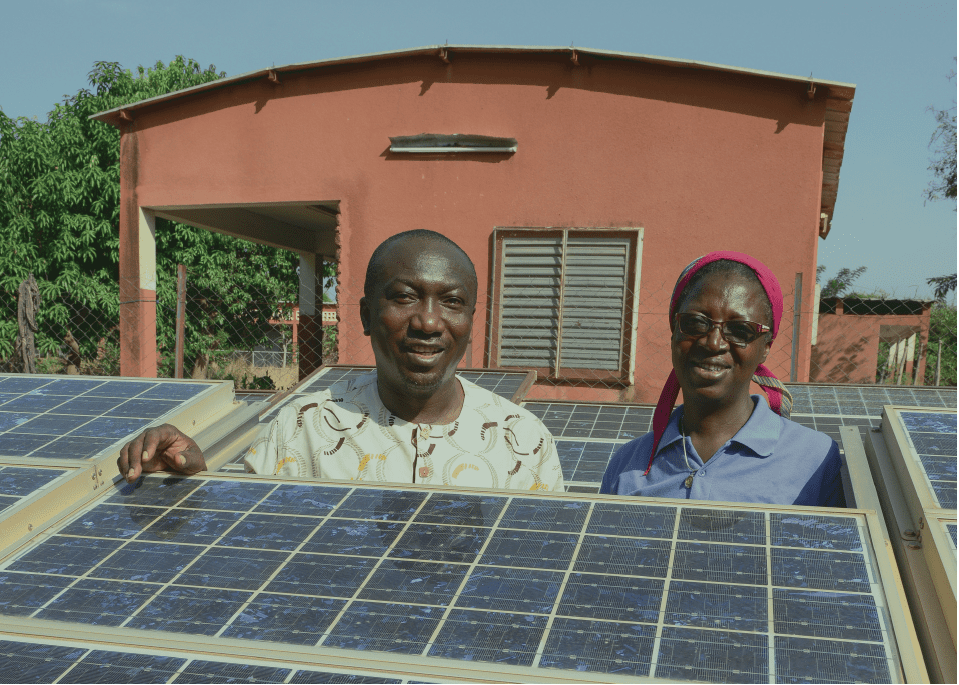
Make the benefits of distributed solar photovoltaics (PV) accessible and more affordable for customers beyond the reach of rooftop PV through community-scale solar PV projects located in or near the communities they serve. Leverage various combinations of fractional project ownership or investment, subscription to projects’ solar generation output, and virtual metering that credits a customer’s utility bill.

Action Documents

Minnesota’s success with community solar offers a valuable model for broad-based solar growth.

‐Bill Grant, Deputy Commissioner of Division of Energy Resources, Minnesota, USA

Engage with Us

Take action today and set your community on an ambitious course to carbon-neutrality bringing economic vitality, cleaner air, and better health and resilience.

Authors

Jacob Corvidae

Jacob Corvidae

Senior Principal
Laurie Stone

Laurie Stone

Managing Editor
James Mandel

James Mandel

Matt Jungclaus

Matt Jungclaus

Peter Bronski

Peter Bronski

Angela Whitney

Angela Whitney

Help build the clean energy future. Donate today.

Independent research. Real-world solutions. Supported by donors.

RMI can pursue the highest-impact climate and energy solutions because we’re supported by people who believe change is possible. Every gift helps advance the work needed to make clean energy the default choice worldwide.

For other ways to give to RMI, including checks or gifts of stock, please visit Other Ways to Give.