

Learn how we are working to transform how we use and produce energy.
Strategic Decarbonization Planning: Turning Vision into Value in Commercial Real Estate
Why we share this work for free
RMI is an independent nonprofit working to accelerate the clean energy transition. We publish research like this to inform decision-makers and drive real-world impact.
Our work is supported by philanthropy as well as partnerships, including fee-for-service engagements. This support makes it possible for us to share our independent insights for free.
If you find this work valuable, you can support it anytime.
Get more insights like this
Stay up to date with the latest research, analysis, and tools from RMI by opting in to receive occasional emails below. You’ll get new reports, event invitations, and practical insights to help us all accelerate the clean energy transition.
Loading form...
Your download should start automatically. If it doesn’t, click the download button below.
This work is made possible by philanthropy
RMI is a nonprofit supported by donors and partners. Philanthropy enables us to produce independent research and make resources like this freely available.
If you find this report valuable, please consider supporting our work. You can also explore how we partner with organizations to drive impact.
Jump to Section
Many real estate investors are looking to align building investments with sustainability goals, meet regulatory requirements, and drive long-term asset value creation. In this paper, we highlight replicable solutions to help real estate investors move beyond compliance and toward integrated decarbonization strategies that deliver value and turn climate goals into a competitive advantage.
The paper draws on real-world experience from CBRE’s management of client properties, Galvanize Real Estate’s decarbonization approach linked to financial incentives, and Hudson Square Properties’ 345 Hudson, a major commercial property in New York City undergoing a high-performance retrofit. It also incorporates insights from leading industry publications by Rocky Mountain Institute (RMI), the Urban Land Institute (ULI), and CBRE.
With vacancy rates higher than historic averages, surveys reveal that nearly 70% of office occupiers say they would either reject or reduce what they were willing to pay if a building does not have sustainable building features and operations. At the same time, LEED-certified buildings in the United States can achieve average rent premiums of 3%–4% and often have higher occupancy rates than peer buildings that are not certified. Total returns of all commercial energy-efficient properties have surpassed those of less efficient properties by 5% since 2021.
Key principles of strategic decarbonization planning include:
- Manage energy demand
- Apply life-cycle-based incremental expense planning
- Align upgrades with trigger events
- Phase in cost-effective quick wins
- Deploy an integrated design approach
- Consider risk overlays
These principles embed decarbonization planning into core asset and capital investment decision-making. By aligning emissions goals with financial and operational priorities, real estate investors can shift from reactive upgrades to proactive strategies, unlocking operational savings, minimizing financial risks, and advancing sustainability outcomes at both the asset and portfolio levels.


Stay updated with the latest clean energy stories, insights, and developments, delivered weekly to your inbox.




Related Insights


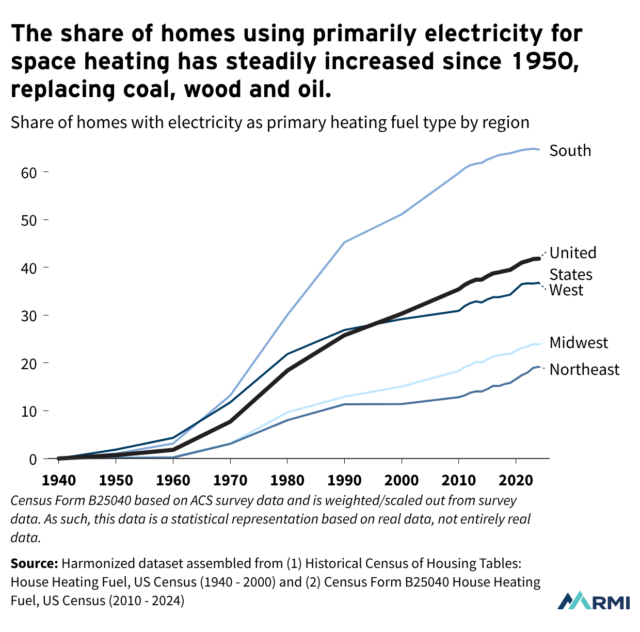
More Americans Are Heating Their Homes with Electricity than Ever Before
Help build the clean energy future. Donate today.
Independent research. Real-world solutions. Supported by donors.
RMI can pursue the highest-impact climate and energy solutions because we’re supported by people who believe change is possible. Every gift helps advance the work needed to make clean energy the default choice worldwide.
For other ways to give to RMI, including checks or gifts of stock, please visit Other Ways to Give.
