

Learn how we are working to transform how we use and produce energy.
Reality Check: Clearing the Air on Methane
Five persistent oil and gas myths, busted
Why we share this work for free
RMI is an independent nonprofit working to accelerate the clean energy transition. We publish research like this to inform decision-makers and drive real-world impact.
Our work is supported by philanthropy as well as partnerships, including fee-for-service engagements. This support makes it possible for us to share our independent insights for free.
If you find this work valuable, you can support it anytime.
Get more insights like this
Stay up to date with the latest research, analysis, and tools from RMI by opting in to receive occasional emails below. You’ll get new reports, event invitations, and practical insights to help us all accelerate the clean energy transition.
Loading form...
Your download should start automatically. If it doesn’t, click the download button below.
This work is made possible by philanthropy
RMI is a nonprofit supported by donors and partners. Philanthropy enables us to produce independent research and make resources like this freely available.
If you find this report valuable, please consider supporting our work. You can also explore how we partner with organizations to drive impact.
Jump to Section
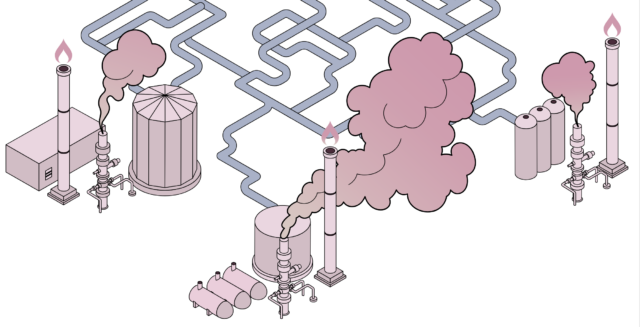
Gas is commonly extracted along with oil and marketed as a clean, reliable fuel. However, the reality is quite different. While oil is a liquid that can be readily seen, gas can be difficult to pin down. It is invisible to the naked eye, odorless through much of its journey, and lighter than air. Even its industry name, “natural” gas, masks the human-made efforts engineered to extract and process it into useful energy and materials.
But the make-up of gas — and its resulting environmental, health, and safety impact — is where there remains far too little transparency. Gas consists mostly of methane, a potent greenhouse gas with over 80 times the warming impact of carbon dioxide over the short term, along with other hazardous chemicals. Gas loss is widespread across oil and gas infrastructure, wasting energy, increasing costs, and accelerating the Earth’s warming.
Below, we highlight five persistent oil and gas methane myths — and the actual facts.
1. Myth:
In terms of pollution from methane emitted during production, all oil and gas is the same.
Reality:
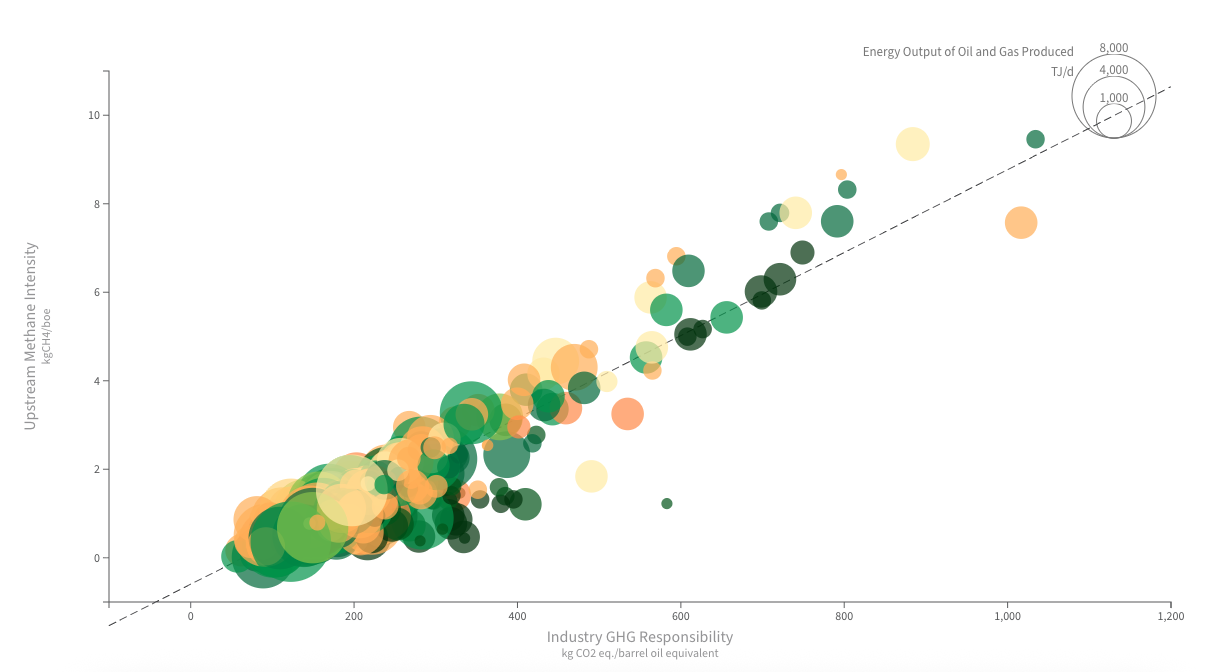
There is no standard oil or gas. Reservoirs and operations vary widely, especially within the United States. Fortunately, sophisticated technology available to monitor and measure wide-ranging methane emissions — making it possible to take urgent action to stop them. RMI’s OCI+ webtool assesses methane emissions intensities from over two-thirds of the world’s oil and gas supply chains. Shockingly, there can be over a 100x difference in upstream methane emissions intensity between equivalent barrels of oil depending on how gas is handled when it is produced, as plotted below.
2. Myth:
Gas leaks are minimal and not too costly.
Reality:
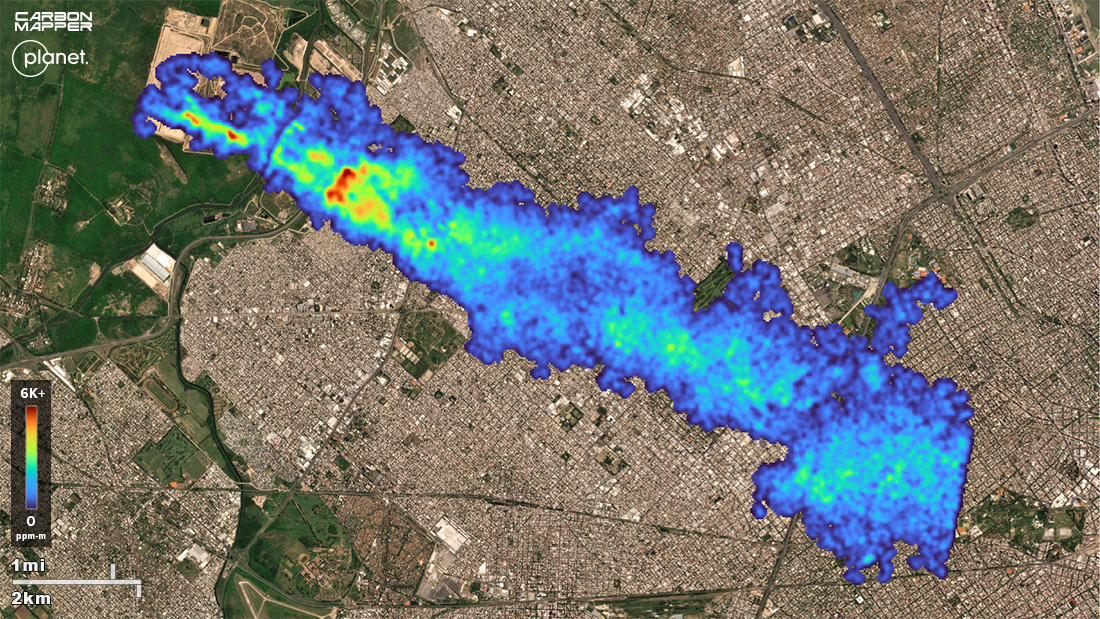
Oil and gas systems should be “closed” to keep gas in the pipe. But, in reality, they have a lot of moving parts and connections. As such, gas can readily leak from infrastructure. And various operations intentionally open systems, venting their gas. But methane is invisible to the naked eye and odorless, rendering it easy to ignore. Methane can be emitted into the atmosphere at multiple points — from leaky valves and flanges and poorly maintained flares to compressors that pressurize pipelines and liquefied natural gas transport systems. Global oil and gas systems emit an estimated 280 billion cubic meters of gas each year, over twice the pre-war volume traveling through the Strait of Hormuz. A recent RMI study found routine venting cost Texas alone more than $1 billion in wasted gas.
3. Myth:
Gas loss and methane emissions are inevitable and impossible to prevent.
Reality:
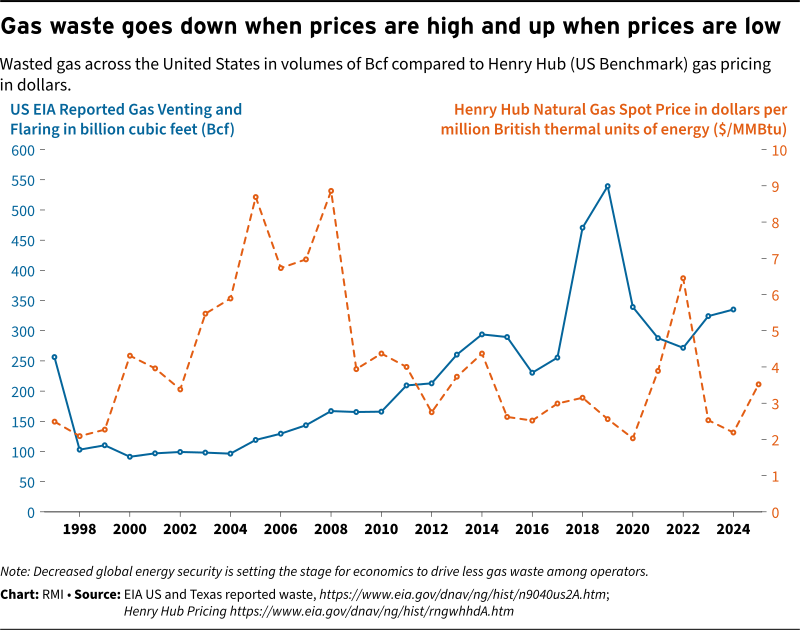
Gas loss and methane emissions are largely preventable; the technology exists to detect and abate methane loss today. What’s more, we know oil and gas companies can prevent leaks because they do it. There is no good reason to willingly waste gas, and when prices go up, emissions go down, and when prices go down, gas loss increases.
4. Myth:
Gas is natural and clean.
Reality:
Gas is typically extracted along with oil. Once it is separated from the oil and other liquids, the gas must then be processed to remove toxic chemicals, like hydrogen sulfide, the carcinogen benzene, and other toxins. What is left is almost all methane (pipeline quality natural gas is 95%–98% methane). Gas is explosive and causes fires. It contributes to the formation of ground-level ozone (smog), which impacts a community’s health and sicken citizens with respiratory illnesses, including increased asthma attacks, hospital admissions, and daily mortality.
5. Myth:
Gas supplies are reliable and prices are certain.
Reality:
Oil and gas prices can be highly volatile and supplies are readily disrupted. Over the past decade, these commodities have been subject to geopolitical disruption, including Russia’s invasion of Ukraine, political transition in Venezuela, and the US war in Iran. For example, the war in Iran has cut off 20% of global liquified natural gas flows from the international market, setting off fuel crises and throwing energy markets into turmoil. Finally, long waitlists for gas turbines mean new gas-fired power plants face delays and cost overruns, all of which threatens grid reliability.
Preventing waste of energy resources is critical as global energy demands continue to rise, largely due to climate change that demands pumping more water, cooling air, and rebuilding damaged infrastructure. In an energy-hungry and warming world, reducing gas waste and mitigating methane emissions are the first lines of defense in a durable energy transition.
Authors

Deborah Gordon
Senior Principal
Nathan Kauffman
Strategic Communications Lead
Colm Quinn
Senior Editor
Laurie Stone
Managing EditorRelated Insights
Help build the clean energy future. Donate today.
Independent research. Real-world solutions. Supported by donors.
RMI can pursue the highest-impact climate and energy solutions because we’re supported by people who believe change is possible. Every gift helps advance the work needed to make clean energy the default choice worldwide.
For other ways to give to RMI, including checks or gifts of stock, please visit Other Ways to Give.
