

Learn how we are working to transform how we use and produce energy.
Procuring Large-Scale Renewables through Aggregation: A Guide for Local Governments
Why we share this work for free
RMI is an independent nonprofit working to accelerate the clean energy transition. We publish research like this to inform decision-makers and drive real-world impact.
Our work is supported by philanthropy as well as partnerships, including fee-for-service engagements. This support makes it possible for us to share our independent insights for free.
If you find this work valuable, you can support it anytime.
Get more insights like this
Stay up to date with the latest research, analysis, and tools from RMI by opting in to receive occasional emails below. You’ll get new reports, event invitations, and practical insights to help us all accelerate the clean energy transition.
Loading form...
Your download should start automatically. If it doesn’t, click the download button below.
This work is made possible by philanthropy
RMI is a nonprofit supported by donors and partners. Philanthropy enables us to produce independent research and make resources like this freely available.
If you find this report valuable, please consider supporting our work. You can also explore how we partner with organizations to drive impact.
Jump to Section
Local governments across the United States are setting ambitious goals to transition to renewable energy. Since most municipalities cannot supply 100 percent of their electricity needs with on-site supply alone, they often look to purchase off-site renewable energy. One approach to do this that can provide numerous benefits is buyer-led aggregation.
Aggregation is an innovative yet underutilized approach in which two or more buyers collaborate to purchase energy from a large-scale generation facility. Aggregated deals present several opportunities for buyers:
- They allow buyers to support new renewable energy projects that meet their specific needs.
- They help grow the demand for renewable energy by enrolling participants who lack the resources or electricity demand to sign large-scale contracts on their own.
- Buyers can collectively negotiate for better contract terms and prices.
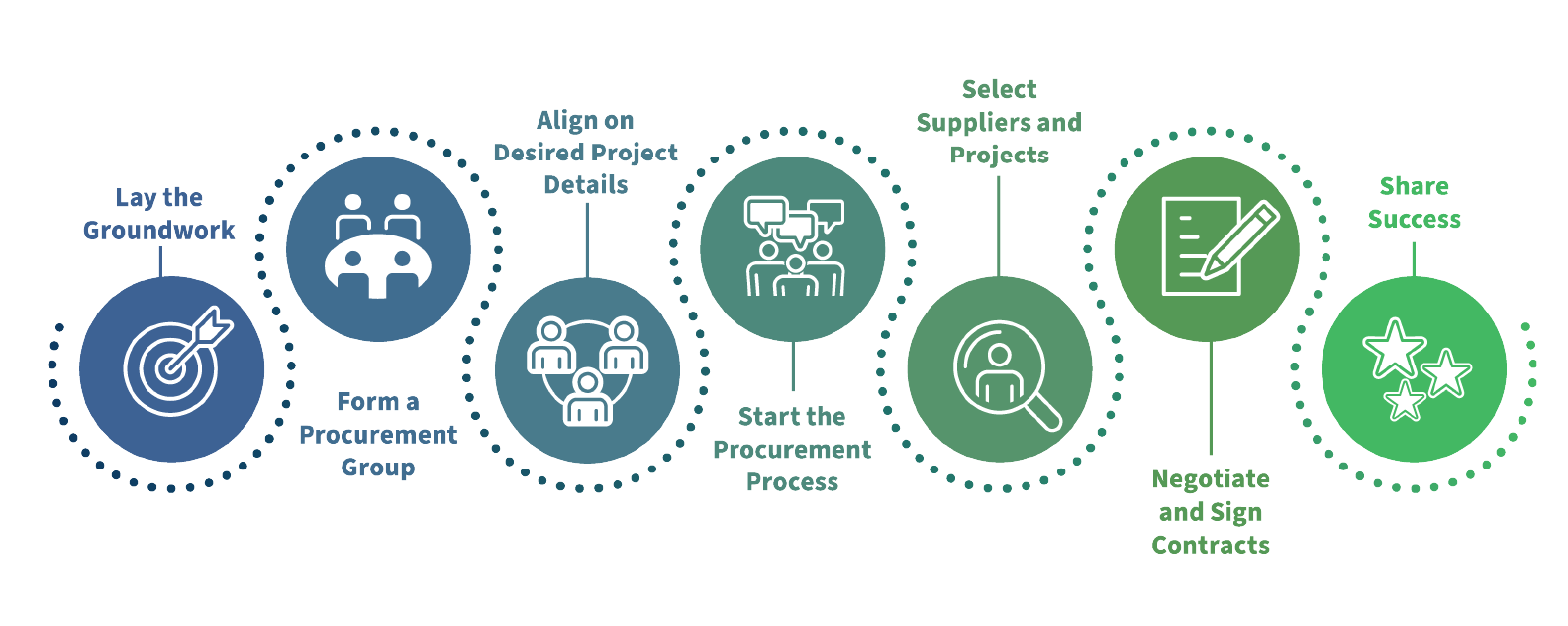
This guide outlines how local governments can pursue buyer-led aggregated PPAs for utility-scale renewable projects. It includes the benefits of aggregation, off-site procurement options available to aggregation groups, and case studies of five successful aggregated renewables procurements. The guide also presents a seven-step process to guide local governments to pursue an aggregated procurement.
Authors

Mia Reback
Manager
Stephen Abbott
Principal, Subnational Energy Action
Yuning Liu
Manager
Alisa Petersen
Related Insights

Gas Utility Depreciation: Recommendations for an Uncertain Future



Help build the clean energy future. Donate today.
Independent research. Real-world solutions. Supported by donors.
RMI can pursue the highest-impact climate and energy solutions because we’re supported by people who believe change is possible. Every gift helps advance the work needed to make clean energy the default choice worldwide.
For other ways to give to RMI, including checks or gifts of stock, please visit Other Ways to Give.
