Learn how we are working to transform how we use and produce energy.
Managing the Coal Capital Transition
Why we share this work for free
RMI is an independent nonprofit working to accelerate the clean energy transition. We publish research like this to inform decision-makers and drive real-world impact.
Our work is supported by philanthropy as well as partnerships, including fee-for-service engagements. This support makes it possible for us to share our independent insights for free.
If you find this work valuable, you can support it anytime.
Get more insights like this
Stay up to date with the latest research, analysis, and tools from RMI by opting in to receive occasional emails below. You’ll get new reports, event invitations, and practical insights to help us all accelerate the clean energy transition.
Loading form...
Your download should start automatically. If it doesn’t, click the download button below.
This work is made possible by philanthropy
RMI is a nonprofit supported by donors and partners. Philanthropy enables us to produce independent research and make resources like this freely available.
If you find this report valuable, please consider supporting our work. You can also explore how we partner with organizations to drive impact.
Jump to Section
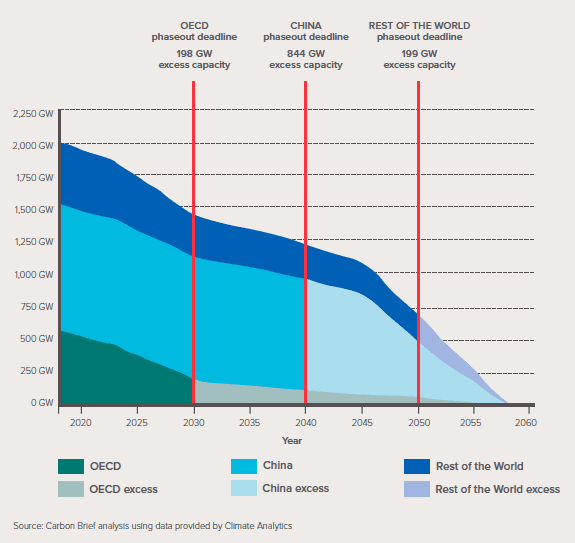
Coal was the preeminent fuel for grid-based electricity generation around the world for the better part of a century, but its time is coming to an end. With this transition, however, workers and communities are experiencing layoffs and the owners of coal-fired power plants are bracing themselves for hundreds of billions in write-offs.
Coal-fired power generation is in structural decline, and its role the global energy mix will continue to diminish due primarily to economics. This erosion is structural, not cyclical, and is driven predominantly by cheap gas, inexpensive renewables, and the costs associated with complying with environmental regulations that seek to reduce air pollution and address climate change.
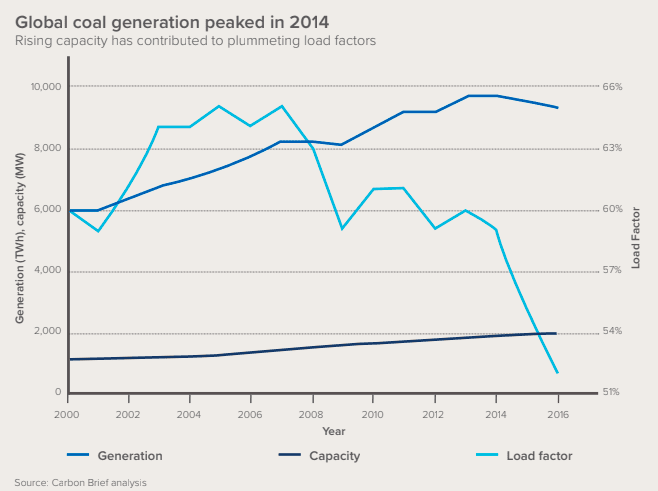
While economic trends are slowing the growth of coal capacity and leading to a significant amount of uncompetitive coal-fired capacity to shutter, these trends alone will not be sufficient to reduce global greenhouse gas emissions consistent with the Paris Agreement objective of holding warming well below 2 Cº. Moreover, the specter of capital losses fuels opposition to policies aimed at accelerating the energy transition.
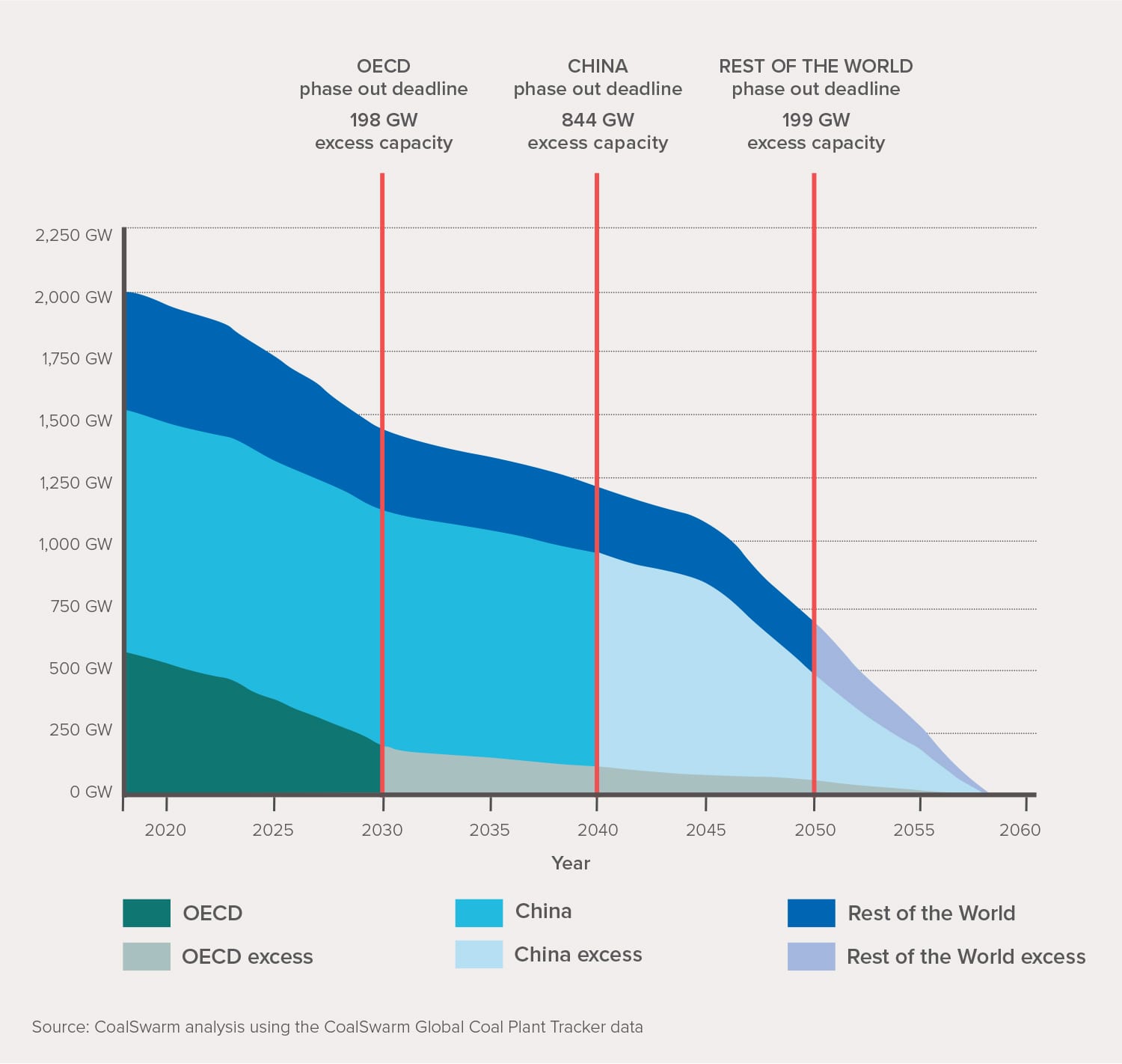
The early retirement of coal plants across the world has enormous financial implications for asset owners, policymakers, and environmental advocates alike. It also represents an opportunity to reallocate capital stock in the energy system from coal generation to lower-cost renewables. However, managing that exit of capital from coal-fired generating assets demands thoughtful and collaborative planning among these stakeholders.
This is the first global survey of approaches that can help ease capital destruction for asset owners and their shareholders while offering policymakers a clearer path toward transitioning the power sector onto a below-2 Cº pathway.
RMI has catalogued 10 policy components for managing the capital losses associated with early retirement of coal-fired generating assets. It also identifies the factors that influence the applicability of components and the potential challenges of including them in policy design.

While these 10 policy components for managing capital losses are presented individually, in practice combining policy components provides flexibility both with the timing of policy implementation, as well as with the ability to allocate— or reallocate—losses across parties. The four in-depth case studies of coal closures included in the report (Alberta, Chile, China and Colorado) demonstrate that there are no one-size-fits-all solutions. Complete policy packages are built from the ground up using policy components fit to their specific context.

Related Insights

States Are Opening the Door to Data Center Investment in Virtual Power Plants



Help build the clean energy future. Donate today.
Independent research. Real-world solutions. Supported by donors.
RMI can pursue the highest-impact climate and energy solutions because we’re supported by people who believe change is possible. Every gift helps advance the work needed to make clean energy the default choice worldwide.
For other ways to give to RMI, including checks or gifts of stock, please visit Other Ways to Give.