
Learn how we are working to transform how we use and produce energy.
The Carbon-Free City Handbook: Industry
Why we share this work for free
RMI is an independent nonprofit working to accelerate the clean energy transition. We publish research like this to inform decision-makers and drive real-world impact.
Our work is supported by philanthropy as well as partnerships, including fee-for-service engagements. This support makes it possible for us to share our independent insights for free.
If you find this work valuable, you can support it anytime.
Get more insights like this
Stay up to date with the latest research, analysis, and tools from RMI by opting in to receive occasional emails below. You’ll get new reports, event invitations, and practical insights to help us all accelerate the clean energy transition.
Loading form...
Your download should start automatically. If it doesn’t, click the download button below.
This work is made possible by philanthropy
RMI is a nonprofit supported by donors and partners. Philanthropy enables us to produce independent research and make resources like this freely available.
If you find this report valuable, please consider supporting our work. You can also explore how we partner with organizations to drive impact.
Jump to Section
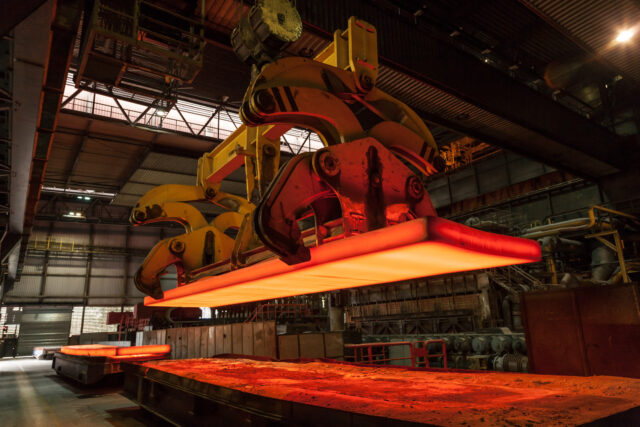
Industry is responsible for 7% of carbon emissions in major cities. Solutions exist that can enable cities to cut these emissions, while also promoting business and manufacturing.
Industry is a major employer and economic driver in many global cities, significantly shaping a city’s carbon emissions. Limited jurisdictional control means that cities frequently must partner strategically with these corporate residents to achieve economic and environmental solutions that benefit everyone.
Action 17: Clean Industrial Heat
Description
Develop industrial programs that reduce emissions from process heat loads. This can be accomplished many ways, including conversion to low-carbon fuels, making process heat generation more efficient, repairing heat-distribution infrastructure, and making productive use of waste heat.
Action Documents
- Schlomann, Barbara, Matthias Reuter, Sohaib Tariq, Katharina Wohlfarth, Bruno Lapillonne, and Karine Pollier. Energy Efficiency Trends and Policies In Industry. Intelligent Energy Europe Progamme of the European Union, 2015.
Features a number of industrial energy efficiency policies in the EU, including incentives for industrial processes - Cornell Center for the Environment, Work and Environment Initiative. Handbook on Codes, Covenants, Conditions, and Restrictions for Eco-Industrial Parks.
Includes some draft language used in codes and covenants to encourage clean district heating
Recommended Resources
- Jinhua City Environmental Protection Bureau. “金华市环境保护局2016年工作总结 和2017年工作思路 (English Translation: Jinhua City Environmental Protection Agency in 2016 summary of work and 2017 work ideas).”
- Zhejiang Online – Qianjiang Evening News. “浙江金华启动“煤改气”逐步淘汰高污染锅炉 政府给补助 (English Translation: Zhejiang Jinhua start “coal to gas” phase-out of high-pollution boiler government subsidies).”
Action 18: Efficient Motors
Description
Develop a program to replace inefficient motors with high-efficiency models through codes, standards, rebates, incentives, audit programs, and other strategies.
Action Documents
- “Topmotors.”
Includes documents, tools, and processes related to industrial motor audits and improvements - U.S. Department of Energy, Office of Energy Efficiency and Renewable Energy. “2014-05-08 Issuance: Energy Conservation Standards for Commercial and Industrial Electric Motors; Final Rule.”
Includes energy conservation standards for commercial and industrial electric motors
Recommended Resources
- Werle, Rita, Conrad U. Brunner, and Rolf Tieben (Impact Energy Inc., Switzerland). Swiss motor efficiency program EASY: results 2010 – 2014. ACEEE, 2015.
Action 19: Operator Training
Description
Develop a voluntary energy management program that recognizes industry for committing to energy management systems, energy audits, and continual energy reductions in their facilities, which will build local capacity for energy managers. Provide resources, including training, for energy management personnel to achieve continuous improvement.
Action Documents
- Thomas, Stefan, et al. Energy Efficiency Policies in Europe: Case Study. Large Industry Energy Network – Ireland.
- U.S. Department of Energy, Office of Energy Efficiency and Renewable Energy. “Superior Energy Performance.”
Recommended Resources
- U.S. Department of Energy, Office of Energy Efficiency & Renewable Energy. “ISO 50001 Energy Management Standard.”
- U.S. Department of Energy, Office of Energy Efficiency & Renewable Energy. “Superior Energy Performance.”
SEAI’s Large Industry Energy Network leverages collaboration, replication, and innovation. Whether the primary motivation is competitiveness or sustainability, participating companies have consistently exceeded their goals and redoubled their efforts.
‐Jim Gannon, CEO, Sustainable Energy Authority of Ireland (SEAI)
Get More Action Docs
Browse Additional Recommendations by Sector
Carbon-Free City Handbook: Transportation and Mobility
The Carbon-Free City Handbook: Electricity
The Carbon-Free City Handbook: Biological Resources
The Carbon-Free City Handbook: Financing
Engage with Us
Take action today and set your community on an ambitious course to carbon-neutrality bringing economic vitality, cleaner air, and better health and resilience.
Help build the clean energy future. Donate today.
Independent research. Real-world solutions. Supported by donors.
RMI can pursue the highest-impact climate and energy solutions because we’re supported by people who believe change is possible. Every gift helps advance the work needed to make clean energy the default choice worldwide.
For other ways to give to RMI, including checks or gifts of stock, please visit Other Ways to Give.