

Learn how we are working to transform how we use and produce energy.
Why we share this work for free
RMI is an independent nonprofit working to accelerate the clean energy transition. We publish research like this to inform decision-makers and drive real-world impact.
Our work is supported by philanthropy as well as partnerships, including fee-for-service engagements. This support makes it possible for us to share our independent insights for free.
If you find this work valuable, you can support it anytime.
Get more insights like this
Stay up to date with the latest research, analysis, and tools from RMI by opting in to receive occasional emails below. You’ll get new reports, event invitations, and practical insights to help us all accelerate the clean energy transition.
Loading form...
Your download should start automatically. If it doesn’t, click the download button below.
This work is made possible by philanthropy
RMI is a nonprofit supported by donors and partners. Philanthropy enables us to produce independent research and make resources like this freely available.
If you find this report valuable, please consider supporting our work. You can also explore how we partner with organizations to drive impact.
Jump to Section
Utility grids in the United States are at an inflection point, and equipping regulators to be more agile can help ensure we are prepared for the future.
State public utilities commissions (PUCs) are critical for ensuring the health and economic vitality of households and businesses across the country. State PUCs have historically been tasked with ensuring access to safe, reliable, and affordable energy services. Now, they face new and more complex responsibilities due to shifting economics, aging and fragile infrastructure, and new customer demands for cleaner and more transparent service. Although PUCs are uniquely positioned to orchestrate an equitable transition to meet these emerging needs, their institutional structures, processes, and staffing — all essential to PUC modernization — have struggled to keep pace.Our new research builds on three RMI insight briefs on PUC modernization that provide strategies and recommendations to support PUCs in effectively regulating today’s evolving energy system. The insight briefs cover PUCs’ purpose, people, and processes as PUCs take on an expanding role while still meeting their historic mandate of ensuring safety, reliability, and affordability.
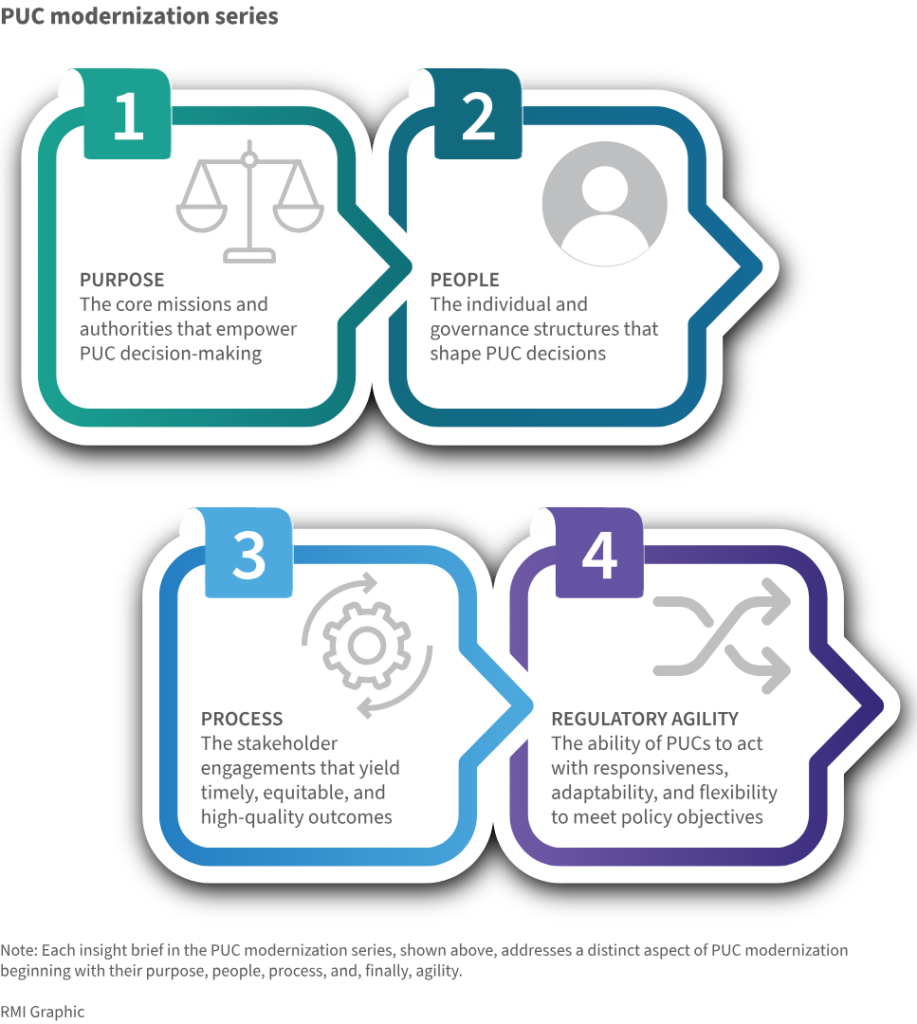
This fourth insight brief details specific actions PUCs can take to be more agile. It highlights three focus areas:
- Build culture, systems, and workforce to advance agility;
- Refine docket processes to improve responsiveness and flexibility;
- Engage stakeholders early, inclusively, and accessibly.
These focus areas emphasize actions that can be taken while largely operating within the constraints posed by legislation, staffing, and budgets. Deeper reforms to address these constraints are referenced in the insight briefs earlier in the series.
Agility can better equip PUCs to continue their critical work in support of the public interest while navigating the increasing complexities and workload of energy regulation.
Authors

Stephanie Bieler
Senior Associate
Rachel Gold
Senior Principal
Alex Walmsley
Manager
Camden Burk

Katie Ebinger
AssociateRelated Insights

For Clean Energy Projects, How Community Benefits Are Delivered Matters

Tracking WestTEC: Where 100+ Transmission Projects Stand and What Comes Next


Help build the clean energy future. Donate today.
Independent research. Real-world solutions. Supported by donors.
RMI can pursue the highest-impact climate and energy solutions because we’re supported by people who believe change is possible. Every gift helps advance the work needed to make clean energy the default choice worldwide.
For other ways to give to RMI, including checks or gifts of stock, please visit Other Ways to Give.
