

Learn how we are working to transform how we use and produce energy.
More EVs, Fewer Emissions
How to Maximize Emissions Reductions by Smart Charging Electric Vehicles
Why we share this work for free
RMI is an independent nonprofit working to accelerate the clean energy transition. We publish research like this to inform decision-makers and drive real-world impact.
Our work is supported by philanthropy as well as partnerships, including fee-for-service engagements. This support makes it possible for us to share our independent insights for free.
If you find this work valuable, you can support it anytime.
Get more insights like this
Stay up to date with the latest research, analysis, and tools from RMI by opting in to receive occasional emails below. You’ll get new reports, event invitations, and practical insights to help us all accelerate the clean energy transition.
Loading form...
Your download should start automatically. If it doesn’t, click the download button below.
This work is made possible by philanthropy
RMI is a nonprofit supported by donors and partners. Philanthropy enables us to produce independent research and make resources like this freely available.
If you find this report valuable, please consider supporting our work. You can also explore how we partner with organizations to drive impact.
Jump to Section
Electric vehicles already deliver much less pollution over their lifetime than gas-powered vehicles.
There’s a simple way to reduce EV emissions even further: with smart charging.
RMI and WattTime found that when EVs are optimized with smart charging to align with times of low emissions on the electricity grid, they further reduce emissions by an additional 2–8 percent and even become a grid resource.
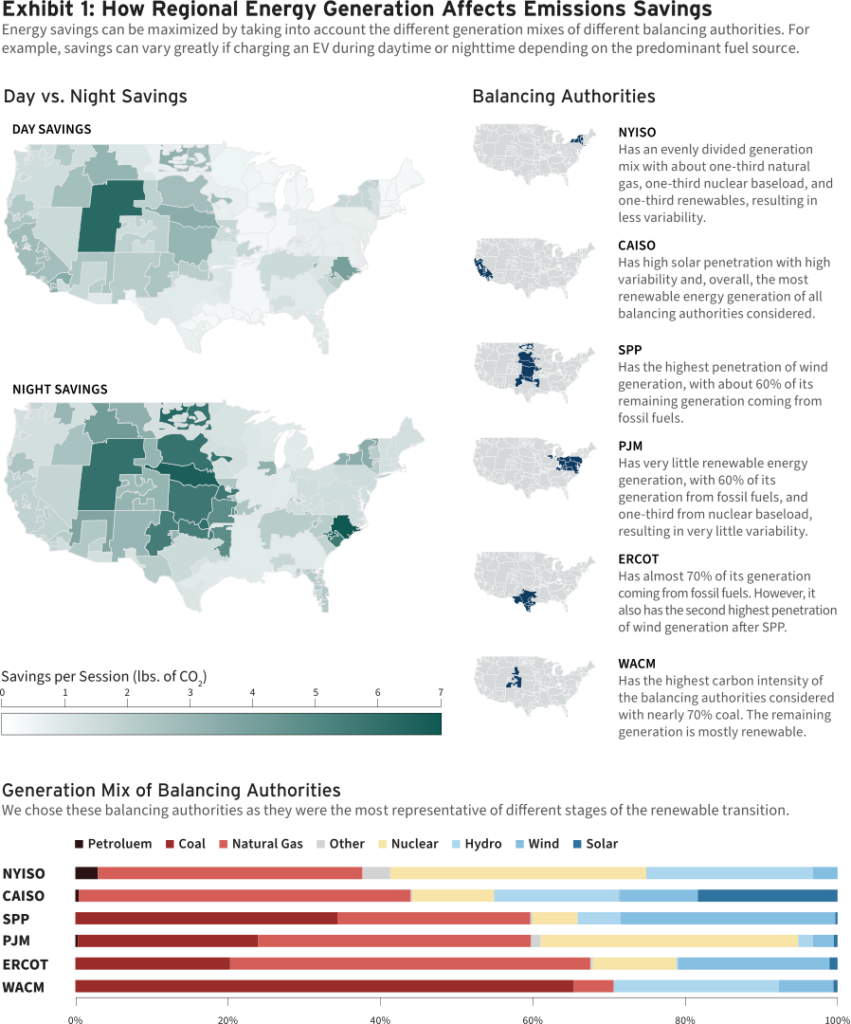
The report More EVs, Fewer Emissions finds two key factors that affect the amount of emissions saved from optimized EV smart charging: the local grid mix and charger speed.
Even on dirtier grids, optimized charging can still play a role in reducing emissions and their associated pollution. This report digs into the differences in six regions in the United States and offers strategies to optimize EV charging everywhere.
For example, the maps below show the carbon savings achieved across the United States when charging during the day versus night depending on the region’s predominant fuel source.


Related Insights


EVs Are Coming to Island Nations. What Happens When They Retire?
Help build the clean energy future. Donate today.
Independent research. Real-world solutions. Supported by donors.
RMI can pursue the highest-impact climate and energy solutions because we’re supported by people who believe change is possible. Every gift helps advance the work needed to make clean energy the default choice worldwide.
For other ways to give to RMI, including checks or gifts of stock, please visit Other Ways to Give.
