

Learn how we are working to transform how we use and produce energy.
Why we share this work for free
RMI is an independent nonprofit working to accelerate the clean energy transition. We publish research like this to inform decision-makers and drive real-world impact.
Our work is supported by philanthropy as well as partnerships, including fee-for-service engagements. This support makes it possible for us to share our independent insights for free.
If you find this work valuable, you can support it anytime.
Get more insights like this
Stay up to date with the latest research, analysis, and tools from RMI by opting in to receive occasional emails below. You’ll get new reports, event invitations, and practical insights to help us all accelerate the clean energy transition.
Loading form...
Your download should start automatically. If it doesn’t, click the download button below.
This work is made possible by philanthropy
RMI is a nonprofit supported by donors and partners. Philanthropy enables us to produce independent research and make resources like this freely available.
If you find this report valuable, please consider supporting our work. You can also explore how we partner with organizations to drive impact.
Jump to Section
The debate over whether private financial institutions should play a proactive role in the low-carbon transition is coming to a close, and significant efforts to define what this role should be in practice have begun.
While the financial sector has initiated broad efforts to consider climate risks, asset owners and lenders representing tens of trillions in assets are moving beyond such considerations to make good on their commitments to align their portfolios with the Paris Agreement. Policymakers across the globe are establishing taxonomies and strenuous climate benchmarks to better direct capital toward sustainable activities and investor expectations of “impact” are increasing. Financial regulators are moving to ensure markets are pricing climate risks effectively and financial supervisors are increasing scrutiny of banks and insurers.
This evolving landscape is difficult to navigate for financial institutions and climate initiatives alike. Yet doing so is crucial for understanding what is being asked of the financial sector, how structural barriers (and sometimes legal obligations) limit its ability to influence the real economy, and which initiatives are working to overcome these barriers to better enable financial institutions.
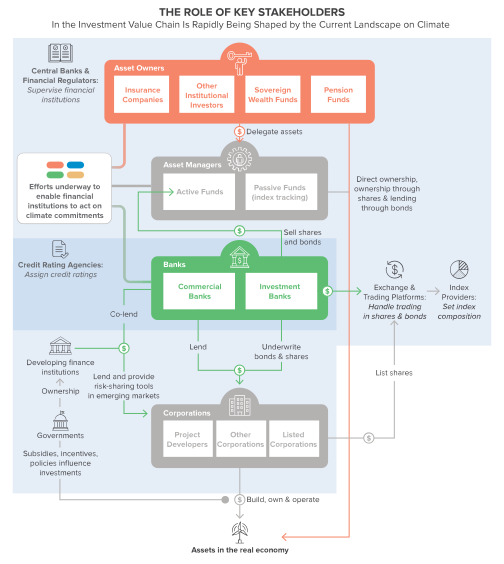
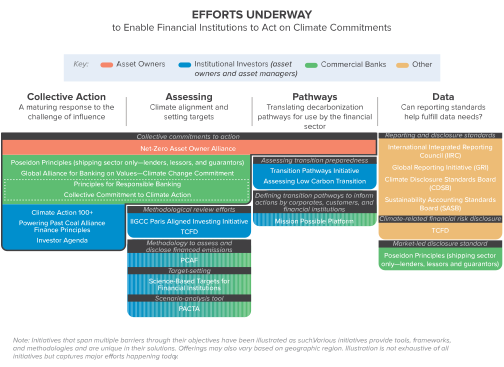
This report takes stock of the regulatory and policy efforts, market trends, and voluntary initiatives actively shaping the role of private financial institutions in supporting decarbonization of the real economy. It clarifies what is being asked of the financial sector today and what may be needed to ensure that the actions taken by the financial sector in support of decarbonization are effective and that expectations are realistic.


Related Insights


Gas Utility Depreciation: Recommendations for an Uncertain Future


Help build the clean energy future. Donate today.
Independent research. Real-world solutions. Supported by donors.
RMI can pursue the highest-impact climate and energy solutions because we’re supported by people who believe change is possible. Every gift helps advance the work needed to make clean energy the default choice worldwide.
For other ways to give to RMI, including checks or gifts of stock, please visit Other Ways to Give.
