

Learn how we are working to transform how we use and produce energy.
A Sweet, Buzzy Passion
Three colonies of bees are thriving on the rooftop of RMI’s Innovation Center, nurtured by facilities director Simon Krzych
Why we share this work for free
RMI is an independent nonprofit working to accelerate the clean energy transition. We publish research like this to inform decision-makers and drive real-world impact.
Our work is supported by philanthropy as well as partnerships, including fee-for-service engagements. This support makes it possible for us to share our independent insights for free.
If you find this work valuable, you can support it anytime.
Get more insights like this
Stay up to date with the latest research, analysis, and tools from RMI by opting in to receive occasional emails below. You’ll get new reports, event invitations, and practical insights to help us all accelerate the clean energy transition.
Loading form...
Your download should start automatically. If it doesn’t, click the download button below.
This work is made possible by philanthropy
RMI is a nonprofit supported by donors and partners. Philanthropy enables us to produce independent research and make resources like this freely available.
If you find this report valuable, please consider supporting our work. You can also explore how we partner with organizations to drive impact.
Jump to Section
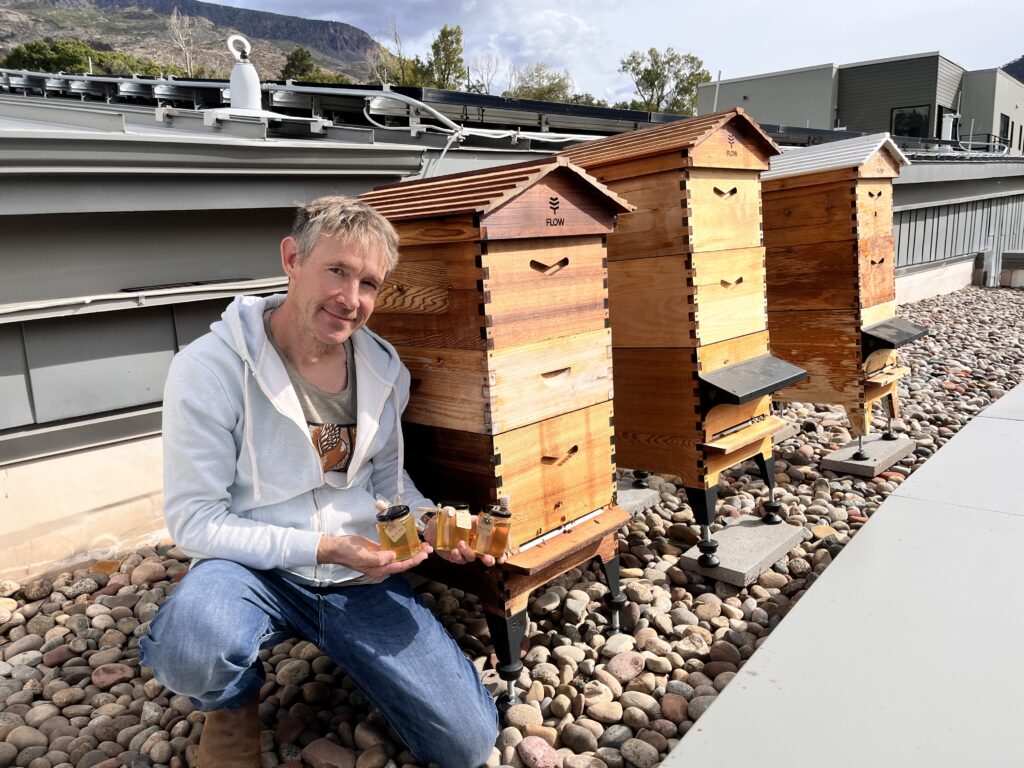
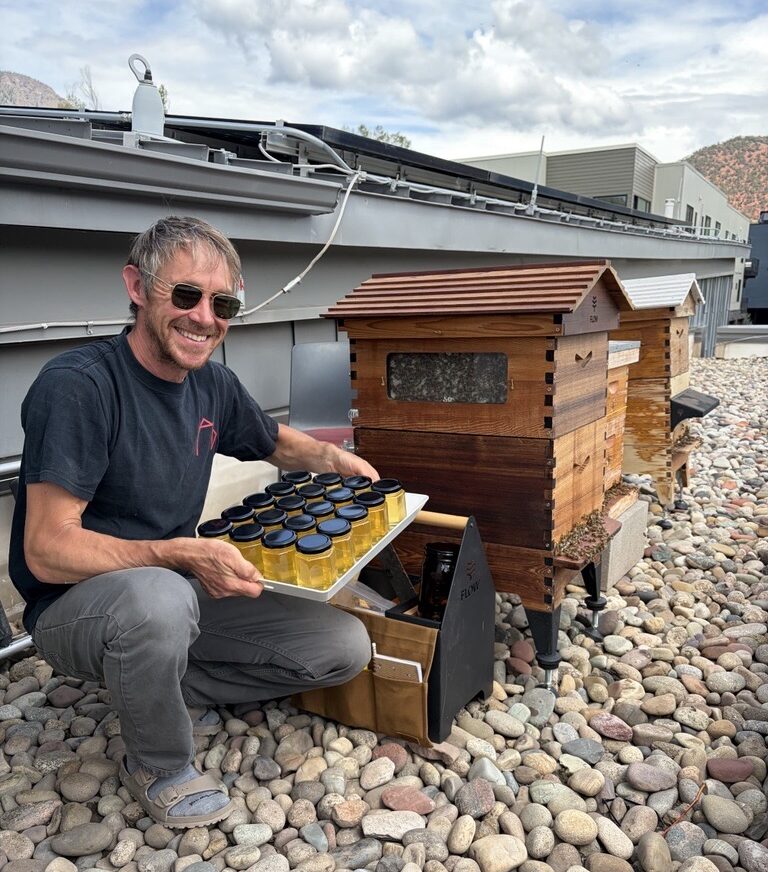
Visitors touring RMI’s Innovation Center in Basalt, Colorado, will see a novel new addition to the super-efficient building. Three beehives on the roof are now producing gallons of sweet honey. The man behind the bees is Simon Krzych, RMI’s director of facilities and operations.
Krzych (pronounced KSHIKH) grew up in Wisconsin as a self-proclaimed “hippie child” with parents who liked to live off the land and maintain a low carbon footprint. His beekeeper father spent two years in the Peace Corps in The Gambia, Africa, teaching locals how to remove wild swarms of African “killer bees” from trees, raise them, and harvest their honey.
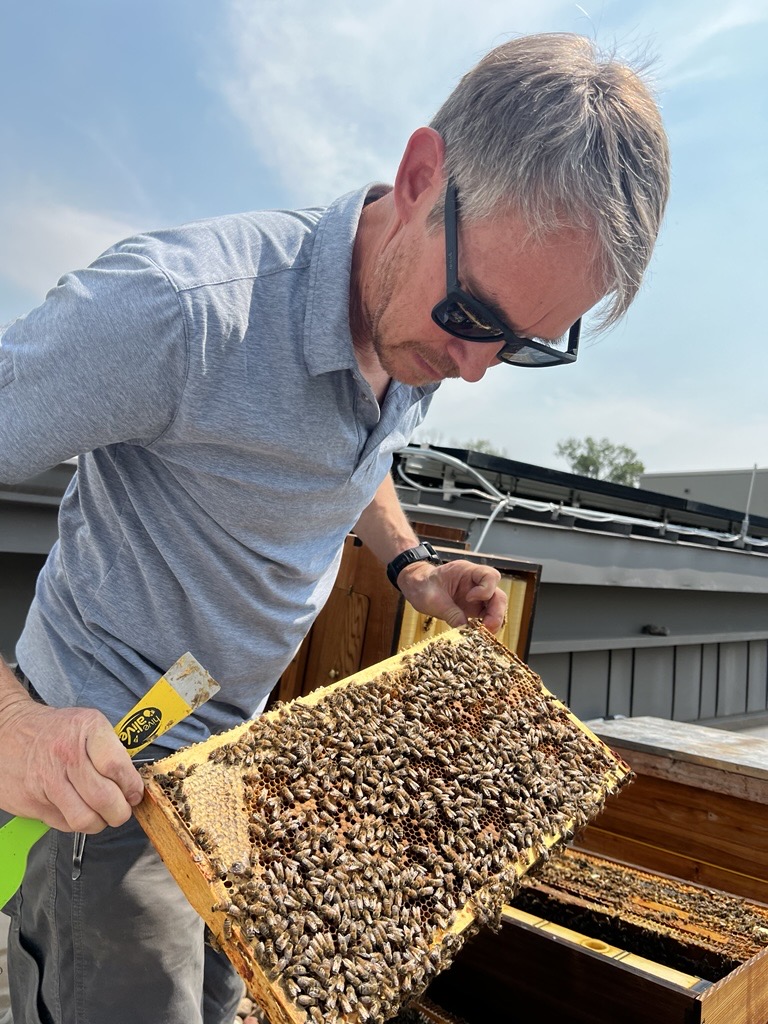
Krzych started helping his father with his bees at age 10. “I didn’t like getting stung,” he says of that time. “But my father never wore any beekeeping suits, so I learned that from him,” explains Krzych who still doesn’t wear any protection when working with the bees.
He was also always fixing things as a child. He moved to Colorado in 1993 to help friends build an energy-efficient off-grid home. He eventually started working in property management, taking care of high-end homes, and also worked as the facilities operator at Hotel Jerome in Aspen. However, when RMI was looking for a facilities manager for the RMI Innovation Center, a super-efficient net-zero-carbon office building and convening center in Basalt, Colorado, Krzych was a perfect fit.
“I took a tour of the building with a friend who worked for RMI and thought this would be an awesome place to work,” said Krzych. “My friend recommended me to RMI, and the rest is history. Now I’m here and loving it.”
As facilities director, he cares for the building, which is the highest-performing structure of its type in the coldest climate zone in the United States, and ensures everything runs efficiently.
Krzych says he enjoys working at RMI for its location being right on the river, the efficiency of the building and how it performs, RMI’s mission, and of course the staff. “The staff is amazing, everyone is super intelligent, which is fun for me.”
One of Krzych’s main passions is beekeeping. About six years ago, Krzych’s wife gave him a fancy Flow hive for Christmas. And he has been keeping bees on his own since then. He now has five colonies at his house, in addition to the three colonies he brought over to RMI. He still calls his father back in Wisconsin and talks to him for hours about bees. “It’s a way to stay connected to my family at home,” he says.
The types of hives that Krzych uses are an innovative update to conventional hive designs — and a perfect fit for the Innovation Center. With this design, “You don’t have to disrupt the bees by pulling the frames, cutting the wax off the top, and extracting the honey on a centrifugal spinner,” explains Krzych. “You just put in a tube, break the comb inside the frames with a key, and the honey flows down the center and comes out the tube. It’s very simple and easy. It’s almost like tap water, where you turn on a tap and it comes out.” With these hives, you can harvest one frame at a time, which means you can get different colors and flavors of honey.
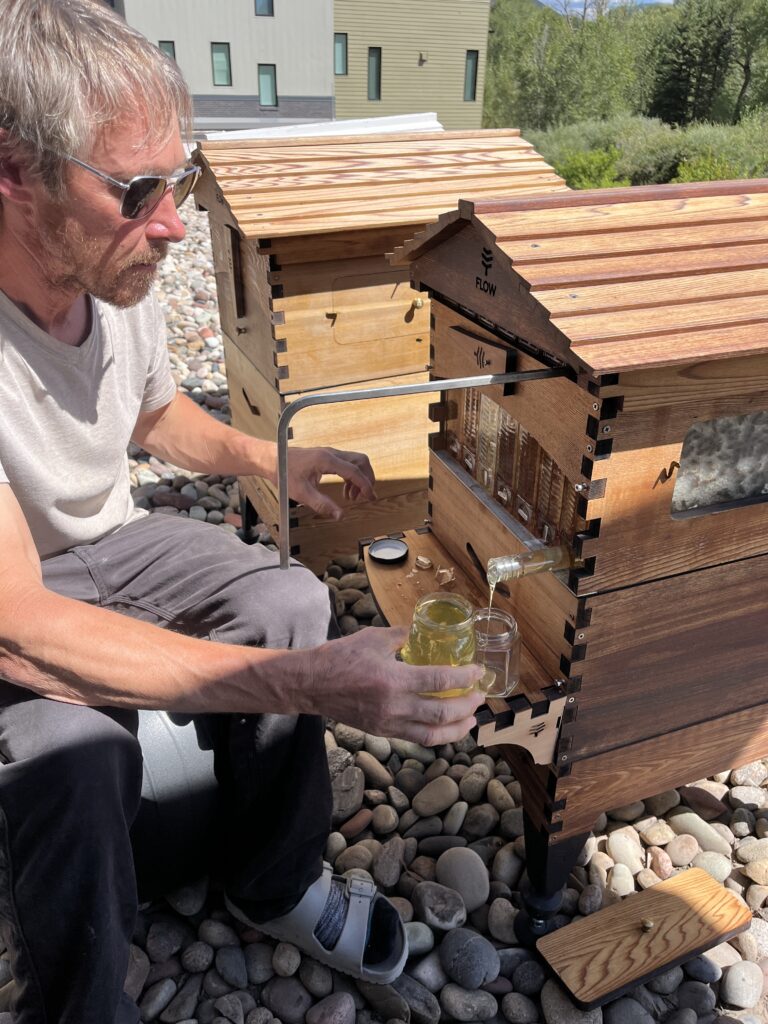
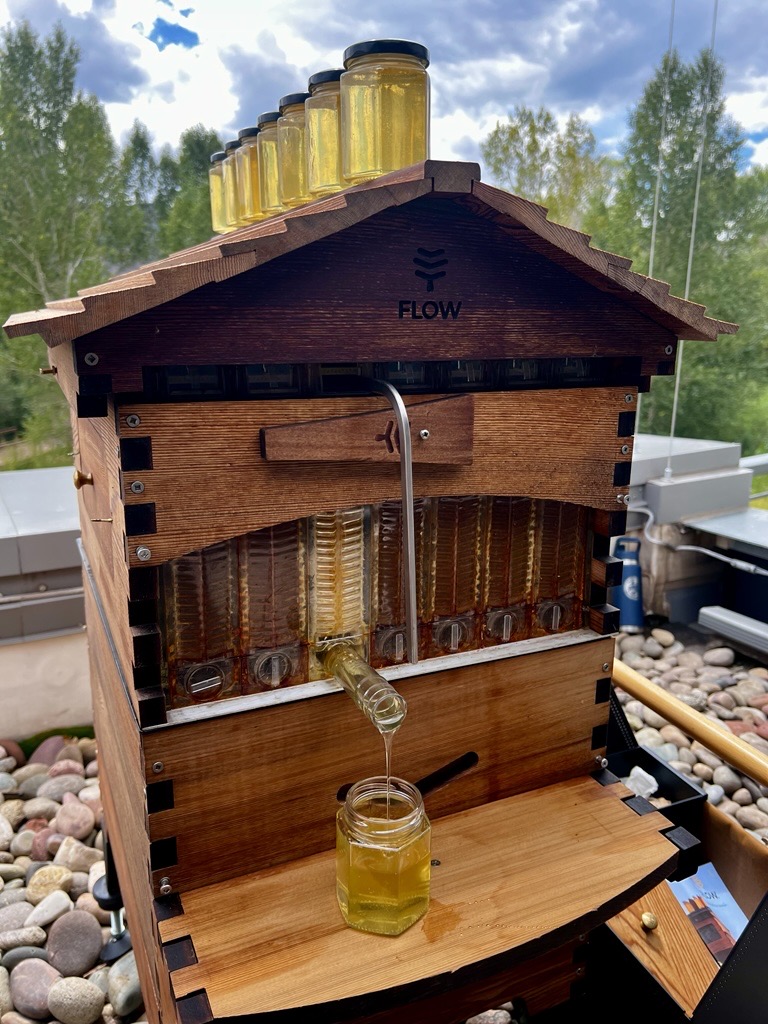
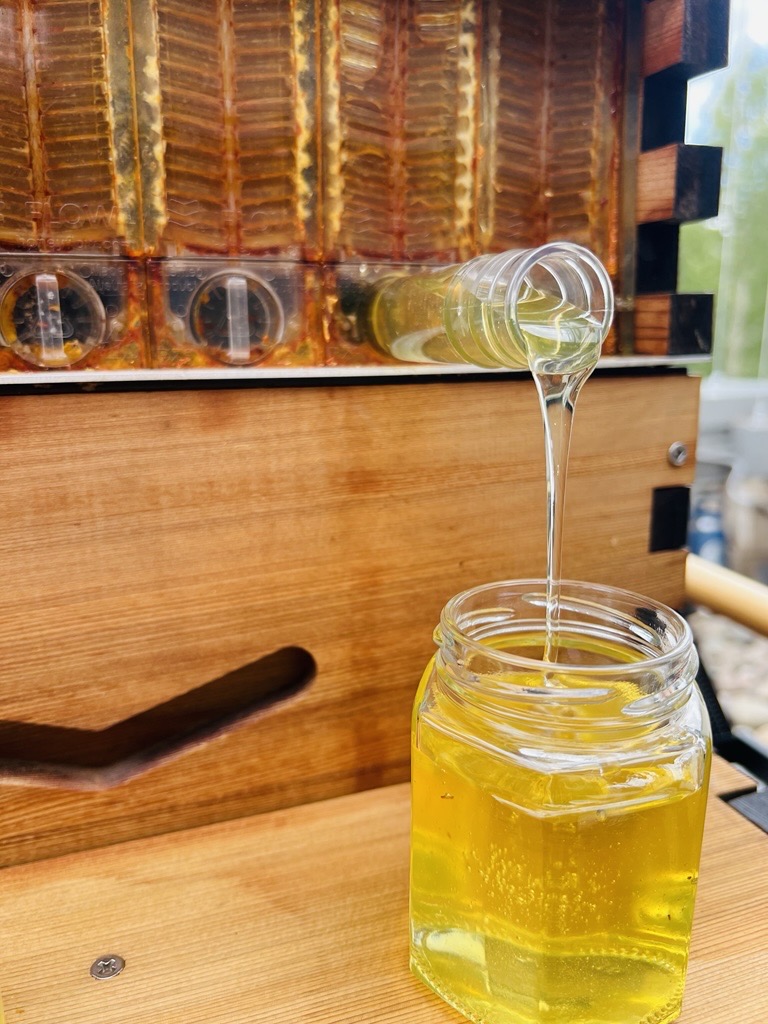
Krzych is dedicated to taking care of the bees, making sure to leave enough honey so they can survive the winter. For ground-mounted hives he keeps elsewhere, Krzych often surrounds hives with non-harmful electric fencing to keep out bears, a constant threat in Colorado. But at the Innovation Center, Krzych places the hives on the roof where the bears can’t get them.
He feels that RMI’s Innovation Center is one of the best locations for his hives. “It’s right on the river so the bees have a water source. There’s plenty of native flowers plus a lot of people in town plant flowers that attract pollinators,” he says.
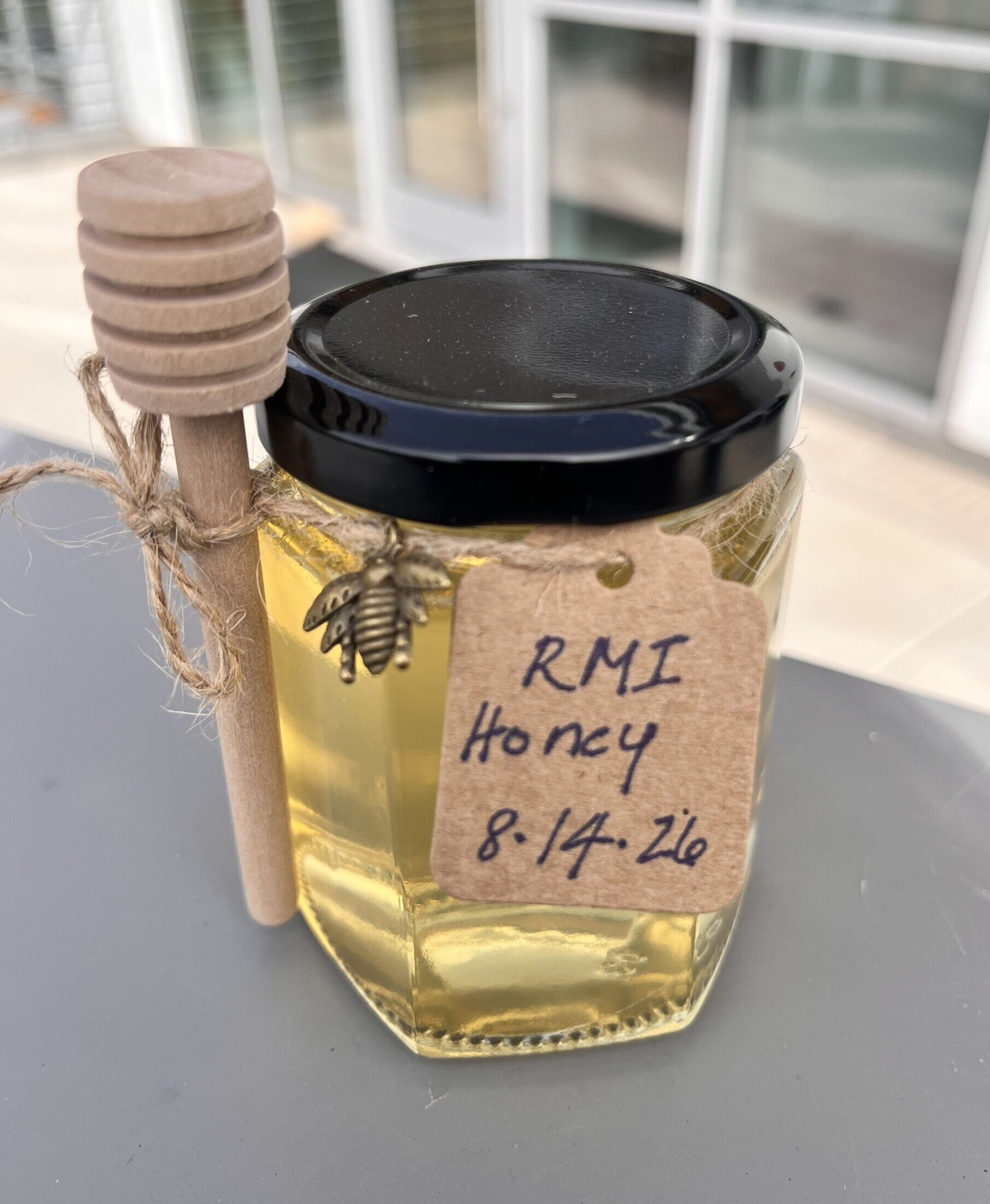
“I knew they would do well, but I was very impressed with the flow that came out.” Krzych estimates that in an average year RMI should get about 7–12 gallons of honey from the three colonies. RMI staff and visitors to the Innovation Center have been receiving jars of the delicious, sweet liquid.
“Keeping bees is a really interesting hobby,” says Krzych. “I learn something new almost every day I work with them. I love showing them to other people. And the honey of course is great.” However, bees face a lot of dangers in today’s world, from climate change caused habitat loss and colony collapse to varroa mites.
That is something that Krzych takes to heart. “If we lose our bees, we’re losing a lot of our food production. If we lose our bees, we’re in trouble.”
Authors

Laurie Stone
Managing EditorRelated Insights

The Emerging Consensus on Social Integrity in Carbon Markets

How Heat Pumps Reduce Energy Bills and Air Pollution in the San Francisco Bay Area
Help build the clean energy future. Donate today.
Independent research. Real-world solutions. Supported by donors.
RMI can pursue the highest-impact climate and energy solutions because we’re supported by people who believe change is possible. Every gift helps advance the work needed to make clean energy the default choice worldwide.
For other ways to give to RMI, including checks or gifts of stock, please visit Other Ways to Give.
