Learn how we are working to transform how we use and produce energy.
Coreina Chan — The Enduring Impact of Bringing People Together
How an RMIer and her team developed innovative approaches to tackle ambitious energy challenges
Why we share this work for free
RMI is an independent nonprofit working to accelerate the clean energy transition. We publish research like this to inform decision-makers and drive real-world impact.
Our work is supported by philanthropy as well as partnerships, including fee-for-service engagements. This support makes it possible for us to share our independent insights for free.
If you find this work valuable, you can support it anytime.
Get more insights like this
Stay up to date with the latest research, analysis, and tools from RMI by opting in to receive occasional emails below. You’ll get new reports, event invitations, and practical insights to help us all accelerate the clean energy transition.
Loading form...
Your download should start automatically. If it doesn’t, click the download button below.
This work is made possible by philanthropy
RMI is a nonprofit supported by donors and partners. Philanthropy enables us to produce independent research and make resources like this freely available.
If you find this report valuable, please consider supporting our work. You can also explore how we partner with organizations to drive impact.
Jump to Section
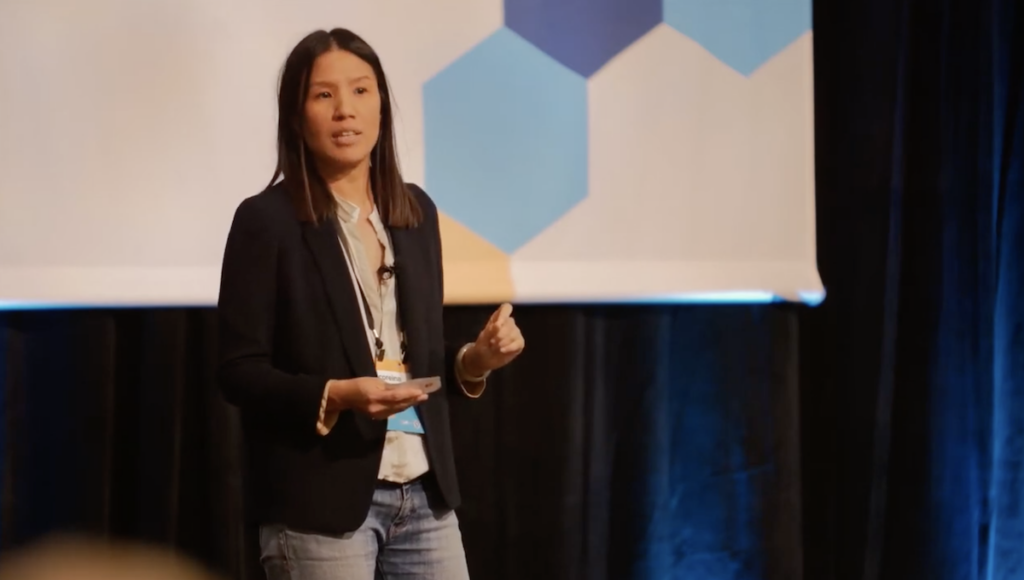
Much of RMI’s most influential work never appears in print. For more than four decades, RMI has built its reputation on rigorous analysis and ideas that challenge conventional thinking. But alongside that tradition runs another, less visible strength: bringing the right people together and facilitating sustained, meaningful conversations that help them solve tough problems together.
RMI is often invited into conversations where parties — such as utilities and customers, businesses and regulators, or financiers and communities — may have opposing interests. And while a workshop may reach a small group of people, when the key decision makers gather, people can find common cause across differing perspectives and priorities, and differences can meld into collaboration. At RMI, Coreina Chan has dedicated her career to this practice.
Trained as an architect at Yale University, Chan first encountered RMI around 2006, while studying energy and sustainability at the University of California, Berkeley. Reading Amory Lovins’s work on “soft energy paths” redefined how she thought about design. She soon joined RMI’s buildings team, where she encountered a familiar architectural practice used in an unfamiliar way: the design charrette. In architecture, a charrette — French for the cart once used to collect designs in architecture studios — is an intense working session in which designers push toward a solution together.
At RMI, Chan’s team developed ways to apply charrette-based approaches to ambitious energy and performance challenges. Bringing together teams of architects, engineers, designers, owners, and other experts, the approach often solved problems by making them bigger: Rather than focusing on each piece of equipment in a building retrofit, for example, what’s possible if the equipment, the building design, and energy inputs — the whole system — all work in harmony?
Bringing together teams of architects, engineers, designers, owners, and other experts, the approach often solved problems by making them bigger.
Over time, RMI began applying the same approach beyond buildings. Through efforts such as e-Lab, which began in 2013, participants from utilities, government, finance, technology, and advocacy worked together on questions facing the changing electricity system. The goal was not merely to assemble experts, Chan says, but to value different perspectives, define the problem together, and build enough trust to explore solutions.
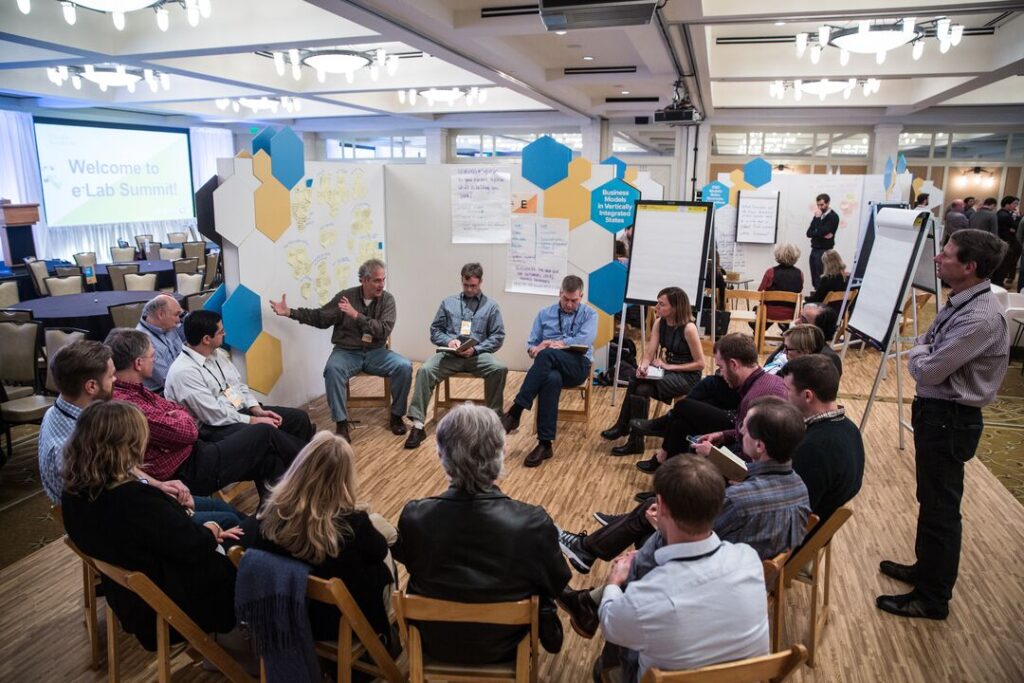
Sometimes RMI’s analytical and facilitation roles build on one another in unexpected ways. Chan recalls work involving Tri-State Generation and Transmission — a wholesale power supplier across Colorado, Nebraska, New Mexico, and Wyoming — where a tough RMI recommendation challenged the utility’s existing direction.
Rather than ending the conversation, RMI’s proposal opened a different kind of engagement. Tri-State asked the institute to help explore how change might come to life. Chan jokingly describes the combination as an analytical “Oh, wow” moment followed by the relief of, “Now, how do we do this?”
Translating those cathartic moments into real-world solutions has become a defining thread of her two-decade career at RMI. Today, she’s guiding the ongoing evolution of this practice area, helping RMI apply collaborative methods to even bigger challenges, from how best to meet rising power demand for US data centers to finding better ways to finance clean energy globally.
The next step for Chan and her small team is the Constellation Team initiative: an effort to build a broader community of advanced facilitators across RMI, making the capability more durable, more widely shared across the institute, and more available to a growing roster of outside partners.
“We’re also reconnecting with RMI’s network of alumni,” says Chan, many of whom helped shape these practices years ago. At the same time, the team is reaching out to experienced convenors and facilitators from beyond the energy field — people who have worked in peacebuilding, conflict resolution, and other high-stakes settings where trust and dialogue are essential — to learn from their experiences.
For Chan, the core lessons of RMI’s facilitation practice have only deepened over time. Ultimately, facilitation is less about clever workshop techniques than about listening deeply, helping people speak honestly, and building trust across differences.
In that space, RMI analysis can reveal a new path forward. Technology matters, certainly, but what often tips the balance is something more foundational: helping people walk that path together.
Authors

Adam Aston
Senior Director of StorytellingRelated Insights


Exploring Energy Affordability Across Income, Time, and Geography
Help build the clean energy future. Donate today.
Independent research. Real-world solutions. Supported by donors.
RMI can pursue the highest-impact climate and energy solutions because we’re supported by people who believe change is possible. Every gift helps advance the work needed to make clean energy the default choice worldwide.
And right now, your impact goes twice as far. Thanks to generous donors and our special match, every $1 you give becomes $2, up to $150,000, through December 31, 2026.