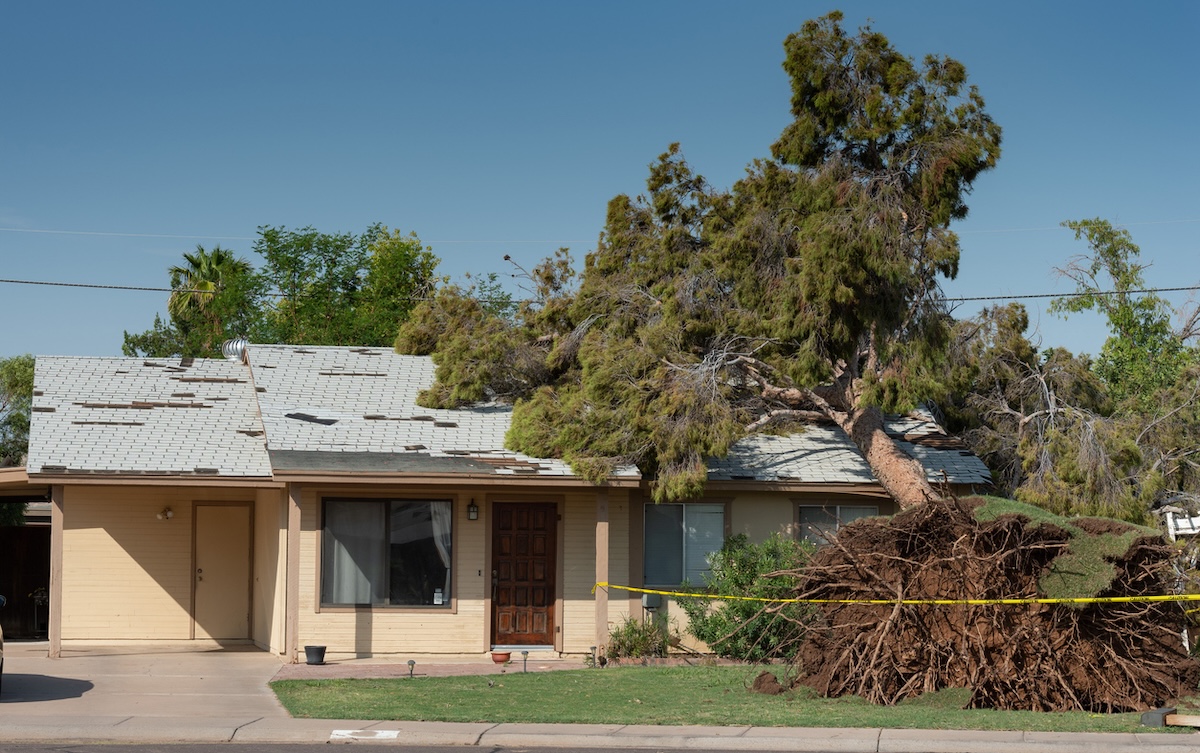
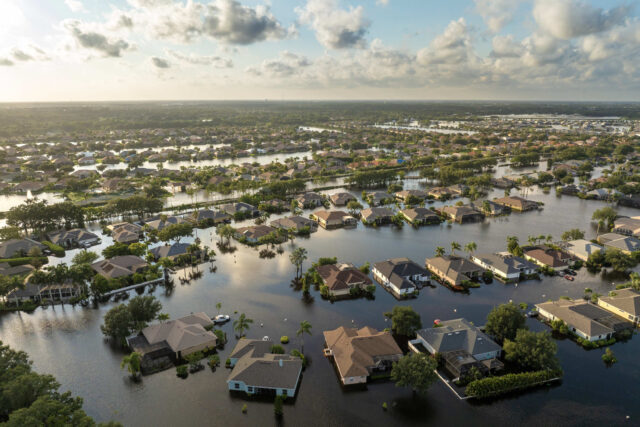
The clean energy transition will both contribute to a more resilient energy system and economy and benefit from investments in asset hardening and community resilience.
Insurance and resilience are at a crossroads
Several related issues are converging to draw attention to the role of insurance in resilience, including:
Rising risk: Extreme weather events are increasingly frequent, severe, and widespread. Insured and uninsured losses are both trending upward, with 192 billion-dollar weather-related events in the United States in the past decade costing more than $1.5 trillion. Other factors, including geopolitics, demographics, technology advances, outdated building codes, and aging infrastructure, are also reshaping risk landscapes.
Affordability: Insurance affordability is being threatened as rising insurance premiums coincide with inflation and higher energy and housing costs. This indicates both the need for resilience actions to reduce risk and improve affordability in the long run, and the challenge of supporting resilience if it will increase costs and premiums in the short run due to more accurate risk pricing.
Protection gaps: As of 2025, half of global catastrophe risk remains uninsured, with a global protection gap exceeding $133 billion. While the protection gap in the United States is lower than the global average, it still signals not only lost revenue and market share for insurers, but also that risk is not being fully absorbed by the combined public and private financial system. Although there are many reasons for this gap, it indicates that there are limits to insurance as a tool to manage and mitigate impacts from physical climate risk.
Adaptation and resilience: There is a growing awareness of the need to adapt economies, communities, and homes to ongoing and future climate change. Building resilience to shocks is a critical element of this adaptation and will contribute to risk reduction and future avoided losses. However, there is an estimated $350 billion financing gap for adaptation and resilience, and the longer deployment is delayed, the higher economic and social losses will be.
RMI has a long history of working on resilience solutions across the energy sector and built environment in the United States and globally. The clean energy transition will both contribute to a more resilient energy system and economy and benefit from investments in asset hardening and community resilience. This homepage features RMI’s work on these topics, including whitepapers, articles, case studies, and media features.
Leading actors across the insurance system are advancing resilience solutions in meaningful ways. Our work accelerates this progress by building an enabling environment via the quantification of resilience benefits and public-private coordination that turns best practices into systems change.
Rachel Goldstein
Insurance and Disaster Resilience Principal
Rachel Goldstein
Insurance and Disaster Resilience Principal
Get Updates
If you are interested in regular updates on this work, subscribe to the Climate Finance Newsletter
As narratives about insurers’ role regarding resilience gain momentum, this report explores the underlying assumptions and identifies areas for further nuance and shared responsibility.
Independent research. Real-world solutions. Supported by donors.
RMI can pursue the highest-impact climate and energy solutions because we’re supported by people who believe change is possible. Every gift helps advance the work needed to make clean energy the default choice worldwide.
For other ways to give to RMI, including checks or gifts of stock, please visit Other Ways to Give.