

Learn how we are working to transform how we use and produce energy.
The Carbon-Free City Handbook: Biological Resources
Why we share this work for free
RMI is an independent nonprofit working to accelerate the clean energy transition. We publish research like this to inform decision-makers and drive real-world impact.
Our work is supported by philanthropy as well as partnerships, including fee-for-service engagements. This support makes it possible for us to share our independent insights for free.
If you find this work valuable, you can support it anytime.
Get more insights like this
Stay up to date with the latest research, analysis, and tools from RMI by opting in to receive occasional emails below. You’ll get new reports, event invitations, and practical insights to help us all accelerate the clean energy transition.
Loading form...
Your download should start automatically. If it doesn’t, click the download button below.
This work is made possible by philanthropy
RMI is a nonprofit supported by donors and partners. Philanthropy enables us to produce independent research and make resources like this freely available.
If you find this report valuable, please consider supporting our work. You can also explore how we partner with organizations to drive impact.
Jump to Section
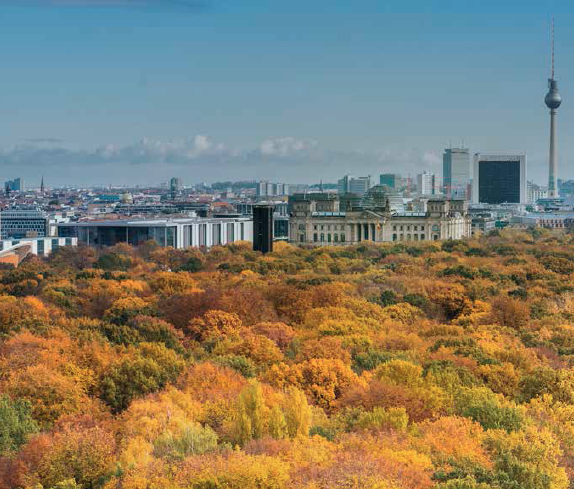
Cities must sustain the people within them, while also properly managing their biological resources through responsible agriculture, forestry, and other land-uses while reducing waste and curbing emissions.
Action 20: Organic Waste Diversion
Description
Divert organic waste—including food waste, landscaping debris, and paper and cardboard packaging—from landfills. Organic materials anaerobically decompose in landfills and produce methane, one of the most potent greenhouse gases. Diversion from the landfill waste stream and subsequent proper composting can greatly reduce GHG impacts while producing a valuable landscaping and agriculture resource.
Action Documents
- Georgia Department of Community Affairs and Georgia Recycling Coalition (SAIC Energy, Environment & Infrastructure, LLC). Residential Source Separated Organics Collection Tool Kit. 2012.
Includes information on separating organics from residential waste streams - Metro Vancouver. “Greater Vancouver Sewerage and Drainage District Bylaw No. 287, 2014: A Bylaw to Establish the Tipping Fee and Solid Waste Disposal Regulation.”
Vancouver’s policy to limit organic waste in landfills
Recommended Resources
- South Africa Department of Environmental Affairs and Tourism, et al. “The Polokwane Declaration On Waste Management.” September 2001.
- “零废弃联盟 (English Translation: China Zero Waste Alliance).”
- U.S. Environmental Protection Agency. “Managing and Transforming Waste Streams: A Tool for Communities.”
- Center for Clean Air Policy (CCAP). Tackling Waste through Community-based Composting: Bangladesh.
- Zero Waste Europe. “Network of European Zero Waste Municipalities.”
- “European Compost Network.”
- Eco-Cycle. “Zero Waste in Action.”
Additional Citations
- City of Alappuzha.
- City of Capetown. “Home Composting Programme.”
- “Cape Town Embraces Government Composting Initiative.” Cape Town Etc., April 8, 2016.
- Zero Waste Europe. “Alappuzha India, Zero Waste Town.”
- “How Alappuzha, Venice of the East, got the ‘cleanest’ tag.” The News Minute, July 12, 2016.
- “CSE’s Clean City Awards conferred on three Indian cities.” Center for Science and Environment, July 11, 2016.
- Philip, Shaju. “‘Clean Home, Clean City’: Alappuzha municipality shows the way.” The Indian Express, October 6, 2014.
- “Alappuzha Civic Body Shows the Way.” Limca Book of Records.
- Sudheesh, T. “Alappuzha shows way in waste management.” Deccan Chronicle, October 11, 2014.
- “Waste management headed in right direction: Thomas Isaac.” The Hindu, June 3, 2014.
- Venugopal, P.N. “Waste Management – The Alappuzha Approach.” Climate South Asia Network.
Action 21: Urban Forestry
Description
Well-designed urban forests can create powerful carbon sinks to remove carbon from the atmosphere and offset emissions. They can also reduce the urban heat-island effect, and therefore reduce energy use for cooling loads.
Action Documents
- City of Minneapolis and Minneapolis Park & Recreation Board (MPRB). “The Minneapolis Urban Forest Policy.” 2016
Minneapolis’s urban forestry policy - City of Minneapolis, Community Planning and Economic Development. “Chapter 350 – Site Plan Review.”
Includes landscaping requirements - City of Minneapolis. “Chapter 10 – Trees and Vegetation.” Park and Recreation Board Code and Ordinances.
Includes tree-related ordinances and codes - City of Los Angeles, Bureau of Street Services. “Urban Forestry Policies.”
Los Angeles’s urban forestry policy
Recommended Resources
- Vibrant Cities Lab (created by U.S. Forest Service, American Forests, and the National Association of Regional Councils). “Urban Forestry Toolkit.”
- McDonald, Rob et al. Funding Trees for Health: An Analysis of Finance and Policy Actions to Enable Tree Planting for Public Health. The Nature Conservancy
- McPherson, Gregory, and James Simpson. Carbon Dioxide Reduction Through Urban Forestry: Guidelines for Professional and Volunteer Tree Planters. USDA Forest Service, 1999
- Leff, Michael. The Sustainable Urban Forest: A Step-by-Step Approach. Davey Institute/ USDA Forest Service, USFS Philadelphia Field Station, 2016.
- Arbor Day Foundation the National Association of State Foresters. “Tree City USA Standards.”
- USDA Forest Service. “i-Tree Tools for Assessing and Managing Forests & Community Trees.”
- The Natural Capital Project. “InVEST.”
Additional Citations
- McPherson, Gregory E., James R. Simpson, Paula J. Peper, Scott E. Maco, Shelley L. Gardner, Shauna K. Cozad, and Qingfu Xiao. City of Minneapolis, Minnesota Municipal Tree Resource Analysis. Center for Urban Forest Research, USDA Forest Service, Pacific Southwest Research Station, 2005.
- Nowak, David, Robert E. Hoehn III, Daniel L. Crane, Jack C. Stevens, Jeffrey T. Walton, Jerry Bond, and Greg Ina. Assessing Urban Forest Effects and Values: Minneapolis’ Urban Forest. USDA Forest Service, Northeastern Research Station, 2006.
- “China Green Carbon Foundation.”
- “Treepedia.”
Action 22: Plant-Based Diets
Description
Shift menus to include more plant-based foods, creating opportunities to promote food options that cause fewer climate-related emissions while offering other health and related benefits. Conversely, diets high in meats, especially beef and pork, result in a much higher carbon footprint.
Action Documents
- City Hall of Barcelona. “Acta de la Comissió D’Economia (English Translation: Minutes of the Committee on Finance and Economics).” March 22, 2016.
Barcelona’s “veg friendly” city proposal - Food Forward. Moving Food Forward: A Win-Win Proposition.
- Sociedade Vegetariana Brasileira. “Implantando Alimentação Escolar Vegetariana (English Translation: Deploying Vegetarian School Food).” 2013.
Recommended Resources
We are proud that the municipality of Cuiabá is leading this important initiative to improve public health and develop more sustainable programs. We know that sustainability is the essential commitment for any serious political management today.
‐Emanuel Pinheiro, Mayor of Cuiabá
Get More Action Docs
Browse Additional Recommendations by Sector
Carbon-Free City Handbook: Transportation and Mobility
The Carbon-Free City Handbook: Electricity
The Carbon-Free City Handbook: Industry
The Carbon-Free City Handbook: Financing
Engage with Us
Take action today and set your community on an ambitious course to carbon-neutrality bringing economic vitality, cleaner air, and better health and resilience.
Help build the clean energy future. Donate today.
Independent research. Real-world solutions. Supported by donors.
RMI can pursue the highest-impact climate and energy solutions because we’re supported by people who believe change is possible. Every gift helps advance the work needed to make clean energy the default choice worldwide.
For other ways to give to RMI, including checks or gifts of stock, please visit Other Ways to Give.