Indiana Landfill Solar Potential Map
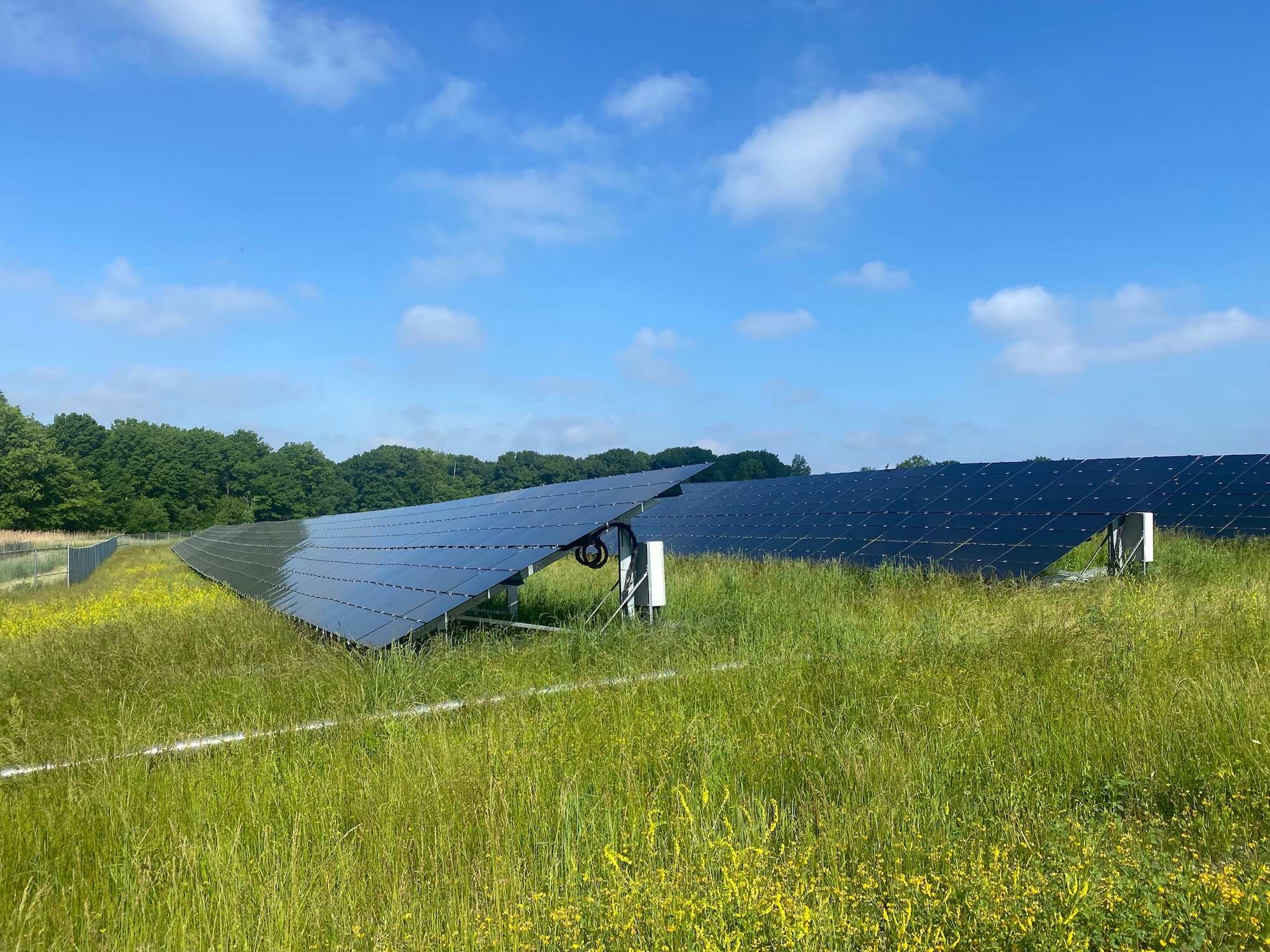
Deploying solar on closed landfills can help meet regional energy demand and put sites at the end of their life back into productive use. Closed landfills typically have direct sun exposure, existing site access, and limited redevelopment opportunities, making solar one of the few ways to productively reuse the land. RMI’s Indiana Landfill Solar Potential Map shows closed landfills in Indiana and is intended to support communities, utilities, and prospective developers in early-stage reuse planning.
Yet, despite these benefits and opportunities, landfill solar is not yet a common practice across the energy industry. To date, over 330 closed landfills now host solar in communities across the United States. However, as of October 2024, only 2 landfill solar projects have been built in Indiana, totaling 22 megawatts (MW) of power. If every landfill shown on this map were developed for solar energy, the potential exists to support an estimated 1,700 MW of solar — approximately equal to powering over 280,000 homes.
How to Use This Map:
-
Landfills on the map are colored by the estimated amount of solar capacity that could be installed. Sites with higher estimated potential are darker gold, as shown in the color bar at the top right of the map. Key factors for determining usable acreage for landfill solar include: total site acreage, overlapping floodplains (if any), and topography.
-
Each circle on the map represents a single closed landfill. Users can zoom in on a site to see the actual landfill shape.
-
Click on a landfill to learn more about that site, including its solar potential, county and electric utility details, and Indiana's "Virtual File Cabinet", which contains site-specific documents.
-
Click on the layer button
 in the top right to select/de-select an overlay of the closed landfills and electric utility service territories by type in Indiana. Note that the layer toggled on most recently will be on top.
-
You can download the data used to build the map here.
Technical Details:
Land Reuse: This map only shows landfills with no publicly planned reuse. Some landfills with a planned, concurrent reuse may still be suitable for solar, but these are not shown on the map at this time.
Estimated Useable Acreage is the total area of the site that is not in a floodplain or wetland and does not have a steep slope. Actual usable acreage may be greater (if landfill buffer or nearby rooftops are available) or smaller (if parts of the site are unsuitable for supporting solar due to physical, safety, policy, or financial constraints).
Estimated Viable Solar Capacity assumes that 70% of the Estimated Usable Acreage is developed for solar, assuming approximately 5 acres are needed to generate 1 MW of solar. This considers site-specific limitations resulting from topography, sloping, vegetation, and other factors.
Site-Specific Information is Available in the Virtual File Cabinet: This map does not include every factor for site suitability. Documents in the Virtual File Cabinet may provide additional details that can help determine site viability for solar development.
Contact Us
To learn more about this tool or technical assistance available, contact Matthew Popkin (mpopkin@rmi.org) and Jacob Becker (jbecker@rmi.org).
Credits & Contributions:
This map was created by Jacob Becker, with contributions and support from Matthew Popkin, Tansy Massey-Green, Hannah Perkins, and Bill Brown (Indiana University Environmental Resilience Institute).
The map is supported by our partners at Kansas State University's Technical Assistance to Brownfields program, who provide technical assistance to communities across US EPA Regions 5-8 and for Tribal communities nationally.

Data Sources:
County Boundaries. Indiana Geographic Information Office. IndianaMap. IndianaMap.org. https://www.indianamap.org/
Slope: Esri. WorldElevation/Terrain (ImageServer). ArcGIS REST Services Directory. https://elevation.arcgis.com/arcgis/rest/services/WorldElevation/Terrain/ImageServer
Floodplain: FEMA. The National Flood Hazard Layer (NFHL). https://www.fema.gov/flood-maps/national-flood-hazard-layer
Utility Service Territories and Transmission: EIA. Energy Atlas. atlas.eia.gov
Landfill Data and Boundaries: Office of Land Quality, Indiana Department of Environmental Management