

Learn how we are working to transform how we use and produce energy.
Winter 2026
Impact Report
RMI’s vision of a clean energy future commits us to THINK bigger, DO boldly, and SCALE globally.
IMPACT SPOTLIGHT
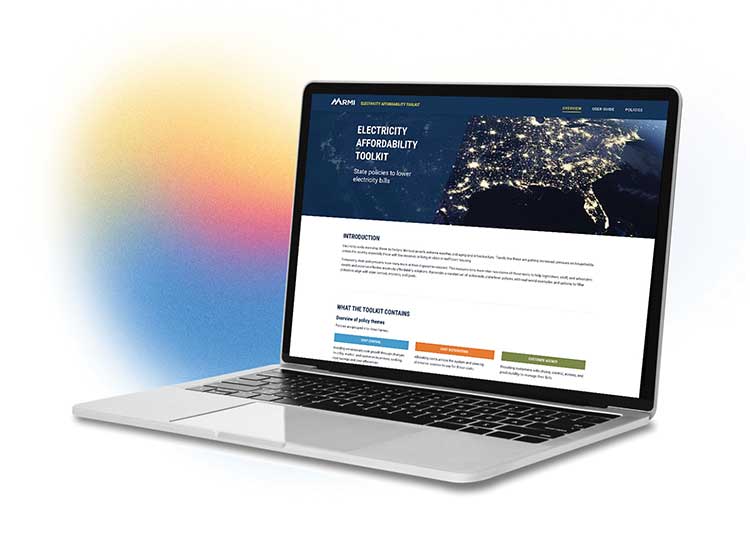
Putting Affordability at the Center of the Energy Transition
Affordability is not just a consumer issue; it is a system design challenge. Many rising costs stem from outdated planning approaches that prioritize infrastructure expansion over efficiency, flexibility, and customer participation. Addressing this challenge requires more than a single policy or technology. It demands a coordinated, practical approach that puts affordability at the center of energy decision-making. By elevating policies that reduce peak demand, extend the life of existing assets, and empower customers to play an active role in the grid, states can avoid unnecessary spending before it reaches utility bills.
Continue reading
RMI’s Electricity Affordability Toolkit was created to meet that need. Designed for state policymakers and advocates, the toolkit offers a comprehensive, actionable suite of policies to improve electricity affordability through three core strategies: cost control, cost distribution, and customer agency. Included across those strategies are policy safeguards to ensure low- to moderate-income customers are protected from disproportionate system costs. Rather than prescribing one-size-fits-all solutions, the toolkit equips decision makers with options they can tailor to their state’s unique energy landscape.
It highlights a variety of proven policies that can deliver meaningful savings for customers. Low-income energy-efficiency programs help households reduce energy use and lower monthly bills by improving insulation, appliances, and building performance. Virtual power plants aggregate distributed energy resources such as rooftop solar, batteries, and smart devices, compensating participating customers while lowering system costs and improving grid reliability during peak demand. And advanced transmission technologies increase the capacity and efficiency of existing power lines, allowing states to move more clean energy without the expense and delays of building new infrastructure.
Each of the more than two dozen policies in the toolkit is categorized by its expected time horizon and potential cost savings, enabling policymakers to identify near-term actions that provide immediate bill relief alongside longer-term investments that reduce system costs. The Electricity Affordability Toolkit has been widely welcomed by advocates and policymakers and is already being used to inform education, advocacy, and policy development across states. By translating complex energy solutions into practical, decision-ready guidance, it helps states deliver lower bills while accelerating the clean energy transition.
SUPPORTER SPOTLIGHT
“When we look at impact per dollar, RMI has been our best philanthropic investment.”
— RUDY RAMSEY, LONG-TIME RMI SUPPORTER, ALONGSIDE HIS WIFE ALICE, THROUGH THE RUDY AND ALICE RAMSEY FOUNDATION

In times of uncertainty, the Ramsey family believes flexibility and trust are not just helpful — they are essential. As long-time supporters of RMI through their foundation, the Rudy and Alice Ramsey Foundation, the family typically gives targeted project support that drives innovation.
Recognizing that many of the trusted nonprofit partners they support are navigating a complex and rapidly changing environment, this year, they made a deliberate shift. Two generations of Ramseys unanimously agreed that long-term progress depends on strong, resilient institutions and, in this moment, unrestricted support mattered most. They believe those closest to the work are best positioned to determine how resources can sustain momentum and maximize impact, saying, “Providing flexible funding allows organizations like RMI to stay focused, adapt as needed, and continue delivering the results that drew us to them in the first place.”
Continue Reading
We are deeply grateful to the Ramsey family for their foresight and generosity. In today’s rapidly evolving energy landscape, impact depends on the ability to move quickly, act across systems, and adapt as conditions change. Rising electricity demand, policy volatility, geopolitical uncertainty, and tightening public funding place a premium on organizations that can respond with speed and strategic judgment. The Ramsey’s unrestricted support enables RMI not just to weather uncertainty but to also drive lasting impact.
Clean energy starts with you. Donate today.
RMI is a global, independent organization of over 700 diverse experts partnering with a wide range of collaborators to build a clean energy future. As a 501(c)(3) nonprofit RMI generates the vast majority of its support from philanthropy. Make a gift today.
For other ways to give to RMI, including checks or gifts of stock, please visit Ways to Give.
IFrame Content

THINK

Lightening the Data Load
As data centers spread, communities face real risks to energy reliability and affordability. RMI’s Lightening the Load report shows how local leaders can meet rising demand with clean energy solutions, from on-site solar and batteries to community resilience hubs and fair large-load tariffs. Communities from the South to the Southwest are using the report’s insights to inform decisionmaking on data centers.
A Regional Path to 100% Renewables
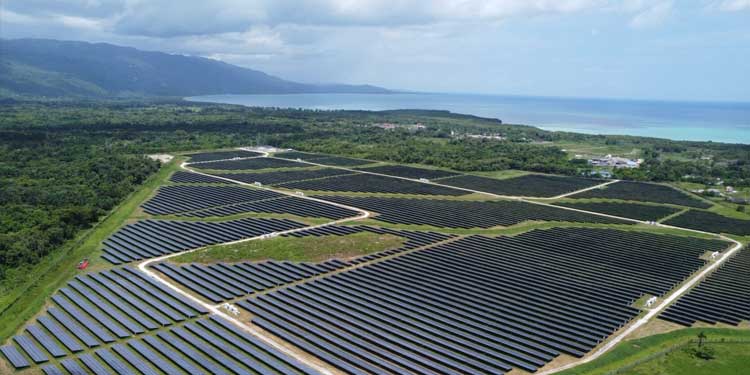
RMI’s Caribbean Regional Transition Scenario shows how island nations can move toward 100 percent renewable energy together by centering the region’s abundant solar, wind, geothermal, and hydro resources. By employing modern technologies and smart policies, the scenario charts a unified path away from costly fossil fuel imports and aging diesel systems, toward affordable, reliable power that strengthens energy security across the region.

Powering India’s Battery Loop
RMI’s Charting a Circular Battery Future in India report is shaping the global conversation on clean energy and mineral security. The research sparked an Associated Press feature highlighting how recycling and reusing batteries could create more than 100,000 jobs, meet nearly 40 percent of India’s mineral needs, and unlock a ~$9 billion market opportunity. It’s proof that smart circularity can power economic growth and climate progress, together.

Buying Carbon Removal at Scale
Reaching gigaton-scale carbon removal by midcentury will require roughly $20 billion a year by 2035 — far more than today’s markets can deliver. In a new discussion paper, RMI shows how a government-led advance market commitment could close critical funding gaps, accelerate scale, and give governments a powerful tool to shape a durable, high-integrity carbon removal market.
Unlocking Electrification’s Full Value
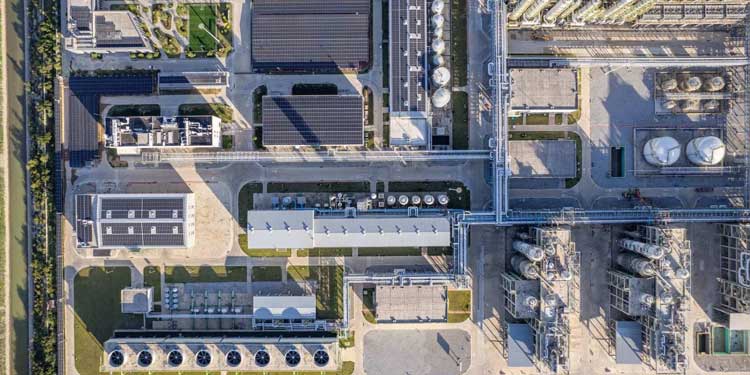
Industrial electrification can deliver more than simple cost savings — but traditional analyses often miss its full value. RMI and Schneider Electric’s new Integrated Net Present Value (iNPV) framework helps decision makers quantify the broader benefits of electrification and automation, from operational flexibility and risk reduction to market differentiation. By capturing these hidden value streams, the iNPV framework equips companies to make smarter, more forward-looking investment decisions.
DO

Reg Lab Scales Up
As utility affordability becomes a growing crisis, RMI’s Regulatory Collaborative (Reg Lab) is meeting the moment. Launched three years ago, Reg Lab convenes public utility commission staff to break down siloes and tackle shared challenges. This past year, participation surged as regulators focused on containing utility costs. The latest cohort — triple the size of the original cohort — took what they gained from their participation and ran with it. Several participating states have since advanced regulatory processes to contain costs, informed directly from their experiences in Reg Lab.

Methane Leaks, Real Stakes
Paramount+’s drama series Landman gets one thing right: leaking gas is a serious risk. RMI research finds that wasted gas and methane emissions from West Texas rank among the largest in the US with real impacts on communities, climate, and energy waste. Read more at rmi.org/landman

Powering Africa’s EV Future
Rapid urbanization is making electric mobility an urgent priority across Africa, but fragmented policy remains a major barrier. RMI and the United Nations Environment Programme developed a framework to harmonize policies across regions and help unlock stronger demand, enable cross-border trade, and support inclusive economic growth. Alongside finance mobilization, workforce development, and other key measures that would further support EV markets in the region, this approach can help secure Africa’s clean mobility future.

Rethinking Aviation’s Hidden Impacts
RMI is advancing how companies measure aviation’s climate impacts beyond carbon alone. Through a series of corporate pilot projects, RMI showed that flight-by-flight contrail accounting dramatically improves accuracy compared with broad, traditional methods, which often overestimate impacts. Using real flight data, pilots revealed which flights drive the most warming, enabling companies to avoid the highest-impact routes.
Putting Communities at the Center
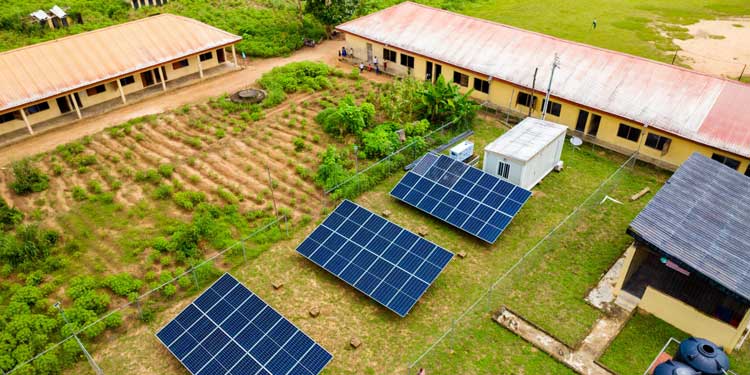
Across sub-Saharan Africa, many rural communities still lack reliable, affordable electricity. Minigrids are a proven path forward — but only if they are built to last and designed around community needs. Developed through RMI’s Africa Minigrids Program (AMP) in partnership with UNDP, the Community-Centric Minigrid Toolkit offers practical guidance for designing and deploying sustainable minigrids that empower communities and advance universal energy access.
SCALE

Make Less, Make Better, Make New
Heavy industry sits at the core of the global economy and at the center of the net-zero challenge. Cement, steel, and chemicals are essential to modern life, yet together they account for a significant share of global emissions. Through Third Derivative, RMI’s climate tech accelerator, we are helping transform these sectors by supporting startups that rethink how the materials that underpin modern life are made and proving that decarbonization and competitiveness go hand in hand.
Continue reading
As we made rigorous technical investment across heavy industry, a clear framework emerged for the innovations needed to reach net zero: Make Less, Make Better, and Make New.
Make Less focuses on reducing demand for virgin materials through smarter resource use. Third Derivative startups are advancing lower-emission emissions in steelmaking through that cut material use while maintaining performance. In steel and chemicals, innovators are scaling recycling and material efficiency solutions that reduce waste and ease pressure on supply chains.
Make Better targets emissions reductions in today’s industrial processes. Third Derivative startups are improving efficiency and cutting emissions in steelmaking through electrified furnaces, novel process controls, and cleaner feedstocks. In chemicals, innovators are deploying electrified and modular production systems that lower emissions while improving flexibility and resilience.
Make New represents the most transformative leap: entirely new production pathways designed for low or zero emissions from the start. Third Derivative startups are pioneering hydrogen-based ironmaking, next-generation cement chemistries, and breakthrough chemical processes that eliminate fossil fuels altogether — opening the door to fundamentally cleaner industrial systems.
Together, these approaches are unlocking investment-ready pathways. By backing innovators across the framework, Third Derivative is helping build a resilient future for heavy industry grounded in real technologies, companies, and momentum.

Philanthropy powers our big ideas and ensures that everyone can enjoy a clean, prosperous, zero-carbon future. Thank you to our donors, who are accelerating today’s climate solutions for tomorrow.
Help build the clean energy future. Donate today.
Independent research. Real-world solutions. Supported by donors.
RMI can pursue the highest-impact climate and energy solutions because we’re supported by people who believe change is possible. Every gift helps advance the work needed to make clean energy the default choice worldwide.
For other ways to give to RMI, including checks or gifts of stock, please visit Other Ways to Give.