

Learn how we are working to transform how we use and produce energy.
Reconsidering Planned Generation
Future-proofing electricity affordability, reliability, and security in a rapidly changing world
Why we share this work for free
RMI is an independent nonprofit working to accelerate the clean energy transition. We publish research like this to inform decision-makers and drive real-world impact.
Our work is supported by philanthropy as well as partnerships, including fee-for-service engagements. This support makes it possible for us to share our independent insights for free.
If you find this work valuable, you can support it anytime.
Get more insights like this
Stay up to date with the latest research, analysis, and tools from RMI by opting in to receive occasional emails below. You’ll get new reports, event invitations, and practical insights to help us all accelerate the clean energy transition.
Loading form...
Your download should start automatically. If it doesn’t, click the download button below.
This work is made possible by philanthropy
RMI is a nonprofit supported by donors and partners. Philanthropy enables us to produce independent research and make resources like this freely available.
If you find this report valuable, please consider supporting our work. You can also explore how we partner with organizations to drive impact.
Jump to Section
Introduction
Power sector decision makers have an increasingly difficult job balancing competing priorities and crises — yet this moment simultaneously offers new opportunities driven by innovation in clean technologies. Demand is growing rapidly, extreme weather events are increasing in frequency and severity, and geopolitical disruptions are ongoing.[1] These create enormous uncertainty and challenges for power sector planners who seek to provide people with reliable, affordable, and secure electricity that strengthens the economic competitiveness of their countries.
But this is also a time of tremendous opportunity. The past decade has seen unprecedented technological advancement, much of it in clean energy — solar and wind costs have respectively fallen by 70% and 55% and are now the cheapest sources of energy on much of the planet; battery costs for firming those variable resources have fallen by 90%; and virtual power plants (VPPs) grew by 33% in North America from 2024 to 2025.
And more technologies are on the horizon, as long-duration energy storage (LDES), next-generation geothermal, and even small modular nuclear reactors navigate a path toward commercial viability. Paired with new planning approaches that help identify least-regrets investments under uncertainty, these resources can be deployed modularly to closely track demand growth and mitigate the risk of overbuilding or underbuilding.[2] They can also provide speed to power, completing construction more rapidly than conventional resources. Although transitioning to these resources is neither simple nor linear, approaches to do so are improving just as quickly as costs are declining.
Low- and middle-income countries (LMICs) — particularly those reliant on fuel imports for electricity generation — face significant questions amid these trends given plans for grid-connected coal expansion. Nowhere is the confluence of these trends more acute than in LMICs, where electricity system change has been particularly dynamic, and which are projected to drive most future electricity demand globally through 2035.[3] Many LMICs also import a significant portion of their coal and/or natural gas fuel supply for energy and electricity use, subjecting their sectors to volatile prices.[4] This creates an urgency for countries to reevaluate power sector planning in tandem with addressing enabling conditions to unlock adoption of alternative sources of low-cost electricity.[5]
In the immediate term, there are many planned generation investments that might be important to reconsider, given both ongoing trends and acute price shocks that are upending traditional approaches to power system planning and operation. Planned, grid-connected coal plants represent one set of these.[6] Historically, coal-fired generation has played a critical role in many LMICs — affordably electrifying economies, heating homes, enabling industrial development, and providing stable jobs. However, as the needs of the grid are changing, and as new technological capabilities are available, the use of coal for power generation in many countries has been in structural decline due to economic and operational pressures from alternatives (including gas), air pollution and environmental priorities, and shifts in needed performance characteristics.[7] Meanwhile, recurring energy crises around the world raise questions about the security implications of relying on an imported supply of fuels priced on a global market.
Today, 640 gigawatts (GW) of grid-connected coal power remain in the development pipeline globally, with 630 GW of that planned in LMICs.[8] These new plants may operate into the 2060s, or longer, given the average lifetimes of existing coal plants. If system operational and economic needs evolve, these plants may be underutilized and ultimately become burdens that increase costs to the system and to customers. Given the scale of disruption and pace of innovation, there is a critical opportunity to reconsider locking in these planned plants, and to test whether alternatives might better meet nations’ goals of power sector affordability, reliability, energy security, and economic competitiveness.
For decision makers wrestling with these questions, this brief offers tools for determining whether planned coal plants are good candidates to be paused or reconsidered. There is no simple answer to the question of whether planned coal plants are or are not the best option for a power system. And some planned coal plants may remain the best option available for their particular situations, such as, in many combined heat and power (CHP) applications or areas with limited renewable resources availability. But recent work by RMI and partners directly with developers and power sector decision makers provides growing evidence that alternatives can better provide affordable, reliable, and secure power in many situations — all while remaining financially attractive to investors and project developers and creating benefits for local communities.
To support developers, regulators, government agencies, utilities, and stakeholders in evaluating whether planned grid-connected coal plants are good candidates for reconsideration, this brief provides:
- An overview of where and why coal power continues to be developed today;
- A simple framework to help decision makers identify planned plants that might be reconsidered;
- Suggested steps for applying the framework to evaluate candidate plants; and
- An Appendix (see the full brief) with details on how to assess the indicators relevant for planned plants and their economic competitiveness.
Resources are available to support deeper analysis, and future briefs will share evaluations of specific plants and alternative options. Based on RMI’s experience supporting developers and regulators in reevaluating plants, a significant number of planned grid-connected coal plants in LMICs could be ripe for reconsideration. For example, close to 30% of planned plants (or 170 GW) were first conceptualized a decade or more ago when capital and fuel costs, technologies, interest rates, and geopolitics looked quite different. And close to half of those plants remain in early stages of development, when most costs have not been locked in. As a first step, we encourage readers to apply the framework provided here against planned coal projects in their jurisdiction to begin identifying those that might be candidates for reconsideration.
In future briefs, we will explore the project-specific technical, economic, and financial viability of alternatives, and the situations where these alternatives are most likely to be attractive to all parties. Support is available from RMI and partners for stakeholders interested in more detailed study of specific power systems or plants — please contact plannedpower@rmi.org.
A significant amount of new coal capacity is planned globally, primarily in LMICs. The global landscape of coal-fired power has been transforming over the past decade — hundreds of gigawatts of coal plants under development have been canceled, with incremental coal plant additions in 2024 hitting their lowest level in two decades. There has also been significant momentum to transition operating coal plants ahead of schedule, especially where such plants have become uneconomic and are increasing electricity costs for customers. These forces have led to transition strategies and pilot projects being explored by governments, plant owners, and multilateral financial institutions.[9]
Despite these shifts, according to Global Energy Monitor (GEM), as of October 2025 more than 640 GW of grid-connected coal plants are still under development globally.[10] As Exhibit 1 illustrates, if built, this would represent a 33% increase in the world’s grid-connected coal-fired capacity. This data is directionally accurate but imprecise, both because planned projects do not always reach completion, and because not all planned projects have been publicly announced (e.g., they may exist in the business plans of plant owners, or as notional capacity in utility resource plans).
Exhibit 1
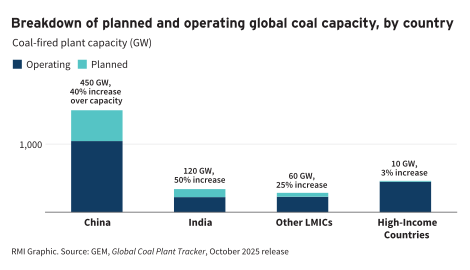
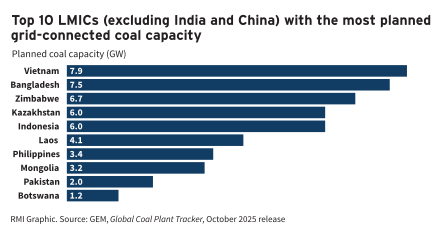
This planned, grid-connected coal capacity is spread across more than 1,000 units, 31 countries, and five continents. Over 98% of this capacity (630 GW) is being planned in LMICs, with just under 11 GW of planned grid-connected capacity in high-income countries (HICs). As Exhibit 1 shows, India and China dominate build-out, but a range of other LMICs are also planning coal-fired power plants — the 10 countries with the most capacity (Exhibit 2) have approximately 50 GW in planned, grid-connected capacity.
Exhibit 2
The pipeline of planned capacity includes many plants that were conceived long ago and have been revived in moments of crisis. GEM has tracked data on planned coal plants around the world since 2014, including how plants have moved between development stages. As Exhibit 3 shows, a surge in coal plant initiation occurred between 2022 and 2025. [11] This surge was driven in part by price shocks in the global liquified natural gas (LNG) market following the invasion of Ukraine by Russia and resurgent electricity demand coming out of COVID. In China, rapidly growing demand for power, a 20-year record-low river flow and hydropower, lack of power system flexibility, and increasing concerns about energy security led to an acceleration of new coal power approvals in 2022–23.
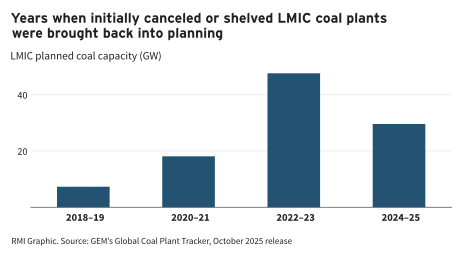
Notably, 28% (over 170 GW) of coal capacity planned in LMICs today was conceived prior to 2016 — more than a decade ago — with an additional 50 GW initiated between 2016 and 2020. Most of these plants (100 GW) were at one point shelved or canceled before being brought back into active development.[12] As Exhibit 4 shows, there was a spike in reviving these plants during the same period as the increase in new project starts (2022–25) as countries sought rapid, off-the-shelf solutions amid those crises.
Exhibit 3
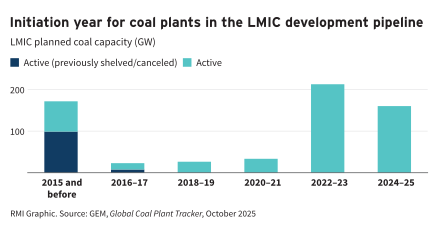
Exhibit 4
There are logical reasons that grid-connected coal plants were originally selected in many situations. Both individual power plants and system planning processes are unique across countries planning to add new coal capacity. But most share a similar set of factors that have led to selecting these plants in their power development planning, including:
- Cost competitiveness — Depending on available resources, land constraints, load and grid dynamics, and local energy supply chains, new coal power may be considered an economically competitive supply option to deliver reliable electricity. Historically, favorable financing costs and terms for coal plants have also contributed to this selection.
- District and industrial heat requirements —Planners needing to serve industries requiring process heat and/or district heating may significantly constrain available technology options. Although this brief focuses on planned coal plants providing electricity, innovative solutions are increasingly available for heat-oriented applications.[13] Of the 640 GW of grid-connected coal power planned in LMICs, around 110 GW is slated to provide a CHP function.
- Perceived energy security — Among nations that import fossil fuels for electricity generation, coal is often considered to be more reliably available and affordable relative to other resources. The LNG price shocks noted earlier contribute to this perception, while the continued geopolitical dynamics including from the Persian Gulf conflict and delays both in gas turbine delivery and in gas infrastructure and LNG terminal build-out may contribute to the selection of coal by planners.
- Legacy operational practices and assessments of grid needs — Power system plans are inherently dependent on an understanding of current and future load, and what the grid needs to provide as a result. Legacy assessments of grid needs may have pointed toward a continued need for “baseload” generation, which may particularly be a driver behind the 35% of the planned coal pipeline that was initiated prior to 2020.[14] However, these grid needs are rapidly evolving and, in many geographies, there is an increasing need for flexibility and peaking capacity. Grid operators may also be more comfortable with an overabundance of conventional resources as they become more familiar with strategies to integrate increasing variable and inverter-based resources.
- Legacy planning assumptions and procurement practices — Technology availability, capabilities, and costs are changing just as rapidly as grid needs. Planning models that include outdated and inaccurate estimates of these parameters, or omit technologies entirely, can lead to prioritization of conventional resources that are no longer economically optimal. For example, battery energy storage system (BESS) costs have declined much faster than many forecasts anticipated, leading to power development plans that did not consider scenarios representative of today’s reality. Similarly, if procurement practices have not been updated to be inclusive of newer technologies, they may give preference to coal and other thermal generation.[15]
Recognizing these factors, the following section provides a framework for considering whether they hold true for individual planned plants, and what the implications might be on whether to reconsider them relative to alternative options.
Power sector decision makers and developers can identify plants to reconsider by assessing how they map to key indicators. Taking the global context into consideration, a power sector planner or a developer with planned coal can quickly evaluate whether a plant should be reconsidered to ensure affordable, reliable, secure electricity supply. Considering grid-connected plants intended for electricity supply, Exhibit 5 provides a simple framework for decision makers to evaluate whether a given plant is a good candidate to reconsider alongside alternatives. As described in the following section, this can serve as a first step that can be conducted quickly and can help determine whether a more detailed feasibility study is warranted.[16]
Exhibit 5
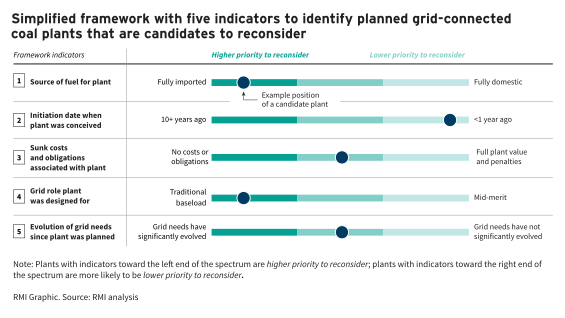
This framework revolves around five key indicators to help decision makers determine whether to further assess the economic competitiveness of alternatives to a planned coal plant, in the context of evolving grid needs:
- Indicator 1: What is the source of fuel for the coal plant? The plant’s fuel source has implications for both energy security and affordability. Imported fuels will be exposed to greater risk of supply disruption relative to domestic production, while also exposing customers, offtakers, taxpayers, or the developer to commodity price volatility and foreign exchange risk, which may not always be mitigated by fuel supply agreements (FSAs).
- Indicator 2: When was the plant originally conceived? Plants that have been under development for an extended period are more likely to be uncompetitive compared with alternatives. These plants were selected and designed at a time when technology, financing, and fuel cost projections were significantly different, and grid needs may have significantly shifted since then.
- Indicator 3: What sunk costs and contractual obligations are attached to the plant? As a project progresses through development stages, it accrues sunk costs and obligations. These include invested capital (such as for acquired land and plant equipment) as well as contractual obligations and fees or penalties to exit those contracts (including power purchase agreements [PPAs], FSAs, and engineering, procurement, and construction [EPC] contracts). The greater these sunk costs and obligations, the more expensive a transition to an alternative will be. For most of the development time frame, these costs and obligations are minimal and increase quickly as financial close is reached and construction begins. If plant owners forgo future revenues by transitioning to an alternative, additional compensation may be required. Although financial instruments may be available to offset these various costs, plants in earlier development stages generally have fewer costs and are more straightforward candidates to reconsider.[17]
Indicator 4: What role was the coal plant originally designed to play on the grid? Although conventional definitions of baseload and mid-merit resources are becoming less useful in the context of rapidly evolving grid needs, these constructs are still the basis around which most planned coal plants have been designed. Mid-merit resources typically follow predictable dispatch patterns with moderate ramping flexibility, while baseload resources are expected to operate effectively continuously, with minimal cycling. Historically, it has been much more common for coal plants to be designed as baseload resources, but advanced combustion technologies and design modifications can enable coal plants to play a more flexible role on the grid, closer to a mid-merit resource.[18]
However, even the most advanced coal plants are not as flexible as combined-cycle gas turbines commonly built to provide mid-merit capacity, and far less flexible than BESS resources. In addition to technical capabilities, contractual constraints also inform the role a coal plant is likely to play on the grid. For example, plants designed and contracted on the expectation of a need for baseload energy are more likely to become uncompetitive (or even liabilities) as grids modernize and are strong candidates to reconsider.
- Indicator 5: How have grid needs evolved since the coal plant was planned? A range of factors may have driven an evolution of grid needs since the coal plant was first planned. This evolution could include increased variable renewable energy deployment and changes in the system’s net load profile, shifts in resource adequacy needs and procurement strategies, or differences in what grid services are undersupplied (among many other factors). The potential addition of new large loads including data centers, industrial hubs, and electrification may be an important consideration as well. If this evolution has already occurred or is anticipated in the near future and these dynamics were not factored into the plant’s selection and design, it is a good indicator that the plant should be reconsidered. Ideal least-regrets resource plans will be future-proofed to allow for modularity and both operational and procurement flexibility to meet these evolving and uncertain grid needs.
Although they contain layers of complexity, these indicators can generally be evaluated quickly by decision makers with knowledge of a country’s power sector. To apply the framework to a plant, a decision maker need only identify the approximate position on each indicator’s sliding scale, as discussed in the following section. Depending on how a plant measures up, it might fall into one of the following categories:
- Higher priority to reconsider: These plants will have most of their indicators toward the left side of the spectrum on the framework. For example, for a plant with limited sunk costs that was planned as baseload in a grid where the needs have evolved significantly, alternatives are likely to be technically preferable and economically competitive.
- Higher priority to reconsider with additional financial or technical support: These plants might have only one or two indicators toward the left side of the spectrum. For example, a plant designed for baseload where the grid’s needs have evolved, but which was recently planned, will use domestically sourced fuel, and has meaningful sunk costs. Alternatives might be more competitive than this plant, but only if financial support is available to overcome sunk costs.[19]
- Lower priority to reconsider: Plants in this category might be more competitive options based on high-level economics and grid needs. For example, these might be recently planned plants with significant sunk costs, designed to play a role that is aligned with what the grid needs both today and into the future, and using domestically sourced fuel that is cost competitive and reduces energy security risk. These plants may be lower priority relative to other assets for plant-specific study, but may still be reconsidered as part of a broader reevaluation at the system level.
Applying the Framework to Reevaluate Planned Plants
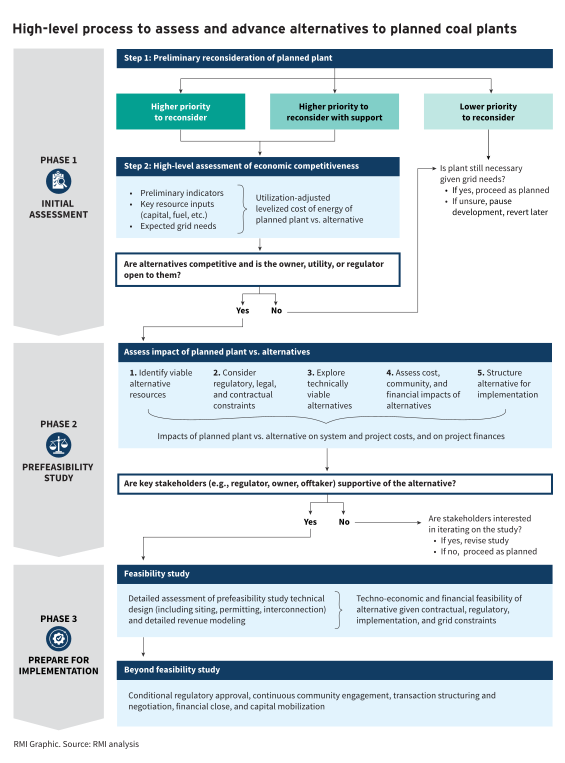
Reevaluating a plant — or plants — can be approached in three phases, as shown in Exhibit 6. Exploration of a plant during these phases can of course be stopped at any time, but these offer natural points where sufficient new information is available to decide how to proceed. This brief focuses on Phase 1, while future briefs will provide detail on other phases. Within Phase 1, there are two main steps: (1) placement on the framework, and (2) high-level analysis of economic competitiveness.
Phase 1, Step 1: Preliminary reconsideration of planned plant using framework
As noted in the previous section, a first step is to move through the five indicators and answer the top-line question to place the plant on the spectrum. The objective of this exercise is to determine whether there is a compelling reason to further evaluate a plant. Decision makers and stakeholders with deeper knowledge of both a country’s power sector and the plant’s history will likely be able to evaluate each indicator quickly. For more complex situations, Appendix A includes detailed considerations that may be helpful in evaluating each indicator and Appendix B applies the framework to illustrative plants (see the full brief).
The following guiding questions and hypothetical situations provide a starting point for applying the framework:
- Indicators 1 and 2: Source of fuel and initiation date
These indicators are straightforward to evaluate, and data is publicly available on each for nearly all planned plants globally, for example through GEM’s Global Coal Plant Tracker. As noted above, this may introduce additional economic and social considerations to account for. - Indicator 3: Sunk costs and obligations associated with plant
In comparison with either plant value at the beginning of commercial operation or costs incurred to complete coal plant, what degree of development costs has this plant incurred and/or what contractual obligations is it under? How significant are the penalties for exiting those contracts?- Higher priority to reconsider: A preconstruction plant that has minimal capital invested and has not yet signed EPC or FSA contracts (or where those can be exited or modified with limited penalty).[20]
- Higher priority to reconsider with support: A preconstruction plant that has a signed PPA contract and has reached financial close, and thus would incur exit penalties.
- Lower priority to reconsider: An under-construction plant that is close to completion, with significant spent development costs and an FSA with stiff cancellation penalties.
Exhibit 6
- Indicator 4: Grid role plant was designed for
What was the expected capacity factor for the plant when it was designed and financed? If the plant has not yet been fully designed, was it procured in alignment with robust and well-calibrated system planning? How flexible is the plant’s compensation structure, and how much operational flexibility will its design allow?- Higher priority to reconsider: A subcritical coal plant with limited flexibility, designed for baseload, while the grid now requires flexible operation.
- Higher priority to reconsider with support: A supercritical coal plant designed for baseload, sited in a grid needing flexibility, but its PPA disincentivizes flexible operation.
- Lower priority to reconsider: An ultra-supercritical coal plant designed for baseload operation, which the grid still needs.
- Indicator 5: Evolution of grid needs since plant was planned
How and to what extent has the system’s current and projected net load profile evolved since the coal plant’s planning was initiated? How much variable renewable energy capacity is expected to be integrated during the plant’s lifetime?[21]- Higher priority to reconsider: The grid has seen significant solar deployment since plant was planned, with capacity increasingly needed during evening hours.
- Higher priority to reconsider with support: The grid has seen significant variable renewable deployment to the point that midday net load is minimal, meaning that additional renewable generation may require greater BESS pairing to shift power to evening hours.
- Lower priority to reconsider: The grid the plant is to be sited in has limited existing baseload resources and limited variable renewable generation, such that net load is relatively flat and aligns well with the coal plant’s operational characteristics.
Phase 1, Step 2: High-level assessment of economic competitiveness
If users of the decision framework in Step 1 conclude a planned coal plant is a candidate to consider (with or without technical and financial support), the next step is a high-level assessment of the coal plant’s economic competitiveness compared with alternatives. Although definitively answering this question requires complex analysis (i.e., Phases 2 and 3 in Exhibit 6), a simple levelized cost of energy (LCOE) assessment is typically sufficient to inform a decision to proceed with more detailed study.
For the planned coal plant, LCOE can be informed by the five indicators above, and estimated from a short list of factors related to the project’s design and location, such as capital costs, fuel costs, combustion technology, and utilization rate.[22] Critically, it is important to consider the plant’s expected utilization rate in light of actual grid needs rather than the assumption made when the plant was planned or its expected PPA price. For example, a plant that was planned to provide baseload power might have originally assumed a capacity factor of 75%. However, if grid needs have evolved, it may only be needed at a 50% capacity factor under updated assumptions. This would increase the plant’s LCOE by roughly 30% (depending on the ratio of fixed to variable costs).
Alternatives to compare against should be selected based on an estimation of which technologies, or combination of technologies, may be able to meet the grid’s needs as well as or better than coal. If that alternative includes variable renewable energy generation, calculating its LCOE would be a similar process to coal but also accounting for local resource availability (this affects the combination of renewable resources required to meet grid needs). For example, an alternative utilizing solar power as its primary energy source would require significantly more storage capacity to provide the equivalent of a coal plant operating at 75% compared with 50% capacity factor.[23] RMI’s analysis of electricity markets around the world, particularly those with limited domestic natural gas resources, has generally found that the most competitive options against planned coal include some combination of variable renewable energy paired with BESS.[24]
To provide an example for how this comparison might look, Exhibit 7 compares the LCOE across a range of scenarios for a new ultra-supercritical coal plant against an alternative that includes solar generation paired with either four-hour or eight-hour BESS, under conservative scenarios (with high starting costs for solar photovoltaics [PV] and BESS) and realistic scenarios.[25] The realistic scenarios include starting costs and design configurations for PV and BESS aligned with norms in many markets with active renewable energy industries today.[26]
As Exhibit 7 shows, the time frame for tightening economics between planned coal and alternatives coincides with a period when many new coal plants are planned. These plants would reach commercial operation at a time when solar with BESS is already cheaper than even the most efficient new coal plants, on a levelized basis. Solar paired with four- or eight-hour BESS alone may not always be a technically viable alternative to all planned coal plants or even be part of the most competitive alternative resource mix. However, this simple comparison underscores the risk that from day 1 of their operation, some planned coal plants may negatively impact customer affordability and national economic competitiveness compared with alternatives.
Exhibit 7
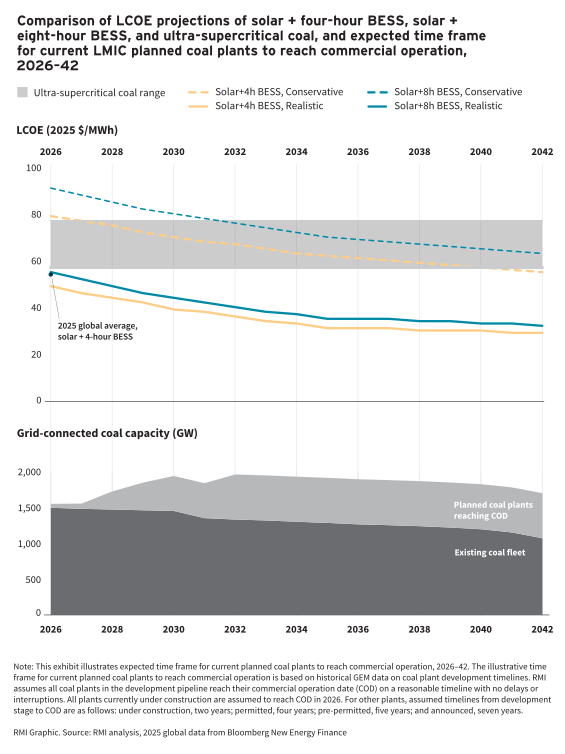
Over time, the risk of locking in these plants becomes even more stark. In 2040, there may be over 500 GW of coal capacity that still has 30 years or more of life remaining but for which the total cost of power (inclusive of capital recovery and fuel) is up to double the cost of a solar and eight-hour BESS alternative.[27] Because those plants are likely to be insulated from competition once they begin operation by long-term contracts or utility tariffs, this represents a significant cost burden to customers and/or taxpayers.
In addition to considering alternative technology costs, considering modularity may be equally important. Resources that can be built rapidly in smaller-capacity tranches may enable decision makers to take advantage of the rapid pace of innovation and cost declines while also being more responsive to evolving grid needs.
Subsequent phases enable deeper analysis before reaching a decision to proceed As Exhibit 6 shows, if the results from Phase 1 provide a reason to question whether the planned coal plant is the best solution for customers, the next step is to conduct a detailed prefeasibility study.
This process may reveal that there are assumptions that have changed and can readily be updated. It may also find that there are systemic challenges to implementing planned coal alternatives to be overcome (e.g., through regulatory intervention) or more nuanced technical considerations around transmission stability that must be taken into consideration (e.g., via a feasibility study). These steps should go beyond financial and techno-economic considerations to include engaging communities early and regularly.
This will differ depending on the situation and entity driving the process.[28] Regardless, accounting for socioeconomic impacts is a critical consideration before reaching a decision.
Engaging in this process presents minimal risk to regulators, utilities, and plant owners. Based on RMI’s experience, confidentially exploring alternatives does not imply making any commitment to changing plans unless they provide a “win” for all stakeholders.
The rapidly evolving global landscape suggests that many planned plants warrant reexamination Electricity systems around the world are rapidly changing amid increasing uncertainty. Meanwhile, the combination of continued planned coal development, evolving grid needs, and a transforming landscape of energy generation technologies is creating both opportunities and risks for power sector decision makers seeking to provide affordable and reliable power that supports economic prosperity and energy security in their countries. There is a clear window to reexamine planned generation, particularly coal, to determine whether these projects still provide the best outcomes for stakeholders.
Significant win-win opportunities likely exist in transitioning planned plants to alternatives We encourage regulators, planners, owners, and other stakeholders to use the framework provided in this brief as a starting point for identifying planned plants that should be reconsidered. Not all planned coal plants will necessarily become cost burdens, and there may be many plants that remain the least-cost, best solution for their situation.
However, the risk of locking in customers and taxpayers to higher costs is significant, and likely warrants investigation. Proceeding with uneconomic plants risks locking in long-term negative affordability impacts, with plant lifetimes of 40 years or more. Even if planning assumptions and decisions were well vetted and logical 5 or 10 years ago, these analyses may no longer be credible under today’s realities. Alternatives to these projects may provide cost savings to customers as well as better returns for developers, and potentially increased energy security at a national level.
Support can facilitate deeper study, and development finance may be able to help unlock certain projects. Where governments, plant owners, or other stakeholders are interested in further analyzing a planned plant or power system, philanthropic aid and development finance can help bridge fiscal gaps for the cost of those studies. For investors and development finance agencies, there may be clear opportunities to support the transition of planned coal to clean alternatives. Where alternatives are already more competitive, these projects may benefit from attractive commercial finance. Other projects may face a viability gap, for example, where sunk costs are greater, if there is forgone revenue, or if storage needs are large, and might be made possible by the introduction of development finance to help overcome those barriers.
Although this brief provides a conceptual starting point, future publications will provide analysis based on real-world experience Reexamining planned plants is one of several steps on the path to making the decision to transition an asset. In subsequent briefs, RMI will share illustrative techno-economic analyses about the viability of transitioning specific plants and explore regulatory strategies to support implementation. These resources will provide a detailed look into the technical and economic considerations for alternatives to specific plants, and pathways for executing a transition.
As a first step, we encourage readers to apply the framework provided here against planned coal projects in their jurisdiction to begin identifying those that might be candidates for reconsideration. If support is desired in applying this framework or in conducting detailed prefeasibility analysis, RMI and partners are available to provide it — please contact plannedpower@rmi.org.
This insight brief was produced with support from The Rockefeller Foundation. The findings and conclusions contained within are those of the authors and do not necessarily reflect positions or policies of The Rockefeller Foundation.
Endnotes
[1] In 2024, electricity demand grew by 4.3%, markedly higher than the 2.5% average growth rate of the 2010s. Although driven in part by extreme weather, the International Energy Agency (IEA) forecasts an annual growth rate of close to 4% from 2025 to 2027. IEA projects the rate of electricity demand growth will outpace the growth in overall energy use, with electricity’s share rising from 21% today to 27% by 2035.
[2] Details on these approaches are included in RMI’s 2026 report Power System Planning in an Uncertain World (forthcoming).
[3] When referencing LMICs, RMI is referring to the latest World Bank taxonomy categorizing countries as low-income, lower-middle-income, and upper-middle-income economies.
[4] Coal fuel prices have generally been less volatile than natural gas prices but do still experience price shocks, especially in the past decade (e.g., in 2022 after Russia invaded Ukraine, in 2026 with the closure of the Strait of Hormuz).
[5] Enabling conditions vary by (and within) countries, but constraints may include access to and cost of finance, institutional capacity, data availability, grid limitations, legacy planning, and procurement practices.
[6] This brief focuses on grid-connected coal plants, recognizing that captive plants have a unique calculus, even while many of the trends and considerations presented here remain relevant.
[7] Per Global Energy Monitor (GEM)’s October 2025 data, from 2014 to 2024, high-income country (HIC) net coal capacity decreased by 17 GW per year. Per the IEA, global coal demand growth slowed to 1.2% in 2024, with advanced economies’ coal demand halving from its peak in 2007. In India and China, coal fleets are operating at average capacity factors of 66% and 48% in 2025, respectively, with China’s having fallen from 60% in 2011.
[8] See GEM’s Global Coal Plant Tracker, October 2025 release.
[9] In the past decade, similar forces have driven the wave of (primarily LMIC) coal plant cancellations, the limited build-out of coal in HICs, and some existing coal plants becoming uneconomic. This includes economics (declining clean energy, BESS, and natural gas–fired power plant costs) and policies (air pollution regulation, emissions trading schemes, legally binding coal transition targets). In HICs, this was strengthened by slower electricity demand growth for an extended period and stronger financial markets.
[10] An additional 50 GW of coal capacity is planned for providing electricity and/or heat directly to specific industrial and commercial customers, rather than to the broader grid. These plants have significantly different development circumstances and economics and are not the focus of this brief.
[11] GEM has tracked year-to-year changes from 2014 to 2025. RMI defined the year of a coal plant’s initiation as the year it first appears in the GEM database (assuming the plant is still under development today), even if it was shelved or canceled in intervening years.
[12] GEM defines projects as shelved when they have not shown signs of advancement for two to four years, and considers projects canceled when they have been either inactive for over four years or have been officially terminated by a project sponsor or the government.
[13] For example, by replacing or augmenting district heating systems with small-scale electric heat pumps for indivudual users, integrating large-scale heat pumps into existing networks, and through the use of next-generation geothermal technologies to provide heat in regions with previously uneconomic resources.
[14] Baseload power is considered near-continuous operation of a power plant to provide bulk energy supply.
[15] For more information on evolving best practices around planning, see RMI’s reports on Reimagining Resource Planning (2023) and Power System Planning for an Uncertain World (forthcoming, 2026).
[16] This framework is meant as a directional decision-making tool and is focused on techno-economic and financial considerations for individual plants. Political and social factors (e.g., priorities around domestic coal resources, impacts, and opportunities for communities) are also important to consider when reassessing plants. Although this brief frames the process around an individual plant, similar analyses can be conducted at a regional or system level (e.g., for a grid where multiple new coal plants are planned).
[17] For example, these additional costs could be offset through concessional financing from multilateral development banks, blended finance platforms, or patient capital.
[18] Ultra-supercritical coal plants, for example, have higher ramp rates than subcritical coal plants. This enables them to play a mid-merit role more effectively. Even the most flexible coal plants remain, at best, similar to older or less flexible combined-cycle natural gas plants, while significantly less flexible than open cycle combustion gas plants or battery energy storage in terms of startup time, ramp rate, and minimum loading.
[19] This could also include situations where technical support is needed to better understand evolving grid needs or to support regulatory adjustments to utilize alternative technologies, for example.
[20] Contract modification may be relevant in the case of, for example, an EPC that might still be utilized for development of an alternative generation project if the planned coal plant was transitioned.
[21] For example, the IEA’s reports Integrating Solar and Wind (p. 29) and Integrating Solar and Wind in Southeast Asia (p. 33) illustrate relatively conservative projections of future variable renewable capacity at a national level through 2035, based in part on national power development plans.
[22] For a full list of factors contributing to LCOE, see National Laboratory of the Rockies (NLR)’s Annual Technology Baseline methodology.
[23] This example is simplified for illustrative purposes, and more detailed study would consider the complementarity of additional technologies to derive a least-cost portfolio, ideally at a system level (e.g., including wind, hydro, gas).
[24] This echoes recent analysis from the International Renewable Energy Agency (IRENA) that demonstrates the competitiveness of hybrid renewables-and-BESS systems with new coal in prime resource regions for wind and solar. World Bank analysis highlights that while meaningful regional differences remain, the general trend in clean energy costs can create savings opportunities through existing coal plant transition. Ember analysis shows that in mid-2025, global renewable energy generation overtook coal generation for the first time.
[25] An ultra-supercritical plant is assumed because, as of October 2025, 74% of planned coal plants in the GEM’s Global Coal Plant Tracker database are ultra-supercritical. Ultra-supercritical plants are on the order of five percentage points more efficient than supercritical plants, and 10 percentage points more efficient than subcritical plants (see The Future of Coal: An Interdisciplinary MIT Study).
[26] Conservative scenarios assumed fixed-tilt solar PV, 4.25–4.5 kilowatt-hours per square meter per day (kWh/m2/day) irradiance, 1:1 PV to BESS power ratio, and a combination of Ember and IRENA estimates and NLR learning curves for projections. Realistic scenarios assumed single-axis tracking PV, 4.75–5 kWh/m2/day irradiance, 1:0.6 PV to BESS ratio, and a combination of BNEF estimates and NLR learning curves for projections. BESS is assumed to be lithium-ion.
[27] In 2040, under all but the most conservative estimates for solar and BESS, solar paired with four-hour or eight-hour BESS outcompetes ultra-supercritical coal. Solar+BESS projects could be between 40% and 110% of new coal project costs in 2040.
[28] For example, plant owners may need to protect commercial interests by avoiding publicizing potential changes to planned projects, whereas a government body may be able and obligated to engage stakeholders more transparently at an earlier stage.



Related Insights
For Clean Energy Projects, How Community Benefits Are Delivered Matters
Tracking WestTEC: Where 100+ Transmission Projects Stand and What Comes Next


Help build the clean energy future. Donate today.
Independent research. Real-world solutions. Supported by donors.
RMI can pursue the highest-impact climate and energy solutions because we’re supported by people who believe change is possible. Every gift helps advance the work needed to make clean energy the default choice worldwide.
For other ways to give to RMI, including checks or gifts of stock, please visit Other Ways to Give.
