

Learn how we are working to transform how we use and produce energy.
Strategic Advantages of Green Hydrogen Imports for the EU
Energy security, climate alignment, and cost savings: The EU can check all the boxes with green hydrogen imports
Why we share this work for free
RMI is an independent nonprofit working to accelerate the clean energy transition. We publish research like this to inform decision-makers and drive real-world impact.
Our work is supported by philanthropy as well as partnerships, including fee-for-service engagements. This support makes it possible for us to share our independent insights for free.
If you find this work valuable, you can support it anytime.
Get more insights like this
Stay up to date with the latest research, analysis, and tools from RMI by opting in to receive occasional emails below. You’ll get new reports, event invitations, and practical insights to help us all accelerate the clean energy transition.
Loading form...
Your download should start automatically. If it doesn’t, click the download button below.
This work is made possible by philanthropy
RMI is a nonprofit supported by donors and partners. Philanthropy enables us to produce independent research and make resources like this freely available.
If you find this report valuable, please consider supporting our work. You can also explore how we partner with organizations to drive impact.
Jump to Section
Imported green hydrogen produced from renewable energy — and the green ammonia made with it — are crucial for European industry to eliminate its reliance on Russian natural gas. Imports of these clean energy fuels are already cost-competitive and can substitute most fossil fuels used by heavy industry and transport in the EU within eight years.
As Europe defines its pathway to energy security and climate alignment, this new report explains key policy measures that EU leaders should take to ensure green hydrogen and ammonia deployment. Straightforward incentives focused on infrastructure for industrial hubs, as well as a certification system and import rules that prioritize low-carbon fuels, will allow the region to reap immediate economic benefits and jump-start the decarbonization of the hardest-to-abate sectors. Incorporating green hydrogen and ammonia into trade policy with renewables-rich countries like Australia, Brazil, Chile, and North African nations will enable imports to reach the continent as early as 2024.
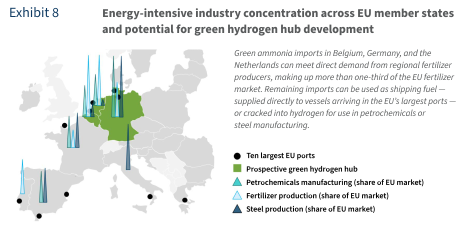
Source: Eurostat, 2022; Petrochemicals Europe, 2022; Fertilizers Europe, 2022; Eurofer, 2020



Related Insights
Gas Utility Depreciation: Recommendations for an Uncertain Future

Help build the clean energy future. Donate today.
Independent research. Real-world solutions. Supported by donors.
RMI can pursue the highest-impact climate and energy solutions because we’re supported by people who believe change is possible. Every gift helps advance the work needed to make clean energy the default choice worldwide.
For other ways to give to RMI, including checks or gifts of stock, please visit Other Ways to Give.
