

Learn how we are working to transform how we use and produce energy.
Charting the Course for Early Truck Electrification
Using Real-World Truck Telematics Data to Identify Electrifiable Trucks, Inform Charging Infrastructure Investments, and Explore Emissions Reductions
Why we share this work for free
RMI is an independent nonprofit working to accelerate the clean energy transition. We publish research like this to inform decision-makers and drive real-world impact.
Our work is supported by philanthropy as well as partnerships, including fee-for-service engagements. This support makes it possible for us to share our independent insights for free.
If you find this work valuable, you can support it anytime.
Get more insights like this
Stay up to date with the latest research, analysis, and tools from RMI by opting in to receive occasional emails below. You’ll get new reports, event invitations, and practical insights to help us all accelerate the clean energy transition.
Loading form...
Your download should start automatically. If it doesn’t, click the download button below.
This work is made possible by philanthropy
RMI is a nonprofit supported by donors and partners. Philanthropy enables us to produce independent research and make resources like this freely available.
If you find this report valuable, please consider supporting our work. You can also explore how we partner with organizations to drive impact.
Jump to Section
Trucks in the United States produce 25 percent of transportation greenhouse gas emissions even though they only make up 10 percent of vehicles on the road. And the problem is growing — emissions from trucks have nearly doubled in the past 30 years and are slated to increase faster as e-commerce booms.
Fortunately, development in EV technology has led to breakthroughs in electric medium- and heavy-duty vehicles. Today, although supply is still relatively low, there are dozens of battery-electric truck models available in the United States and Canada alone, and that number is increasing rapidly to meet demand. Across the United States, fleets have already committed to deploying over 140,000 electric vehicles.
Although this trend is enabled by technology, regulation is also encouraging electric truck adoption. California now requires truck builders to sell an increasing percentage of electric trucks in the state. And 15 additional states signed a joint memorandum of understanding to follow California’s path.
This report uses real-world observed trucking telematics data from Geotab to investigate which trucks in California and New York can electrify the fastest based on currently available electric truck models.
The report also examines the amount of energy and charging infrastructure that these early electrifiable trucks need, in addition to emissions from the grid under various charging schedules. Regardless of when charging occurs, emissions per mile are less than half (and in some cases less than 10 percent) of those from diesel trucks. California and New York house approximately 14 percent of the truck population in the United States. In the next iteration of this project, the authors will perform a similar analysis for all 15 states that are following California’s lead.
Below, trucking telematics data from Geotab is used as the foundation to calculate energy needs, load curves, and emissions from early trucking electrification.
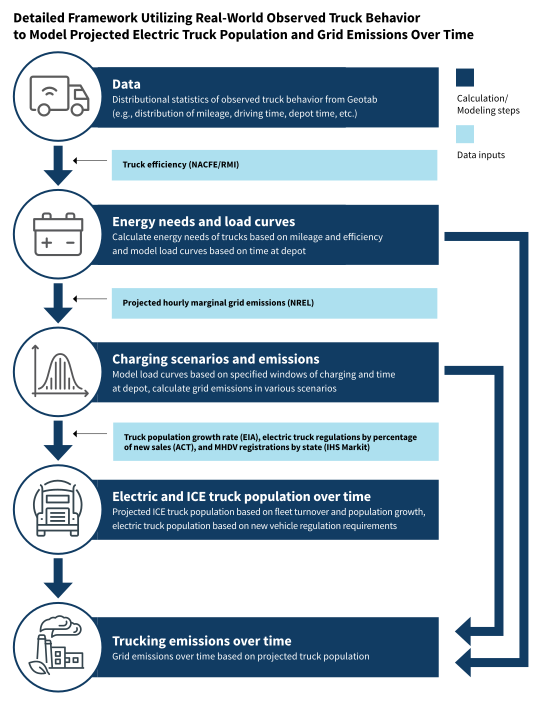
This report was made possible with support by NACFE, Geotab, and FedEx. NACFE provided expert review and analysis; Geotab provided data, review, and analysis; and FedEx provided the generous philanthropic support to make this work possible.



Authors

Jessie Lund
Dave Mullaney
John Schroeder
Emily Porter
Related Insights
The Opportunity for Heat Pumps to Put Downward Pressure on Electricity Rates


Gas Utility Depreciation: Recommendations for an Uncertain Future
Help build the clean energy future. Donate today.
Independent research. Real-world solutions. Supported by donors.
RMI can pursue the highest-impact climate and energy solutions because we’re supported by people who believe change is possible. Every gift helps advance the work needed to make clean energy the default choice worldwide.
For other ways to give to RMI, including checks or gifts of stock, please visit Other Ways to Give.
