

Learn how we are working to transform how we use and produce energy.
Cutting Carbon While Keeping the Lights On
Leveraging Excess Capacity to Kickstart a Clean Electricity Future
Why we share this work for free
RMI is an independent nonprofit working to accelerate the clean energy transition. We publish research like this to inform decision-makers and drive real-world impact.
Our work is supported by philanthropy as well as partnerships, including fee-for-service engagements. This support makes it possible for us to share our independent insights for free.
If you find this work valuable, you can support it anytime.
Get more insights like this
Stay up to date with the latest research, analysis, and tools from RMI by opting in to receive occasional emails below. You’ll get new reports, event invitations, and practical insights to help us all accelerate the clean energy transition.
Loading form...
Your download should start automatically. If it doesn’t, click the download button below.
This work is made possible by philanthropy
RMI is a nonprofit supported by donors and partners. Philanthropy enables us to produce independent research and make resources like this freely available.
If you find this report valuable, please consider supporting our work. You can also explore how we partner with organizations to drive impact.
Jump to Section
It is now well documented that economic pressures are forcing many US coal plants to retire. However, utilities and regulators often raise concerns that retiring uneconomic plants risks reliability and resource adequacy. In Cutting Carbon While Keeping the Lights On, we examine the state of resource adequacy nationwide. While some regions are short on capacity—including Texas and California, where recent blackouts occurred—most of the United states still has excess dispatchable capacity well in excess of reserve margins.
Crucially, the analysis shows that we can retire 27 percent of the existing US coal fleet without any replacement, while still allowing regions to meet their reliability reserve margins. The region with the most excess capacity, by far, is PJM. Further, our analysis shows that another 29 percent of current coal generation can retire and be replaced with lower-cost wind and solar, without the need for additional resources. The remaining US coal fleet can retire with cost-effective clean energy portfolios.
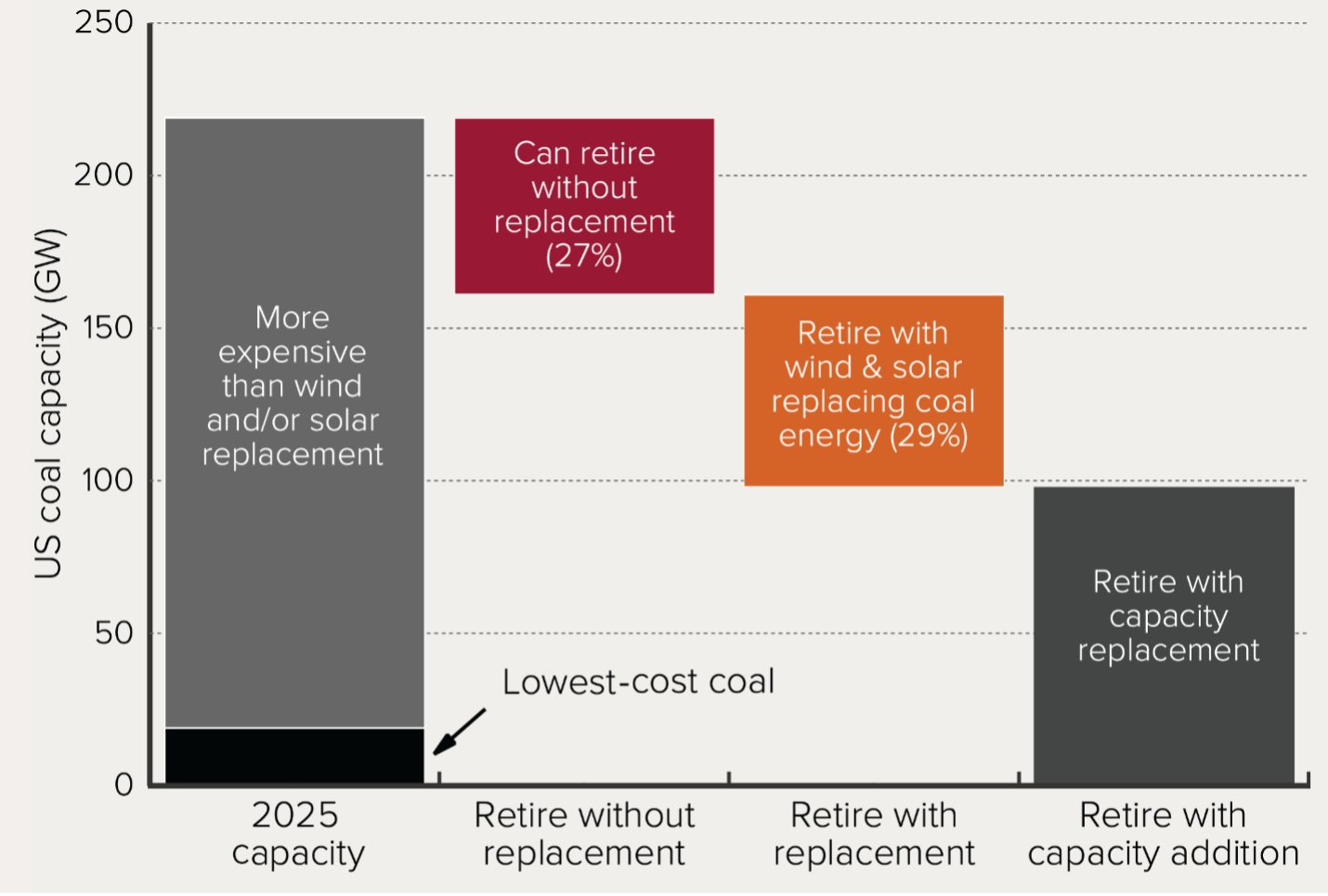
Cutting Carbon While Keeping the Lights On is intended as a resource for policymakers at the state and federal level, as well as advocates, wind and solar developers, and other energy market stakeholders. Through a better understanding of the opportunities available to retire costly legacy coal plants, we can cut carbon, save consumers money, and still keep the lights on.



Related Insights
Reality Check: For Power Plants, Changing the Fuel Doesn’t Fix the Economics

The Opportunity for Heat Pumps to Put Downward Pressure on Electricity Rates

For Clean Energy Projects, How Community Benefits Are Delivered Matters
Tracking WestTEC: Where 100+ Transmission Projects Stand and What Comes Next
Help build the clean energy future. Donate today.
Independent research. Real-world solutions. Supported by donors.
RMI can pursue the highest-impact climate and energy solutions because we’re supported by people who believe change is possible. Every gift helps advance the work needed to make clean energy the default choice worldwide.
For other ways to give to RMI, including checks or gifts of stock, please visit Other Ways to Give.
