

Learn how we are working to transform how we use and produce energy.
Transition Opportunities for Prairie State Energy Campus
Why we share this work for free
RMI is an independent nonprofit working to accelerate the clean energy transition. We publish research like this to inform decision-makers and drive real-world impact.
Our work is supported by philanthropy as well as partnerships, including fee-for-service engagements. This support makes it possible for us to share our independent insights for free.
If you find this work valuable, you can support it anytime.
Get more insights like this
Stay up to date with the latest research, analysis, and tools from RMI by opting in to receive occasional emails below. You’ll get new reports, event invitations, and practical insights to help us all accelerate the clean energy transition.
Loading form...
Your download should start automatically. If it doesn’t, click the download button below.
This work is made possible by philanthropy
RMI is a nonprofit supported by donors and partners. Philanthropy enables us to produce independent research and make resources like this freely available.
If you find this report valuable, please consider supporting our work. You can also explore how we partner with organizations to drive impact.
Jump to Section
The 1,600 MW Prairie State Energy Campus (PSEC) is the largest greenhouse gas emitter in Illinois. It is also less than 10 years old, making it one of the newest coal plants in the country.
Using publicly available information, RMI evaluated historic economics of PSEC and analyzed future scenarios to determine how continued PSEC operations will compare to market and clean energy solutions in 2029.
The analysis finds that over the past four years, the plant cost $20 million more per year to operate than short-term market energy and capacity purchases. When the cost of servicing PSEC’s debt is considered, the plant cost an average of between $390 million and $470 million more than buying from the market.
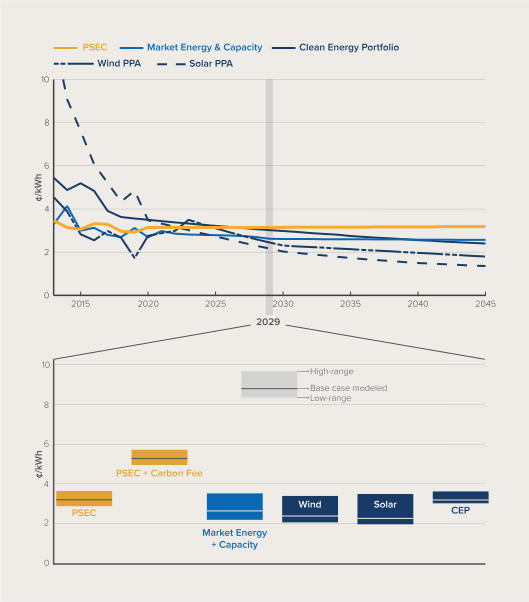
The report analyzed future plant economics compared with market and clean energy alternatives and concluded that plant net economics are likely to deteriorate prior to 2030.
The RMI analysis suggests that at the very least, 2030 closure of PSEC (as has been proposed in the Illinois Clean Energy Jobs Act) will not result in any significant rate increases to PSEC owners. In fact, 2030-mandated closure may help extricate the many plant owners from an asset which is currently expensive and may become highly uneconomic in the coming years.



Related Insights
Reality Check: For Power Plants, Changing the Fuel Doesn’t Fix the Economics

The Opportunity for Heat Pumps to Put Downward Pressure on Electricity Rates
For Clean Energy Projects, How Community Benefits Are Delivered Matters
Tracking WestTEC: Where 100+ Transmission Projects Stand and What Comes Next
Help build the clean energy future. Donate today.
Independent research. Real-world solutions. Supported by donors.
RMI can pursue the highest-impact climate and energy solutions because we’re supported by people who believe change is possible. Every gift helps advance the work needed to make clean energy the default choice worldwide.
For other ways to give to RMI, including checks or gifts of stock, please visit Other Ways to Give.
