

Learn how we are working to transform how we use and produce energy.
Transforming Chemicals Production in Louisiana
State-level actions Louisiana can take to improve competitiveness within its chemicals sector and position itself for the future while improving public health and avoiding unnecessary pollution
Why we share this work for free
RMI is an independent nonprofit working to accelerate the clean energy transition. We publish research like this to inform decision-makers and drive real-world impact.
Our work is supported by philanthropy as well as partnerships, including fee-for-service engagements. This support makes it possible for us to share our independent insights for free.
If you find this work valuable, you can support it anytime.
Get more insights like this
Stay up to date with the latest research, analysis, and tools from RMI by opting in to receive occasional emails below. You’ll get new reports, event invitations, and practical insights to help us all accelerate the clean energy transition.
Loading form...
Your download should start automatically. If it doesn’t, click the download button below.
This work is made possible by philanthropy
RMI is a nonprofit supported by donors and partners. Philanthropy enables us to produce independent research and make resources like this freely available.
If you find this report valuable, please consider supporting our work. You can also explore how we partner with organizations to drive impact.
Jump to Section
Executive Summary
Louisiana, a leading chemical manufacturer and exporter in the United States, is at an inflection point. The state can allow facilities to continue operating largely as they do today or help the industry modernize in ways that strengthen global competitiveness, improve public health, and reduce emissions.
Louisiana is home to 29 basic chemical manufacturing facilities (Appendix B) that primarily produce hydrogen and olefins, building block chemicals used to manufacture everyday products such as plastics, detergents, and adhesives, as well as a few that produce ammonia and methanol. Some of these facilities have been in operation for several decades, since petrochemical production first began in Louisiana. Chemical facilities in Louisiana are concentrated along the Mississippi River in the state’s industrial corridor. The chemical sector is also a major contributor to Louisiana’s economy, supporting approximately 29,000 jobs, contributing $22 billion to the national GDP, and accounting for 11% of the state’s manufacturing exports.
Collectively, chemical manufacturing facilities in Louisiana release approximately 40 million metric tons of carbon dioxide equivalent (CO2e) each year, along with significant quantities of criteria and hazardous air pollutants, particularly nitrogen oxides (NOx), carbon monoxide (CO), volatile organic compounds (VOCs) and 1,3-butadiene, which contribute to poor air quality and toxic health risks. Globally, market standards are increasingly tracking the emissions intensity of products, signaling growing demand for lower-emissions commodities. By deploying technologies that reduce pollution and emissions from primary chemical production, Louisiana can maintain its competitive advantage in the chemical industry, particularly in growing export markets for low-emissions commodities. The state can also improve the reliability and resilience of production processes, and improve public health.
Solutions exist that can modernize and transform Louisiana chemicals production. This report evaluates the economic, health, and emissions impacts of deploying five key technological levers and the policies, market drivers, and other state actions needed to encourage their adoption and improve Louisiana’s globally competitive position in chemicals production.
AI-driven predictive maintenance uses sensors and analytics software to monitor high-consequence equipment and identify abnormal vibration, temperature, pressure, or flow patterns before failures cause shutdowns, leaks, venting, or flaring.
~50
Potential unplanned maintenance events avoided each year (~2 events per facility per year)
$12M–$22M
Deployment cost statewide (~$0.4 million–$0.8 million per facility)
~$184M
Avoided production losses per year (~$6.3 million per facility per year)
30,000 tons
CO₂ avoided per year
13 tons
NOₓ avoided per year
57 tons
VOCs avoided per year
Low-leak natural gas procurement entails chemical producers buying certified natural gas that is produced, processed, and transported with lower methane leakage, through measurement-based certification standards set by independent, third-party organizations.
Methane intensity can vary by as much as 100 times between the highest-emitting production and an openly certified volume of gas. As such, chemical manufacturers can play an important role in reducing supply chain emissions by demanding low-leak natural gas from their suppliers.
~360M MMBtu
Annual natural gas procurement in Louisiana for chemical feedstock and fuel
1.71%
Methane intensity baseline (North America average)
Under 0.2%
Methane intensity target
~104,000 tons
Methane avoided per year
~8.6M tons
CO₂e avoided per year
~$22M
EPA COBRA health benefits per year
Varies
Incremental annual cost: cost of low-leak gas dependent on type of abatement technology implemented
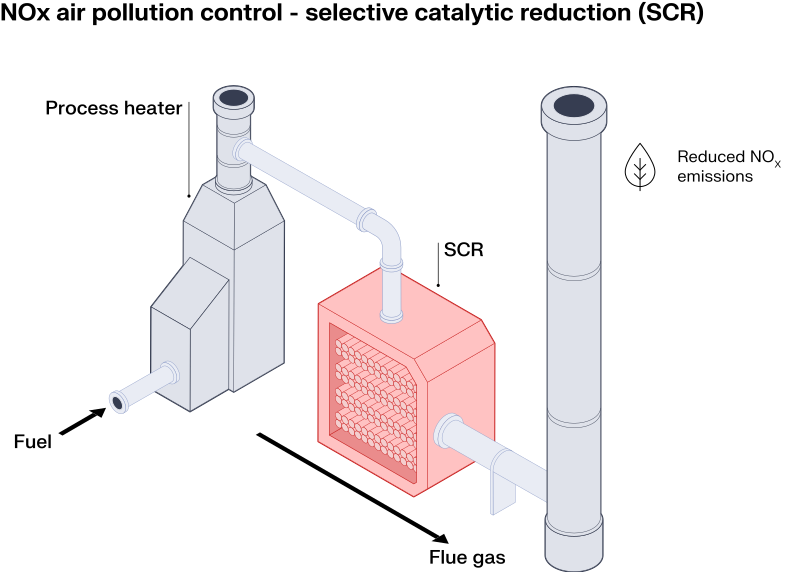
NOx air pollution controls include low-NOx burners (LNB), which reduce NOx formation inside combustion equipment, and selective catalytic reduction (SCR), which removes NOx from flue gas after combustion.
20,000 tons
Modeled NOₓ baseline per year (statewide)
1,300 tons
NOₓ reduction per year from low-NOₓ burner (LNB) installation
Cost: $2 million/year
Health benefit: $30 million/year
2,400 tons
NOₓ reduction per year from SCR installation
Cost: $27 million/year
Health benefit: $56 million/year
3,700 tons
NOₓ reduction per year from stacked LNB and SCR installation
Cost: $29 million/year
Health benefit: $87 million/year
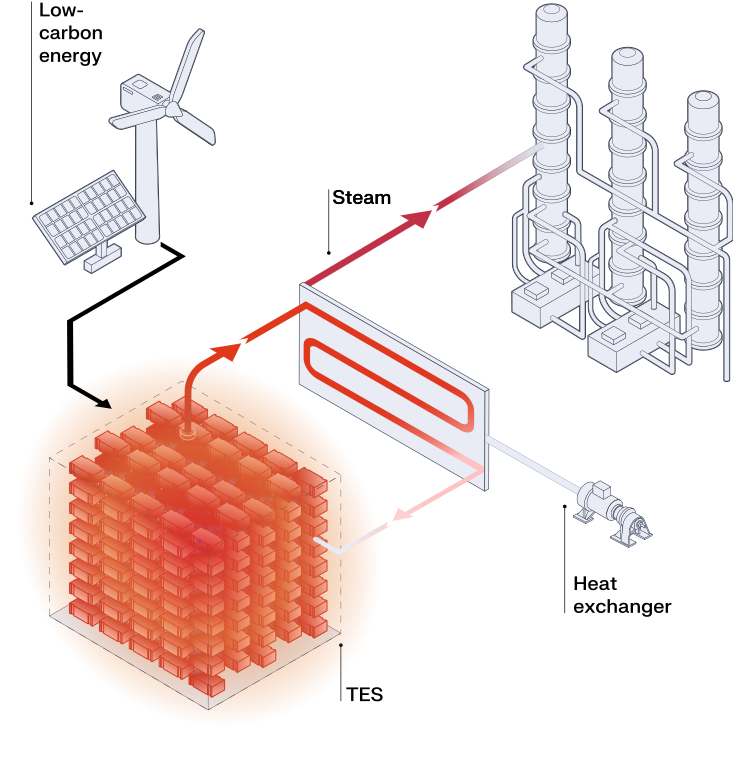
Thermal energy storage uses electricity to heat a storage medium and later discharges that stored heat to produce steam for industrial process heating.
21M MMBtu
Eligible boiler heat per year (share attributable to conventional boilers in target facilities)
1.4M tons
Maximum CO₂ reduction potential per year, if TES is charged with 100% renewable energy
$30M–$43M
Human health benefits per year, if TES is charged with 100% renewable energy
$276M
Incremental annual energy cost — Scenario 1: average 2025 Louisiana industrial retail and gas prices
TES heat cost: $19/MMBtu; gas-boiler cost: $5.4/MMBtu
$7M
Incremental annual energy cost — Scenario 2: favorable scenario for TES
Electricity: $30/MWh all-in; natural gas: $7.18 per thousand cubic feet (MCF), 2022 high-price case
TES heat cost: $9/MMBtu; gas-boiler cost: $8.6/MMBtu
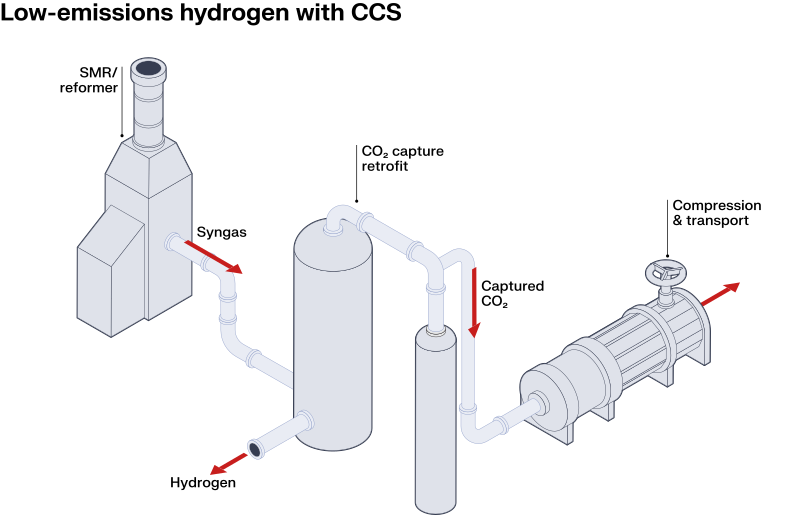
Low-emissions hydrogen is created from hydrogen production units such as steam methane reformers and autothermal reformers that are outfitted with carbon capture equipment; the captured CO2 is then used or sequestered instead of released into the atmosphere.
7.2M tons
Net CO₂e avoided per year
$5.1 billion
Estimated capital expenditure (capex), statewide
$880M
Estimated annual cost per year, statewide
$120/ton
Cost per ton of CO₂e avoided
$40/ton
Cost per ton of CO₂e avoided, including the federal 45Q tax credit
Policies and market drivers summary
To encourage deployment of these five technologies Louisiana could undertake policy and market-driving actions for its chemicals industry using a phased approach.
- Over the next two years, Louisiana can build capacity within its existing chemicals industry by improving awareness of new technologies, increasing utilization of existing tools, and beginning long-term planning.
- Over the next five years, the state can accelerate modernization by upgrading existing industrial assets in ways that reduce pollution and improve project economics.
- Over the next decade, Louisiana can embed industrial transformation by implementing an industrial modernization plan and strengthening industrial air permitting and State Implementation Plan protections.
Changing policy and markets will require collaboration between industry, the Louisiana legislature, Louisiana’s government agencies, academia, and local communities.
Phase 1 (0–2 years): Build capacity within Louisiana’s existing chemicals industry by improving awareness of new technologies, increase utilization of existing tools, and begin planning for the long term.
| Policies and market drivers | Levers encouraged |
|---|---|
| Author an industrial modernization strategy |     |
| Establish a Louisiana Chemicals Efficiency and Modernization cohort to accelerate voluntary adoption of AI-driven predictive maintenance technologies | |
| Clarify eligibility for new technologies to receive pollution control tax exemptions | |
| Support an industry-led Gulf Coast low-methane natural gas buyers’ alliance for chemical producers |  |
Phase 2 (2–5 years): Accelerate Modernization by upgrading existing industrial assets in ways that also reduce pollution.
| Policies and market drivers | Levers encouraged |
|---|---|
| Create an Industrial Emissions Reduction and Modernization Program to issue grants for Industrial electrification and pollution reduction at chemical production facilities in Louisiana | |
| Establish a Louisiana Industrial Modernization Finance Program to attract large-scale private investment in modernizing chemicals production | |
Phase 3 (5+ years): Embed Industrial Transformation
| Policies and market drivers | Levers encouraged |
|---|---|
| Implement an industrial modernization plan | |
| Strengthen industrial air permitting and state implementation plan protections | |
Introduction
Louisiana can solidify itself as a national leader of primary chemicals manufacturing by modernizing production and addressing health hazards
The United States is the second-largest producer of chemicals, behind only China, producing around 10% of global chemicals. Louisiana is the second-largest producer in the United States, based on shipment value, with the state’s industrial corridor along the Mississippi River from East Baton Rouge Parish to the Gulf Coast.
Chemical manufacturing is a cornerstone of the Louisiana economy, contributing around $22 billion to national GDP in 2024, about 6% of the total state contribution to the national GDP. According to BASF, the industry is the second-highest producer of direct jobs in Louisiana, employing over 29,000 Louisianians. Chemicals are also the second-largest export from Louisiana with exports valued at over $10 billion in 2025, roughly 11% of the state’s total exports that year by value.
The Gulf Coast region specializes in “primary” or “basic” chemicals that serve as the building blocks or inputs for other chemicals and products. These primary chemicals are hydrogen, ammonia, methanol, olefins, and aromatics. Olefins and aromatics are groups of chemicals traditionally manufactured from fossil fuels that are used to produce a wide range of everyday products such as plastics, detergents, adhesives, and synthetic fibers. Louisiana has 29 primary chemical facilities, mostly located in the industrial corridor along the Mississippi River as shown in Exhibit 1 (see Appendix B: Facility List for the full facility list included in this state analysis). In Louisiana, the most common primary chemical manufacturing facilities are for hydrogen production with 12 sites and olefins facilities with 11 sites.
Today, primary chemicals facilities emit criteria air pollutants (CAPs) and hazardous air pollutants (HAPs) that impact air quality and create toxic health risks and are generally regulated by the US EPA. A 2026 review of industrial pollution’s impact on Louisiana assessing over 53 papers from 1999 to 2024 cites that researchers have documented elevated levels of industrial air pollution in Louisiana, especially in the industrial corridor along the Mississippi River. This paper found that Louisianians who experienced more industrial pollution often experienced worse health, with residents in the industrial corridor bearing a disproportional burden of pollution and related health impacts. Chronic health issues related to air industrial air pollution include respiratory and heart problems, thyroid disease, and cancers, and acute health issues include headaches, dizziness, chest pain, and irritation of the eyes, nose, throat, and skin.
In Louisiana, nitrogen oxides (NOx), carbon monoxides (CO), and volatile organic compounds (VOCs) are the largest sources of air pollution from the primary chemical facilities. Notably, Louisiana is home to the largest ammonia production facility in the world; based on 2020 NEI data, over 90% of the state’s reported NOx emissions came from this single ammonia production facility. The Centers for Disease Control and Prevention (CDC) lists NOx as a toxic substance linked to respiratory issues that can result in fluid build-up in the lungs, even after low levels of exposure.
In addition to air pollutants, primary chemicals are more than a quarter of Louisiana’s industrial greenhouse gas (GHG) emissions and the largest industrial contributors to carbon pollution in the state, according to the EPA. Based on RMI modeling of primary chemical manufacturing emissions intensity, the 29 primary chemical manufacturing facilities emit around 40 million tons of CO2e across Scope 1, Scope 2, and upstream Scope 3. Almost half of these emissions — nearly 18 million tons of CO2e — are from Scope 1, as shown in Exhibit 2.
Primary chemical facilities that produce olefins are the highest emitting, contributing about 23 million tons CO2e per year, over 55% of the total GHG emissions across all Scopes from Louisiana primary chemical facilities.
As global markets increasingly differentiate products based on emissions intensity, Louisiana has an opportunity to protect and extend its chemicals advantage. Policies such as the European Union’s Emissions Trading System (ETS) and Carbon Border Adjustment Mechanism (CBAM) signal a broader shift toward carbon-informed trade and procurement standards. While CBAM’s initial scope is limited to cement, iron and steel, aluminum, fertilizers, electricity, and hydrogen, in its 2025 review, the European Commission concluded that the phased expansion of CBAM to certain chemicals could be technically feasible and will be further considered in 2027. Additionally, the International Maritime Organization’s 2023 strategy requiring a reduction in carbon intensity of international shipping and uptake of zero or near-zero emissions fuels displays the potential increase in demand for lower-emissions methanol and ammonia. These policies reflect a growing market expectation that industrial producers will be able to measure, manage, and reduce embedded carbon emissions.
Louisiana has been building out petrochemical facilities dating back to World War II. Many facilities now face a modernization challenge: how to upgrade these legacy production assets while maintaining the state’s industrial competitiveness. By supporting industrial modernization through state policies and market-driving actions, Louisiana can position its chemical industry to compete in emerging markets for lower-emissions products, attract investment, improve air quality, and reduce emissions.
Technology Levers
Modernizing Louisiana’s primary chemical sector requires solutions that can be deployed today at the scale and speed needed to transform the industry. This report focuses on five technology levers: AI-driven predictive maintenance, low-leak gas procurement, NOx air pollution control, thermal energy storage (TES) for industrial steam, and low-emissions hydrogen with carbon capture and storage (CCS). These technologies were selected due to their technological and commercial viability for near-term deployment and ability to deliver measurable impact within the current decade. Each technology is also retrofit-friendly, allowing existing facilities to modernize incrementally rather than relying on the capital intensity and long planning timelines of greenfield construction.
These five levers were selected among 24 modernization technologies based on scoring criteria that evaluated the political feasibility, implementation feasibility, and potential impact of these solutions in Louisiana. The scoring criteria included: cost and economic viability relative to existing industrial practices; political and regulatory feasibility; fit with the state’s existing infrastructure, energy systems, and supply chains; speed to deployment; co-benefits such as improved reliability and operational flexibility; and emissions reduction potential of GHGs, CAPs, and HAPs.
Each of the five selected technology levers was analyzed to understand its impact when implemented at scale across the applicable primary chemical facilities in Louisiana, as well as the practical considerations needed for wide-scale deployment.
| Metric | Value |
|---|---|
| Potential Unplanned Maintenance Events Avoided | ~50 events/year, ~2 events/facility/year |
| Deployment Cost | $12 million–$22 million, ~$0.4 million–$0.8 million/facility |
| Avoided Production Losses | ~$184 million/year, ~$6.3 million/facility/year |
| CO2 Avoided | 30,000 tons/year |
| NOx Avoided | 13 tons/year |
| VOCs Avoided | 57 tons/year |
Overview and application
Chemical plants require continuous operation of their pumps, compressors, valves, motors and other equipment to keep the facility operating at full capacity. When this equipment fails unexpectedly, the facility may need to shut down, vent or flare gases, and endure downtime while repairs are made. These incidents result in lost production, repair costs, and acute spikes in toxic chemicals and GHG pollutants.
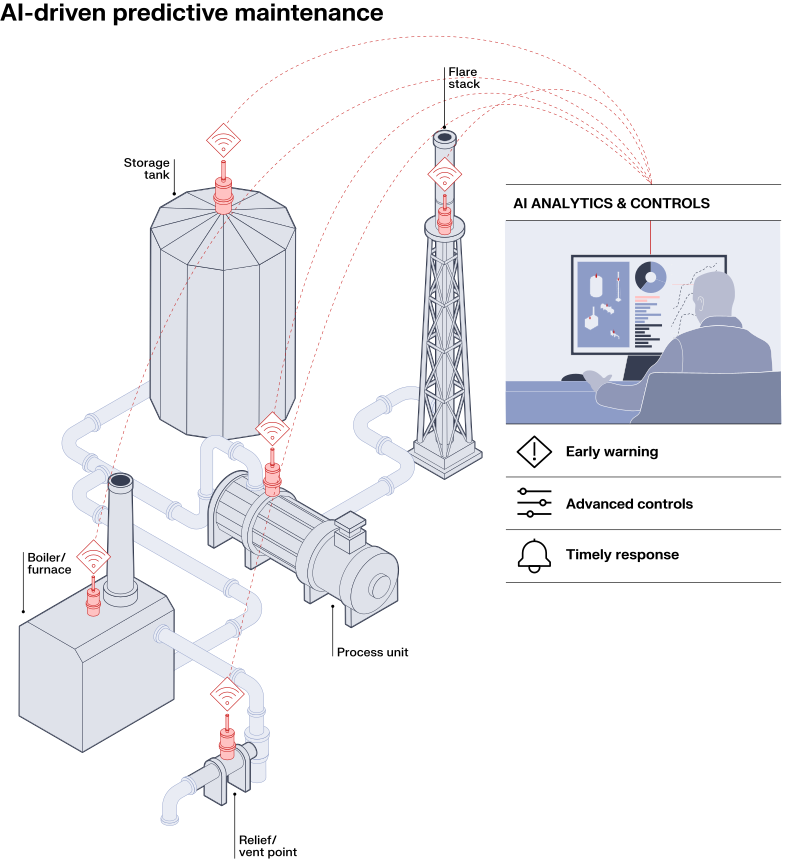
AI-driven predictive maintenance can help facilities identify problems before equipment fails. Sensors track the operation of the equipment by measuring vibration, temperature, pressure and flow. Bundled with AI analytics software, problems can be detected based on abnormal patterns and will alert operations and maintenance teams so that repairs can be made during planned maintenance window while the unit remains running or before the problem causes a larger unit upset. This software is most effective on equipment that shows warning signs of failure such as compressors, pumps, valves, and instrumentation. AI-prediction cannot prevent all shutdowns, such as those from power outages, weather related events, operator errors, and sudden failures.
Impact on Louisiana facilities
Due to limited publicly available data on event-specific emissions releases for Louisiana, data from the Texas Commission on Environmental Quality was used to estimate the impact of AI-driven predictive maintenance tools in Louisiana. Based on an analysis of a sample set of 162 maintenance-related emissions events at major Texas chemical facilities between 2021 and 2025, roughly 85% of the events involved failure mechanisms that appeared potentially detectable through better equipment monitoring.
The statewide impact of implementing AI-driven predictive maintenance was extrapolated from this sample set by applying an effectiveness factor and expanding to all 29 facilities in Louisiana. We found that each year, AI-driven predictive maintenance could avoid:
- About 50 events across Louisiana primary chemical facilities
- Approximately 30,000 tons of CO2 emissions
- Approximately 13 tons of NOx emissions and 57 tons of VOCs, reducing ground-level ozone formation
- Approximately 2.5 tons of benzene and 3 tons of 1,3 butadiene emissions, improving worker and fenceline-community health
Although the GHG emissions are relatively small compared to the sector’s annual emissions, predictive maintenance addresses these acute, unpredictable releases that have direct impact on communities and workers and introduce reputational risk. Based on EPA COBRA modeling of the associated NOx and VOC reductions, the modeled air-quality improvements could produce up to $0.4 million per year in monetized health benefits.
The cost of installing new sensors, upgrading software and licensing, ongoing maintenance are estimated at $0.4 million to $0.8 million per facility over the first five years of the installation. For the state, if all 29 chemical facilities implemented this technology, it would cost $12 million to $22 million over five years.
Using an average 48-hour downtime for maintenance events, Louisiana could avoid production losses equal to $184 million every year. These significant annual cost savings, compared to the statewide implementation cost, can bring short payback periods on lost production alone. The value of avoiding a major failure can be much higher when maintenance costs, overtime hours, product quality events, and reputational risk are factored into the equation.
Deployment considerations
This deployment will not require facilities to install monitors on every piece of equipment at their site. Facilities should begin with equipment that is a single point of failure or most likely to cause a major shutdown, safety incident, or emissions event at their site. The deployment might cover 10% to 20% of high-consequence pieces of equipment rather than the whole facility.
Different facilities will also need to evaluate their readiness to both install the sensors and software and to monitor and respond to alerts with sufficient time and personnel so that the events do not escalate to unit upsets. This evaluation would need to be done on a facility-by-facility basis as sites consider implementing AI-driven predictive maintenance.
| Metric | Value |
|---|---|
| Annual Natural Gas Procurement in LA for Chemical Feedstock and Fuel | ~360 million MMBtu |
| Methane Intensity Baseline | 1.71% (North America average) |
| Methane Intensity Target | <0.2% |
| Methane Avoided | ~104,000 tons/year |
| CO2e Avoided (GWP20) | ~8.6 million tons/year |
| EPA COBRA Benefits | ~$22 million/year in health benefits |
| Incremental Annual Cost | Net negative for some levers; cost varies by type of abatement technology implemented |
Overview and application
Natural gas (methane) is used in chemical manufacturing as both a fuel to power chemical facilities and a feedstock to create primary chemicals. Louisiana chemical manufacturing facilities get most of their feedstock from US and other North American oil and gas producers, with natural gas transported to facilities through pipelines. During natural gas extraction, production, and transport, methane can escape from the process due to leaks, operational decisions, flaring, maintenance, and equipment failure.
These upstream losses are important because methane is a potent greenhouse gas. Over a 20-year window (GWP20), methane is approximately 82.5 times as potent of a greenhouse gas as carbon dioxide, and over a 100-year window (GWP100), it is about 28 times as potent. Reducing these upstream losses allows for capture and sales of additional product, while significantly reducing the supply chain emissions associated with natural gas. This study uses a 20-year GWP for methane and other non-CO2 emissions calculations.
The emissions intensity of natural gas supplied to chemical manufacturers can vary substantially depending on where and how the gas is produced and transported. Using RMI’s Oil Climate Index plus Gas (OCI+) model, we estimated a wide range of production and transport (upstream) emissions intensities for natural gas serving Louisiana chemical manufacturers, as shown below. Methane intensities can vary by as much as 100 times between the highest-emitting production and an openly certified low-leak volume of gas.
These differences are large enough to matter. Ongoing research finds that there is no “standard barrel” of oil and gas. Certified low-leak gas is defined by standards set by independent, third-party organizations, such as MiQ, which denote the level of methane intensity in certified gas, or simply the amount of methane that leaks per unit of natural gas produced. Some suppliers have feedstock that is certified as low as A-grade at 0.05% methane intensity. For example, the open source, independent organization MiQ has currently certified an estimated one-quarter of US gas under the 0.2% methane intensity threshold, a passing grade. This threshold was adopted by the industry in the Oil and Gas Decarbonization Charter in 2023. Thus, a ready supply of low-methane intensity gas is available today for chemical manufacturers.
According to RMI research, however, gas and oil assets, including those producing associated gas, that provide feedstock to US chemical plants have an average methane intensity of 2.2%, meaning 2.2% of methane is released into the atmosphere throughout the production and transport process before the natural gas reaches the end buyer. This methane intensity varies widely across different assets, with studies indicating leak rates in the double digits, especially during satellite-detected super-emitting events.
To account for the range of methane intensities across gas supplied, this study estimates an average methane intensity of 1.71% currently, which assumes that 25% of the gas used by Louisiana chemical plants is certified at 0.2% and the remainder averages 2.2%. Using this average provides a conservative estimate of the climate benefits that chemical manufacturers can drive through their supply chain purchasing power.
Chemical manufacturers can therefore play an important role in reducing upstream emissions by signaling demand for low-leak gas from their suppliers. Importantly, chemical facilities do not need to modify their equipment to receive certified low-leak gas. The benefit is in the supply chain leading up to the chemical facility. This presents a market opportunity for chemical manufacturers to use procurement to encourage their suppliers to reduce upstream and transport methane leakage.
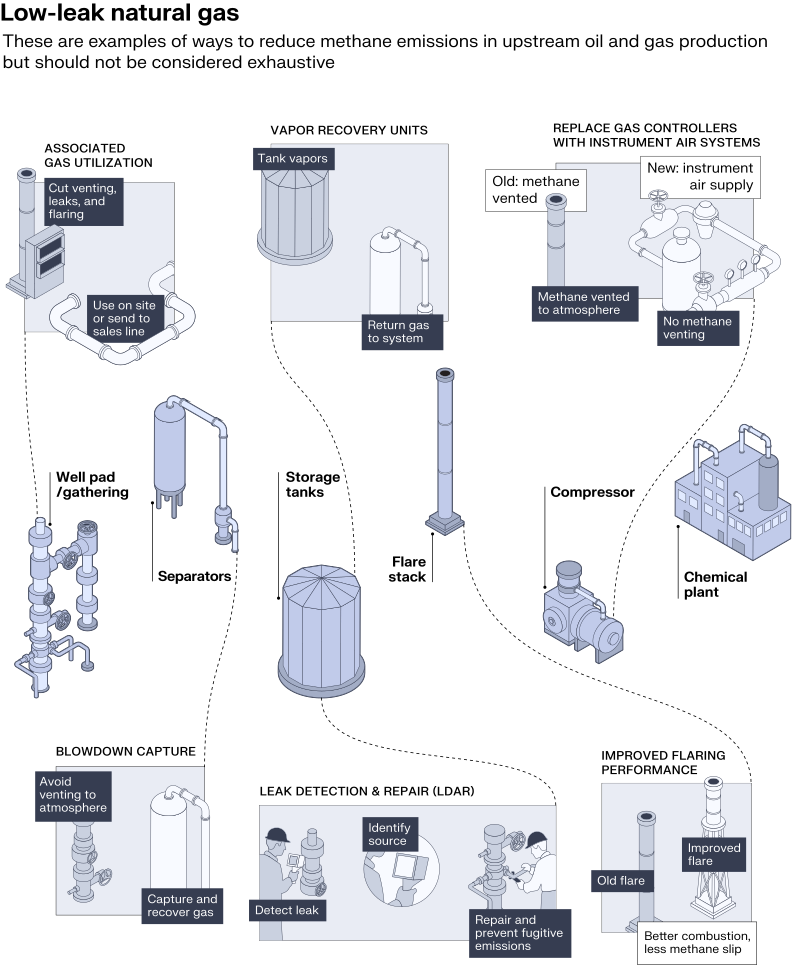
The IEA marginal abatement cost curve (MACC curve) lists eight different measures that can be used to mitigate emissions in the upstream supply chain. These measures include associated gas utilization, improved flaring, blowdown capture, pump replacement, instrument air system improvement, vapor-recovery units, compressor seal replacement, and electrification of motors. These improvements reduce venting, equipment losses, and leaks, and capture gas that would otherwise have leaked into the environment. Some producers may achieve lower methane emissions by implementing the least-cost abatement measures included in the IEA MACC curve, and low premiums on certified natural gas today reflect that producers do not necessarily pass the full cost of methane abatement on to the buyer when selling certified low-leak gas.
Impact to Louisiana facilities
The 29 chemical facilities in Louisiana procure around 360 million MMBTU of natural gas each year for use as both feedstock (for SMR/ATR processes) and fuel for industrial heating. If all facilities provided the demand signal and purchased low-leak gas versus the baseline under our modeled scenario:
- The state could avoid approximately 104,000 tons of methane emissions each year, which equates to about 8.6 million tons of CO2e emissions annually (assuming a GWP20)
- The state would avoid approximately 29,000 tons of VOC emissions, resulting in an annual health benefit in Louisiana of around $22 million based on EPA COBRA
The emissions reductions associated with natural gas procurement do not require on-site modifications and result in significant Scope 3 climate benefits that will lead to an overall lower emissions product from these facilities.
The cost to the chemical industry is driven by the procurement premium of certified natural gas. Based on recent certified gas purchasing programs around the country, the premium for lower-leak gas can be as low as $0.01 to $0.12 per MMBtu. However, these premiums may only exist in situations where there is already sufficient supply of certified gas to meet demand.
Production and procurement of certified natural gas is both an efficiency and an emissions reduction lever for Louisiana. Reducing leakage of methane improves efficiency of the natural gas system, reducing losses across the system that can be transformed into useful products.
The statewide annual human health benefit if all gas procured by chemical production facilities goes from baseline level methane emissions to certified low-leak level methane emissions is approximately $22 million. Annually, about 104,000 tons of methane would be contained in natural gas that would have been directly emitted.
Deployment considerations
The largest challenge with adoption of low-leak gas procurement is ensuring that the buyer accurately report the benefits of procuring the lower-emissions product. The buyer needs clear accounting and claim guidance, while ensuring that there is no double counting of emissions reductions along the supply chain, to claim the emissions benefits associated with the extra cost to purchase the lower-leak gas. By procuring certified low-leak gas, chemical facilities will maintain competitiveness in the emerging global market for low-emissions products.
Based on RMI analysis, approximately 45% of Haynesville gas production is already certified as low-emissions natural gas. Demand for this supply is expected to grow as the EU Methane Regulation takes effect in 2027, potentially tightening availability and increasing price premiums for low-leakage gas. Louisiana therefore has a near-term opportunity to encourage in-state adoption while certified supply remains relatively abundant and cost-competitive, helping local chemical industry secure lower-emissions fuel before stronger export demand drives up costs.
In some cases, such as when implementing leak detection and repair (LDAR), associated gas utilization, and blowdown capture, abatement costs can be negative, signaling that it is net beneficial for natural gas suppliers to implement mitigation technology and increase efficiency of their systems. According to RMI’s Chemistry in Transition report, methane leak mitigation is the second most impactful near-term emissions reduction lever after efficiency measures.
Individual supply chains will vary substantially in their baseline intensities and the rates at which they are able to achieve lower emissions thresholds. Clear accounting and verification and measurement practices are critical for the credibility and success of this technology lever.
In a policy of this type, certificates can either be “bundled” (trace and claim) or “unbundled” (book and claim) from the actual physical gas that is sold. The policy could require that any obtained certificates are associated with the actual physical gas that is obtained, or alternatively, limit allowable certificates to a specific geographic region. It could also be worth evaluating a requirement that buyers obtain gas or certificates from regions that are primarily oil-producing regions. This is because these areas generally have higher methane intensities than non-oil producing regions. Unbundled energy attribute credits are currently the most common way to buy low-leak gas, but more bundled or direct procurement options could be possible depending on the specific chemical producer.
| Metric | Value |
|---|---|
| Modeled NOx Baseline (statewide) | 20,000 tons/year |
| Low NOx Burner Installation | NOx Reduction: 1,300 tons/year Cost: $2 million/year Health Benefit: $30 million/year |
| SCR Installation | NOx Reduction: 2,400 tons/year Cost: $27 million/year Health Benefit: $56 million/year |
| Stacked Installation | NOx Reduction: 3,700 tons/year Cost: $29 million/year Health Benefit: $87 million/year |
Overview and application
Industrial combustion sources such as boilers, steam generators, process heaters, and furnaces are used across industrial facilities to generate heat. These units burn natural gas or other fuels to provide heat for production, but high flame temperatures promote the formation of nitrogen oxides (NOx). The amount formed depends on burner design, flame temperature, oxygen levels, and other operational conditions. NOx contributes to ground-level ozone, which negatively affects respiratory and cardiovascular health.
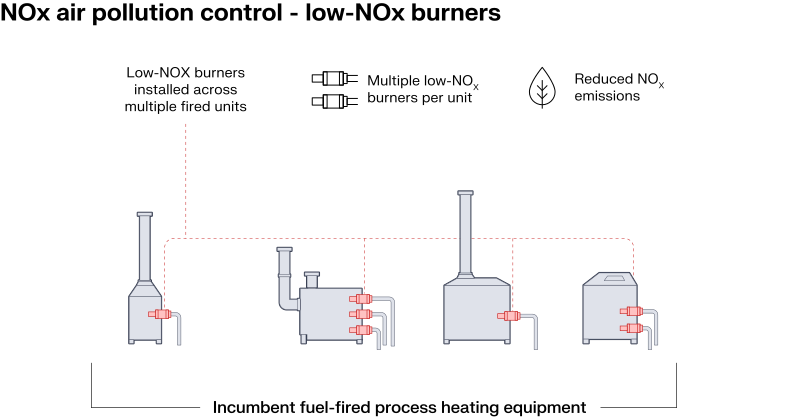
Low-NOx burners (LNBs) reduce NOx formation inside the combustion unit. They improve fuel-air mixing and stage the combustion process so that less oxygen and fuel are present together at the hottest point in the flame, lowering peak flame temperatures and limiting thermal NOx formation. Depending on the existing equipment, an LNB retrofit may involve replacing the burner assembly, modifying the burner register, or adjusting how fuel and combustion air are introduced into the unit. In practice, burner replacement is often paired with upgraded combustion controls and tuning
Selective catalytic reduction (SCR) controls NOx after combustion. The system injects ammonia or urea into the flue gas and passes the mixture across a catalyst, where NOx is converted primarily into nitrogen and water before the exhaust reaches the stack. SCR can achieve much deeper NOx reductions than burner changes alone, but it requires additional equipment, reagent handling, catalyst management, and sufficient space in the exhaust system and is typically compatible with larger, continuous systems. The two technologies can be stacked by applying burner improvements first, and SCR to the emissions that remain.
Impact to Louisiana facilities
The Louisiana NOx inventory sets a baseline of approximately 20,000 tons of annual NOx emissions across the chemical facilities and emissions sources reviewed. The analysis assigns a NOx reduction factor for LNBs, SCRs, and the stacked scenario to determine:
- Low NOx burners alone reduce approximately 1,300 tons of NOx per year
- SCR installations reduce approximately 2,400 tons of NOx per year
- The stacked scenario with LNBs and SCR may reduce about 3,700 tons of NOx per year
Approximately 91% of the reduction from these technologies is associated with olefins facilities. These sites have large fired heaters, furnaces, and boilers, which give them much higher emissions reduction potential than those of other chemical production facilities.
Using annualized cost assumptions, the screening cost estimates for these installations for the state of Louisiana is $2 million/year for low NOx burners, $27 million/year for SCR, and $29 million/year for the stacked strategy. Actual costs will depend on equipment size, burner count, furnace access, ductwork, etc.
Reducing NOx can lower the formation of ground-level ozone and fine particulate matter. This leads to benefits for workers and neighboring communities. The screening estimate from EPA COBRA estimates the monetized benefits from avoided health effects for these technologies as $30 million (LNB), $56 million (SCR) and $87 million (stacked). All three solutions can result in a positive benefit-to-cost ratio indicating high health-related returns compared to the investment required.
Deployment considerations
Better unit-level data is needed to determine where each technology is most appropriate. Publicly available information does not consistently identify which combustion units already have low-NOx burners, ultra-low-NOx burners, SCR, or other controls. Before implementation targets are established, facilities or regulators would need to confirm the existing control configuration, baseline emissions, unit size, operating schedule, age, and remaining useful life of individual boilers, heaters, and furnaces.
For burner retrofits, key questions include flame stability, furnace operation, transient behavior, and compatibility with existing burner management systems. Installation may require coordination with planned downtime due to furnace internal modifications or safety system upgrades.
For SCR, feasibility depends on whether the furnace is compatible with the SCR catalyst and whether space is available for ductwork and additional equipment. The statewide estimates depend on which facilities can install these technologies and represent the best-case deployment opportunity.
The primary business motivation will differ by technology. LNBs paired with controls optimization may offer fuel savings and operating improvements in addition to emissions compliance. SCR is more likely to be driven by the value of deep NOx reduction, regulatory requirements, or the public-health benefits of reducing emissions from large sources. In both cases, aligning installation with planned capital cycles can improve feasibility and reduce disruption.
| Metric | Value |
|---|---|
| Eligible Boiler Heat (share attributable to conventional boilers in target facilities) | 21 million MMBtu/year |
| Max CO2 Reduction Potential (if TES charged with 100% renewable energy) | 1.4 million tons/year |
| Human Health Benefits (if TES charged with 100% renewable energy) | $30 million–$43 million/year |
| Energy Cost Scenario 1: Average 2025 LA Industrial Retail & Gas Prices | TES Heat Cost: $19/MMBtu, Gas-Boiler Cost: $5.4/MMBtu Incremental Energy Cost Increase: $276 million /year |
| Energy Cost Scenario 2: Favorable Scenario for TES | Electricity Assumption: $30/MWh; all-in electricity price Natural Gas Assumption: $7.18/MCF; 2022 high-price case TES Heat Cost: $9/MMBtu, Gas-Boiler Cost: $8.6/MMBtu Incremental Energy Cost Increase: $7 million/year |
Overview and application
Most chemical manufacturing facilities use natural gas-fired boilers to produce steam for process heating needs.
TES, like a thermal battery, is a commercial-scale technology that uses electricity to make heat, stores that heat in hot rocks or other media, and delivers steam when the facility needs it. Unlike a conventional gas or electric boiler, TES can shift electricity use into cheaper hours and continue supplying steam on demand. TES can displace gas boilers or be operated in a hybrid configuration alongside them.
By reducing or displacing operation of on-site boilers, TES can lower Scope 1 greenhouse gas emissions, combustion-related NOx, and other criteria pollutant emissions at the facility. These on-site air-quality improvements can provide near-term benefits for workers and nearby communities. The net climate and public-health effects, however, depend heavily on the emissions intensity of the electricity used for charging and when that electricity is generated.
Impact to Louisiana facilities
Natural gas boilers at the Louisiana chemical facilities included in our analysis generate approximately 21 million MMBtu of useful heat each year to provide steam and process heat for primary chemical manufacturing. In a scenario where thermal energy storage (TES) charged with zero-emissions electricity displaces 100% of gas-boiler-based steam generation at these facilities, approximately 1.4 million tons of CO₂ emissions could be avoided annually. However, if the TES systems charge using electricity with the current average Louisiana grid mix, annual emissions would increase by approximately 1.2 million tons. The climate benefit of TES therefore depends on when the systems charge and which power-generation sources serve the additional electricity demand.
At average 2025 industrial retail electricity and natural gas prices, the energy cost of TES heat is approximately $19/MMBtu, compared with approximately $5.4/MMBtu for heat produced by natural gas boilers. Across the modeled statewide opportunity, annual energy expenditures would increase from approximately $113 million for natural gas boilers to $389 million for TES. This energy-cost difference, commonly referred to as the spark gap, is the primary barrier to widespread TES deployment.
We also modeled a favorable scenario combining elevated natural gas prices with lower-cost electricity. For natural gas, we used the recent 2022 high of $7.18/MCF, which equates to approximately $8.6/MMBtu of delivered heat after accounting for an assumed boiler efficiency of 80%. For electricity, we used an all-in TES charging price of $30/MWh, representing a scenario in which TES can access wholesale-linked pricing while still paying applicable grid and delivery charges. At this electricity price, and assuming 98% TES efficiency, the energy cost of TES heat would be approximately $9/MMBtu, about 4% higher than gas-fired heat.
Assuming all TES systems operate with an eight-hour daily charging window and provide heat throughout the day, displacing 100% of modeled gas-boiler heat demand at the target facilities would require approximately 11 GWh of thermal storage capacity and 2 GW of electric charging capacity. Actual projects would be smaller and deployed in phases, but the aggregate scale illustrates why utility, interconnection, and transmission planning will be critical.
Transitioning away from reliance on gas boilers through replacement or hybrid systems with TES can reduce combustion-related CAP emissions at facilities. In the scenario where 100% of gas boilers are replaced by TES charged with zero-emissions electricity, Louisiana could see approximately $30 million to $43 million per year in annual human health benefits according to EPA COBRA. However, the CAPs emissions reduction potential and the associated human health benefits are dependent on the emissions intensity of the electricity used to charge TES systems and the ability of facilities to fully transition to TES versus implement TES in a hybrid configuration with gas boilers.
Deployment considerations
Deployment should begin with individual steam headers or stable load blocks rather than assuming full boiler replacement at every facility. Pilot projects should test optional rate structures that allow flexible industrial loads to benefit from lower-cost hours while still paying transparent, cost-based grid charges. At the same time, demand-charge structures should be designed so they do not erase the value created by concentrating charging within a limited window. Price-responsive charging should also be paired with clean-power procurement or an emissions signal, since the lowest-cost hours are not necessarily the lowest-emission hours.
Before moving beyond pilots, facilities and utilities will need to plan for interconnection, transmission, backup steam supply, outages, and abnormal operating conditions. Because Louisiana participates in Midcontinent Independent System Operator’s organized wholesale power market and has a large concentration of major chemical facilities, it is a promising candidate for testing flexible industrial rate designs and large-load interconnection pathways.
| Metric | Value |
|---|---|
| Net CO2e Avoided | 7.2 million tons/year |
| Estimated Capex (statewide) | $5.1 billion |
| Estimated Annual Cost (statewide) | $880 million/year |
| Cost per tCO2e | $120/ton |
| Cost per tCO2e (incl. 45Q) | $40/ton |
Overview and application
CCS is a carbon management technology that reduces carbon emissions from industrial processes. When natural gas is converted to hydrogen or syngas to produce hydrogen, ammonia, or methanol, CO2 is produced and emitted directly from the chemical reaction. The CCS unit separates 95% or more of the CO2 emitted from this conversion, and the carbon is captured to be permanently stored or utilized instead of emitted directly into the atmosphere. To perform this capture step, renewable power is required. If not renewable, the number of emissions may increase depending on the grid mix used.
Impact on Louisiana facilities
Installing or retrofitting hydrogen production units with CCS allows hydrogen, methanol, and ammonia facilities to produce lower emissions from hydrogen and capture useful CO2. In Louisiana, installing these systems on all relevant facilities could:
- Reduce approximately 7.2 million tons of CO2e emissions annually
- Reduce criteria air pollutants by approximately 1% statewide (is using renewable energy)
- Result in approximately $2 million to $3 million of monetized health benefits per EPA COBRA
In Louisiana, the screening cost to implement CCS on hydrogen production streams at all 18 hydrogen, ammonia, and methanol facilities in the state would be approximately $880 million per year on a levelized basis including capture, transport, and storage costs before the federal 45Q carbon oxide sequestration tax credit (45Q). This represents approximately $120 per ton of CO2e avoided.
Assuming eligibility for the 45Q tax credit at $85/ton of CO2 stored, the annual cost for the state decreases to approximately $270 million per year with an effective cost of roughly $40 per ton of CO2e avoided.
Since CCS units require power to operate, to achieve both CO2 and CAP emissions reductions, Louisiana’s grid would need to be at least 85% renewable energy. Benefits were assumed with a grid with 100% renewable energy. CCS implementation with 100% renewable power would also result in a roughly 1% reduction in statewide CAPs emissions. According to EPA COBRA modeling, the CAPs reductions in Louisiana would lead to annual human health benefits of $2 million to $3 million.
Deployment considerations
With the implementation of CCS for low-emissions hydrogen, Louisiana is positioned to be a carbon management leader due to its abundant CO2 infrastructure, storage, and technological expertise in CO2 management and utilization.
While CCS on hydrogen is a solution that leads to substantial reductions in CO2e emissions statewide, there are multiple factors that should be considered when implementing this solution. The need to power CCS units is a critical aspect to consider when choosing to implement CCS on hydrogen. Adding CCS to hydrogen production systems increases the electricity requirements at each facility by approximately 11 times. As noted above, the power supplied to the capture unit needs to be at least 85% zero-emissions energy to achieve both CO2 and CAP emissions reductions and avoid burden shifting to electricity generation communities. If CCS were to be installed or retrofitted on hydrogen production facilities powered by today’s grid, CAPs and CO2 emissions would increase at fossil electricity generation sites, shifting the burden to electricity generation communities.
Policy and Market-Driving Recommendations for Louisiana
Implementing technological improvements will transform and modernize chemicals production in Louisiana while demonstrating that Louisiana is a leader in industrial innovation, building long-term industrial resilience, attracting new industries, improving health outcomes, and reducing pollution. New actions and new policies — including types of policy that have never been attempted in Louisiana — will be necessary to encourage Louisiana’s chemical industry to adopt these innovative technical improvements. We suggest implementing a portfolio of market-based, education, financial, and regulatory policies in three phases:
- Build capacity within the next two years
- Accelerate modernization over the next five years
- Embed industrial transformation over the next decade
Collaboration between industry, the Louisiana Legislature, Louisiana’s government agencies, academia, and local communities will be necessary to realize all the possible benefits of transforming chemicals production. The following recommendations are a mix that includes ideas that build off pre-existing efforts in Louisiana and concepts borrowed from other states that do not have precedence in Louisiana but could be adapted.
Phase 1 (0–2 years): Build capacity within Louisiana’s existing chemicals industry by improving awareness of new technologies, increasing utilization of existing tools, and initiating long-term planning.
The Phase 1 set of policy and market drivers focus on actions that can begin immediately without new legislation. These actions can take place through chemical industry self-organization or through the efforts of state agencies under their existing authority.
Policy Recommendation #1: Author an industrial modernization strategy
Applies to
To support the modernization of the chemical industry in Louisiana, formalized programs paired with consistent engagement with the state will be critical. This can be achieved by centralizing a vision and implementation planning for Louisiana’ industrial future. Publishing a long-range planning document for the modernization of industrial facilities, including chemicals facilities, could help state agencies to crystallize their own role in ushering in new, globally competitive and cleaner forms of production, identify the programs and regulations that need modification to encourage this transition, and signal certainty to chemical producers in their partnership with the state.
Louisiana Economic Development, in conjunction with the Department of Administration and the Louisiana Commission on Environmental Quality, could produce an Industrial Modernization for Chemicals Facilities guide. This guide could outline the economic development and export competitiveness opportunity in low-emissions chemical production and measure the air quality benefits of chemical production modernization. It could also detail promising technological interventions, include grid planning considerations for new large loads, and clarify the state’s plan to engage in supporting chemical facilities in transition to improve air quality and promote responsible production in Louisiana. Alternatively, a blueprint version guide could be authored by one of Louisiana’s public universities.
An industrial modernization strategy could be modeled off of states that are doing similar planning for their industrial sectors, like Michigan’s office of Labor and Economic Opportunity’s Economic Transition report, which details pathways for cementing Michigan’s strong automaking legacy and preparing its workers for the future, even as production methods change.
A strong modernization strategy could evaluate global markets for low-emissions chemicals, identify infrastructure needs and priority investment areas, and evaluate the efficacy of technologies to improve public health and reduce pollutions and emissions. A strong blueprint could also recommend state support mechanisms like streamlined permitting of industrial efficiency and emissions-savings projects, grants and financing programs, and technical assistance.
Policy Recommendation #2: Establish a Louisiana Chemicals Efficiency and Modernization cohort to accelerate voluntary adoption of AI-driven predictive maintenance technologies.
Applies to
The purpose of the cohort would be to reduce information barriers and accelerate technology deployment. We recommend an initial emphasis on AI-driven predictive maintenance, as the cost efficiencies are most likely to attract industry attention. However, subsequent cohorts could expand to focus on other additional technological levers like thermal energy storage and low-emissions hydrogen with CCS. This recommendation is focused on education and implementation in Louisiana facilities, but with enough interest could be expanded to Louisiana facilities as well, forming a Gulf Coast cohort.
A technical learning cohort has precedence and can build upon existing educational infrastructure. For example, US Department of Energy (US DOE) implements the industrial energy management learning cohort ISO 50001 Ready Program. Membership in the Louisiana Chemicals Efficiency and Modernization cohort would be voluntary and could be encouraged by a trusted industry group like the American Chemistry Council or Louisiana Chemistry Association.
One of Louisiana’s industrial academic institutions — such as the University of Louisiana’s Lafayette’s Energy Efficiency & Sustainable Energy Center, LSU’s Industrial Training and Assessment Center, or Louisiana Tech’s MALT-ITAC — could convene the cohort while the others could serve educational and technical assistance roles for the cohort. Encouragement and friendly involvement from state government agencies could help the cohort succeed, particularly if the Louisiana Economic Development and/or Louisiana Department of Environmental Quality could invite facilities to participate, possibly help convene the cohort or finance the convening, and promote the reports written regarding the cohort experience.
After formalizing the organizational structure of the cohort, the convening organization would enroll 5 to 10 industrial chemical facilities. Membership in the cohort — as a voluntary learning effort — would not come with obligations. After membership is established, the cohort would receive educational experiences like site tours, expert briefings, and technical information from technology providers on how AI helps predictive maintenance and the new equipment necessary. The cohort would then be surveyed to identify common sensor equipment, software, data collection needs, and deployment challenges. As the educational experiences continue, facility operators would work with technology providers to estimate the cost to deploy predictive maintenance at their facilities. The convener could publish anonymized results of the survey alongside cost data.
Upon completion of the educational experiences, when interest in the technologies has grown, the convener would implement a voluntary “efficiency and modernization partnership for emissions-event reduction” with those facilities that intend to deploy new AI-driven predictive maintenance technologies, similar in spirit to the US DOE’s Better Plants Program with subsidies for contracted technical assistance. The convener or the technical assistance partners could then publish annual case studies showing cost and emissions improvement due to the projects from cohort members, further disseminating the positive possibilities of deploying the AI-driven predictive maintenance technology.
In addition, the program could continue to grow in two ways after early successes: (1) more facilities could join the cohort, and (2) the curriculum could expand to cover additional technical and engineering opportunities to modernize facilities, including thermal energy storage and low-emissions hydrogen with CCS.
Policy Recommendation #3: Clarify eligibility for new technologies to receive pollution control tax exemptions.
Applies to
Louisiana has elements of its tax code and economic development programs that allow chemical production facilities to reduce their sales tax and property tax bills. Specifically, existing provisions include the sales/use tax exclusion for approved pollution control devices or systems, the manufacturing machinery and equipment sales/use tax exemption that includes pollution-control machinery and equipment, and property tax relief through the Industrial Tax Exemption Program and pollution-control equipment assessment provisions. By clarifying the applicability of these tax exemptions and abatements to newer technologies, chemical production facilities can improve the project economics for technological levers described earlier. Louisiana has a history of using the tax code to guide the private sector, such as the research and development tax credit, the motion picture production tax credit, and the software development tax credit.
The equipment for NOx air pollution control, as an older and more “traditional” form of pollution mitigation, would likely already qualify for the sales tax exemptions and, where included in an approved manufacturing investment, property tax relief. The eligibility of equipment for newer forms of pollution mitigation — such as the sensors, monitors, control systems, and software for AI-driven predictive maintenance; the thermal energy storage media for electrification; and the CO2 capture, separation, and compression equipment for CCS on hydrogen production — need clarification from Louisiana’s regulatory and tax authorities.
Determining eligibility will require petitioning or engaging the Louisiana Department of Environmental Quality (LDEQ), Louisiana Department of Revenue, and Louisiana Economic Development to evaluate and make new determinations as to whether these newer forms of pollution control would qualify for the existing sales tax exemptions, pollution-control device approvals, and property tax abatement programs. This may require LDEQ, the Department of Revenue, and Louisiana Economic Development issuing joint guidance or rule interpretations covering industrial modernization technologies with measurable emissions benefits, a determination of partial-use eligibility, and a preapproved technology list.
Taken together over a 10-year period, the combined value of Louisiana sales tax relief and property tax abatements could reduce qualifying pollution-control project costs by approximately 15% to 20%, with higher values possible where the project receives the full value possible from the Industrial Tax Exemption Program.
Policy Recommendation #4: Support an industry-led Gulf Coast low-methane natural gas buyers’ alliance for chemical producers.
Applies to
Chemical producers in Louisiana and Texas — as major consumers of pipeline natural gas, natural gas liquids, and oil for chemical feedstock and process heating — make up an influential proportion of industrial fossil fuel demand in the Gulf Coast. A buyers’ alliance is a group of purchasers that coordinate demand signals or procurement standards while retaining their own competitive purchasing decisions. For anti-trust reasons, buyers’ alliances are administered by a neutral third party and do not exchange competitively sensitive data or coordinate pricing.
A buyers’ alliance could create demand certainty for certified low-leak gas and natural gas liquids and indirectly encourage their upstream suppliers to reduce methane leakage during oil and natural gas extraction, processing, and transmission. Aggregated demand helps justify natural gas and oil producers investing in leak mitigation; aggregated demand can then be translated into RFPs, procurement specifications, emissions-intensity thresholds, and potential offtake agreements.
The alliance should use technology-neutral, measurement-based certification criteria, drawing on existing standards such as MiQ, OGMP 2.0, or equivalent programs rather than creating a new standard. A buyers’ alliance in Texas and Louisiana also complements coalitions of natural gas and oil suppliers planning to lower their methane emissions, like ONE Future or the Natural Gas Supply Collaborative. Buyers alliances already exist in other sectors; such as the Sustainable Aviation Buyers Alliance for airlines, the Sustainable Steel Buyers Platform for large steel purchasers across sectors, and the Sustainable Concrete Buyers Alliance in the buildings and infrastructure sectors.
Spearheading creation of the alliance would likely require leadership from respected chemicals industry groups in the Gulf, such as the Louisiana Chemistry Association and Texas Chemistry Council. If that is not possible, then a few large corporate owners of Texas and Louisiana facilities with sustainability commitments could start as a provisional charter-buyer steering committee.
The neutral third-party facilitator should be an organization with experience working with the chemicals industry and experience creating buyers alliances, such as the Center for Green Market Activation or RMI. Other key stakeholders for establishing a low-leak gas buyers’ alliance include the American Chemistry Council, local associations such as East Harris County Manufacturers Association, corporate owners of Texas and Louisiana chemicals producers, and representatives of state agencies that could help recruit alliance members and sponsor the initial convenings of the alliance.
Members of the buyers’ alliance would agree on common procurement criteria and reporting standards, make public commitments for the purchase of low-leak gas and natural gas liquids, and publicly report annually on progress in transitioning all their natural gas and natural gas liquids usage to low-leak certified product. State government encouragement of a voluntary, private industry-led buyers’ alliance could be a first step in achieving chemical industry supply chain reductions of methane emissions without resorting to state regulation.
Phase 2 (2–5 years): Accelerate modernization by upgrading existing industrial assets in ways that also reduce pollution
The Phase 2 set of policies and market drivers require action from the Louisiana Legislature, particularly for authorization of new funding for existing and new programs that can improve the project economics of technological improvements.
Policy Recommendation #5: Create an Industrial Emissions Reduction and Modernization Program to issue grants for industrial electrification and pollution reduction at chemical production facilities in Louisiana.
Applies to
The high up-front cost of new technologies represents a barrier to modernizing chemicals production. The government of Louisiana, recognizing the strategic value and overall economic benefit to the state, can provide funding to help chemical producers adopt modernizing and innovative technologies that can help project economics and improve quality of life for workers and the surrounding communities. The federal government has historically funded industrial demonstration programs that can reduce pollution; given Louisiana’s potential competitive advantage for chemicals production it may be advantageous for the government of Louisiana to financially support continued innovation and leadership in chemicals.
Nearby, the Texas Emissions Reduction Program (TERP) was established by the Texas Legislature in 2001 as a voluntary, incentive-driven way for Texas to meet the air quality standards of the federal Clean Air Act. The TERP Trust fund generates revenue through certain fees and surcharges on vehicles and heavy-duty equipment that create NOx pollution; in the 2024–2025 biennium, the TERP Trust Fund generated nearly $600 million.
Unlike Texas, Louisiana does not have an equivalent of TERP that could be expanded to include grants and incentives for large-scale emissions-reducing industrial technology deployment at chemical production facilities. To remain competitive with Texas and chemical producing economies abroad, the Louisiana legislature could create a new Industrial Emissions Reduction and Modernization Program, administered by LDEQ in coordination with the Department of Conservation and Energy and Louisiana Economic Development. Revenue for the new program could be generated by placing fees on polluting activities and polluting equipment, similar to how TERP generates revenues for projects in Texas.
Grants from the new Industrial Emissions Reduction and Modernization Program should be available for chemicals projects across a range of technological readiness, from the fully commercialized to first-of-a-kind (FOAK) demonstration projects, and carve out special funding for projects that also help with grid stability, load shifting, and pollution reduction. In addition to Texas, there is other precedence for this type of government support for new industrial improvements that reduce pollution at the federal level, such as the US DOE’s Industrial Demonstrations Program and California’s Industrial Decarbonization and Improvement of Grid Operations (INDIGO) program.
Policy Recommendation #6: Establish a Louisiana Industrial Modernization Finance Program to attract large-scale private investment in modernizing chemicals production.
Applies to
Although grants can help incent deployment of new technologies in chemicals production, the amount of investment needed will also require access to low-cost capital. Louisiana could establish a Louisiana Industrial Modernization Finance Program with financial authorization and concessionary capital to de-risk investments and encourage private market participation in the financing of these projects. For technologies where there is real or perceived technology risk, like in the case of FOAK technology deployment or pilot projects, public financing can help to de-risk private investment, lowering the effective borrowing rate to implement innovative modernization projects.
A grant like a Louisiana Industrial Modernization Finance Program would need to be established by the Louisiana State Legislature, and could most readily be administered by Louisiana Economic Development. Technical support could be provided by other Louisiana agencies when appropriate, such as the Louisiana Department of Conservation and Energy, Louisiana Department of Environmental Quality, Louisiana Public Facilities Authority, Louisiana Community Development Authority, Louisiana State Bond Commission, and the Louisiana Public Service Commission.
Due to the relation between energy usage and chemicals production, the legislature and Louisiana Economic Development (LED) could design the Louisiana Industrial Modernization Finance Program so that it qualifies as a US Department of Energy Loan Programs Office State Energy Financing Institution. That would allow state financial support to unlock larger federal loan guarantees and private investment. State-backed financing could also prioritize replicability across Louisiana’s chemical corridor in addition to community air-quality benefits and grid value.
Phase 3 (5+ years): Embed Industrial Transformation
The final set of policies and market drivers outline long-term actions the state can take to secure and improve its competitive advantage in the chemicals industry. Chemicals are the second-largest export in Louisiana, accounting for $10 billion in value, and Louisiana can secure this advantage by pioneering innovative chemicals producing pathways, creating differentiated products that are competitive in global markets by modernizing facilities. These policy actions can take place at any time but would be most effective after project economics are improved for low-emissions chemicals production and are therefore staged last.
Policy Recommendation #7: Implement an industrial modernization plan
Applies to
Following the publication of an industrial modernization plan recommended in Phase 1, Louisiana would be well positioned to implement its strategy, working in concert with the economic development office, the department of administration, and air regulating agencies in the state. Moving the plan from a publication to producing results would require inter-agency coordination, and likely an expanded scope of work for multiple agencies in the state. Programs like permitting fast-tracks or additional grants and incentive programs would require additional authorities and budget and likely require legislative or executive action.
To improve coordination of programming, LDEQ, LED, and the Department of Administration could consider standing up a single-door program office so that any industrial facility seeking guidance could connect with a network of technical assistance providers, navigate permitting processes smoothly, and understand what public financing they may be eligible for. Creating a “single door” for these interactions reduces friction for chemicals producers pursuing new projects.
Policy Recommendation #8: Strengthen industrial air permitting and state implementation plan protections
Applies to
Industrial pollution is a serious challenge in Louisiana, with over 200 petrochemical facilities located in the 85-mile Mississippi River Corridor, where elevated levels of hazardous air pollutants, including human carcinogens, have been documented. Residents living in parishes along this 85-mile stretch represent about a third of Louisiana’s population. Communities in this corridor also face cumulative exposure to multiple hazardous pollutants, frequent flaring events, and limited access to real-time air-quality information. To progress on reducing industrial pollution in Louisiana, the state can leverage the state implementation plan (SIP) to reduce pollution from stationary emissions sources, including chemical facilities.
Louisiana could use its SIP as a statewide planning and accountability framework while strengthening the permits and source-category rules that directly govern industrial facilities. The state’s core challenge is not only mitigating emissions from new sources, but also reducing ongoing emissions from existing facilities, improving transparency, and addressing cumulative impacts in heavily industrialized communities.
Priority actions to improve air quality through the SIP could include updating Best Available Control Technology requirements for new and modified industrial sources, including boilers, process heaters, turbines, engines, and leaking equipment; adopting generally applicable source-category rules for high-emitting equipment rather than relying on facility-by-facility permit negotiations; incorporating federal hazardous-air-pollutant requirements into permits promptly and ensuring that state permits contain all necessary monitoring, reporting, and corrective-action provisions; requiring fenceline or near-source monitoring for facilities’ high-risk pollutants; and limiting exemptions for startup, shutdown, malfunction, flaring, and maintenance events.
Louisiana could establish fenceline monitoring and corrective-action requirements for several hazardous pollutants, including ethylene oxide. LDEQ could incorporate those requirements into facility permits, make monitoring results readily available to the public, and use permit reopenings, renewals, and enforcement actions to address exceedances.
Conclusion
Louisiana has long been a leader in chemicals owing to the scale of its production, infrastructure, and workforce. In the future, defined by increasing global competitiveness and shifting market conditions, this will no longer be enough. Going forward, leadership will mean operating the world’s most modern, reliable, and lower-emissions chemical manufacturing base. Louisianans will benefit from this modernization through improved energy security and industrial resilience, continued economic development, and reduced pollution-related health impacts.
The technologies assessed in this report provide a practical portfolio for starting this transition.
- AI-driven predictive maintenance and commercially mature NOx control technologies can deliver near-term emissions reduction, health benefits, and operational value.
- Low-leak gas procurement can substantially reduce supply-chain methane emissions.
- Coordinated purchasing and a strong market signal will be needed to stimulate investment in efficiency improvements across the upstream gas distribution system.
- Thermal energy storage and low-emissions hydrogen with carbon capture can potentially deliver large structural emissions reduction and enable Louisiana to compete in evolving global low-emissions chemicals and fuels markets but require access to affordable low-emissions energy, enabling infrastructure, and improved project economics.
Together, these five modernization levers could improve operational reliability, reduce air pollution, and abate millions of tons of greenhouse gas emissions annually.
Policies and market-driving actions can help initiate, guide, and ultimately scale this transformation. Louisiana can first build industry capacity by increasing awareness of modernization technologies, strengthening coordination, and beginning long-term planning. The state could then accelerate modernization of existing industrial assets by improving project economics through state-backed financing and incentives that also reduce pollution. Over time, Louisiana could institutionalize industrial modernization by integrating proven technologies into long-term statewide industrial planning and air-quality permitting.
Success will require sustained collaboration between chemical producers, technology providers, utilities, financial institutions, communities, and state government. By laying the foundation now, Louisiana can protect the competitive advantage of its chemical industry and ensure it remains the preferred location for the next generation of chemical manufacturing.
Appendices
Appendix A: Glossary
| Term | Definition |
|---|---|
| 1,3-Butadiene | A flammable hydrocarbon gas (C4H6) regulated as a hazardous air pollutant. |
| All-cause mortality | Deaths from all causes in a population, usually measured as a count or rate over a period. |
| Ammonia | A nitrogen-hydrogen compound (NH3) used widely as an industrial chemical and fertilizer input. |
| Annualized cost | Up-front and ongoing project costs converted into an equivalent yearly cost over an analysis period. |
| Aromatics | Hydrocarbons with aromatic molecular structures, such as benzene, toluene, and xylenes. |
| Basic chemicals | High-volume chemicals, including petrochemicals and industrial gases, that are often used to make other chemicals or products. |
| Capex (capital expenditures) | Up-front costs for long-lived project assets such as equipment, construction, and installation. |
| CAPs (criteria air pollutants) | The six common pollutants for which the United States Environmental Protection Agency sets National Ambient Air Quality Standards (NAAQS). |
| CBAM (Carbon Border Adjustment Mechanism) | The European Union’s policy tool to price carbon emitted during production of certain carbon-intensive imported goods. |
| CCS (carbon capture and storage) | A process that separates carbon dioxide from industrial or power-sector emissions and stores it in deep underground geologic formations. |
| Clean Air Act | The primary United States federal law directing the Environmental Protection Agency to regulate air pollution from stationary and mobile sources. |
| CO (carbon monoxide) | A colorless, odorless gas produced by incomplete combustion and regulated as a criteria air pollutant. |
| CO2e (carbon dioxide equivalent) | The warming impact of a greenhouse gas or mixture of greenhouse gases expressed as the amount of carbon dioxide with the same global warming potential. |
| COBRA (Co-Benefits Risk Assessment Health Impacts Screening and Mapping Tool) | A tool that estimates how changes in air pollution affect human health and the economic value of those health effects. |
| Concessionary capital | Financing offered on more favorable terms than market-rate finance, such as below-market interest rates or longer repayment periods. |
| Demonstration project | A project that tests a technology, process, or business model at meaningful scale to validate performance, cost, and replicability. |
| Discount rate | Future costs or benefits converted into present value for economic analysis. |
| EIA (the United States Energy Information Administration) | The US government agency that collects, analyzes, and disseminates independent energy data and information. |
| Ethylene oxide | A flammable gas used in chemical manufacturing and sterilization and regulated as a hazardous air pollutant. |
| EU ETS (European Union Emissions Trading System) | The European Union’s carbon market requiring covered emitters to pay for greenhouse gas emissions. |
| Feedstocks | The raw materials or input substances used as the starting point to synthesize or produce chemical products. These feedstocks can be derived from various sources, including fossil fuels (e.g., natural gas, crude oil, coal), biomass (e.g., agricultural residues, wood), and recycled materials. |
| Fixed opex (fixed operating expenditures) | Recurring operating costs that do not vary directly with production volume. |
| Flaring | A high-temperature combustion process used to burn waste gases containing combustible components such as methane, volatile organic compounds, carbon monoxide, or hydrogen. |
| FOAK (first-of-a-kind) | The first commercial or near-commercial deployment of a technology in a specific application or market. |
| GHGRP (Greenhouse Gas Reporting Program) | A program that requires large US greenhouse gas sources, fuel and industrial gas suppliers, and carbon dioxide injection sites to report greenhouse gas data. |
| Global Energy Monitor Global Chemicals Inventory | A public dataset tracking facilities that produce major primary chemical products. |
| Global warming potential (GWP) | How much energy one ton of a greenhouse gas absorbs over a chosen time period relative to one ton of carbon dioxide. |
| Grid mix | The combination of energy resources used to generate electricity for a region or power system. |
| Grid stability | The ability of the electric system to remain balanced and reliable as electricity supply, demand, and disturbances change. |
| HAPs (hazardous air pollutants) | Toxic air pollutants regulated under the Clean Air Act because they may cause cancer or other serious health or environmental effects. |
| HyCO (hydrogen and carbon monoxide) plants | Plants that produce hydrogen, carbon monoxide, or syngas mixtures for industrial customers. |
| Hydrogen | A light chemical element and industrial gas commonly used as a fuel, feedstock, or process input. |
| IEA (International Energy Agency) | An intergovernmental organization that provides energy data, analysis, and policy advice. |
| Incidence | The number of new cases of a disease or health outcome that occur in a population during a specified period. |
| Industrial Revenue Bonds | Tax-exempt or taxable bonds used to finance eligible private industrial projects that promote business activity, employment, and local tax base expansion. |
| Load shifting | Changing the timing of electricity use to reduce peak demand, lower costs, or better align demand with available generation. |
| Loan guarantee | A commitment by a guarantor to repay all or part of a borrower’s principal and interest if the borrower fails to do so. |
| Low-emissions products | Goods made with lower greenhouse gas emissions than comparable conventional products when measured over a defined boundary. |
| MACC (marginal abatement cost curve) | A method that ranks emissions-reduction measures by the cost of reducing an additional unit of pollution. |
| Margin of yield | The estimated economic value or contribution margin associated with each unit of product output in a modeled process. |
| Methane intensity | Methane emissions divided by a measure of oil, gas, or fuel production or delivery. |
| Methanol | A volatile alcohol (CH3OH) used as a chemical feedstock, solvent, and fuel-related chemical. |
| MiQ (Methane Intelligence) | A nonprofit certification system that grades natural gas supply-chain methane-emissions performance. |
| MMBtu (million British thermal units) | Energy unit equal to one million British thermal units. |
| Mobile source | A moving source of air pollution, such as a vehicle, engine, or piece of nonroad equipment. |
| NEI (National Emissions Inventory) | The Environmental Protection Agency’s comprehensive estimate of air emissions from criteria pollutants, criteria precursors, and hazardous air pollutants. |
| NETL (National Energy Technology Laboratory) | A United States Department of Energy national laboratory focused on energy and carbon management research and analysis. |
| NOx (nitrogen oxides) | Air pollutants formed during combustion that contribute to ozone and particulate matter formation. |
| O3 (ozone) | A gas that at ground level is a criteria air pollutant formed from chemical reactions involving nitrogen oxides and volatile organic compounds in sunlight. |
| Olefins | Acyclic or cyclic hydrocarbons with one or more carbon-carbon double bonds, including ethylene and propylene. |
| Opex (operating expenditures) | Ongoing costs required to operate and maintain a project or facility. |
| PM2.5 (fine particulate matter) | Airborne particle pollution with diameters of 2.5 micrometers or smaller. |
| Primary chemical | A chemical substance that is produced at large scale as a foundational material in the chemical industry. These chemicals serve as building blocks for the synthesis of more complex chemicals, materials, or products. |
| Scope 1 emissions | Direct greenhouse gas emissions from sources owned or controlled by an organization. |
| Scope 2 emissions | Indirect greenhouse gas emissions from purchased electricity, steam, heat, or cooling. |
| Scope 3 emissions | Indirect value-chain greenhouse gas emissions outside an organization’s Scope 1 and Scope 2 boundaries. |
| Short-term exposure / long-term exposure | Contact with a pollutant over a brief period / repeated or continuous contact over an extended period. |
| SIP (State Implementation Plan) | A state plan submitted to the Environmental Protection Agency showing how the state will attain, maintain, or enforce federal air quality standards. |
| SMR (steam methane reformer) | A device or system that produces hydrogen by reacting methane with steam, typically producing carbon dioxide as a byproduct. |
| SO2 (sulfur dioxide) | A gaseous air pollutant produced largely from sulfur-containing fuel combustion and industrial processes. |
| Stationary source / stationary industrial facility | A fixed building, structure, installation, or facility that emits or may emit regulated air pollutants. |
| Steam cracking | A high-temperature petrochemical process that breaks hydrocarbons into smaller molecules such as ethylene and propylene. |
| Supply chain emissions | Greenhouse gas emissions associated with producing, transporting, using, or disposing of goods and services across the value chain. |
| TES (thermal energy storage) | A system that stores heat or cold for later use in buildings, power systems, or industrial processes. |
| Variable opex (variable operating expenditures) | Operating costs that change with production, throughput, or utilization. |
| VOCs (volatile organic compounds) | Carbon-containing chemicals that readily evaporate and can contribute to ground-level ozone formation. |
Appendix B: Facility list
The following is a list of the primary chemical facilities included in the analysis based on data from EPA’s Greenhouse Gas Reporting Program, EPA’s National Emissions Inventory, Global Energy Monitor’s Global Chemicals Inventory, and Environmental Integrity Project’s Oil and Gas Watch. Although most facilities produce multiple chemicals, each facility was designated as a single primary chemical facility type based on production volumes and company descriptions.
Exhibit B1: Louisiana primary chemical facilities
| Facility | Main primary chemical product | City | County |
|---|---|---|---|
| CF Industries Donaldsonville Nitrogen Complex | Ammonia | Donaldsonville | Ascension |
| CF Industries Waggaman Complex | Ammonia | Waggaman | Jefferson |
| Mosaic Faustina Plant | Ammonia | Donaldsonville | Ascension |
| Nutrien Geismar Nitrogen Facility | Ammonia | Geismar | Ascension |
| Air Products Garyville Hydrogen Facility | Hydrogen | Garyville | St. John the Baptist |
| Air Products Geismar SMR | Hydrogen | Geismar | Ascension |
| Air Products Industrial Gas Production Facility – New Orleans | Hydrogen | New Orleans | Orleans |
| Air Products Lake Charles Facility | Hydrogen | Westlake | Calcasieu |
| Air Products Geismar 3 HyCO | Hydrogen | Geismar | Ascension |
| Air Products Norco SMR | Hydrogen | Norco | St. Charles |
| Air Products Baton Rouge SMR | Hydrogen | Baton Rouge | East Baton Rouge |
| Air Products Luling SMR Facility | Hydrogen | Luling | St. Charles |
| ANGUS / Advancion Sterlington Facility | Sterlington | Ouachita | |
| Linde Calcasieu Hydrogen Facility | Hydrogen | Sulphur | Calcasieu |
| Linde Geismar HyCO Facility | Hydrogen | Geismar | Ascension |
| Linde St. Charles Facility | Hydrogen | Norco | St. Charles |
| Koch Methanol St. James Facility | Methanol | St. James | St. James |
| Methanex Geismar Methanol Complex | Methanol | Geismar | Ascension |
| Dow Plaquemine Chemical Complex | Olefins | Plaquemine | Iberville |
| Dow / Union Carbide St. Charles Operations | Olefins | Taft | St. Charles |
| ExxonMobil Baton Rouge Chemical Complex | Olefins | Baton Rouge | East Baton Rouge |
| Indorama Ventures Olefins Westlake Facility | Olefins | Carlyss | Calcasieu |
| NOVA Chemicals Geismar Olefins Facility | Olefins | Geismar | Ascension |
| Louisiana Integrated PolyEthylene JV / Lake Charles cracker | Olefins | Lake Charles | Calcasieu |
| Shell Geismar Chemicals Plant | Olefins | Geismar | Ascension |
| Shell Norco Manufacturing Complex | Olefins | Norco | St. Charles |
| Shintech Plaquemine Complex | Olefins | Plaquemine | Iberville |
| Dow / Union Carbide St. Charles Operations | Olefins | Hahnville | St. Charles |
| LACC / Lotte Louisiana Ethylene Plant – Sulphur | Olefins | Sulphur | Calcasieu |
Exhibit B2: Louisiana primary chemical facility count by main product type
| Main product type | # of LA facilities |
|---|---|
| Hydrogen | 12 |
| Methanol | 2 |
| Ammonia | 4 |
| Olefins | 11 |
| Aromatics | 0 |
| Total | 29 |
Methodology and Assumptions
Authors

Ankur Dass
Senior Associate
Drew Veysey
Senior Associate
Emily Albergo
Associate
Lindsay Asmussen
Rotational Associate
Allie Jobe
Associate
Catherine Huyett
Manager
Hannah Thonet
Manager
Brianne Cangelose
PrincipalRelated Insights
For Clean Energy Projects, How Community Benefits Are Delivered Matters

Tracking WestTEC: Where 100+ Transmission Projects Stand and What Comes Next
Help build the clean energy future. Donate today.
Independent research. Real-world solutions. Supported by donors.
RMI can pursue the highest-impact climate and energy solutions because we’re supported by people who believe change is possible. Every gift helps advance the work needed to make clean energy the default choice worldwide.
For other ways to give to RMI, including checks or gifts of stock, please visit Other Ways to Give.
