

Learn how we are working to transform how we use and produce energy.
The UCSD Microgrid – Showing the Future of Electricity … Today
Why we share this work for free
RMI is an independent nonprofit working to accelerate the clean energy transition. We publish research like this to inform decision-makers and drive real-world impact.
Our work is supported by philanthropy as well as partnerships, including fee-for-service engagements. This support makes it possible for us to share our independent insights for free.
If you find this work valuable, you can support it anytime.
Get more insights like this
Stay up to date with the latest research, analysis, and tools from RMI by opting in to receive occasional emails below. You’ll get new reports, event invitations, and practical insights to help us all accelerate the clean energy transition.
Loading form...
Your download should start automatically. If it doesn’t, click the download button below.
This work is made possible by philanthropy
RMI is a nonprofit supported by donors and partners. Philanthropy enables us to produce independent research and make resources like this freely available.
If you find this report valuable, please consider supporting our work. You can also explore how we partner with organizations to drive impact.
Jump to Section
Rocky Mountain Institute visited the University of California, San Diego to study and document the “microgrid” that controls and integrates electricity supply and demand on the campus. UCSD’s microgrid is one of the best examples of an electricity network that provides local control yet is interconnected with the larger electricity grid.
Microgrids are one element in the emerging toolbox of communications and controls technologies that are evolving rapidly to support demand management and the integration of distributed generation into electricity grids. The shift toward greater reliance on distributed resources is one of the trends explored in Reinventing Fire, RMI’s blueprint for shifting the U.S. energy system away from fossil fuels to efficiency and renewables. The control and operation of the electricity grid is a key enabler for using smaller distributed technologies to solve our energy problems.
At UCSD, the microgrid provides the ability to manage 42 megawatts of generating capacity, including a central cogeneration plant, an array of solar photovoltaic installations and a fuel cell that operates on natural gas reclaimed from a landfill site. The central microgrid control allows operators to manage the diverse portfolio of energy generation and storage resources on the campus to minimize costs. In addition, the campus can “island” from the larger grid to maintain power supply in an emergency, as in the case of the power blackout that struck parts of Southern California, Arizona and Mexico in September 2011.
The microgrid at UCSD provides a living laboratory to experiment with integration and management of local resources and to optimize the use of these resources in interaction with market signals from the larger grid.
Learn how RMI is seeking to identify and amplify the kinds of solutions that have the potential to transform the electricity system.
Authors
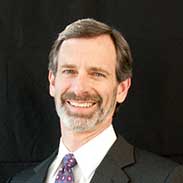
James Newcomb
Senior ExpertRelated Insights

Reality Check: For Power Plants, Changing the Fuel Doesn’t Fix the Economics

The Opportunity for Heat Pumps to Put Downward Pressure on Electricity Rates

For Clean Energy Projects, How Community Benefits Are Delivered Matters

Tracking WestTEC: Where 100+ Transmission Projects Stand and What Comes Next
Help build the clean energy future. Donate today.
Independent research. Real-world solutions. Supported by donors.
RMI can pursue the highest-impact climate and energy solutions because we’re supported by people who believe change is possible. Every gift helps advance the work needed to make clean energy the default choice worldwide.
For other ways to give to RMI, including checks or gifts of stock, please visit Other Ways to Give.
