

Learn how we are working to transform how we use and produce energy.
The Economics of Electrifying Buildings: Residential New Construction
Electrifying Homes to Save Energy, Money, and Carbon
Why we share this work for free
RMI is an independent nonprofit working to accelerate the clean energy transition. We publish research like this to inform decision-makers and drive real-world impact.
Our work is supported by philanthropy as well as partnerships, including fee-for-service engagements. This support makes it possible for us to share our independent insights for free.
If you find this work valuable, you can support it anytime.
Get more insights like this
Stay up to date with the latest research, analysis, and tools from RMI by opting in to receive occasional emails below. You’ll get new reports, event invitations, and practical insights to help us all accelerate the clean energy transition.
Loading form...
Your download should start automatically. If it doesn’t, click the download button below.
This work is made possible by philanthropy
RMI is a nonprofit supported by donors and partners. Philanthropy enables us to produce independent research and make resources like this freely available.
If you find this report valuable, please consider supporting our work. You can also explore how we partner with organizations to drive impact.
Jump to Section
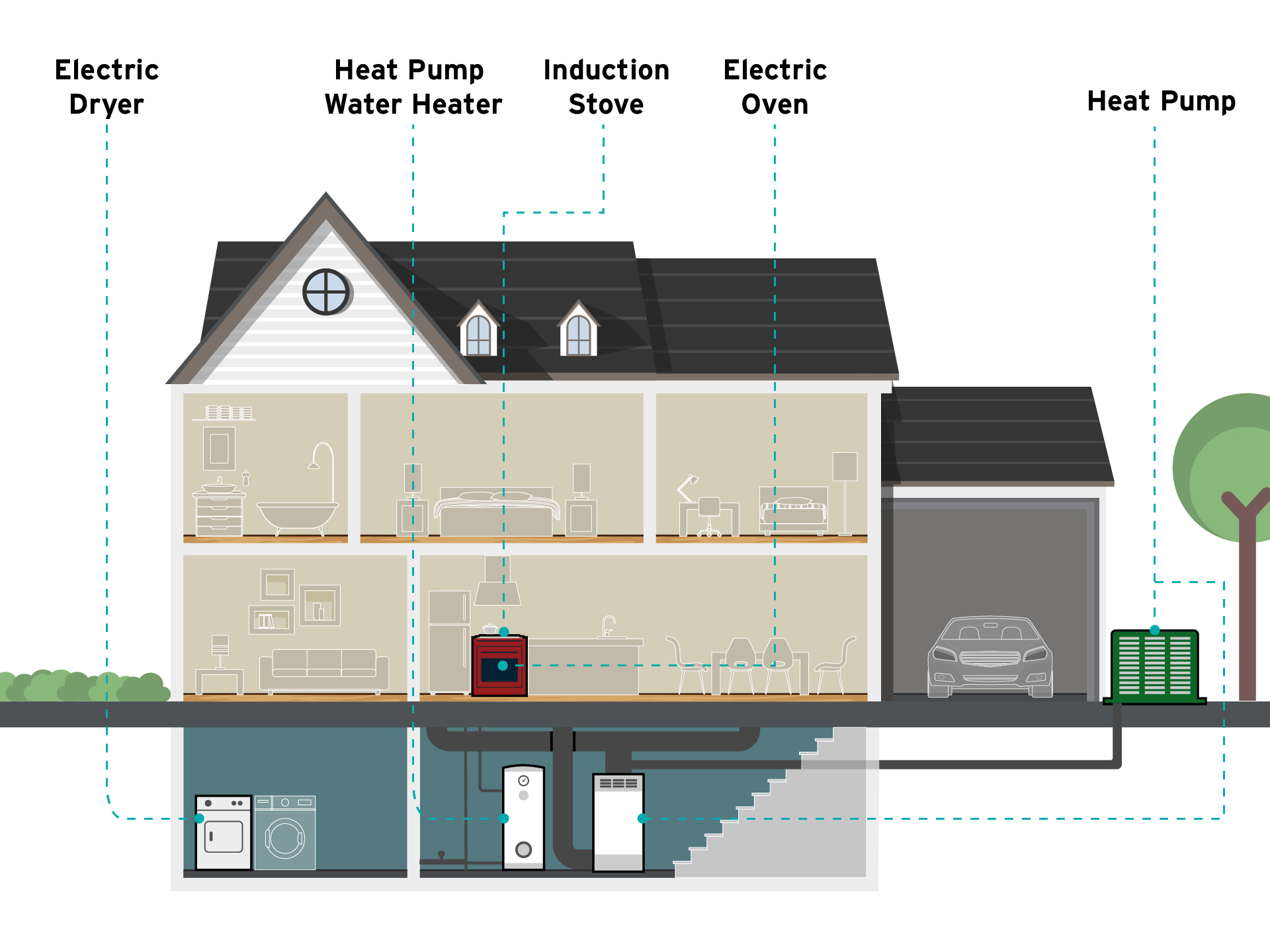
To help inform crucial policy and market decisions with up-to-date cost analysis information, RMI updated and expanded its 2020 analysis, The New Economics of Electrifying Buildings. Due to significant changes in gas and electricity rates and evolving construction costs, we examine the economic and climate impacts of building all-electric single-family new construction — homes that rely on electric appliances for space and water heating, cooking, and clothes drying.
Our analysis shows that all-electric, single-family new construction is more economical to build and operate than a home with gas appliances and has lower lifetime emissions in all nine cities studied. This is because mixed-fuel homes have gas furnaces, water heaters, air conditioning, and new gas connection costs. The all-electric home, by comparison, uses a single heat pump system for both heating and cooling and a heat pump water heater. Heat pumps also provide significant carbon and energy savings over gas appliances, resulting in a lower annual utility cost for the all-electric home.
Additionally, the 15-year CO2 emissions of all-electric homes are significantly lower than those of mixed-fuel homes for all the studied cities, even if gas continues to provide a significant share of electricity generation.
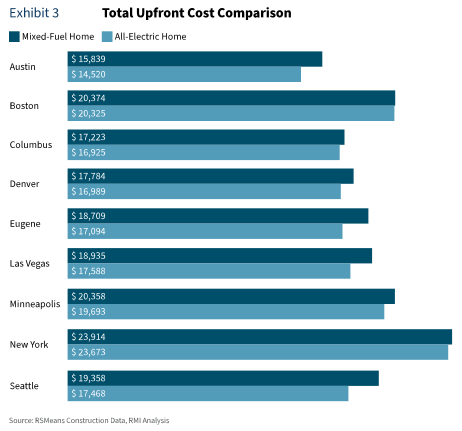
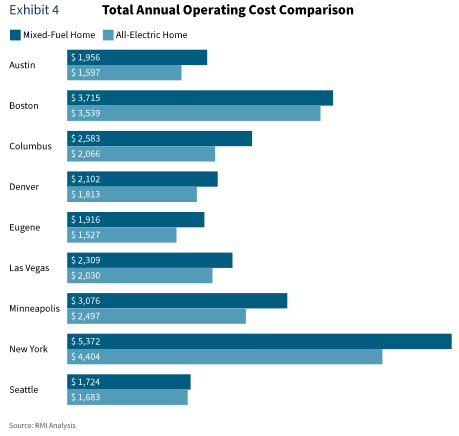
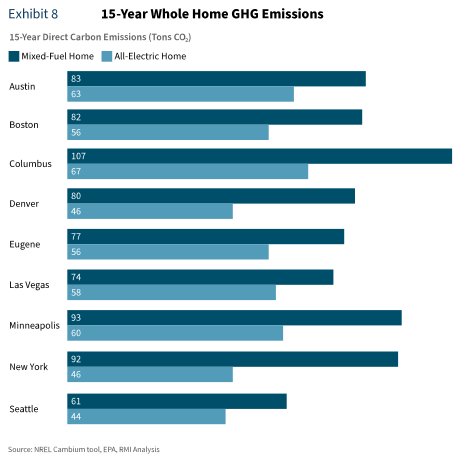
The Economics of Electrifying Buildings: Residential New Construction compares the economics and environmental impacts of electrification for single-family new construction detached residential buildings in 9 different cities in the US. Findings of this study provide valuable insights to state and local policymakers who seek analysis for the economic and environmental impacts of electrification for their specific region. It also supports policies that incentivize or require all-electric residential new construction and eliminate gas infrastructure subsidies for new buildings and could be used as an economical and environmental justification for home buyers to look for all-electric new construction due to their lower operating costs.
Authors

Edie Taylor
Lacey Tan
Related Insights

Help build the clean energy future. Donate today.
Independent research. Real-world solutions. Supported by donors.
RMI can pursue the highest-impact climate and energy solutions because we’re supported by people who believe change is possible. Every gift helps advance the work needed to make clean energy the default choice worldwide.
For other ways to give to RMI, including checks or gifts of stock, please visit Other Ways to Give.
