

Learn how we are working to transform how we use and produce energy.
Refrigerant Reclamation
Assessing Potential Emissions Impacts of R-410A Refrigerant Reclamation in the United States’ Residential HVAC Sector
Why we share this work for free
RMI is an independent nonprofit working to accelerate the clean energy transition. We publish research like this to inform decision-makers and drive real-world impact.
Our work is supported by philanthropy as well as partnerships, including fee-for-service engagements. This support makes it possible for us to share our independent insights for free.
If you find this work valuable, you can support it anytime.
Get more insights like this
Stay up to date with the latest research, analysis, and tools from RMI by opting in to receive occasional emails below. You’ll get new reports, event invitations, and practical insights to help us all accelerate the clean energy transition.
Loading form...
Your download should start automatically. If it doesn’t, click the download button below.
This work is made possible by philanthropy
RMI is a nonprofit supported by donors and partners. Philanthropy enables us to produce independent research and make resources like this freely available.
If you find this report valuable, please consider supporting our work. You can also explore how we partner with organizations to drive impact.
Jump to Section
In the United States, new rules announced by the Environmental Protection Agency are requiring a transition away from refrigerants that have high global warming potential (GWP) to support implementation of the American Innovation and Manufacturing (AIM) Act. The phasedown of these super-emitter refrigerants means lifecycle refrigerant management (LRM) practices, including recovery and reclamation, will be vital to manage the gap between refrigerant supply and demand for operation and maintenance of existing refrigeration, air conditioning and heat pump equipment, all while ensuring a shift to lower GWP refrigerants.
Stimulating recovery and reclamation efforts can minimize disruption to the current stock of equipment in operation, enabling continued use with existing refrigerant supplies until the equipment’s end of life. It can also help manage supply shortages of virgin refrigerants and insulate the industry against price spikes that could affect the servicing of existing systems that use HFCs. However, one of the key prerequisites for incentivizing reclamation — either via regulation or other market mechanisms such as carbon markets — is articulating its environmental benefits compared with the continued use of virgin refrigerant.
RMI’s Refrigerant Reclamation report highlights the positive climate impact of using reclaimed refrigerant R-410A (the most commonly used refrigerant in residential equipment) for servicing existing air conditioning and heat pump equipment in the residential sector. This analysis found that reclamation of R-410A can cut greenhouse gas emissions from refrigerant production by more than half compared to production of new refrigerant. Maximizing reclamation in place of producing new refrigerant can reduce emissions from the sector overall.
The report also highlights current financial and logistical barriers to recovery, which is foundational to achieving the illustrated emissions impact from reclaimed refrigerant. It also identifies policies and best practices from different regions around the world to overcome those barriers based on stakeholder interviews conducted by the team. Implementing these policies quickly will be crucial to scale the adoption of reclaimed refrigerant in the United States, which impacts not only the R-410A market, but also the success of the broader industry transition to refrigerants that have a significantly lower impact on the climate.
This research was conducted with support from Hudson Technologies, Inc.
Authors

Ankit Kalanki
Principal
Raghav Muralidharan
Manager
Gareth Westler
Senior Associate
Ian McGavisk
Related Insights
The Opportunity for Heat Pumps to Put Downward Pressure on Electricity Rates
Building Smarter, More Efficient Air Conditioners for Real World Conditions

How Heat Pumps Reduce Energy Bills and Air Pollution in the San Francisco Bay Area
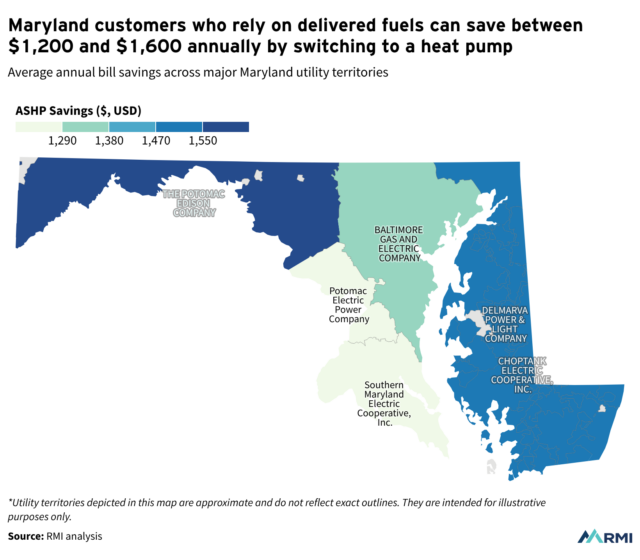
Delivered Fuel Customers in Maryland See Strong Energy Bill Savings in a Switch to Heat Pumps
Help build the clean energy future. Donate today.
Independent research. Real-world solutions. Supported by donors.
RMI can pursue the highest-impact climate and energy solutions because we’re supported by people who believe change is possible. Every gift helps advance the work needed to make clean energy the default choice worldwide.
For other ways to give to RMI, including checks or gifts of stock, please visit Other Ways to Give.
