

Learn how we are working to transform how we use and produce energy.
Reforming Residential Energy Efficiency Incentive Programs: Best Practices and Legislative Options
Best practices and legislative options for creating energy efficiency programs that are simple, durable, equitable, and tailored to the local market, with a focus on heat pumps.
Why we share this work for free
RMI is an independent nonprofit working to accelerate the clean energy transition. We publish research like this to inform decision-makers and drive real-world impact.
Our work is supported by philanthropy as well as partnerships, including fee-for-service engagements. This support makes it possible for us to share our independent insights for free.
If you find this work valuable, you can support it anytime.
Get more insights like this
Stay up to date with the latest research, analysis, and tools from RMI by opting in to receive occasional emails below. You’ll get new reports, event invitations, and practical insights to help us all accelerate the clean energy transition.
Loading form...
Your download should start automatically. If it doesn’t, click the download button below.
This work is made possible by philanthropy
RMI is a nonprofit supported by donors and partners. Philanthropy enables us to produce independent research and make resources like this freely available.
If you find this report valuable, please consider supporting our work. You can also explore how we partner with organizations to drive impact.
Jump to Section
RMI hosted a webinar on April 22nd to present the research here and discuss with an expert panel. View the webinar recording and more information here.
Dollar incentives for energy upgrades have enormous potential for impact. They can spur transformation by lowering up-front costs and making upgrades more accessible and appealing for households. And they can help drive wary contractors to recommend and install more energy efficient equipment such as heat pumps.
However, incentive uptake is not happening at the pace and scale needed to tackle the millions of poorly sealed and insulated homes that waste energy, raise costs, and rely on inefficient fossil fuel equipment. Incentive programs are needlessly complex, bogged down by excessive reporting, and burdened by ever-changing rules. Consumers can’t make sense of it all, and contractors are driven away. The impact is especially pronounced for low-income families, who often have less time and resources to deal with the complexity — making them one-third as likely to receive incentives than moderate-income households.
Regulators have strong incentives to be risk-averse, adding layers of complexity to prevent fraud that diminish ease of use. But there is a better way forward. The reward is an $97 billion lever to decarbonize US homes in the next decade, consisting primarily of $8.8 billion spent annually on existing state and utility electric and gas efficiency programs. RMI has developed resources to help stakeholders reform existing programs and develop effective programs from the start.
Our resources come in two parts:
- A best practice guide for reforming energy efficiency programs to increase heat pump adoption, created in consultation with manufacturers, contractors, program administrators, and advocates. The best practices, available here, are organized by the desired outcome: simplicity, fit with the local market, durability, and equitability. While the guide outlines principles applicable to all energy efficiency programs, details of implementation focus on electric heat pump programs.
- A legislative options package containing four options for deploying best practices in incentive programs. The legislative options, which you can download below, apply not just to heat pumps but to all types of energy efficiency programs. Developed in partnership with the Regulatory Assistance Project, they include:
- Incentive Clearing House that would require a universal application — a single point of contact for program information, application submission, and technical assistance or a single program that offers a variety of services for multiple programs within a state or region.
- Energy Efficiency Authority to establish a single entity that would pilot, design, and run state efficiency programs.
- Incentive Program Oversight Council to establish standards governing the incentive programs. To ensure a user-first perspective, we propose that program guidance and oversight be overseen by an expert committee.
- Agency Incentive Implementation Task Force to align existing incentive programs.
These resources are for program administrators, utility regulators, policymakers, and advocates looking to improve program impact.
For assistance in applying the best practices and legislative options, reach out to Lacey Tan (ltan@rmi.org), Jack Teener (jack.teener@rmi.org), and Russell Unger (runger@rmi.org).
Authors

Jack Teener
Olivia Prieto
Lacey Tan
Russell Unger
Related Insights

Building Smarter, More Efficient Air Conditioners for Real World Conditions

How Heat Pumps Reduce Energy Bills and Air Pollution in the San Francisco Bay Area
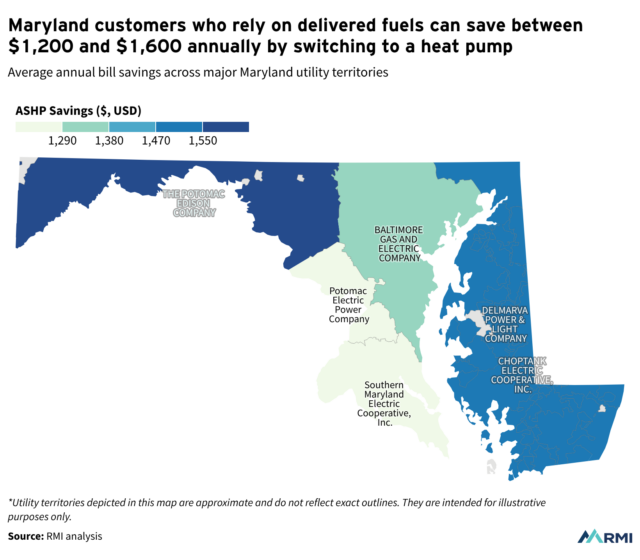
Delivered Fuel Customers in Maryland See Strong Energy Bill Savings in a Switch to Heat Pumps
Gas Utility Depreciation: Recommendations for an Uncertain Future
Help build the clean energy future. Donate today.
Independent research. Real-world solutions. Supported by donors.
RMI can pursue the highest-impact climate and energy solutions because we’re supported by people who believe change is possible. Every gift helps advance the work needed to make clean energy the default choice worldwide.
For other ways to give to RMI, including checks or gifts of stock, please visit Other Ways to Give.
