

Learn how we are working to transform how we use and produce energy.
Why we share this work for free
RMI is an independent nonprofit working to accelerate the clean energy transition. We publish research like this to inform decision-makers and drive real-world impact.
Our work is supported by philanthropy as well as partnerships, including fee-for-service engagements. This support makes it possible for us to share our independent insights for free.
If you find this work valuable, you can support it anytime.
Get more insights like this
Stay up to date with the latest research, analysis, and tools from RMI by opting in to receive occasional emails below. You’ll get new reports, event invitations, and practical insights to help us all accelerate the clean energy transition.
Loading form...
Your download should start automatically. If it doesn’t, click the download button below.
This work is made possible by philanthropy
RMI is a nonprofit supported by donors and partners. Philanthropy enables us to produce independent research and make resources like this freely available.
If you find this report valuable, please consider supporting our work. You can also explore how we partner with organizations to drive impact.
Jump to Section
Resource adequacy is the ability of the electric grid to supply enough electricity to meet demand under a range of future conditions. It has come under increased scrutiny from regulators as traditional fossil fuel power plants approach retirement at the same time as electricity demand is forecasted to grow. This report aims to support regulators in the Western United States in understanding both the key drivers of resource adequacy risk and the specific options available to navigate and mitigate this uncertainty as the grid evolves.
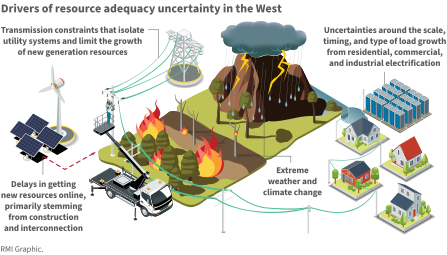
The first part of this report identifies and contextualizes four primary drivers of resource adequacy risk facing Western states: load growth uncertainties, extreme weather and climate change, delays in planned resource builds, and slow transmission expansion.
The second part of this report shows how by pursuing improvements in planning practices, widening the suite of resource adequacy solutions, and seeking reforms in utility business models, regulators can reduce the risk of future resource adequacy shortfalls while continuing to facilitate a transition to a low-carbon grid that benefits customers and enables local economic development.
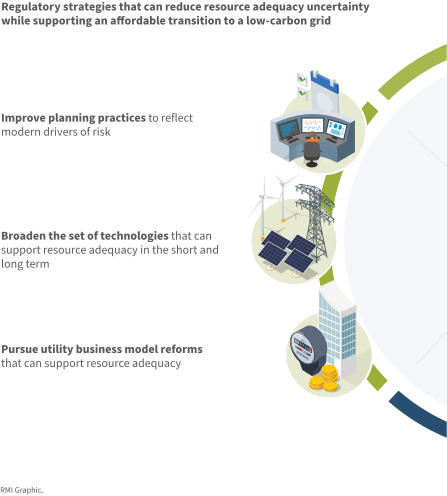
This report identifies ten specific options for regulators to pursue across these three regulatory strategies, supported by dozens of real-world examples across the West. Ultimately, we hope the addition of this comprehensive framework to Western regulators’ toolbox can help them proactively pursue the most high-impact and climate-conscious solutions to cost-effectively maintain resource adequacy in light of the unique risks facing the West.
This work is made possible with support from the Heising-Simons Foundation.



Related Insights


Help build the clean energy future. Donate today.
Independent research. Real-world solutions. Supported by donors.
RMI can pursue the highest-impact climate and energy solutions because we’re supported by people who believe change is possible. Every gift helps advance the work needed to make clean energy the default choice worldwide.
For other ways to give to RMI, including checks or gifts of stock, please visit Other Ways to Give.
