

Learn how we are working to transform how we use and produce energy.
Making the Clean Energy Transition Affordable
How Totex Ratemaking Could Address Utility Capex Bias in the United States
Why we share this work for free
RMI is an independent nonprofit working to accelerate the clean energy transition. We publish research like this to inform decision-makers and drive real-world impact.
Our work is supported by philanthropy as well as partnerships, including fee-for-service engagements. This support makes it possible for us to share our independent insights for free.
If you find this work valuable, you can support it anytime.
Get more insights like this
Stay up to date with the latest research, analysis, and tools from RMI by opting in to receive occasional emails below. You’ll get new reports, event invitations, and practical insights to help us all accelerate the clean energy transition.
Loading form...
Your download should start automatically. If it doesn’t, click the download button below.
This work is made possible by philanthropy
RMI is a nonprofit supported by donors and partners. Philanthropy enables us to produce independent research and make resources like this freely available.
If you find this report valuable, please consider supporting our work. You can also explore how we partner with organizations to drive impact.
Jump to Section
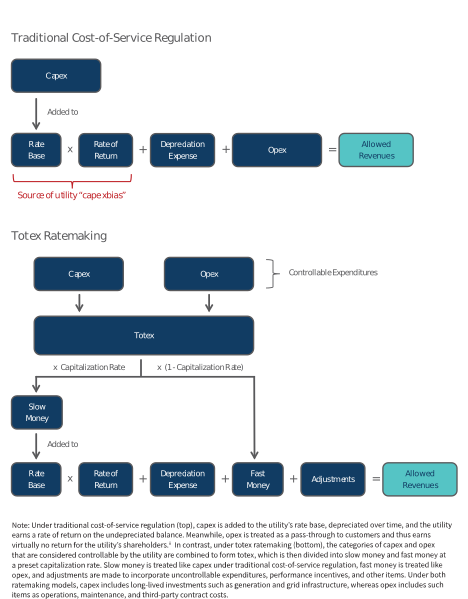
The US electric sector faces a massive spending surge in the coming years as utilities decarbonize, strengthen system resilience, and embrace technological advances. To maintain affordability during this investment boom, utility spending must be cost effective. However, traditional utility regulation creates a perverse incentive known as “capex bias,” which encourages utilities to pursue capital investments over other alternatives — even if those alternatives could save customers money.
Totex ratemaking is a regulatory innovation that could help keep utility rates affordable through the clean energy transition. By changing how regulators set the utility’s revenue allowance, it allows alternative solutions to compete with capital projects on a level playing field.
Totex ratemaking is part of RIIO, the UK’s performance-based regulatory framework, and has a growing track record in Europe — but so far no US state has seriously considered adopting it. A key reason for this seems to be the assumption that totex ratemaking would conflict with current US accounting standards, coupled with uncertainty about whether this could impact a utility’s cost of capital.
Based on the research presented in our new report, Making the Clean Energy Transition Affordable, we believe totex ratemaking is broadly compatible with existing US accounting standards, and that if conflicts do arise the impacts should be manageable. We therefore see no reason why US regulators who wish to explore it should not move forward. However, whether totex ratemaking should be adopted in the United States is ultimately a question for state regulators and local stakeholders. To help jump-start these discussions, the report offers some initial thoughts on a series of design and implementation questions.
Totex Ratemaking Changes How the Utility’s Allowed Revenues Are Set
Authors

Cara Goldenberg
Kaja Rebane
Uday Varadarajan
David Posner
Related Insights

For Clean Energy Projects, How Community Benefits Are Delivered Matters

Tracking WestTEC: Where 100+ Transmission Projects Stand and What Comes Next


Help build the clean energy future. Donate today.
Independent research. Real-world solutions. Supported by donors.
RMI can pursue the highest-impact climate and energy solutions because we’re supported by people who believe change is possible. Every gift helps advance the work needed to make clean energy the default choice worldwide.
For other ways to give to RMI, including checks or gifts of stock, please visit Other Ways to Give.
