

Learn how we are working to transform how we use and produce energy.
Gas Stoves: Health and Air Quality Impacts and Solutions
Why we share this work for free
RMI is an independent nonprofit working to accelerate the clean energy transition. We publish research like this to inform decision-makers and drive real-world impact.
Our work is supported by philanthropy as well as partnerships, including fee-for-service engagements. This support makes it possible for us to share our independent insights for free.
If you find this work valuable, you can support it anytime.
Get more insights like this
Stay up to date with the latest research, analysis, and tools from RMI by opting in to receive occasional emails below. You’ll get new reports, event invitations, and practical insights to help us all accelerate the clean energy transition.
Loading form...
Your download should start automatically. If it doesn’t, click the download button below.
This work is made possible by philanthropy
RMI is a nonprofit supported by donors and partners. Philanthropy enables us to produce independent research and make resources like this freely available.
If you find this report valuable, please consider supporting our work. You can also explore how we partner with organizations to drive impact.
Jump to Section
Health Effects from Gas Stove Pollution
Rocky Mountain Institute, Physicians for Social Responsibility, Mothers Out Front, Sierra Club
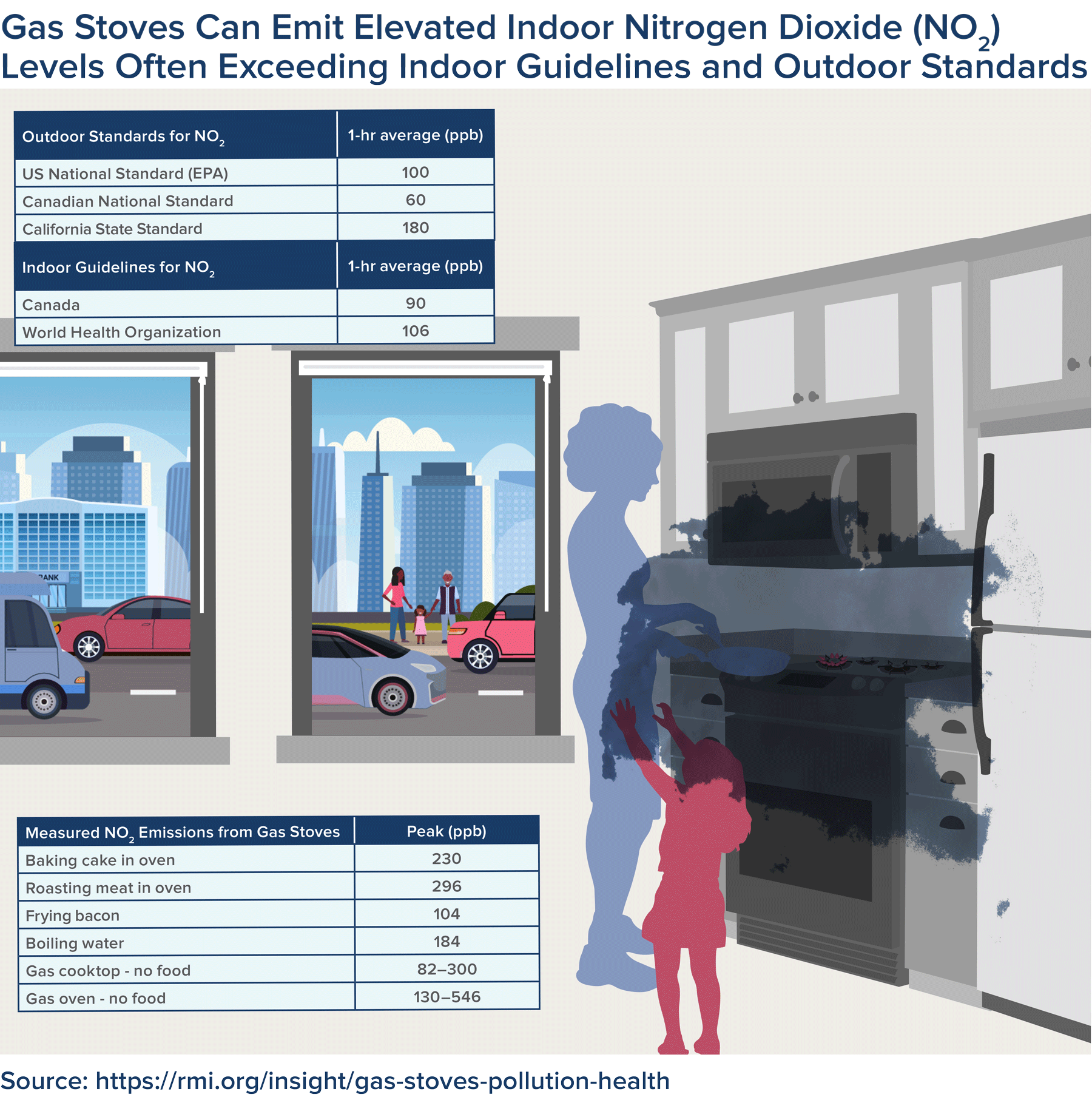
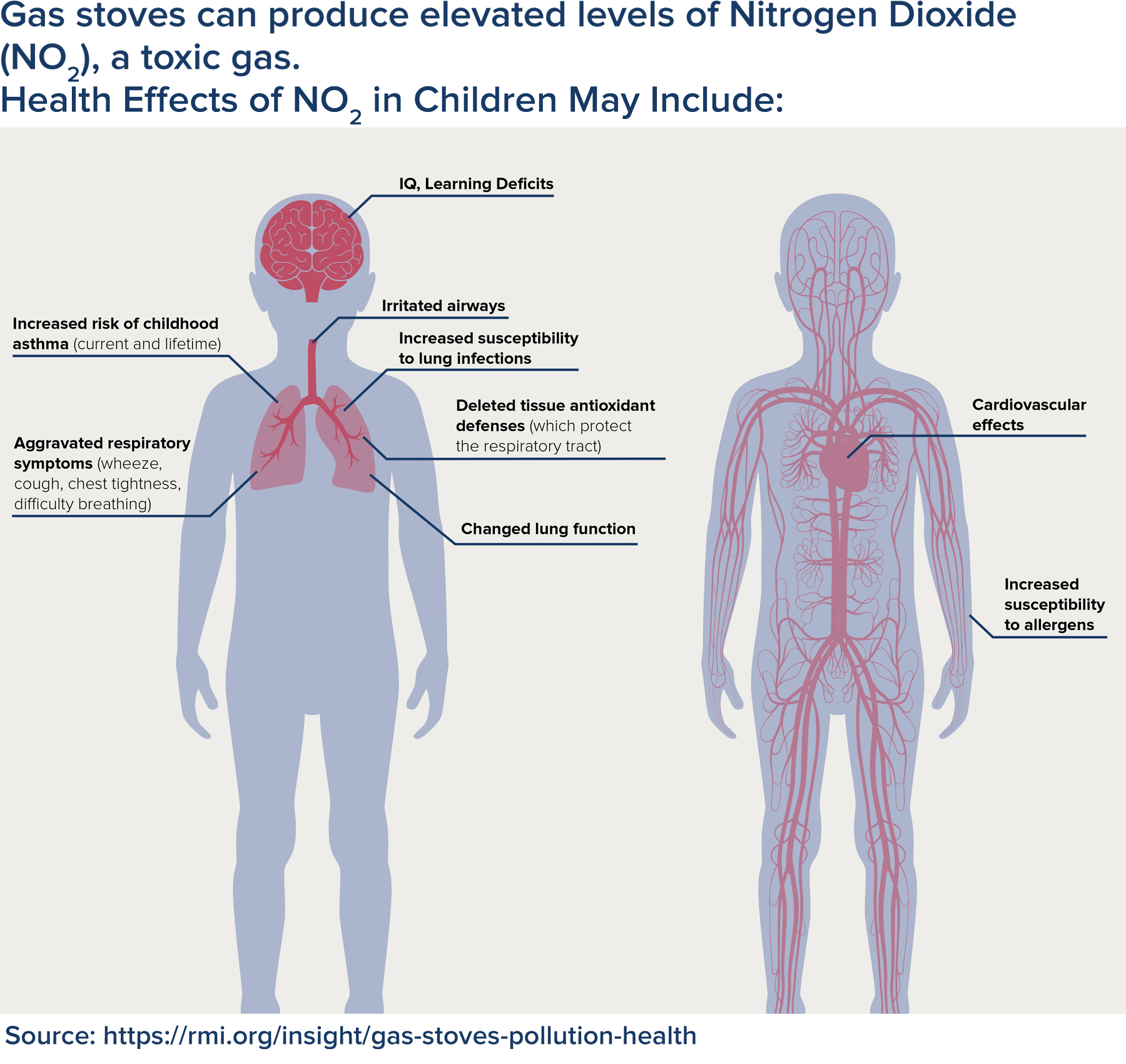
Across the United States, millions of homes and apartments rely on gas appliances for heating and cooking. Burning gas in buildings is not only a threat to climate action but also to human health, as these appliances are sources of indoor air pollution. Gas stoves, particularly when unvented, can be a primary source of indoor air pollution. What’s more, a robust body of scientific research shows the pollutants released by gas stoves can have negative health effects, often exacerbating respiratory conditions like asthma.
Despite this growing body of evidence, indoor air pollution remains largely unregulated. In this report, we synthesize the last two decades of research and offer recommendations for policymakers, researchers, health care professionals, and the public to work to swiftly to mitigate the health risks associated with gas stoves. Air pollution is preventable, and we hope this report can spur the necessary action to protect public health.
Indoor Air Pollution: The Link between Climate and Health by Brady Seals
Click the “Download” button above for a PDF of the full report. The infographics below are also available for download.

Authors

Andee Krasner
Brady Seals
Related Insights




Help build the clean energy future. Donate today.
Independent research. Real-world solutions. Supported by donors.
RMI can pursue the highest-impact climate and energy solutions because we’re supported by people who believe change is possible. Every gift helps advance the work needed to make clean energy the default choice worldwide.
For other ways to give to RMI, including checks or gifts of stock, please visit Other Ways to Give.
