

Learn how we are working to transform how we use and produce energy.
Five Takeaways from IEA’s Report on World Energy Investment
Clean energy investment is at a record high, but there's room for much more.
Why we share this work for free
RMI is an independent nonprofit working to accelerate the clean energy transition. We publish research like this to inform decision-makers and drive real-world impact.
Our work is supported by philanthropy as well as partnerships, including fee-for-service engagements. This support makes it possible for us to share our independent insights for free.
If you find this work valuable, you can support it anytime.
Get more insights like this
Stay up to date with the latest research, analysis, and tools from RMI by opting in to receive occasional emails below. You’ll get new reports, event invitations, and practical insights to help us all accelerate the clean energy transition.
Loading form...
Your download should start automatically. If it doesn’t, click the download button below.
This work is made possible by philanthropy
RMI is a nonprofit supported by donors and partners. Philanthropy enables us to produce independent research and make resources like this freely available.
If you find this report valuable, please consider supporting our work. You can also explore how we partner with organizations to drive impact.
Jump to Section
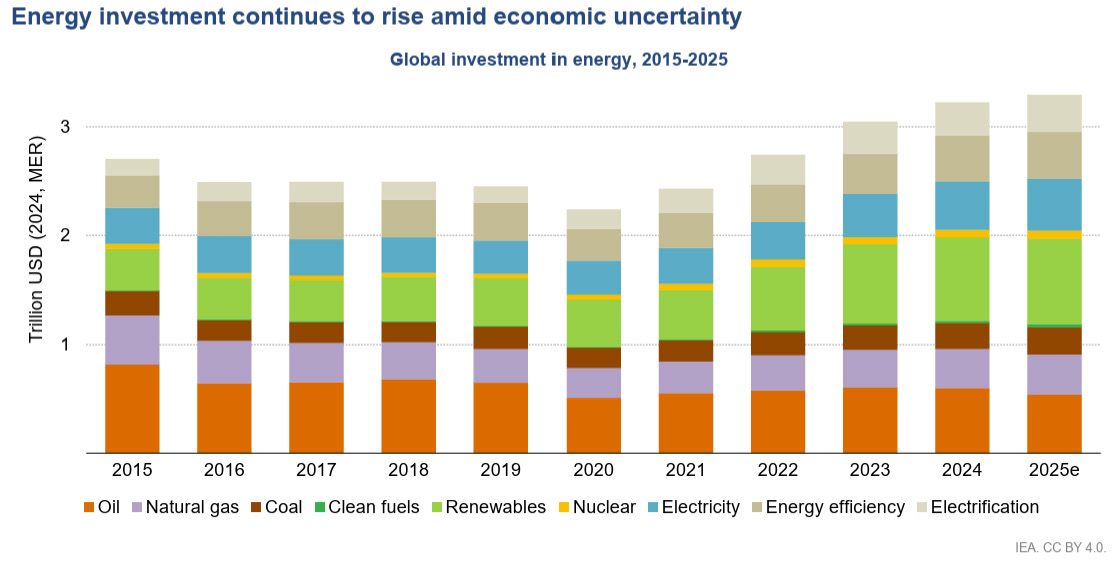
Clean energy investment is a record high, according to the recently released World Energy Investment 2025 report by the International Energy Agency (IEA). The report provides an update of the investment picture in 2024 and what we can expect in 2025. Below we provide five charts and takeaways from the report.
1. Global energy investment has never been more weighted toward clean solutions. Less than half went to clean categories 10 years ago, but now that fraction is two-thirds. Solar receives more investment than any other technology ($450 billion).
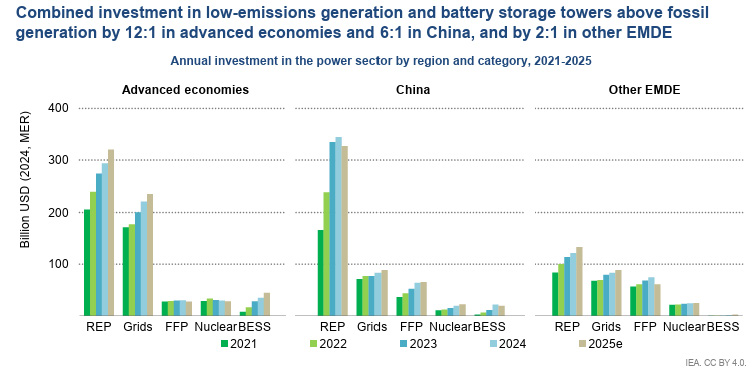
2. Clean electricity investment “towers above” fossil fuel sources by 12:1 in the advanced economies, by 6:1 in China, and by 2:1 in other emerging markets and developing economies.
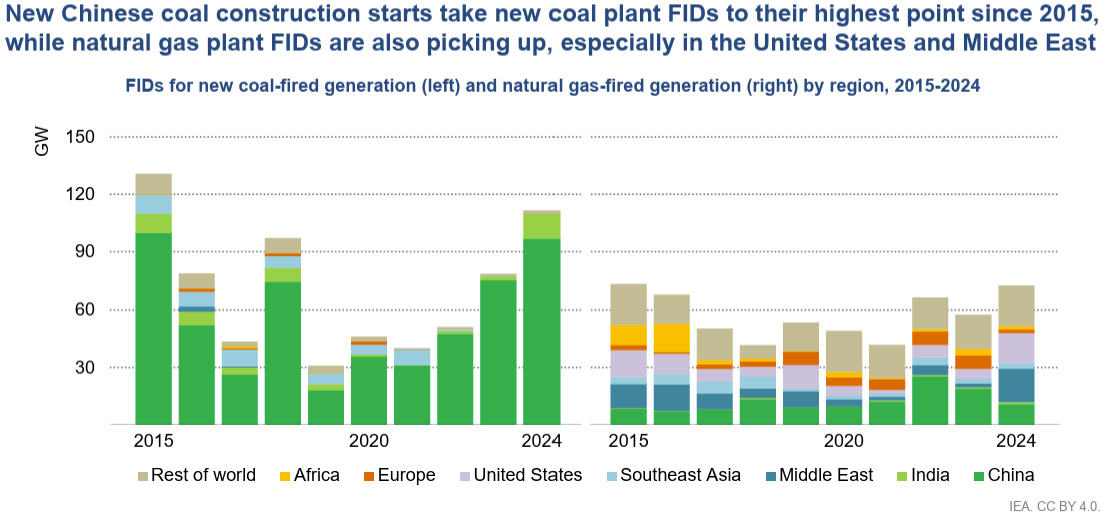
3. However, more coal and gas power plant capacity was approved in 2024 than in any year since 2015. Time will tell if these plants are fully utilized, or if they bring further risks that raise costs for consumers and corporates alike.
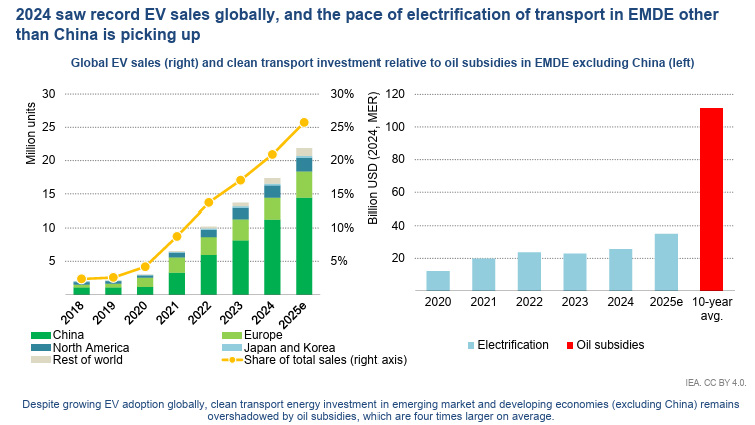
4. Transport shows a similar story. Though electric vehicles and their investments are growing higher than ever, oil subsidies are still four times higher in emerging markets. Powering vehicles with locally produced renewable electricity would save these nations billions of dollars every year.
5. Global progress requires systemic solutions. Africa has 20 percent of the global population, but only 2 percent of clean energy investment. With currencies depreciating by two times or more in just the past decade, debt servicing costs are nearly as much as total energy investment.
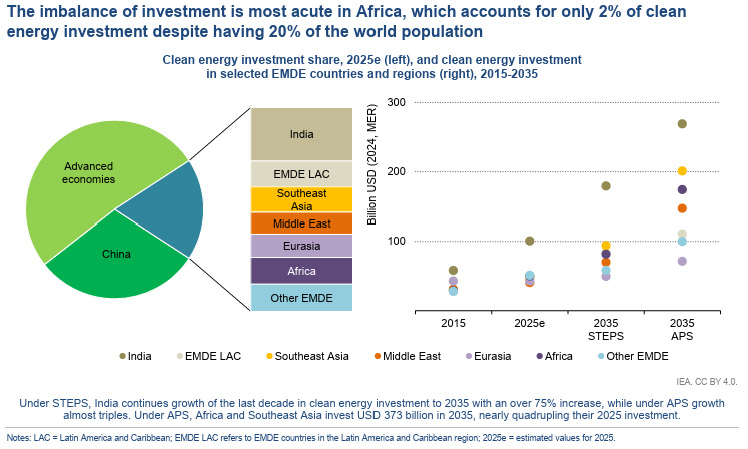
We’ll also need much more than money — from supportive policies to accelerated grid buildout, since procuring the right materials can take years. You can find much more in the full report as well as in all of RMI’s work to overcome these barriers.
Authors

Will Atkinson
Senior AssociateRelated Insights



Help build the clean energy future. Donate today.
Independent research. Real-world solutions. Supported by donors.
RMI can pursue the highest-impact climate and energy solutions because we’re supported by people who believe change is possible. Every gift helps advance the work needed to make clean energy the default choice worldwide.
For other ways to give to RMI, including checks or gifts of stock, please visit Other Ways to Give.
