

Learn how we are working to transform how we use and produce energy.
Why we share this work for free
RMI is an independent nonprofit working to accelerate the clean energy transition. We publish research like this to inform decision-makers and drive real-world impact.
Our work is supported by philanthropy as well as partnerships, including fee-for-service engagements. This support makes it possible for us to share our independent insights for free.
If you find this work valuable, you can support it anytime.
Get more insights like this
Stay up to date with the latest research, analysis, and tools from RMI by opting in to receive occasional emails below. You’ll get new reports, event invitations, and practical insights to help us all accelerate the clean energy transition.
Loading form...
Your download should start automatically. If it doesn’t, click the download button below.
This work is made possible by philanthropy
RMI is a nonprofit supported by donors and partners. Philanthropy enables us to produce independent research and make resources like this freely available.
If you find this report valuable, please consider supporting our work. You can also explore how we partner with organizations to drive impact.
Jump to Section
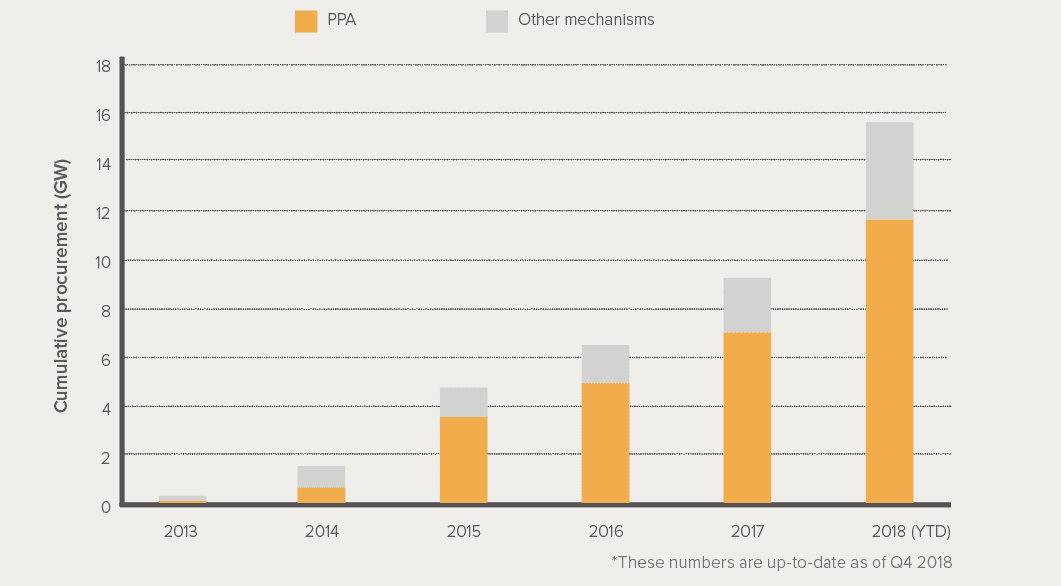
The US corporate renewable market has grown by leaps and bounds in the past five years. Corporate procurement has rapidly expanded from a niche to a substantial part of the US electricity system—one that has cumulatively brought online over 12% of all utility-scale wind and solar installed in the country today.
However, risk mitigation solutions have not kept pace with a rapidly diversifying and expanding corporate market. The issue of buyer risk has been raised with increasing frequency over the last few years and the market must address this issue seriously and immediately.
For its own long-term health, the market must move away from the current one-size-fits-all approach to a “many-sizes-for-all” approach to risk mitigation.
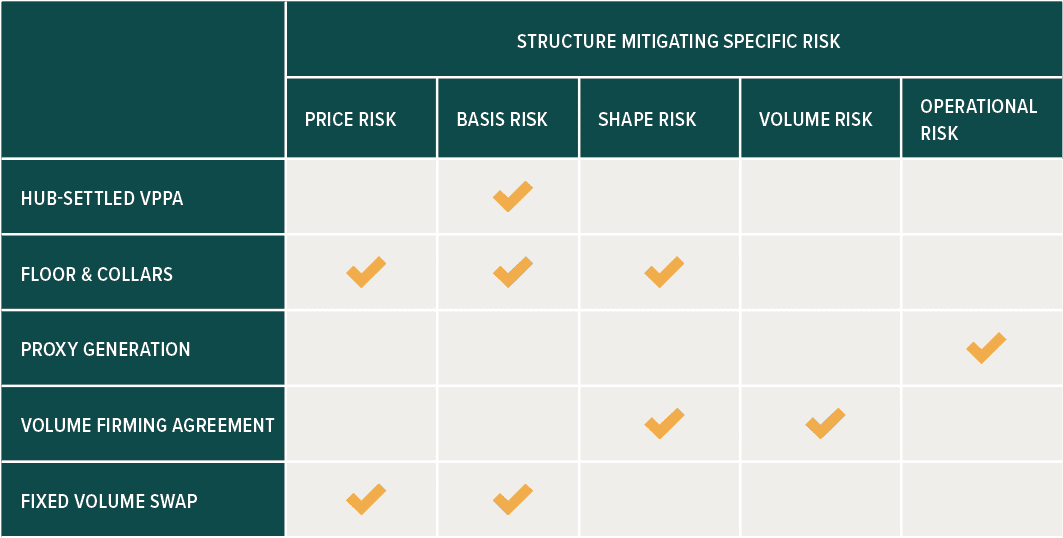
The report, of which this is the executive summary, dives into five specific risks buyers find unfamiliar—price, shape, basis, volume, and operational risk. It then reviews a range of mitigation strategies, including those that are widely available and those that are emerging in the market today—hub-settled contracts, floors and collars, proxy generation, volume firming agreements, and fixed volume swaps. The report also explores mitigation and procurement strategies such as long-term renewable energy certificate (REC) agreements, project tranches, and contract tranches.
Lastly, the report highlights best practices for buyers to contract for off-site renewable power in a way that meets their risk priorities.
Download the Risk Mitigation Guide’s Executive Summary
Access to the full report is for RMI Business Renewables Center (BRC) members only, and may be obtained through their online member portal HERE.
For further reading, an RMI blog highlighting additional risk mitigation topics may be accessed HERE.


Related Insights




Help build the clean energy future. Donate today.
Independent research. Real-world solutions. Supported by donors.
RMI can pursue the highest-impact climate and energy solutions because we’re supported by people who believe change is possible. Every gift helps advance the work needed to make clean energy the default choice worldwide.
For other ways to give to RMI, including checks or gifts of stock, please visit Other Ways to Give.
