

Learn how we are working to transform how we use and produce energy.
Why we share this work for free
RMI is an independent nonprofit working to accelerate the clean energy transition. We publish research like this to inform decision-makers and drive real-world impact.
Our work is supported by philanthropy as well as partnerships, including fee-for-service engagements. This support makes it possible for us to share our independent insights for free.
If you find this work valuable, you can support it anytime.
Get more insights like this
Stay up to date with the latest research, analysis, and tools from RMI by opting in to receive occasional emails below. You’ll get new reports, event invitations, and practical insights to help us all accelerate the clean energy transition.
Loading form...
Your download should start automatically. If it doesn’t, click the download button below.
This work is made possible by philanthropy
RMI is a nonprofit supported by donors and partners. Philanthropy enables us to produce independent research and make resources like this freely available.
If you find this report valuable, please consider supporting our work. You can also explore how we partner with organizations to drive impact.
Jump to Section
India has experienced rapid urbanization and economic growth over the past decade, making energy accessible and affordable. However, as adverse effects of climate change such as heatwaves become more common, the growing use of air conditioners will increasingly put the electricity grid under stress during peak hours. As the government plans reliable power supply by increasing renewable energy generation and implementing new load classes, demand response can be a cost-effective measure for the DISCOMs to meet these daily and seasonal swings in electricity demand.
This report investigates the opportunities available with a scaled-up demand response program as temperature extremes drive up peak loads and create an acute load management challenge for the DISCOMs. Unmanaged cooling demand in Haryana itself could add nearly 3.3 GW of peak load to the grid during the summer, necessitating expensive power purchase contracts with “peaker” gas plants. This report makes an economic case for AC-based demand response to reduce significant investments in expanding grid infrastructure for the DISCOMs, and make cooling loads a more manageable challenge in the long run.
The report discusses the principles and technological and policy frameworks necessary for supporting successful demand response programs. As policies in India mature to realize the significant value proposition of demand-side measures in ensuring better grid management and integrating renewables, the report also highlights other non-monetary benefits such as reliability of power supply and reduced chances of blackouts. Our analysis of targeted load reduction of residential cooling loads for Haryana as modeled for 2030 shows a potential to reduce up to 400 MW (2% of annual demand) of peak load requirements of the state, allowing up to INR 83 lacs per demand response event in power purchase savings.
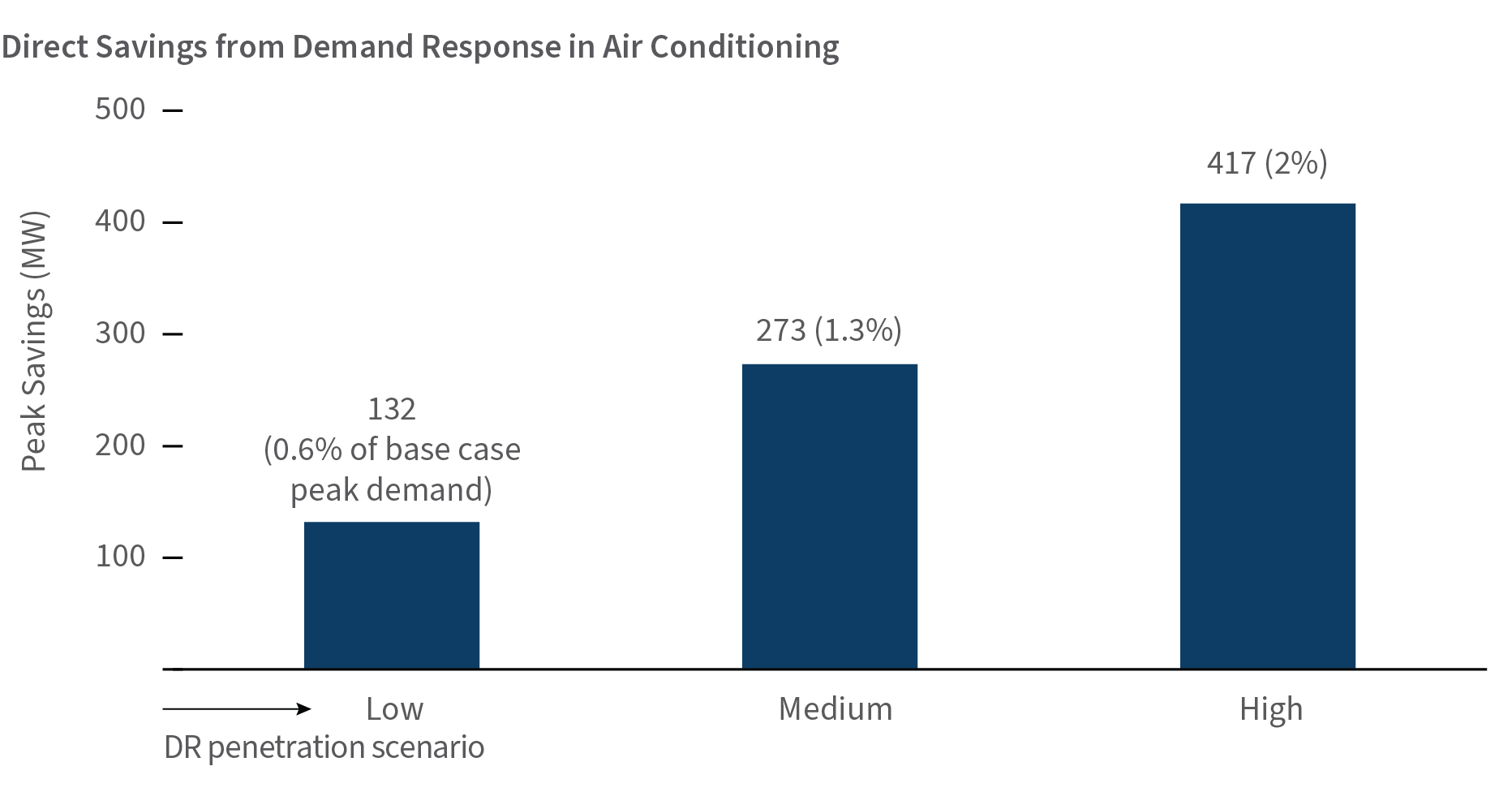
There are numerous barriers associated with successful implementation of demand flexibility measures in India, most pronounced being a lack of understanding of consumer behavior and granular data availability on critical and non-critical loads. In addition to this, even as technological prerequisites such as smart meters, telemetry units etc. gain penetration, introduction of dynamic tariffs (such as time-of-use pricing) by regulators can drive consumers to shift or curtail demand. Understanding these barriers as well as coordinated planning between key stakeholders will allow markets for demand-side measures to grow across India and ensure cost-optimal investments in grid infrastructure.
Authors

Related Insights

India’s Used EV Battery Market Needs Trust. Battery Aadhaar Can Help.

Help build the clean energy future. Donate today.
Independent research. Real-world solutions. Supported by donors.
RMI can pursue the highest-impact climate and energy solutions because we’re supported by people who believe change is possible. Every gift helps advance the work needed to make clean energy the default choice worldwide.
For other ways to give to RMI, including checks or gifts of stock, please visit Other Ways to Give.
