Skip to content

Our History

40 Years of Impact

Rocky Mountain Institute (RMI) was founded in 1982 as an independent, non-partisan nonprofit to increase energy efficiency and improve practices around energy use.

RMI’s data-led focus on efficiency, whole systems analysis, and levering business to drive change has since extended our influence globally, transforming businesses, revolutionizing energy systems, and improving national economies along the way.

In recent years, the rising demand for electricity coupled with the increasing frequency and severity of natural disasters — combined with the global race to lead on innovation — has amplified the need for and impact of RMI’s mission: to help usher the world toward a clean, prosperous, and secure low-carbon future for all.

1976

Landmark article sets out RMI approach

Amory Lovins gets interested in energy efficiency during the 1970s oil crisis. In “Energy Strategy: The Road Not Taken,” published in Foreign Affairs, Amory introduces the soft energy path, a concept that acts as a cornerstone for RMI’s future work

1982

RMI blooms — and builds

Amory and Hunter Lovins migrate to Snowmass, Colorado, and cofound RMI. Our first HQ is built as a groundbreaking experiment in energy efficiency — and as the Lovins’ home. Its centerpiece, a bioactive indoor farm heated only by the sun, has supported a thriving tropical garden – with scores of banana harvests — ever since. For more on Amory’s home, and work on green buildings, see Inside Amory’s Brain. In 2004, we expand to nearby Boulder and into the net-zero energy Innovation Center in Basalt in 2015. Today, we also have offices in New York City; Oakland, CA; Washington, D.C.; and Beijing.


1989

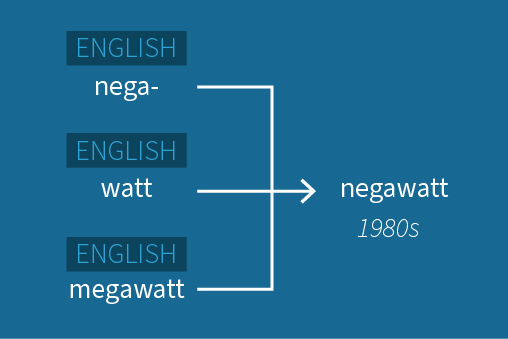
"Negawatt" redefines energy savings

Better language can help reframe how we think about problems. To identify and measure the value of reducing energy consumption or avoiding the need for new energy capacity in the future, Amory coins the term negawatt. The word was added to the Oxford English Dictionary in 2003.

1991

Hypercar sets the standard for the future of autos

A century or so after the debut of the fossil-fueled car, Amory develops the concept of the hypercar — ultralight, hybrid-electric, and superefficient — laying the groundwork for key innovations that today are helping a new generation of electric vehicles outperform regular cars and trucks.

1993

LEED: Greening the building industry

RMI helped set up the US Green Building Council and its LEED (Leadership in Energy and Environmental Design) rating system, setting a standard for building performance that inspire an ongoing transformation of the built environment.

1999

Amory co-authors Natural Capitalism

Natural Capitalism: The Next Industrial Revolution remains an influential business resource, and long-time best seller, on how to do business as if nature and people were properly valued. For more on Amory’s publications, see Inside Amory’s Brain.

2005

Transforming corporate energy efficiency

From theory to impact: In the 2000s, Amory’s system-of-systems method helped Texas Instruments build a superefficient microchip plant. RMI analysis helped Walmart double the fuel efficiency of its trucking fleet, racking up billions in avoided fuel costs.

2008

Realizing the green building revolution

Buildings account for nearly 40% of global emissions. RMI co-led a deep energy retrofit of the Empire State Building, saving two-fifths of its energy with a three-year payback. The work has since sparked hundreds of successful integrative renovations, including Denver’s historic Byron Rogers Federal Complex, where we cut energy use by 70%. Our Portfolio Energy Optimization approach delivers similar gains to commercial buildings that have been left behind by the traditional retrofit methods.

2009

Extending efficiency into road freight and sea shipping

Practically everything we buy is delivered via road or sea. Freight accounts for around 8% of global emissions. RMI spun off the North American Council for Freight Efficiency (NACFE) to help the trucking industry cut this impact and has proven out tweaks that can boost mileage by more than two thirds. In 2010, with RightShip, we co-developed a rating tool to help shippers pick the most carbon-efficient ships and routes, now used by companies shipping a fifth of the world’s goods.

2011

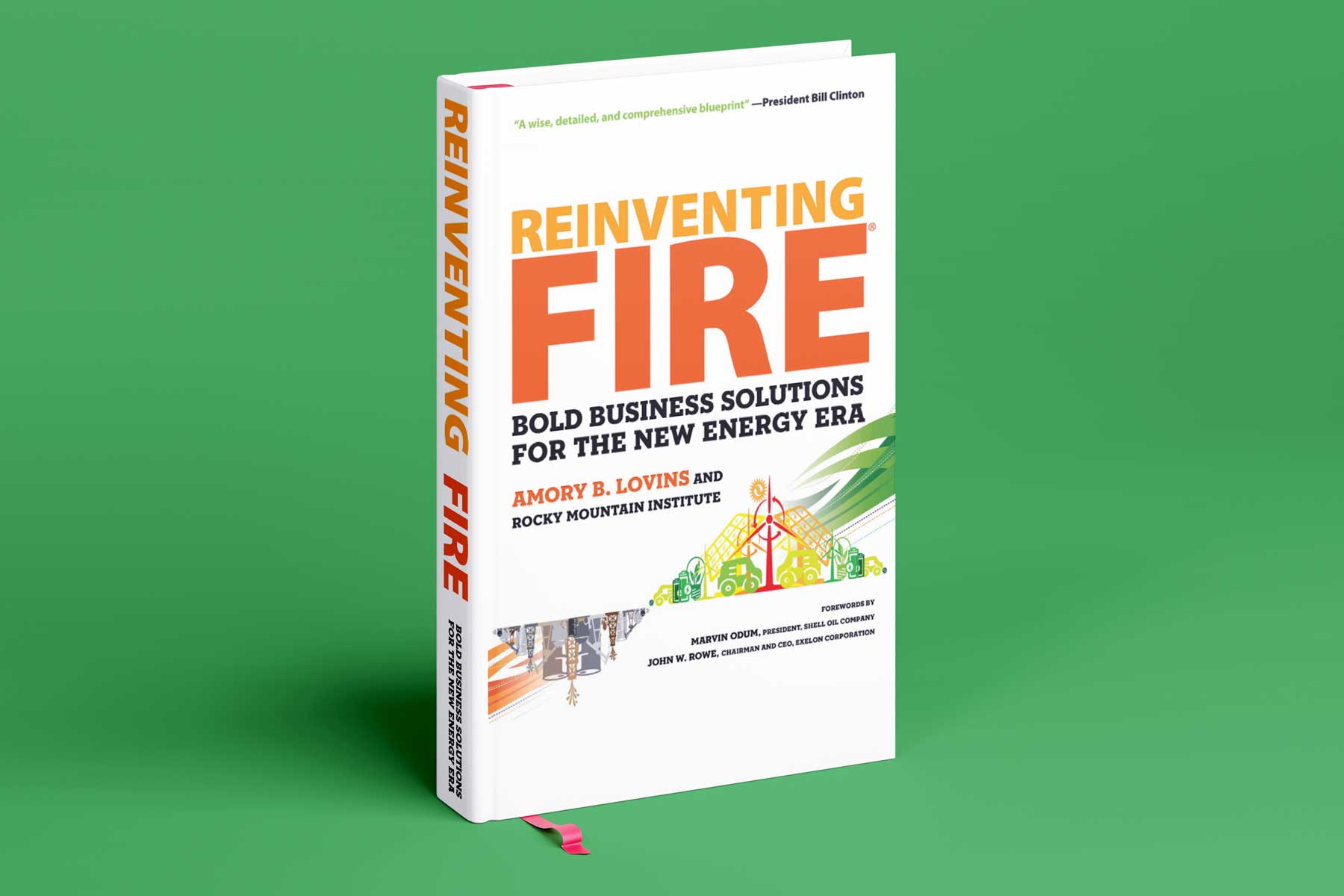
Reinventing Fire

In 2011, RMI published a blueprint detailing a profitable path to phase out US coal, oil, and nuclear energy by 2050,Reinventing Fire: Bold Business Solutions for the New Energy Era. RMI extended the project to China, the world’s second largest and fastest growing major economy. Insights from the report, published in 2016, were embedded in China’s 13th Five Year Plan, an economy-wide plan that directs investment and economic priorities.

2013

e⁻Lab aims for power sector solutions

Decarbonizing transportation and buildings, two of our biggest emissions sources, can’t be done without transforming the electric sector. But the electric industry is highly regulated and technically complex. To change the industry’s trajectory RMI launched e-Lab to convene utilities, generators, and other key players. Since 2014, Accelerator, e⁻Lab’s bootcamp, has been supporting groundbreaking projects across the US that are critical to realizing the clean energy transition.

2014

Joining forces with Carbon War Room

Carbon War Room, the UK-based climate action group founded by Sir Richard Branson, merged with RMI to create a powerful new alliance dedicated to market-based acceleration of a low-carbon energy future. The merger expands RMI’s portfolio, adding new expertise in islands, aviation, shipping, and trucking.

2014

Solar analysis moves financial markets

RMI’s Economics of Grid Defection report broke the story on the rising threat of customers unplugging from utility grid services once the combination of solar-plus-storage becomes cheap enough. The analysis served as a wake-up call for the electricity sector and its bankers. Financial heavyweight Barclay’s cited the report when it downgraded the credit of US utilities.

2015

The Business Renewables Center lifts off

From Amazon to Google, big companies are among the economy’s largest buyers of renewable energy. The Business Renewables Center began a crossroads to trade best practices and has since spun off as the Clean Energy Buyers Association, a group of some 300 large-scale buyers of energy, including commercial, industrial, and nonprofit entities.

2015

Opening the doors to our Innovation Center

“There are few leverage points as big as our buildings,” says Amory. “Most of the energy they use is wasted.” Our Basalt, Colorado Innovation Center debuted in 2015, to prove the viability of a better way. Built as the highest-performing building in the coldest climate zone in the U.S.the center produces more clean energy than it uses annually, plus enough to power a small fleet of electric vehicles. The center has inspired hundreds of other net-zero commercial buildings and remains a pinnacle achievement in green building design and advanced technology integration.

2017

Energy Web spins off

RMI cofounds the Energy Web, a nonprofit focused on using blockchain technology to help decarbonize the global economy. Blockchain can, for example, help secure and accelerate the flow of transaction, carbon, and financial data between generators, utilities, and end users.

2017

Delivering mobility solutions for India

Together with NITI Aayog, an Indian government think tank, RMI published India Leaps Ahead: Transformative Mobility Solutions for All, outlining India’s opportunity to pioneer clean passenger transport while saving $330 billion and 1 gigaton of CO2 emissions by 2030. To bring those solutions to life in India, and globally, the Urban Mobility Lab launched in 2018.

2018

Global Cooling prize debuts

As global temperatures continue to rise, demand for air conditioning and related cooling is also expected to quadruple by midcentury. To meet this rising source of greenhouse gases, RMI and the Indian government debuted the Global Cooling Prizea competition to develop climate-friendly air conditioners and other residential cooling solutions. The two winners of the prize, announced in 2021, will bring their super-efficient products to market in coming years.

2018

Helping solar systems survive hurricanes

The three reports in RMI’s Solar Under Storm series, written from 2018 to 2020, detail how to build hurricane-resistant solar systems. As severe storms grow in intensity and number, governments and installers throughout the Caribbean are using the recommendations to help keep the power on.

2019

Climate Finance Access Network launches

Nations in the Global South often face huge challenges in accessing the funding available to help them meet their climate goals and build community resilience. RMI cofounded the Climate Finance Access Network (CFAN) to train financial professionals to better navigate foundation, government, and other sources of funding for mitigation and adaption work.

2020

Third Derivative incubates climate-tech startups

In collaboration with established corporate partners, RMI and New Energy Nexus launched Third Derivative to nurture a new generation of climate-tech startups. Working on everything from batteries to direct air capture as well as new business models, D³ has invested $210 million, with $7 billion in assets under management, with over 60 startups in its ecosystem.

2020

Center for Climate Aligned Finance lifts off

The finance sector is a master gear of the global economy — its priorities ripple into all the companies it finances. To advance climate-friendly practices among the world’s tops banks, institutional investors, and their clients, RMI established the Center for Climate Aligned Finance.

2021

Reimagining RMI's brand

To mark an inflection point in RMI’s support of the global clean energy transition, we renewed our brand, including a new logo, an evolved name, and a sharp tagline: “Energy. Transformed.” As part of this exercise, RMI restructured our portfolio of work to align with the target of cutting global greenhouse gas emissions 50% by 2030 and driving the global economy toward net-zero emissions by 2050.

2021

A new home for energy expertise: Canary Media launches

RMI launched Canary Media, an independent nonprofit journalism outlet dedicated to covering the transition to a decarbonized economy. Tracing its roots back to Greentech Media, Canary is home to a staff of top energy reporters covering the energy transition, transportation, and industry at canarymedia.com and via podcasts: The Carbon CopyCatalyst, and Political Climate.

2021

Accelerating the shift to a green hydrogen economy

Green hydrogen offers a zero-carbon solution for vital hard-to-abate industries, such as steel and petrochemicals. To accelerate adoption of green hydrogen, the UN with the support of RMI launched the Green Hydrogen Catapult. At COP26, Catapult members consisting of leading global industrials committed to develop 45 GW of hydrogen electrolyzers — the reactor that liberates hydrogen from water using renewable electricity — with secured financing over the next five years.

2021

Electrifying urban deliveries in India

Petrol has long powered the small two-, three- and four wheelers that deliver people and goods across India. Those same engines contribute to some of the world’s worst urban air quality and chronic health impacts. Shoonya is spurring a switch to electrified two-, three-, and four-wheelers, via a verification and branding system for zero-emission delivery vehicles and packages. Launched by NITI Aayog, the Government of India’s official think tank, with support from RMI, Shoonya offers a model that can scale and help electrify delivery globally.

taxi

2022

Extending access to EV infrastructure

For the EV revolution to succeed, charging infrastructure must be available everywhere, including low-income communities. In January, RMI unveiled a $750,000 grant from General Motors (GM) to identify electric vehicle “charging deserts” in low-income communities in North American cities. Working with government, industry, and community stakeholders, the effort will streamline permitting for EV charging infrastructure. The work will extend RMI’s Los Angeles-focused EV Charging for All equity analysis.

2024

Canary Media takes flight

After three years under the wing of RMI, Canary Media spun out to become fully independent on July 1, 2024. This is a major achievement for both Canary and RMI, as Canary grew during its time with RMI to become a leading voice in clean energy journalism. The spinout adds to RMI’s long track record of nurturing and launching new entities into the ecosystem of startups focused on energy, climate, and efficiency.

Canary media logo

2024

RMI and World Energy Partner to Lower the Carbon Footprint of Business Travel

“World Energy has been proud to put many of RMI’s ideas and models for the SAF market into practice in the corporate world,” said Kathleen Wight, World Energy’s vice president of Net Zero Solutions. “RMI’s commitment to using SAFc insets for its own emissions reduction sends a strong signal that real world solutions exist today in the aviation sector for those committed to net-zero travel.”

Help build the clean energy future. Donate today.

Independent research. Real-world solutions. Supported by donors.

RMI can pursue the highest-impact climate and energy solutions because we’re supported by people who believe change is possible. Every gift helps advance the work needed to make clean energy the default choice worldwide.

For other ways to give to RMI, including checks or gifts of stock, please visit Other Ways to Give.