Learn how we are working to transform how we use and produce energy.
Locking in Prosperity
Ten practical, evidence-backed actions toward affordable, reliable, and secure power systems
Why we share this work for free
RMI is an independent nonprofit working to accelerate the clean energy transition. We publish research like this to inform decision-makers and drive real-world impact.
Our work is supported by philanthropy as well as partnerships, including fee-for-service engagements. This support makes it possible for us to share our independent insights for free.
If you find this work valuable, you can support it anytime.
Get more insights like this
Stay up to date with the latest research, analysis, and tools from RMI by opting in to receive occasional emails below. You’ll get new reports, event invitations, and practical insights to help us all accelerate the clean energy transition.
Loading form...
Your download should start automatically. If it doesn’t, click the download button below.
This work is made possible by philanthropy
RMI is a nonprofit supported by donors and partners. Philanthropy enables us to produce independent research and make resources like this freely available.
If you find this report valuable, please consider supporting our work. You can also explore how we partner with organizations to drive impact.
Jump to Section
It’s a historic time to be an energy leader, but building a prosperous energy future is a hard job.
Demand for electricity is surging amid growing market volatility and climate risk. Power systems are evolving quickly to meet new demand and preserve reliability, affordability, and security. At the same time, decisions being made today are long-lived: contracts and PPAs last decades; major grid and fuel infrastructure can remain in service for half a century or more. Every day, RMI staff work with the people in government, utilities, and regulatory bodies who are challenged to “lock in” a future where electricity drives prosperity, rather than one where power system problems constrain growth and interrupt daily life.
This report tackles those challenges by providing 10 Practical Actions to catalyze progress on immediate needs while building the evidence and capability for long-term infrastructure investment and policy decisions.
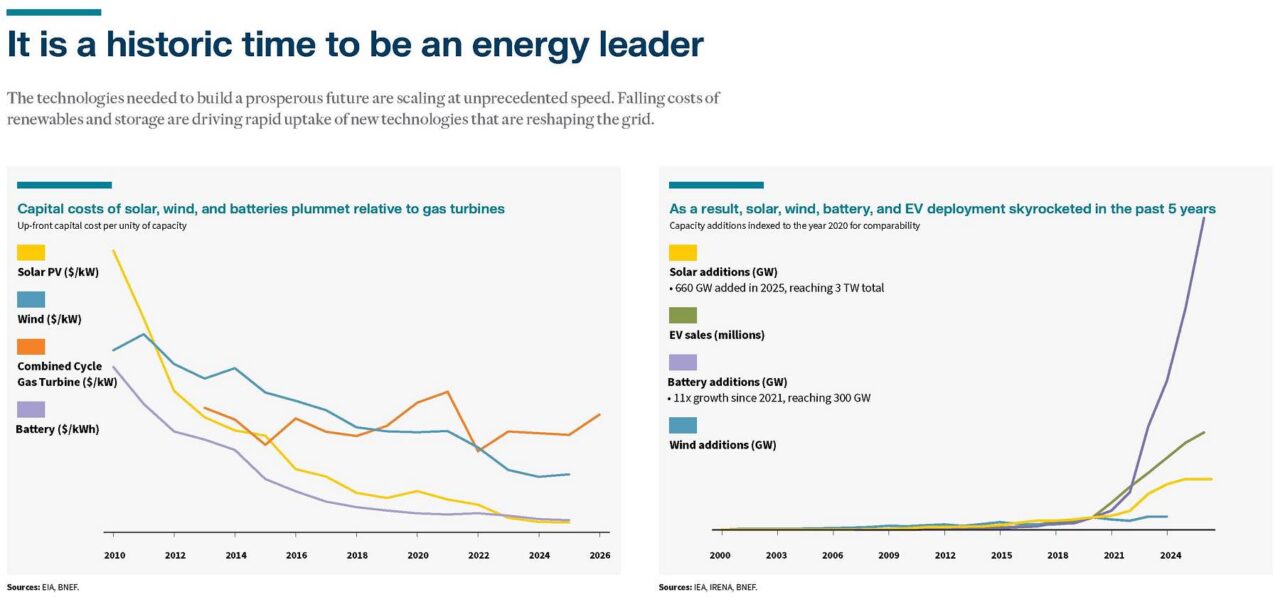
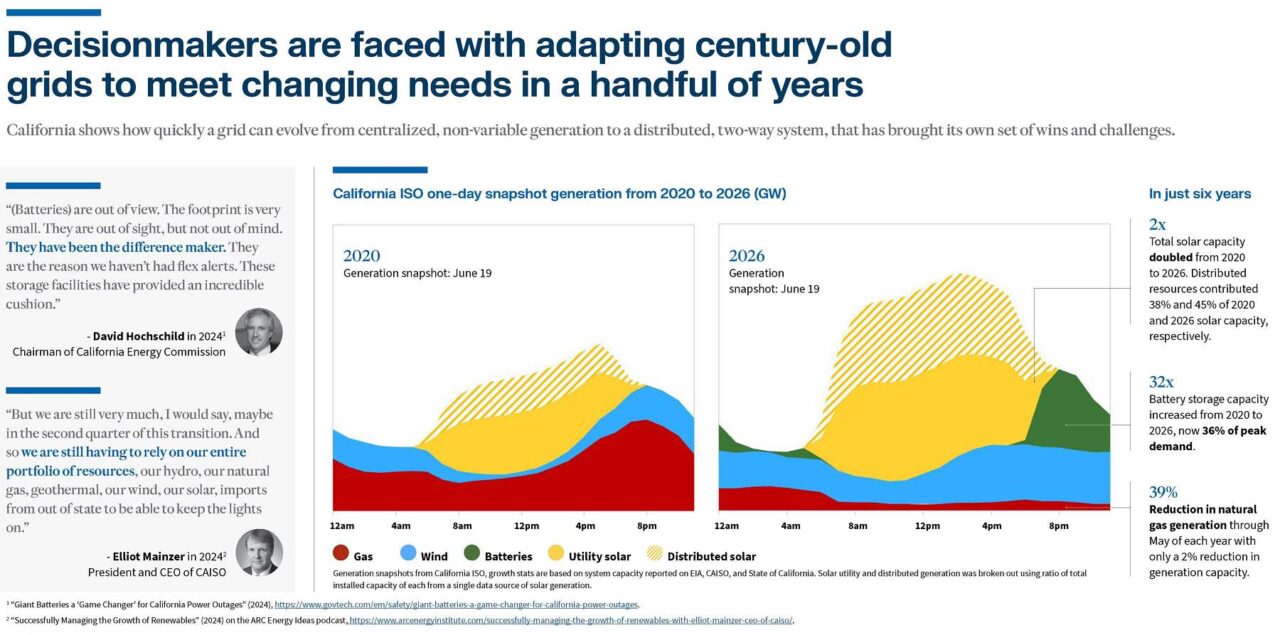
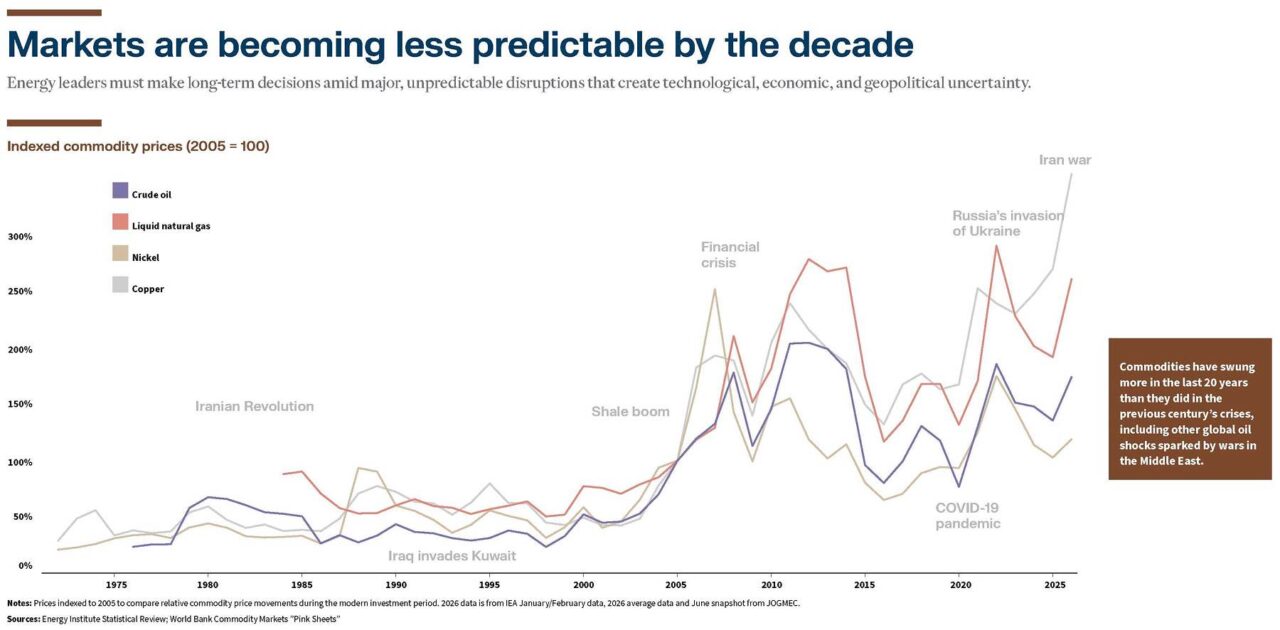
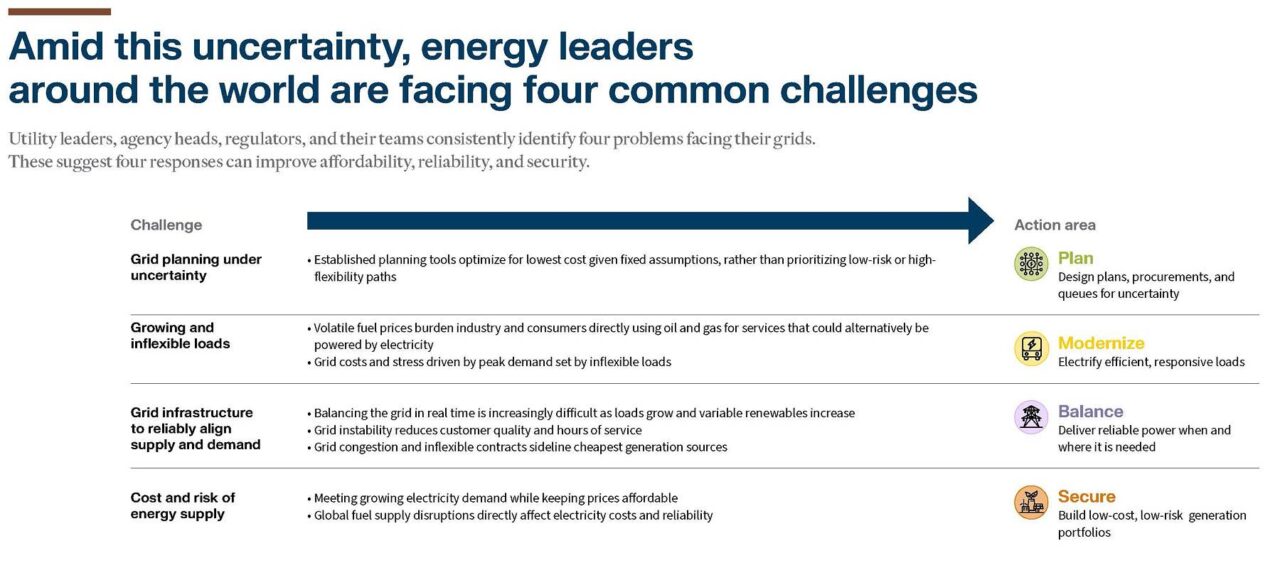
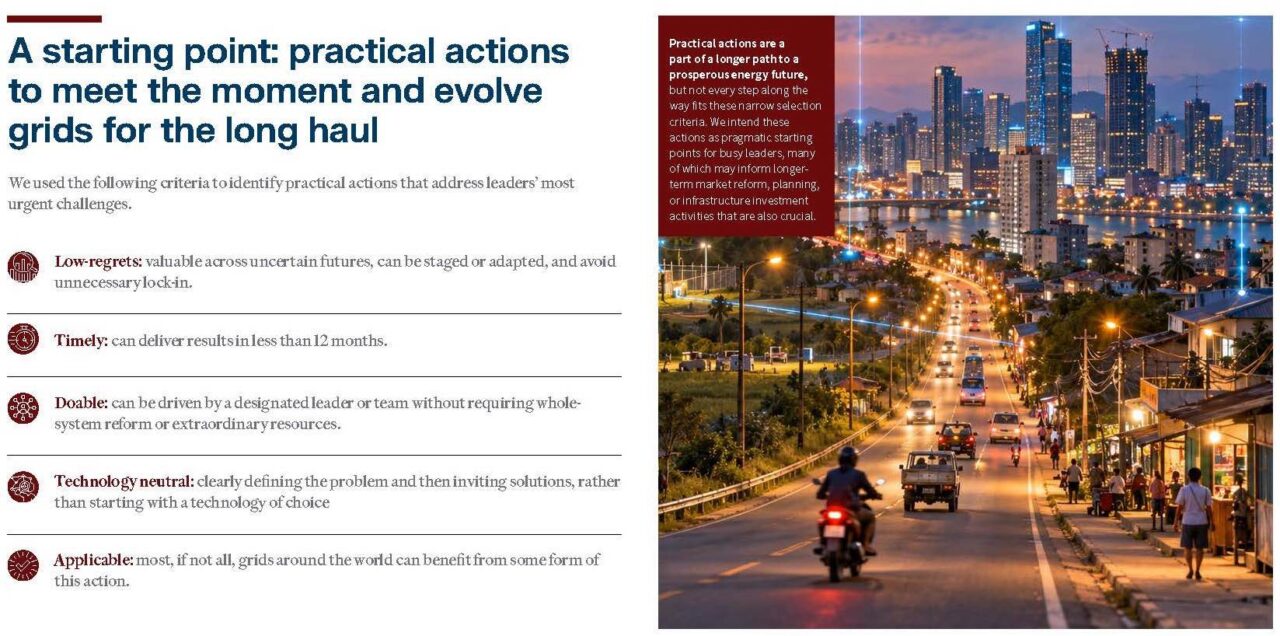
Leaders from Delhi to Denver can chart their course to a prosperous electricity system through the 10 Practical Actions detailed in the report. The actions are widely applicable, can show results in less than 12 months, and are useful even when the future is uncertain. These are pragmatic starting points to catalyze a virtuous cycle of infrastructure and policy deployment, improved power system performance, and economic competitiveness. They can build experience and buy-in for subsequent long-term reforms and investment that take longer to craft and deploy (e.g., greenfield transmission).
Ten practical, evidence-backed actions toward affordable, reliable, and secure power systems
We spoke to stakeholders from Delhi to Denver, triangulated findings with published reports from the wider energy ecosystem and ultimately recommend ten Practical Actions to address common challenges.
Plan
Design plans, procurements, and queues for uncertainty
1 Plan for uncertainty.
Model system risk across a range of fuel cost, demand forecast, and technology cost scenarios, then stage procurement and investment to pivot when circumstances change.
Supporting cases: Ghana power sector planning; Morocco grid buildout for green industrialization
2 Clear queues and improve forecasts.
Apply project planning milestones and financial requirements to clear speculative or stagnant projects from connection queues and forecasts, directing limited study capacity toward the most promising projects, and improving generation and load projections.
Supporting cases: Great Britain NESO power system reforms; Western Australia integrated system planning
Modernize
Electrify efficient, responsive loads
3 Scale efficient cooling.
Set testing standards and labels that differentiate and reward air conditioners delivering efficient real-world performance, and build ecosystem awareness to shift the market toward such products.
Supporting cases: India cooling efficiency standards
4 Encourage vehicle electrification.
Educate consumers on the real costs and benefits of EVs versus petrol and diesel vehicles and reduce up-front adoption barriers by streamlining financing and charging.
Supporting cases: India 2- and 3-wheeler electrification
5 Make large loads flexible.
Tie large-load connection costs and queue priority to grid impact, so loads that commit to reducing demand during critical hours connect faster.
Supporting cases: Malaysia data center growth and strategy
Balance
Deliver reliable power when and where it is needed
6 Match supply and demand.
Incentivize storage to earn and stack revenues from energy shifting and capacity provision.
Supporting cases: Chile grid storage boom; Puerto Rico distributed battery VPP
7 Stabilize the grid.
Create technology-neutral pathways to procure ancillary services with clear technical standards.
Supporting cases: Australia frequency control ancillary services; ERCOT reliability improvements in wake of winter storms; Iberian peninsula voltage control; China grid forming inverters
8 Improve grid utilization.
Pilot advanced transmission technologies (ATTs) in high-impact grid segments while embedding ATT evaluation into ongoing transmission planning.
Supporting cases: Colombia advanced power flow controls; Bangladesh reconductoring with advanced materials; USA dynamic line ratings
Secure
Build low-cost, low-risk generation portfolios
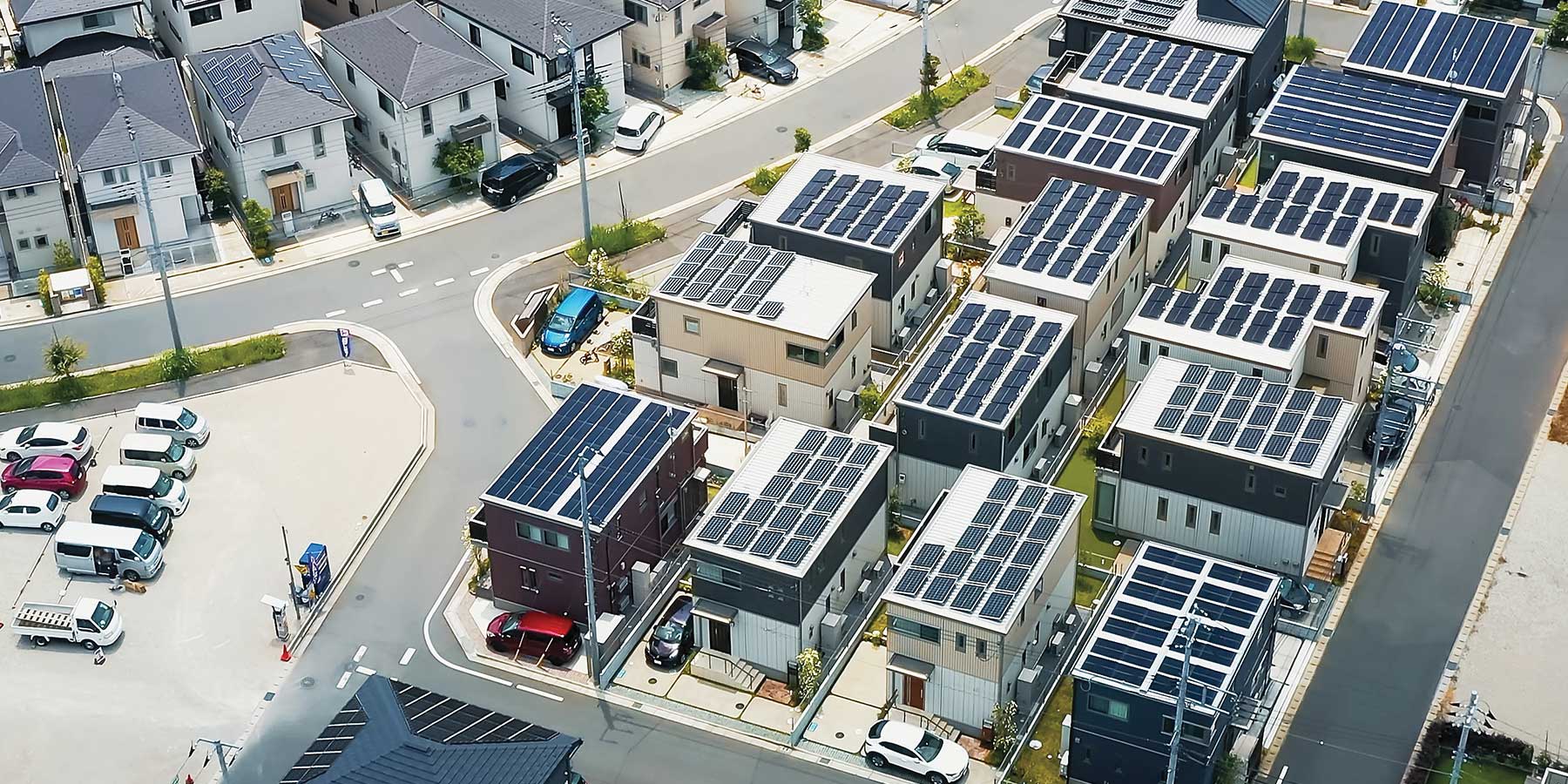
9 Make distributed solar a grid resource.
Reduce soft costs and implement financially sustainable net-billing rules for distributed solar, keeping connection requirements tech-neutral and encouraging solar + storage.
Supporting cases: Brazil’s distributed solar boom; Southern Australia reduction in solar soft costs
10 Level the playing field.
Run all-source, tech neutral procurement competitions with independent evaluations that weigh resilience and fuel-price risk in addition to cost.
Supporting cases: South Africa all-source procurement closes supply gaps; Kenya opened the door for promising geothermal resources, enabling competitively selected IPPs to supply clean firm power at ~$0.07/kWh
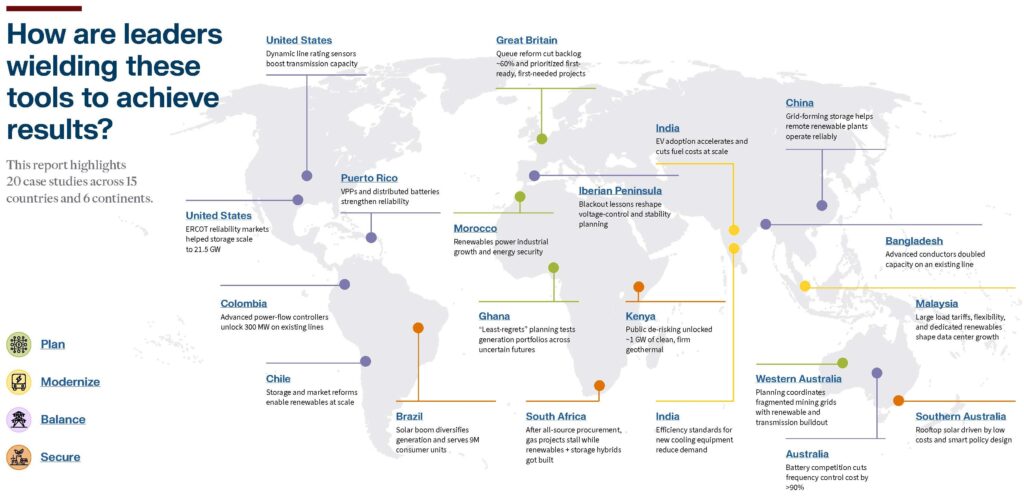
Leaders around the world are already wielding these tools with impressive results
The Practical Actions were developed and tested through 20 case studies across 15 countries. Around the world, energy leaders are already achieving results with these technology and policy solutions, saving billions in fuel or overbuild costs, raising grid reliability, and getting more out of the grid they already bought and paid for.
How to use this report in your work this year
This document provides a starting point for:
- Understanding the trends driving energy strategy and outcomes
- Defining shared challenges across the sector, and mapping solutions to them
- Learning Practical Actions leaders and their teams can explore
Taking action usually starts with bringing others in. Leaders can:
- Identify the solutions that may address the problems they are solving
- Bring in their colleagues by sharing interest with peers or decisionmakers or by delegating responsibility to explore further and take action.
- Build on the experience of global peers to move quickly.
Additional Contributors:
Ayaan Asthana, Zhinan Chen, Zihao Chen, Zsaria Diaz, Jordon Hayles, Pat Hoody, Genevieve Lillis, Will Long, Russell Mendell, Chidera Moghalu, Lillie Ogden, Daniel Onyeanuna, and Enjo Salonga
Explore the report with RMI Managing Director Mark Dyson:
Authors

Andrew Allee
Manager
James Sherwood
Principal
Kaitlyn Ramirez
Manager
Eshan Gupta
Associate
Mark Dyson
Managing Director
Vikram Singh
Senior DirectorRelated Insights


Help build the clean energy future. Donate today.
Independent research. Real-world solutions. Supported by donors.
RMI can pursue the highest-impact climate and energy solutions because we’re supported by people who believe change is possible. Every gift helps advance the work needed to make clean energy the default choice worldwide.
And right now, your impact goes twice as far. Thanks to generous donors and our special match, every $1 you give becomes $2, up to $150,000, through December 31, 2026.