

Learn how we are working to transform how we use and produce energy.
How Turning Brownfields into Brightfields Can Help Meet State Energy Goals and Strategically Reuse Land
Supportive state policies can make clean energy more competitive on previously developed and disturbed lands
Why we share this work for free
RMI is an independent nonprofit working to accelerate the clean energy transition. We publish research like this to inform decision-makers and drive real-world impact.
Our work is supported by philanthropy as well as partnerships, including fee-for-service engagements. This support makes it possible for us to share our independent insights for free.
If you find this work valuable, you can support it anytime.
Get more insights like this
Stay up to date with the latest research, analysis, and tools from RMI by opting in to receive occasional emails below. You’ll get new reports, event invitations, and practical insights to help us all accelerate the clean energy transition.
Loading form...
Your download should start automatically. If it doesn’t, click the download button below.
This work is made possible by philanthropy
RMI is a nonprofit supported by donors and partners. Philanthropy enables us to produce independent research and make resources like this freely available.
If you find this report valuable, please consider supporting our work. You can also explore how we partner with organizations to drive impact.
Jump to Section
Our energy system has always required land — from oil and gas drilling and coal mining to solar and wind farm siting. Communities face competing needs and goals that inform how they use their land. At the same time, communities are also grappling with rising energy demand driven by new domestic manufacturing, data center expansion, and the electrification of vehicles and buildings.
While solar and wind are now among the most cost-effective sources of new electricity, deploying them at scale is not just a question of cost. Projects often face siting constraints, permitting delays, interconnection challenges, and community opposition — particularly when development competes with agricultural operations, recreation, conservation, and other local priorities.
Across America, many communities are home to often-neglected, previously disturbed, and contaminated lands, or “brownfields.” By hosting clean energy on these sites, communities can reuse land that has limited value and meet their growing energy needs while reducing conflicts over local land use. In fact, the US EPA has pre-screened over 190,000 existing brownfields for this purpose.
Despite the number of brownfields and their potential, clean energy on brownfields, or “brightfields,” currently represent a small fraction of clean energy deployment. Through 2024, the United States installed 313 GW of clean energy capacity, but only 4.4 GW have been developed on brownfields and other contaminated lands — just 1.4% of the total installed capacity. This is largely because brightfield projects typically involve more specialized design and more costly site preparation to develop than greenfield projects. Thus, without policy support, they are currently not the default choice in most markets.
Since 2022, many brightfield projects qualified for a 10% bonus to the federal Investment Tax Credit. However, in 2025, Congress accelerated the sunset of this incentive from 2035 to 2027 for solar and wind projects, although these incentives still exist for energy storage and geothermal energy projects. Beyond this, states and communities interested in aligning energy deployment with land reuse goals should consider longer-term policies and practices to make brightfields a viable part of their energy mix.
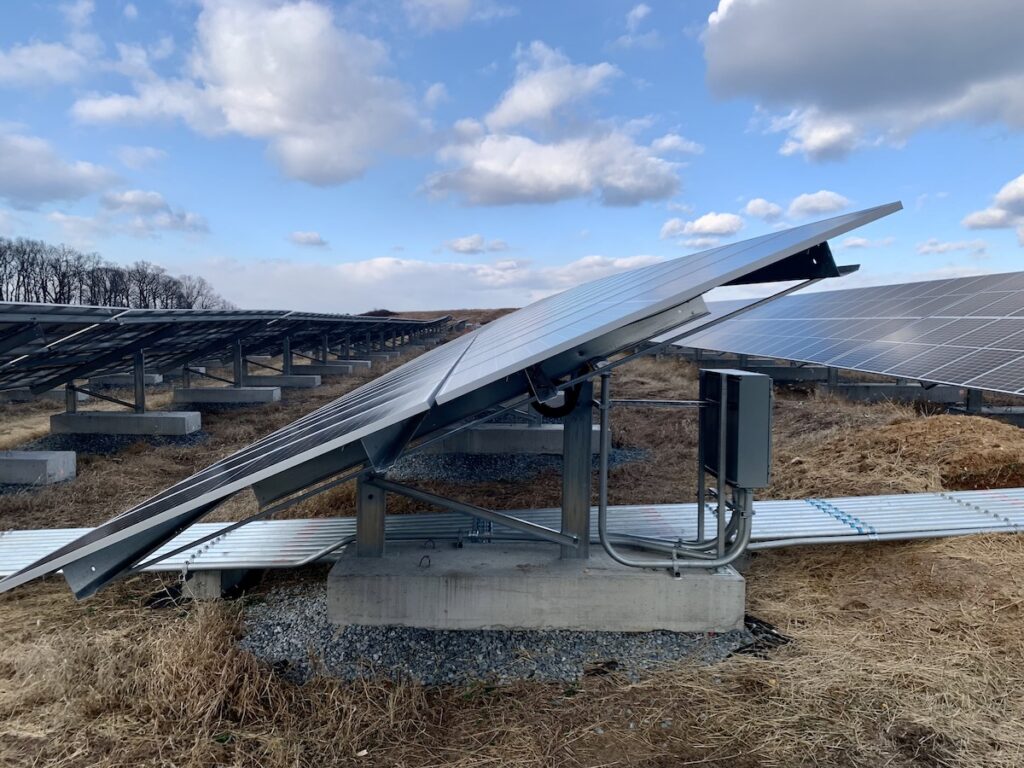
Brightfields offer key benefits for a prosperous energy system for all
As state policymakers and communities increasingly reckon with growing electricity demand and rising opposition to development, brightfields offer three key benefits:
- Reusing underutilized land for energy generation and local revenue: Brightfields convert brownfield sites into productive assets. By reactivating contaminated or blighted lands, states and local governments can create new sources of value, including lease payments or tax revenue in some cases. However, not all sites are financially viable. Cleanup needs, site conditions, and local electricity prices can impact whether projects are financially feasible without additional support.
- Reducing pressure on undeveloped land: One of the leading sources of opposition to clean energy is the question of how land is used in communities, including concerns about impacts on farmland, community character, and visual aesthetics. Prioritizing previously disturbed land can help reduce these conflicts by directing development away from higher-value or contested land uses when other options exist. This will also help communities become more familiar with solar, wind, and energy storage technologies, which are still novel to many people and decision makers.
- Opportunities to reinvest in lower-income communities: Past development decisions often resulted in industrial sites and landfills sited in or adjacent to low-income communities. These sites impacted environmental and human health and local economies, especially when operations shut down. Redeveloping these sites for clean energy can support local job creation and renewed economic activity. While not guaranteed, intentional state policies and regional project planning can encourage environmental cleanup, engineering, and construction jobs as well as enable new industries co-locating around new energy capacity.
State policies and practices can help make brightfields competitive in existing energy markets
Developing on brownfield sites often requires additional steps, including understanding complicated or unknown site histories, regulatory requirements, remediation needs, and site-specific design accommodations. These factors increase costs and time for development compared to greenfield projects. Intentional and supportive state policies and practices can encourage brightfield development, help address some of these challenges, and make brightfields more competitive.
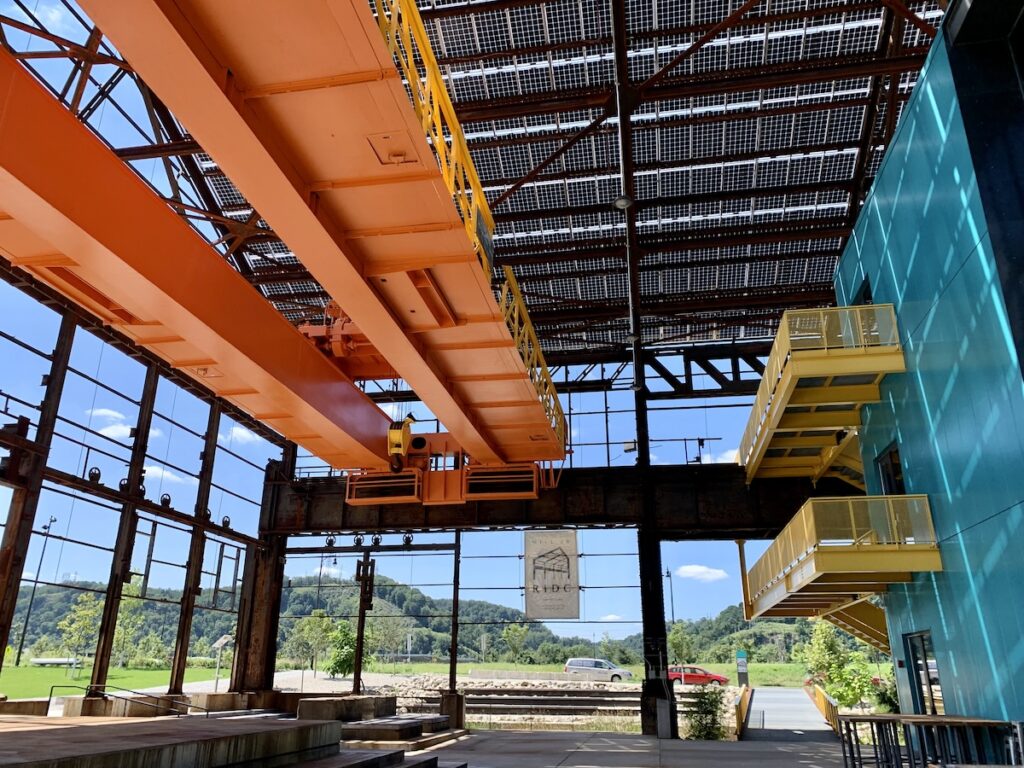
Most brightfield policies fall into two categories:
- Policies that offset project costs with incentives: Incentives can help offset up-front costs and improve project viability. Examples include grants, low-interest loans, tax incentives, renewable energy certificate (REC) carve-outs, and guaranteed buyers. These tools can be especially important in markets with lower electricity prices or less mature clean energy sectors. However, incentives require funding — either new or repurposed from existing programs.
- Policies or practices that reduce costs by making projects easier to build: Reducing project timelines can improve project economics, reducing risks of inflation, drawn-out planning, and supply chain uncertainty. States can help by streamlining permitting, clarifying requirements, expanding funding eligibility within their brownfields programs, supporting regional energy zone planning, and proactively identifying and/or mapping suitable sites. Many of these strategies can be implemented administratively without new funding. However, these steps alone may not fully close the cost gap with greenfield projects.
Energy developers need to identify one or more buyers to purchase the electricity generated from a renewable energy project. Energy buyers — whether utilities, companies, schools, or institutions — typically prioritize cost-competitive power. In many cases, buyers are weighing multiple options and selecting the least-cost solution that meets their needs. While approaches vary by state, the goal is consistent: make brightfields competitive with other clean energy projects. This means policies do not need to cover all project costs — only the gap between brownfield and greenfield development.
While a brightfield strategy will vary by state, emerging markets can learn from existing approaches
There is no one-size-fits-all approach for a state brightfields strategy. Fortunately, brightfield policies are not a new concept, as states have been laboratories for such strategies since 2014. Here are three examples:
Massachusetts
Massachusetts’ SMART program provides an incentive for solar projects developed on brownfields and landfills. The program was specifically designed to offset the cost difference of a brightfield project versus a solar project developed on a greenfield. The policy has led to 382 megawatts (MW) across 140 completed brightfields through 2024 — the most of any state. This is equivalent to powering over 48,000 homes and avoids over 1,500 acres of undisturbed land.
Illinois
Illinois has both a mandate for purchasing power from brightfields and a preference for brightfields in its procurement process. The state requires that utilities procure 3% of their power from brightfields in Illinois’ Renewable Portfolio Standard and provides a preference for solar on brownfields in its community solar scoring criteria for projects under 5 MW. Both policies help drive market demand with clarity for energy buyers and developers alike.
Ohio
In May 2025, Ohio created the “Priority Investment Area” (PIA) program to allow local governments to designate former mining sites and other brownfields to qualify for both incentives and streamlined permitting for energy infrastructure projects. Once designated, potential benefits include property tax exemptions, priority brownfield cleanup funding, and expedited regulatory review (for projects 50 MW or greater).
These are just three of many states starting to explicitly support brightfields by addressing hard and soft costs. Brightfield policies work best when they’re created with attention to the state and market context. Massachusetts’ policies consider the limited natural and greenfield spaces available, land use guidance, the capital costs by type of site, and high electricity prices when ambitiously incentivizing local solar on other types of previously disturbed lands. New Jersey has the most landfills per square mile and the most sites in the Superfund program than any other state. Both Massachusetts and New Jersey have embraced multiple strategies, accounting for approximately 42% of brightfields built through 2024. Other states consider and implement such policies to focus clean energy deployment on sites that prompt less local opposition.
Brightfield policies can complement state land reuse and energy demand goals
Energy projects tend to follow the path of least resistance — where land is available, affordable, and connected to infrastructure. States may want to reconsider what that path means for them, and two states already are currently doing that. Michigan is preparing to launch its Renewable Energy on Brownfields Pilot Program, and Colorado followed a similar path to Ohio by passing House Bill 1268, which expands the brightfields toolkit for eligible sites designated as a “Renewable Energy Reinvestment Area.”
Brightfields offer one way to meet growing energy demand while reusing previously developed land and reinvesting in communities. If these goals are priorities for policymakers, states should consider adopting intentionalbrightfield policies and practices as part of their broader energy strategy.
For specific state or local government technical assistance or other questions about policies, practices, and projects, reach out to RMI’s Brightfields Accelerator.


Related Insights

Help build the clean energy future. Donate today.
Independent research. Real-world solutions. Supported by donors.
RMI can pursue the highest-impact climate and energy solutions because we’re supported by people who believe change is possible. Every gift helps advance the work needed to make clean energy the default choice worldwide.
For other ways to give to RMI, including checks or gifts of stock, please visit Other Ways to Give.