

Learn how we are working to transform how we use and produce energy.
Five Years of the Climate Finance Access Network
Through CFAN, a growing network of embedded advisors are helping island nations access the funding needed to build a more resilient future.
Why we share this work for free
RMI is an independent nonprofit working to accelerate the clean energy transition. We publish research like this to inform decision-makers and drive real-world impact.
Our work is supported by philanthropy as well as partnerships, including fee-for-service engagements. This support makes it possible for us to share our independent insights for free.
If you find this work valuable, you can support it anytime.
Get more insights like this
Stay up to date with the latest research, analysis, and tools from RMI by opting in to receive occasional emails below. You’ll get new reports, event invitations, and practical insights to help us all accelerate the clean energy transition.
Loading form...
Your download should start automatically. If it doesn’t, click the download button below.
This work is made possible by philanthropy
RMI is a nonprofit supported by donors and partners. Philanthropy enables us to produce independent research and make resources like this freely available.
If you find this report valuable, please consider supporting our work. You can also explore how we partner with organizations to drive impact.
Jump to Section
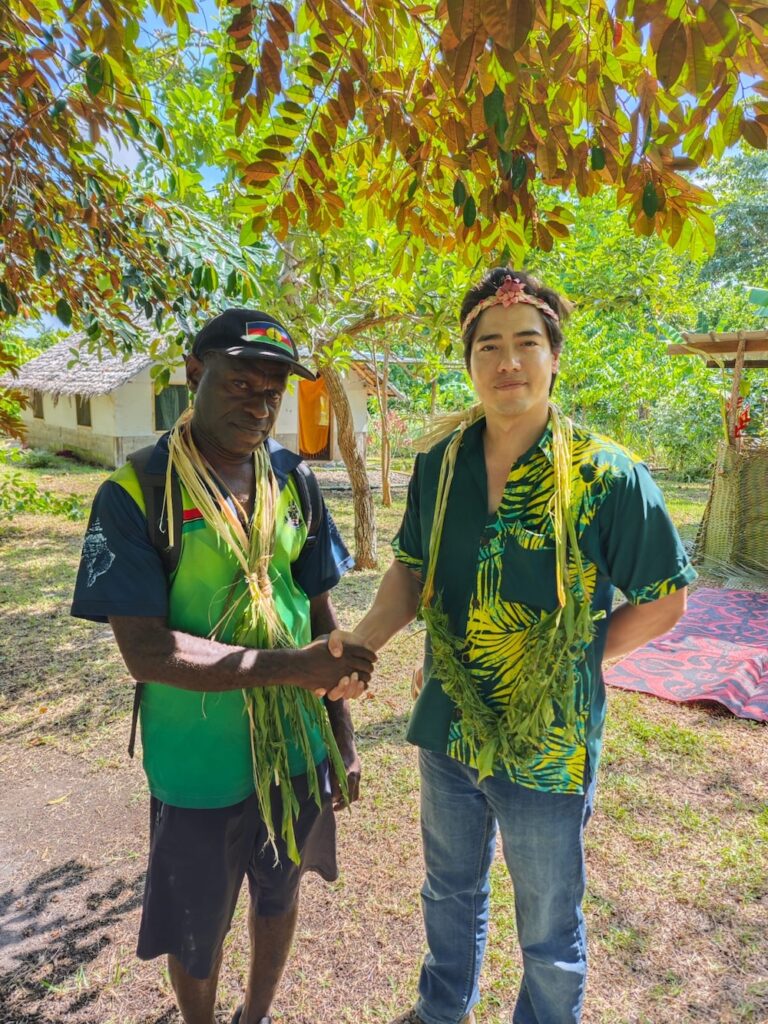
What does climate finance mean for small island nations? In Tonga, it means an emergency early warning system to reach the far ends of the country during cyclone season. In Vanuatu, it means water and energy security for even the most remote communities. In Jamaica, it means climate-proof schools and health centers that double as emergency shelters with distributed solar and battery storage units. Access to climate finance can mean the difference between being prepared for the future or remaining vulnerable to extreme weather events.
The need has always been there. Sitting at the frontlines of climate impacts, small island developing states (SIDS) and least developed countries (LDCs) face unique vulnerabilities and major barriers to infrastructure, financing, and long-term resilience. Contributing less than 1% of global greenhouse gas (GHG) emissions, these small island nations are disproportionately affected by the changing climate, facing rising sea levels, stronger storms, and water and energy insecurity that threaten communities and livelihoods.
For many of these countries, the problem isn’t a lack of ideas or ambition. Governments and NGOs have already identified priorities and practical solutions that could address their growing climate risks, but securing financing and technical support to implement them remains a significant challenge. That is why RMI created the Climate Finance Access Network (CFAN).
Building a network for climate action
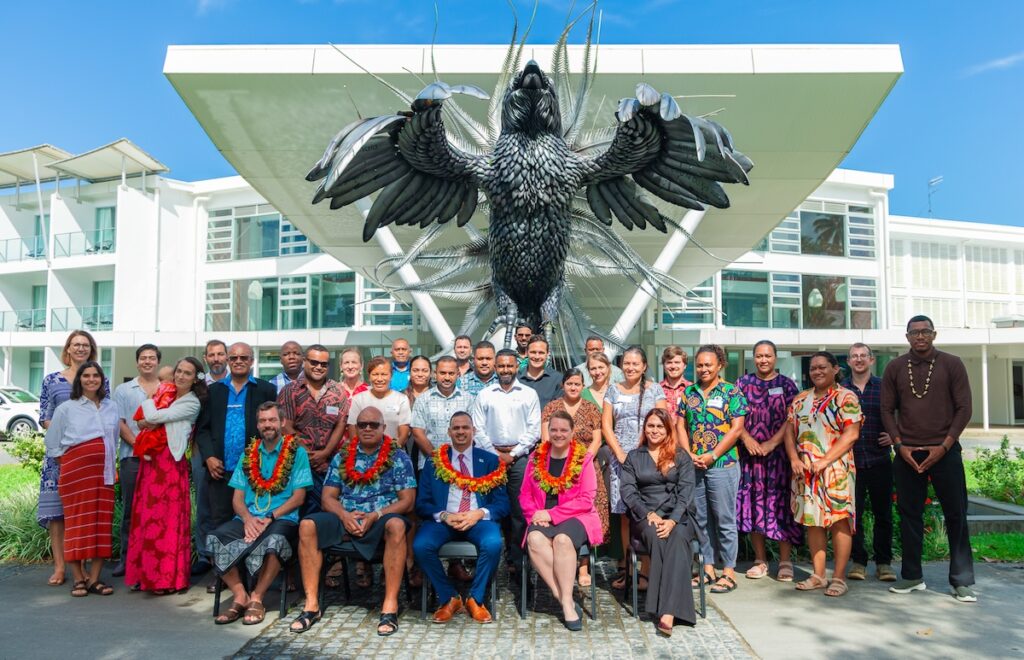
Five years ago, when RMI launched CFAN, less than 20% of finance pledged was even making it to projects on the ground — and countries were clear on what they needed to close that gap. More than 100 respondents from across 45 developing countries overwhelmingly identified project-level support as critical, and near unanimously supported the founding idea behind CFAN: highly trained, dedicated climate finance advisors.
CFAN embeds these advisors within the ministries and government entities of small island states that are responsible for coordinating climate finance. CFAN advisors then help secure and distribute capital for some of the most pressing sustainability and climate-related projects that may otherwise have gone unfunded or unnoticed.
These embedded advisors are trained in fundraising tactics, climate fundamentals, country-specific risks and vulnerabilities, negotiation and facilitation, technical instruction, and relationship building with public and private finance providers. Trained advisors pass along their knowledge to in-country stakeholders, building local capacity and creating a robust network of climate professionals.
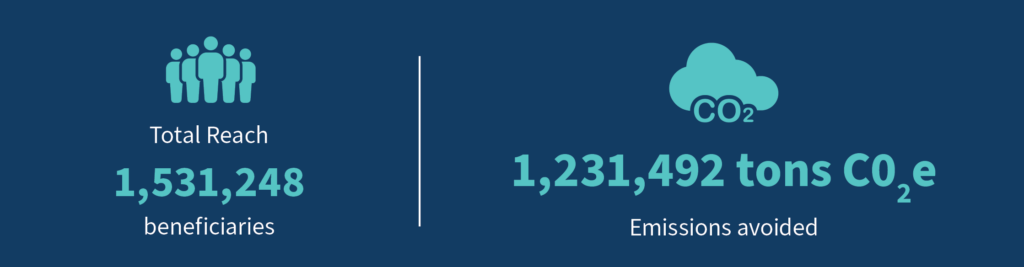
The results speak for themselves. What started with a $7 million initial grant has turned into a $2.6 billion pipeline of climate infrastructure projects and proposals, reaching more than 1.5 million beneficiaries and avoiding more than 1.2 million tons of emissions.
Today, CFAN has emerged as one of the most effective delivery mechanisms for unlocking climate finance in SIDS, with 16 current advisors working across the Caribbean and Pacific. These advisors are strategically positioned alongside governments and institutions to implement projects, catalyze investments, and unblock climate finance.
CFAN’s global pipeline now includes mitigation, adaption, and cross-cutting projects including sustainable energy, clean water, forest and mangrove restoration, green cities, and waste management. Details of CFAN’s project pipeline can be found in CFAN’s 2026 Impact Report.
Supporting regional ambition in the Pacific
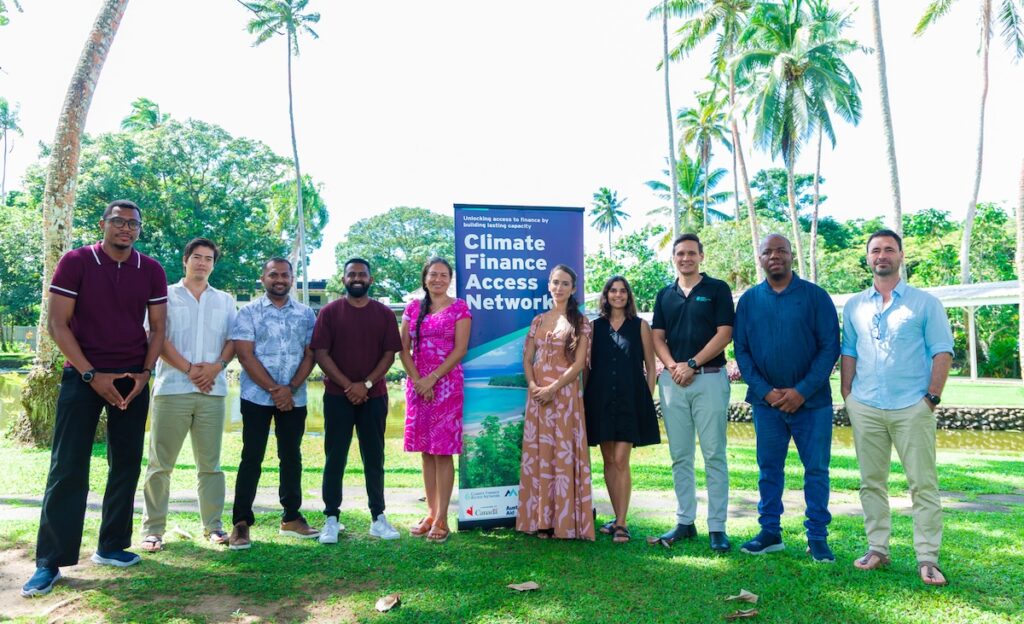
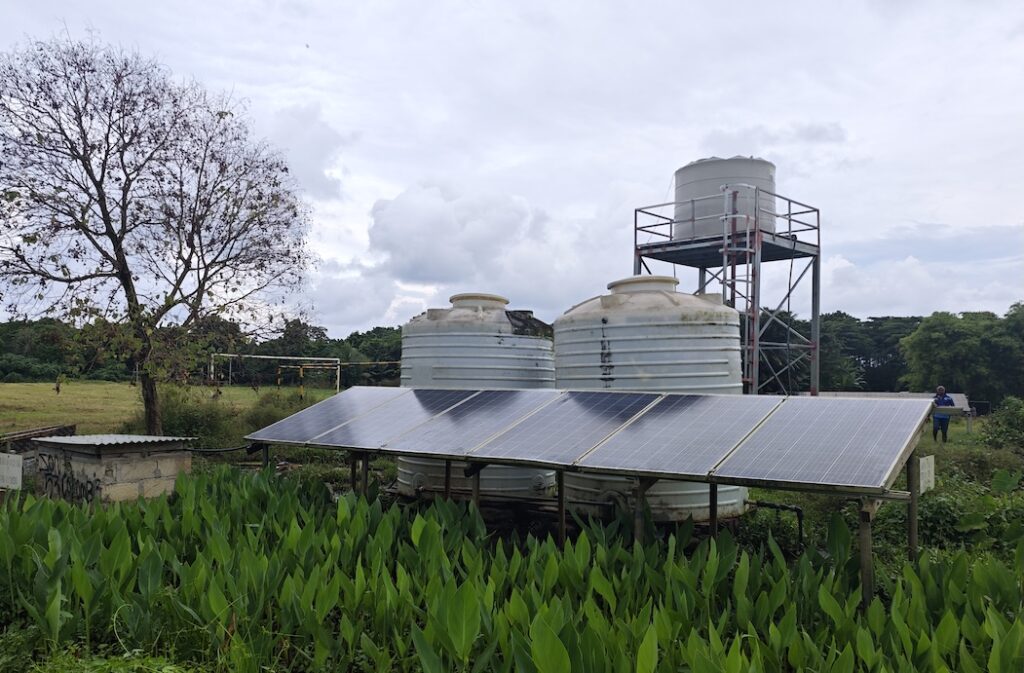
The Pacific is where it all started. Since its launch in the region in 2021, CFAN advisors have mobilized more than $211 million in climate finance projects, helping to convert early-stage concepts into approved investments across renewable energy, water security, food systems, and coastal protection and resilience for SIDS and LDCs. Two strategic local partners implement CFAN throughout the Pacific — the Global Green Growth Institute (GGGI) and the Pacific Community (SPC). Through these partnerships, CFAN ensures that their advisor model is aligned with national development priorities, nationally determined contributions, and National Adaptation Plans.
CFAN in the Caribbean: A growing global reach
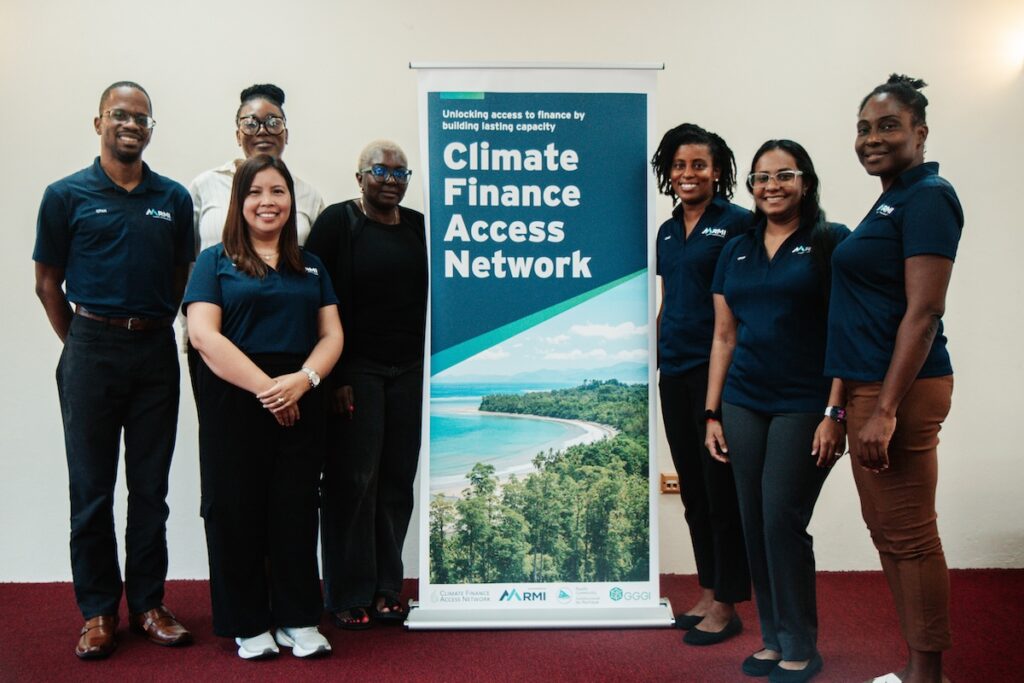
After its initial impact in the Pacific, CFAN expanded into the Caribbean in 2024. In just two years, CFAN’s Caribbean portfolio has exceeded $725 million, with $633 million under development and over $31 million already secured. CFAN has partnered with Caribbean governments, development banks, and regional institutions to create bankable, investment-ready projects across five island nations. The portfolio includes climate-resilient infrastructure, sustainable energy, and coastal protection. CFAN has trained over 500 stakeholders across the Caribbean to date.
Human-powered impact
From the start, a state-of-the-art training has been core to CFAN’s success. “Building capacity” is more than a buzzword for the program — it is creating a sustained, regionally rooted knowledge base and expertise. These human-powered solutions are reflected in the numbers: while CFAN has directly trained over 120 individuals, CFAN advisors have gone on to train nearly 900 additional people across the Pacific and Caribbean.
Alex Milano, who has led CFAN’s training program since 2021, notes, “One of the things we always wanted to ensure was that the training we offer all our advisors was both flexible enough to adapt to their needs, and responsive enough to grow to accommodate new needs.” The newest addition to the program is a prime example of that.
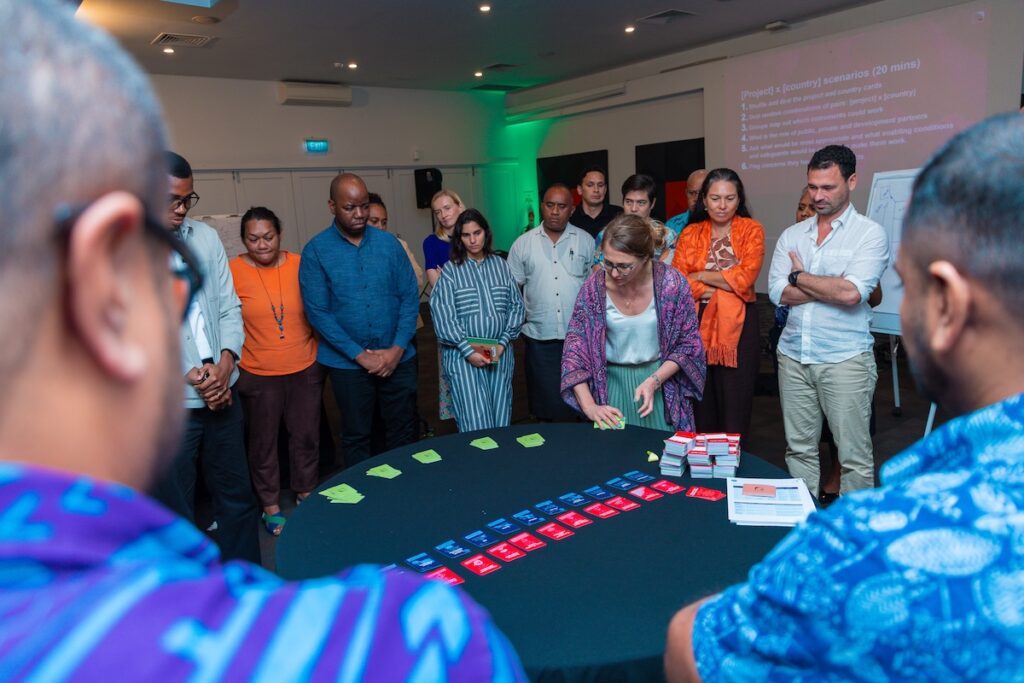
In 2026, CFAN expanded its training to include a new biodiversity module by partnering with the University of the West Indies (UWI), and expert Glenn Finau from the Pacific region. Island economies are directly tied to their natural ecosystems and biodiversity through food systems, tourism, and coastal resilience. Getting funding to support these ecosystems is a challenge — UNEP estimates a significant biodiversity funding gap of $700 billion per year. Because of that gap and the clear need to protect ecosystems throughout island states, adding this module to the CFAN training was both highly requested and additive.
The new module, which highlights the overlap between ecosystem science and climate finance, is a direct reflection of how CFAN aligns its training with the needs and priorities of SIDS.
This is the power of what we have built over the past five years. CFAN is not only mobilizing finance; we are mobilizing people, partnerships, and possibility. We are building capacity that stays, grows, and compounds long after a project is approved.
— Kaitlyn Bunker, CFAN Director
Delivering results faster and further
As CFAN looks onward to the next five years, the plan is to deliver results faster and further. With a steadily growing network, CFAN will continue to deepen existing partnerships and expand its reach to regional and civil society organizations throughout the world. CFAN’s vision of the future includes stronger national institutions and empowered regional organizations that can attract and coordinate investments to critical infrastructure and locally identified priorities. CFAN will continue to reshape how climate finance works in the Pacific and Caribbean, ensuring that finance reaches those who need it most, when they need it most.
Authors

Daniel Elkin
Strategic Communications and Social Media Specialist
Denali Hussin
Strategic Communications ManagerRelated Insights
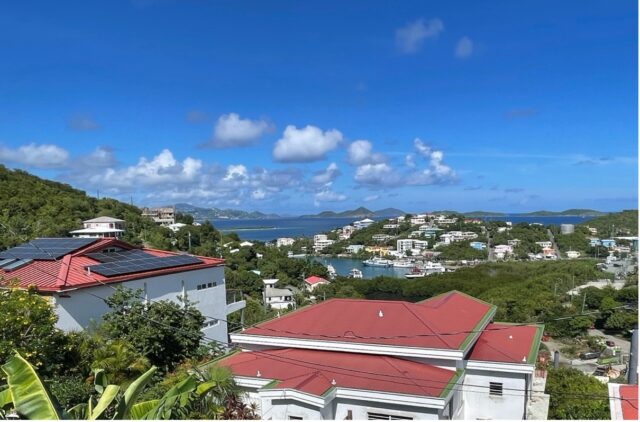
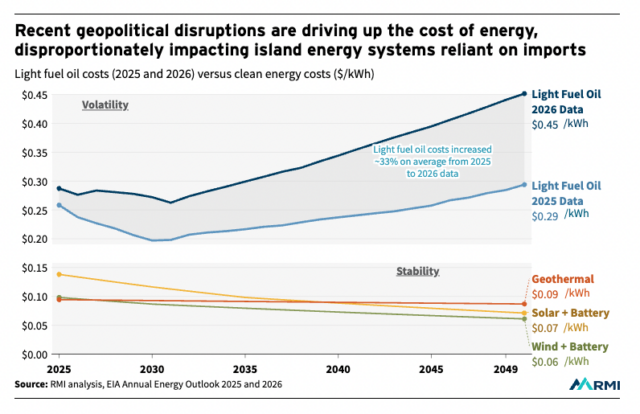
As Islands Grapple with Spiking Fuel Costs, Renewables Offer a More Secure and Affordable Option
Help build the clean energy future. Donate today.
Independent research. Real-world solutions. Supported by donors.
RMI can pursue the highest-impact climate and energy solutions because we’re supported by people who believe change is possible. Every gift helps advance the work needed to make clean energy the default choice worldwide.
For other ways to give to RMI, including checks or gifts of stock, please visit Other Ways to Give.
