

Learn how we are working to transform how we use and produce energy.
Electric Harmony: How a Virtual Power Plant Is Keeping the Lights on in the US Virgin Islands
A network of residential rooftop solar and home battery storage systems is bolstering grid reliability and performance in this Caribbean nation.
Why we share this work for free
RMI is an independent nonprofit working to accelerate the clean energy transition. We publish research like this to inform decision-makers and drive real-world impact.
Our work is supported by philanthropy as well as partnerships, including fee-for-service engagements. This support makes it possible for us to share our independent insights for free.
If you find this work valuable, you can support it anytime.
Get more insights like this
Stay up to date with the latest research, analysis, and tools from RMI by opting in to receive occasional emails below. You’ll get new reports, event invitations, and practical insights to help us all accelerate the clean energy transition.
Loading form...
Your download should start automatically. If it doesn’t, click the download button below.
This work is made possible by philanthropy
RMI is a nonprofit supported by donors and partners. Philanthropy enables us to produce independent research and make resources like this freely available.
If you find this report valuable, please consider supporting our work. You can also explore how we partner with organizations to drive impact.
Jump to Section
In the US Virgin Islands (USVI), a quiet virtual symphony is taking place. As increasingly extreme weather and geopolitical disruption take a toll on energy costs and islands’ energy systems, a network of residential rooftop solar and home battery storage systems is coming together to bolster grid reliability and performance.
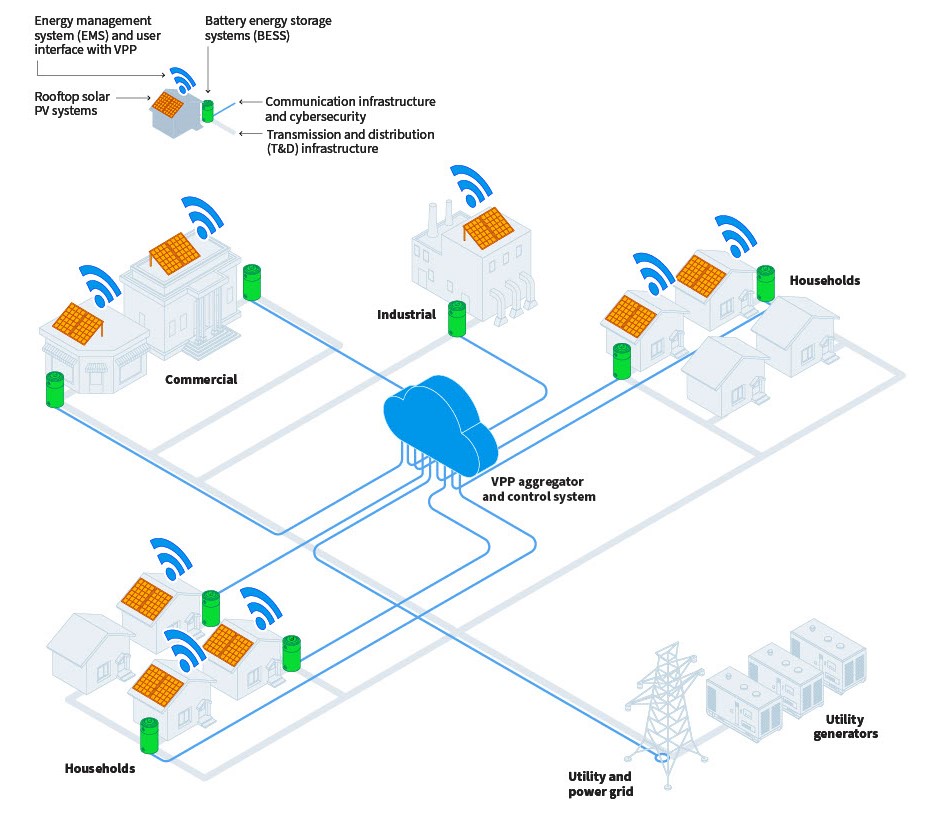
In March 2026, the Virgin Islands Energy Office (VIEO) launched VIBES 2.0, a virtual power plant (VPP) pilot program. It doesn’t generate power but rather organizes the available energy from individual battery systems to play in perfect harmony and react within sub-seconds to the utility’s power needs. All of this takes place without any new investments in generation or power lines from the utility.
How did this come about? Back in 2024, RMI partnered with the energy office to answer a specific challenge: how can you bridge the gap between self-reliant and sometimes skeptical residents, their underutilized battery storage systems, and a struggling utility?
After Hurricane Irma in 2017, the USVI struggled to get power back online — depending on where residents were in the territory, it took three to six months to get fully restored grid power. USVI residents were increasingly frustrated and distrusted the utility or their timelines to get the grid back online for their homes and businesses. As a result, those who could afford to do so increasingly secured their own energy resilience by installing solar panels and battery backup systems. USVI residents continue to contend with an unreliable electricity supply, driving significant uptake of residential and commercial solar and battery storage.
A virtual power plant aggregates solar systems, batteries, and other distributed energy resources to provide a range of services to the grid
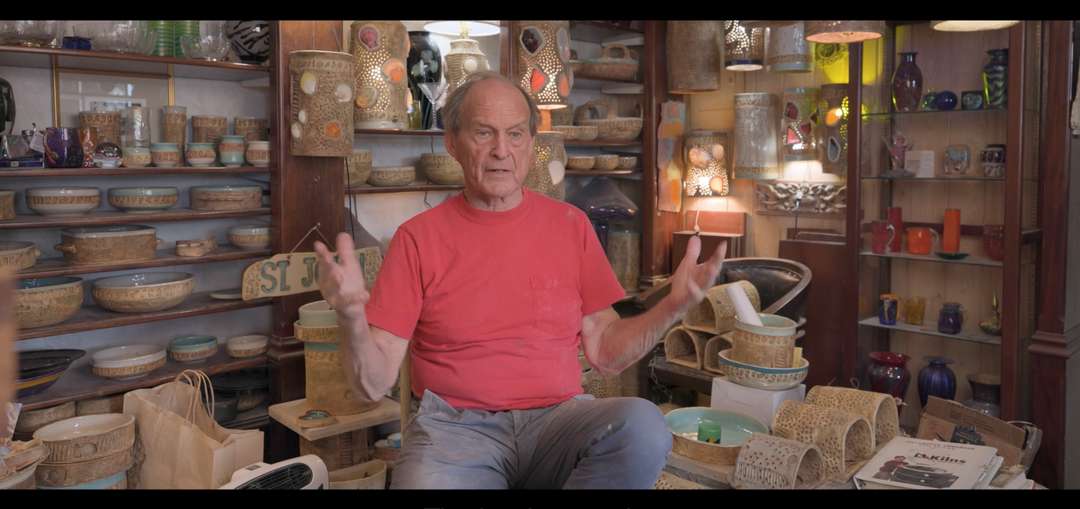
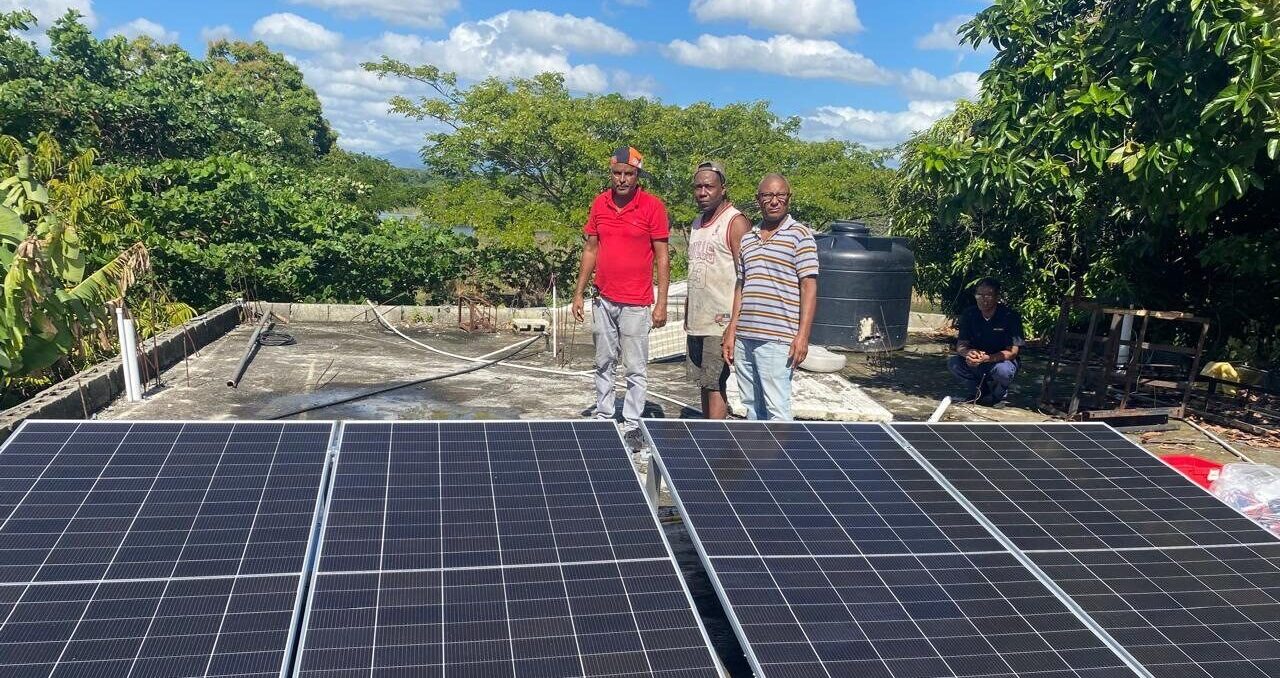
Today in USVI, nearly one in eight homes have solar, and many residents have coupled solar with battery storage systems. In total, the islands have 30 megawatts of solar PV and over 50 megawatt-hours of battery storage. People like St Thomas’ artisan Don Schnell are a great model of what this looks like in practice: a business owner and artisan who felt he couldn’t depend on the grid for consistent, reliable energy, and so invested in rooftop solar and battery storage. Problem solved: the grid might dip, but his productivity won’t.
However, this uptake in renewable energy systems creates an interesting dichotomy. Residents with solar and batteries have access to reliable energy while those who rely only on the grid are subject to service disruptions. All while the massive 50 MWh of aggregated battery storage sits there, often full and idle, and the main grid struggles with outages and voltage dips.
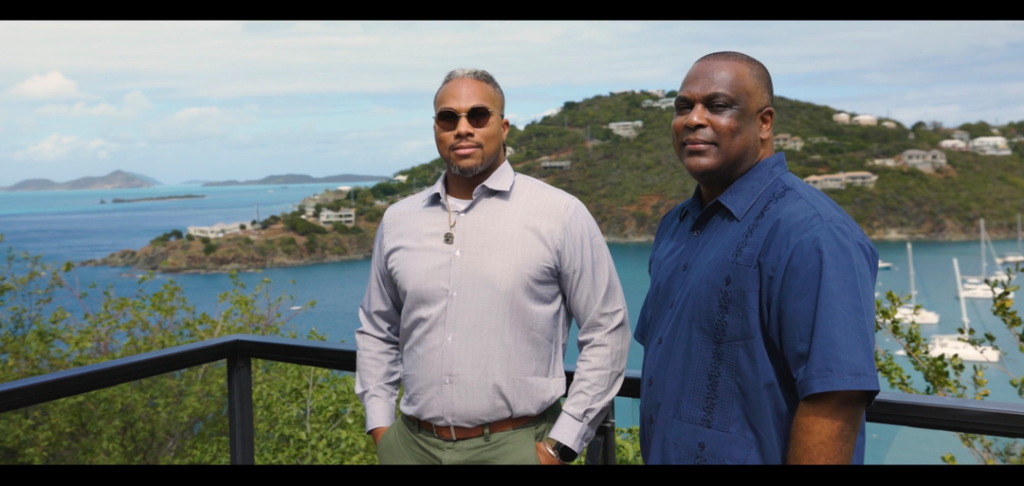
RMI crafted a study for USVI that offered a solution: a VPP pilot with a Distributed Energy Resource Management System (DERMS). Two years later this pilot is now in action, led by Kyle Fleming, the VIEO Director. It’s a pilot whose chances of success are very high, because the steel is already in the ground and the glass is on the roof. They don’t need to build a power plant; they just need to connect the Wi-Fi.
The USVI VPP pilot represents more than a win for that Territory’s residents: It proves the concept for the wider Caribbean and demonstrates how other island nations can adopt similar models. In fact, it’s already happening: Puerto Rico is currently running a two-year VPP pilot with over 67,000 participants.
For resource-constrained islands looking to lead on energy resilience, VPPs are an option that don’t require expensive future technology but rather use off-the-shelf hardware and smart software that are available now. It proves that you don’t need a wealthy government or a well-capitalized utility to build a resilient grid; you need a motivated community and electro-tech orchestration.
The authors would like to thank David Gumbs, Ian Welch-Phillips, and Sidney Jules for their contributions to this article.
Lives in Motion | Power
Check out the Economist's "Lives in Motion | Virtual Power Plants in the US Virgin Islands," exploring how clean energy solutions are improving reliability and resilience for the islands’ people and businesses.


Related Insights
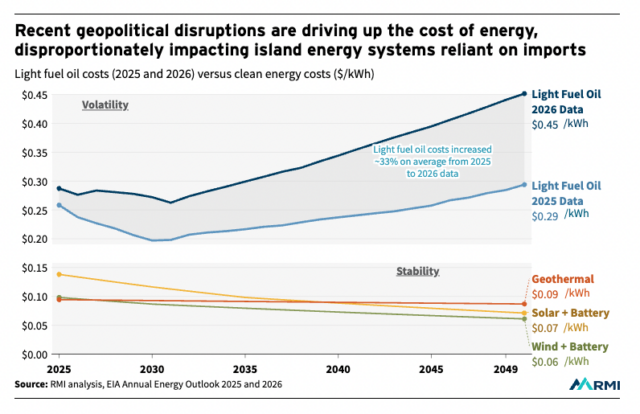
As Islands Grapple with Spiking Fuel Costs, Renewables Offer a More Secure and Affordable Option
Help build the clean energy future. Donate today.
Independent research. Real-world solutions. Supported by donors.
RMI can pursue the highest-impact climate and energy solutions because we’re supported by people who believe change is possible. Every gift helps advance the work needed to make clean energy the default choice worldwide.
For other ways to give to RMI, including checks or gifts of stock, please visit Other Ways to Give.
