

Learn how we are working to transform how we use and produce energy.
Keeping Your Home Healthy During the COVID-19 Crisis
Why we share this work for free
RMI is an independent nonprofit working to accelerate the clean energy transition. We publish research like this to inform decision-makers and drive real-world impact.
Our work is supported by philanthropy as well as partnerships, including fee-for-service engagements. This support makes it possible for us to share our independent insights for free.
If you find this work valuable, you can support it anytime.
Get more insights like this
Stay up to date with the latest research, analysis, and tools from RMI by opting in to receive occasional emails below. You’ll get new reports, event invitations, and practical insights to help us all accelerate the clean energy transition.
Loading form...
Your download should start automatically. If it doesn’t, click the download button below.
This work is made possible by philanthropy
RMI is a nonprofit supported by donors and partners. Philanthropy enables us to produce independent research and make resources like this freely available.
If you find this report valuable, please consider supporting our work. You can also explore how we partner with organizations to drive impact.
Jump to Section
As COVID-19 spreads, more and more states are enacting “shelter in place” and “stay at home” orders. We are all in being pushed to extremes—emotionally, mentally, and physically. In these trying times, it is important to stay healthy, and take good care of yourself and your family. We are also in a time of economic upheaval, as unemployment rises and local businesses shut down. Thus, staying healthy and saving money are both top of mind for many of us around the world. As you find yourself spending A LOT more time at home, we thought we would give you the top six things to do to keep your home healthy, and save energy, carbon, and money.
1. Reset your thermostat
It may have been a while since you checked in with this long-lost friend. As the seasons are shifting from winter to spring here in the northern hemisphere, it is a good time to double check your setbacks and make sure your home is staying comfortable and saving you money.
First off, be sure to use a programmable thermostat. Programable thermostats adjust when your air conditioning or furnace is running based on prescheduled blocks of time each day. Doing this can save you up to 10 percent of your electricity bill. A common rule of thumb is that for every degree Fahrenheit you adjust the thermostat (down in winter, up in summer), you save about 2 percent on costs. So, if you normally keep a house at 72° in the summer and raise the setting to 78°, you’ll reduce cooling costs by about 12 percent. And importantly, don’t forget to set your thermostat back when you go back to work in the office and your house is unoccupied during the day!
Most utilities offer rebates, and certain thermostats such as a Nest or ecobee (here in Xcel territory) may enable the utility to call upon adjustments during peak periods. Often those peak periods are simultaneous with peak grid emissions, so smart thermostats may reduce carbon as well as costs. And to take things a step further, WattTime works with vendor partners to bring an emissions signal directly into your devices so that they automatically shift the load to low emissions periods. Thus far they are synced up with EV charging, not thermostats, but stay tuned for that evolution.
Determining the appropriate setpoints is quite personal and depends on several occupant-based and home-based factors. UC Berkeley’s Center for the Built Environment Efficiency cites six factors that indicate your personal comfort including level of clothing, activity level, air flow, air temperature, radiant surface temperature, and humidity. Only one of these factors is captured by a thermostat; thus these are just our recommended starting points for setpoints and setbacks. Start here and adjust up or down as needed to maintain your own comfort.
| Summer recommended thermostat settings Start here and adjust up or down to fit your family’s needs based on the conditions of your house | |
| Occupied hours (or if you’re home during the day) | 76°F |
| Unoccupied | 82°F |
| At night | 78°F |
2. Order LEDs and replace all your light bulbs
The cost of LED bulbs has dropped dramatically, and LED bulbs last two to four times longer than compact fluorescents (CFLs), meaning even more cost savings. LEDs are also more efficient than CFLs: LEDs have a system efficiency (the amount of light that actually reaches the target area) of 50 lumens per watt. A typical CFL has a system efficiency of less than 30 lumens per watt. Additionally, LEDs, unlike CFLs, can withstand extreme temperatures and do not contain mercury.
If you are under “stay-at-home” orders and practicing social distancing, you don’t even need to go to your local hardware store. You can order them online. Just remember to hold on to your old CFLs until you can recycle them properly.
3. Set appliances to run at low marginal emissions times of day
Many EV chargers, clothes washing machines, dish washers, and other appliances have a delay cycle, meaning you can run them at low-carbon times of the day. You can even figure out when your grid is producing the highest carbon emissions and schedule devices for low-carbon intensity periods. Most of the United States is in grid regions with highly variable or low penetrations of renewables, meaning it’s hard to generalize the best times to operate devices. Also keep in mind grid profiles can change dramatically from day to day. Generally, avoid using energy between 5 p.m. and 10 p.m. The table below provides a few more location specific suggestions:
| Region | With today’s grid emissions intensities: |
| Texas | Summer – Schedule appliances to run between 10 a.m. and 4 p.m. when solar is dominant. Winter – schedule appliances to run at night when wind is dominant. |
| California, Vermont, and Hawaii | Schedule appliances and chargers to run in the middle of the day (10 a.m.–3 p.m.) when solar is at peak production. |
| Pacific Northwest | Generally, avoid morning hours (6 a.m.–11 a.m.) when demand is at its highest, calling upon generation resources dirtier than wind or hydro. |
WattTime recently released a widget that allows you to enter in your zip code and see the real time grid emissions intensity in your area.
Stay tuned for more specific grid-interactive buildings recommendations from RMI, WattTime, and NBI’s Grid Optimal program.
4. Revisit utility rate structures and green power purchasing
When you have some free time, check out your utility’s website for rate structure options. Enroll in time-of-use rates or pilot programs wherever possible. Time-of-use rates vary according to the time of day or season. Higher rates are charged during peak demand hours and lower rates during off-peak hours. This can help you save money and help avoid often higher emissions from a peaker plant. You may also be able to participate in solar or wind power purchasing programs, if you don’t already have solar on your home. Or as a last result, consider purchasing renewable energy credit offsets for your home.
5. Research and plan for getting off gas
Gas stoves emit significant contaminants, such as nitrogen dioxide and carbon monoxide, into our homes, often at levels that would be illegal outdoors. Additionally, the 70 million homes and businesses in the United States that burn natural gas, oil, or propane for heating, cooking, drying clothes, and more generate 560 million tons of carbon dioxide each year. If you include the methane that leaks out of the gas distribution, the use of these fuels in our buildings is responsible for upward of a billion tons of annual CO2-equivalent emissions—or 15–20 percent of total US emissions.
While it may be challenging at this time to get a service contractor out, research heat pump water heaters and induction ranges, and make a plan for turnover once the trades activate again. Many utilities are offering rebates for the conversion. As many cities and states move toward electrification, it is smart to plan now and get ahead of the curve.
6. When the temperature is appropriate, open windows and let your home breathe
As people work from home and “shelter in place,” there is less vehicle travel and corresponding emissions. Thus, outdoor air quality is generally very good these days. Open your windows and let your home breathe after the long winter. Fresh air can do wonders for your health both physically and emotionally.
Further Reading
While the health of you and your family should take precedence during these hard times, the health of our planet must not be forgotten. Here are a few interesting reflections that we have enjoyed reading to stay abreast of the energy implications of the coronavirus.


Related Insights
The Opportunity for Heat Pumps to Put Downward Pressure on Electricity Rates

Building Smarter, More Efficient Air Conditioners for Real World Conditions

How Heat Pumps Reduce Energy Bills and Air Pollution in the San Francisco Bay Area
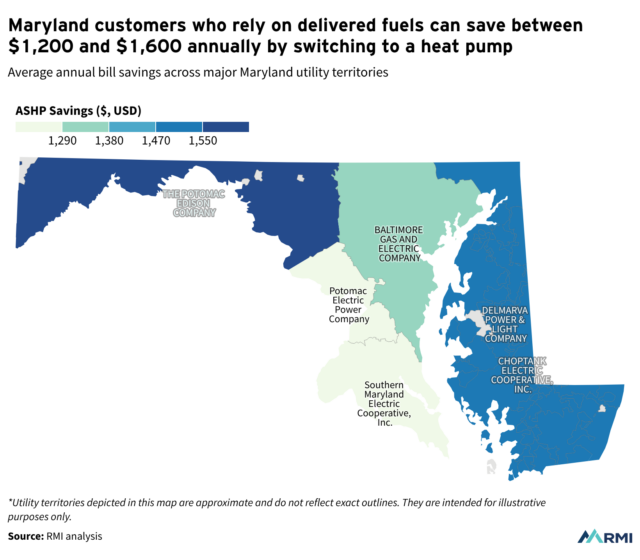
Delivered Fuel Customers in Maryland See Strong Energy Bill Savings in a Switch to Heat Pumps
Help build the clean energy future. Donate today.
Independent research. Real-world solutions. Supported by donors.
RMI can pursue the highest-impact climate and energy solutions because we’re supported by people who believe change is possible. Every gift helps advance the work needed to make clean energy the default choice worldwide.
For other ways to give to RMI, including checks or gifts of stock, please visit Other Ways to Give.
