

Learn how we are working to transform how we use and produce energy.
How to Cost-Effectively Withstand the Next Polar Vortex
Making Your Home Cold-Climate Resilient
Why we share this work for free
RMI is an independent nonprofit working to accelerate the clean energy transition. We publish research like this to inform decision-makers and drive real-world impact.
Our work is supported by philanthropy as well as partnerships, including fee-for-service engagements. This support makes it possible for us to share our independent insights for free.
If you find this work valuable, you can support it anytime.
Get more insights like this
Stay up to date with the latest research, analysis, and tools from RMI by opting in to receive occasional emails below. You’ll get new reports, event invitations, and practical insights to help us all accelerate the clean energy transition.
Loading form...
Your download should start automatically. If it doesn’t, click the download button below.
This work is made possible by philanthropy
RMI is a nonprofit supported by donors and partners. Philanthropy enables us to produce independent research and make resources like this freely available.
If you find this report valuable, please consider supporting our work. You can also explore how we partner with organizations to drive impact.
Jump to Section
The 2019 polar vortex has passed, leaving behind many harrowing stories in its wake. The new Cold Climates Addendum of Rocky Mountain Institute’s Economics of Zero Energy Homes report illuminates how our homes can be better prepared for weather extremes cost-effectively, even in some of the coldest climates in the United States.
We talked to numerous people in the Midwest who lost water when the pipes in their walls froze this past month. Others lost power. Others struggled just to keep their homes warm enough with their existing heating system. Meanwhile, several utilities in Minnesota and Michigan asked consumers to turn their thermostats as low as 55 degrees because they couldn’t supply enough gas to keep homes any warmer.
Fortunately, this most recent cold snap has passed. But with extreme weather events becoming more common, how long until the next one?
Home Resilience
We should expect our homes to keep us safe and comfortable, even in the face of weather extremes (both hot and cold). Yet the current building stock is not always up to the challenge.
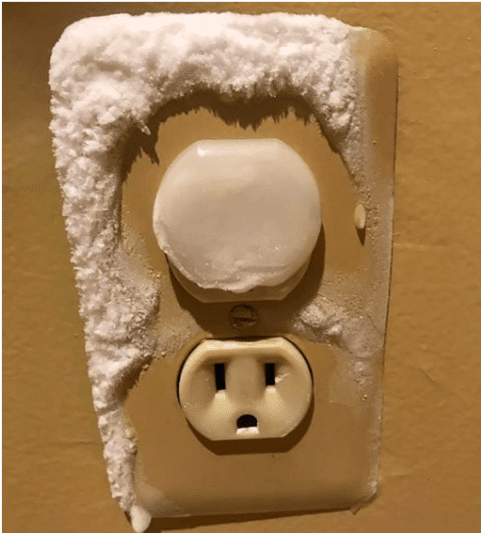
The average US home leaks so much cold air that at roughly 20 mile-per-hour winds, all of the air inside a home will be replaced every 6 to 10 minutes. This can lead to dangerous indoor conditions when outside air is coming in at -20 to -30 degrees Fahrenheit. Some cities still utilize older energy codes that don’t require significantly better performance (or have no energy codes at all), meaning that many homes built today will continue to be challenged by extreme weather events like the polar vortex over their lifetime.
The first step in having a home that can deal with extreme temperature is to eliminate drafts and improve insulation. These measures are especially cost-effective for new homes. Lloyd Alter’s article “Lessons from the Polar Vortex” provides some examples of the benefits just from an improved envelope to provide extreme weather resilience.
Homes can be made even more resilient with a solar photovoltaic (PV) system, which, with the right equipment, can provide enough power to meet emergency electrical needs through extreme weather events even when electric grid power is temporarily lost. The more energy efficient the home is, the smaller the PV system required to keep it operating. Finally, for a truly resilient home, battery systems can be used to store solar power and keep those systems working even when the sun stops shining.
Making It Cost-Effective
The good news is that our recent research shows that highly efficient homes capable of surviving extreme weather conditions can be built cost-effectively for only a small amount more than standard construction, even in cold climates. Our work centers on zero-energy (ZE) homes, which are efficient homes that produce as much renewable energy as they consume over the course of the year. Additionally, we analyzed zero-energy ready (ZER) homes, which are similarly efficient homes without a solar PV system. The new Cold Climate Addendum in RMI’s Economics of Zero Energy Homes: Single Family Insights report provides design recommendations and cost estimates for homes in climate zones 6 and 7, representing cities as far north as Anchorage, Alaska.
The key to cost-effectively building a ZE or ZER home even in extreme settings is to use an integrated design approach that takes advantage of recent technology improvements and leverages the envelope, heating, cooling, and lighting equipment efficiency (among others) and solar measures described above in harmony. For example, with improved insulation and reduced drafts, homes can be heated effectively with a smaller heating system, thereby saving costs. Such an approach can yield a ZER home built for only a 2.2 to 2.5 percent incremental increase and a ZE home built for an 8.8 to 10.1 percent increase over standard new residential construction costs, according to RMI’s analysis. And these estimates don’t include incentives offered by local utilities, nor savings from eliminating gas hookups which can further reduce costs to homebuilders.
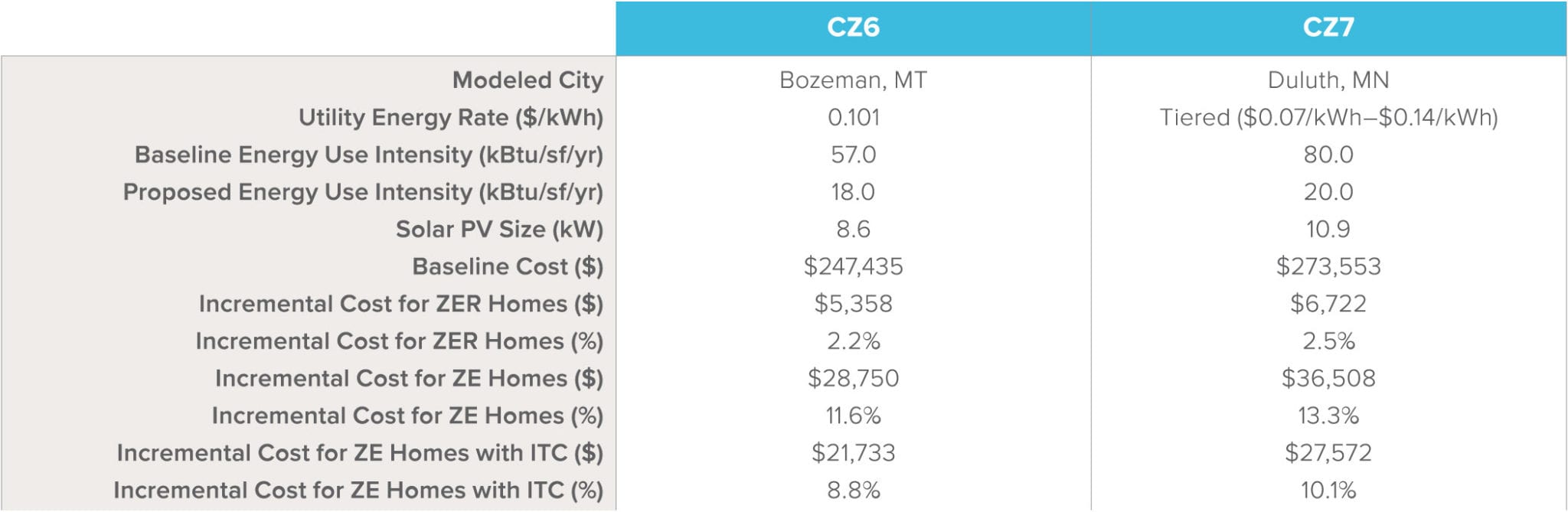
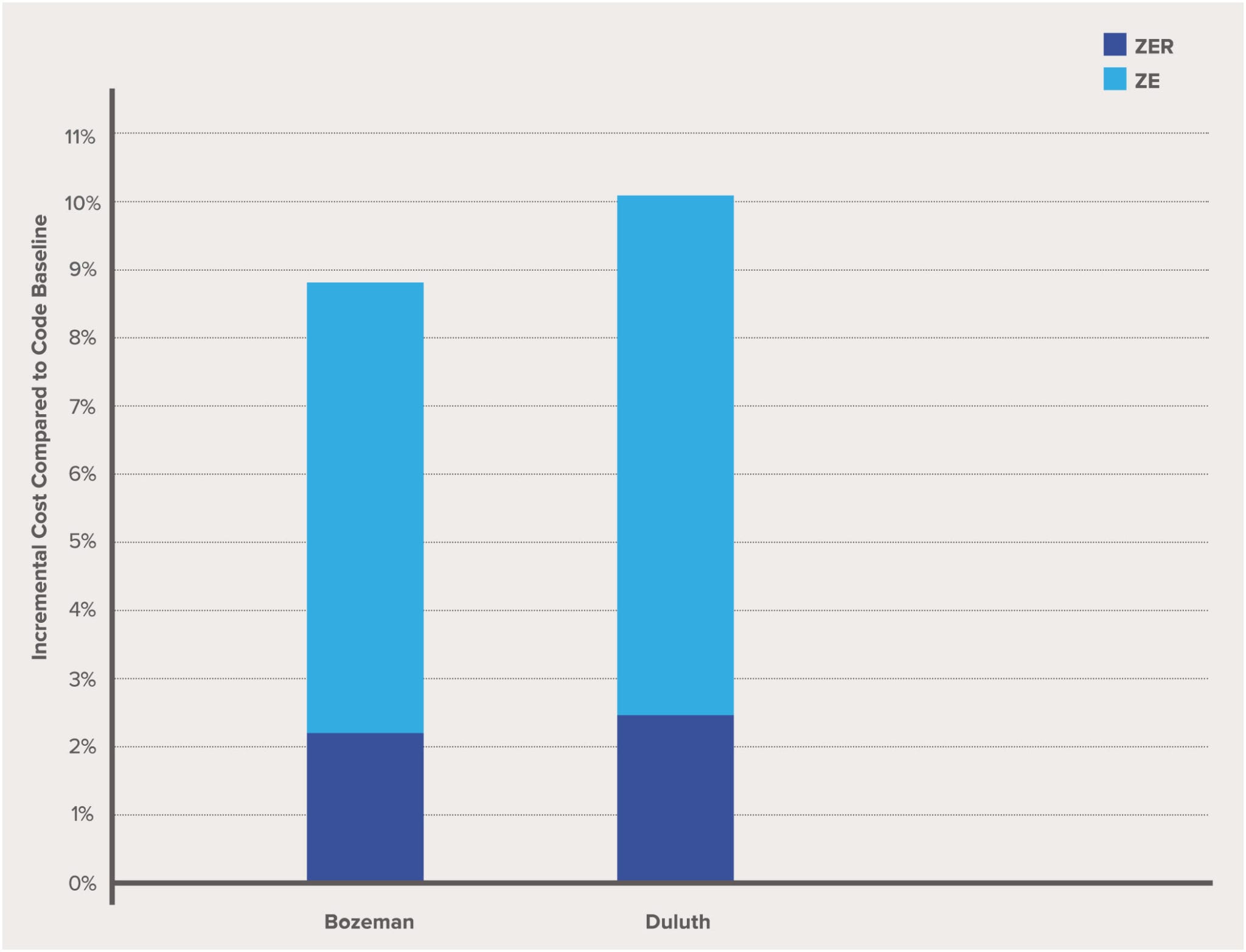
This new research shows that cold climates adhere to the basic results found in the original report: that zero-energy and zero-energy ready homes do not have to cost tremendously more than a code-built home. The colder climates do require some different design decisions for this cost-optimized approach, especially in chilly climate zone 7. Download the report with the new Cold Climates Addendum to find out more.


Related Insights

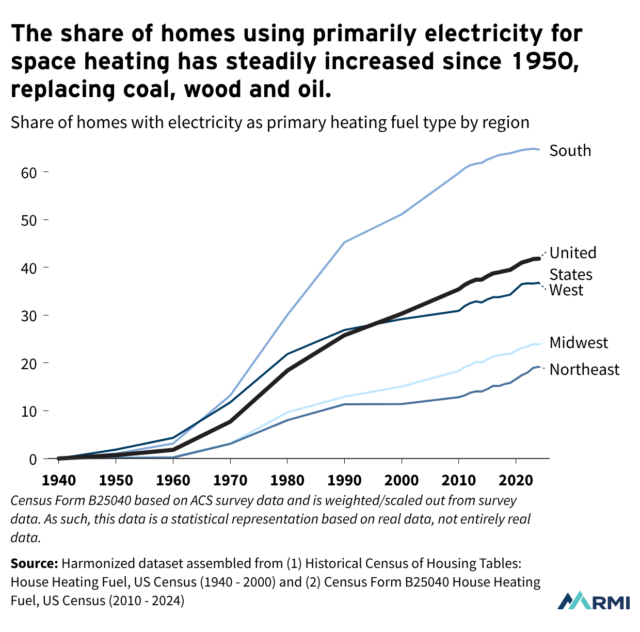
More Americans Are Heating Their Homes with Electricity than Ever Before
Help build the clean energy future. Donate today.
Independent research. Real-world solutions. Supported by donors.
RMI can pursue the highest-impact climate and energy solutions because we’re supported by people who believe change is possible. Every gift helps advance the work needed to make clean energy the default choice worldwide.
For other ways to give to RMI, including checks or gifts of stock, please visit Other Ways to Give.
