

Learn how we are working to transform how we use and produce energy.
The Bank of America Tower – What Is and What Could Have Been
Why we share this work for free
RMI is an independent nonprofit working to accelerate the clean energy transition. We publish research like this to inform decision-makers and drive real-world impact.
Our work is supported by philanthropy as well as partnerships, including fee-for-service engagements. This support makes it possible for us to share our independent insights for free.
If you find this work valuable, you can support it anytime.
Get more insights like this
Stay up to date with the latest research, analysis, and tools from RMI by opting in to receive occasional emails below. You’ll get new reports, event invitations, and practical insights to help us all accelerate the clean energy transition.
Loading form...
Your download should start automatically. If it doesn’t, click the download button below.
This work is made possible by philanthropy
RMI is a nonprofit supported by donors and partners. Philanthropy enables us to produce independent research and make resources like this freely available.
If you find this report valuable, please consider supporting our work. You can also explore how we partner with organizations to drive impact.
Jump to Section
The Bank of America Tower is making headlines—of the wrong sort. Writers lambasted the iconic building, calling it a “toxic tower,” an “energy guzzler,” and exclaiming “LEED Lies!” After the public release of New York City’s benchmarking and disclosure information, the downtown headquarters of the multinational bank topped the charts in energy use and carbon emissions, despite receiving a LEED Platinum certification. Yet an evaluation of the Bank of America Tower’s energy use and green building certification is a bit more complicated than the one-dimensional headlines may suggest.
New Republic writer Sam Roudman instigated this discussion with his article Bank of America’s Toxic Tower: New York’s “greenest” skyscraper is actually its biggest energy hog, and recently followed up saying “LEED has done wonders to attract attention to the importance of green building, but we’re too deep in the game to accept claims, and not demand results.” This isn’t the first time an attack has been lobbied against the energy performance of LEED certified projects. Nor will it be the last.
Perhaps one of the more interesting, and contentious, components of Roudman’s article was the contrast of the Bank of America Tower to the recently retrofitted Empire State Building. Lloyd Alter, writing for Treehugger, quoted LEED founder Robert Watson as saying that the comparison of the Bank of America Tower and the Empire State Building is “stupid,” and that it is similar to “comparing Michael Phelps’ food consumption with an ‘average’ person of similar size.” Frankly, he is right. Comparing buildings based exclusively on size, number of floors, or geographic location ignores the activities that take place within the building’s walls.
While at its heart a LEED certification is not a direct comparison, the industry often uses the certification level as a metric for relating the environmental performance of one or more projects. Whether a certified project is compared to a base-case-scenario or to other LEED projects, the certification level is often used as a benchmark to evaluate the performance of buildings relative to a common baseline. By seeking to aggregate a diverse range of projects under a single label, a LEED certification results in encouraging a comparison based on certification level. This can often lead to an oversimplification of a building’s energy use or environmental performance to a single certification level, rather than the specifics of the certification or the underlying use of the space.
However, the primary issue at hand is the fact that a LEED certification may not return the performance intended or allow for the detailed comparison the market is beginning to demand. As long as the LEED program focuses on models versus actual performance when certifying buildings, the result will be substantial variation in building performance due to, among other factors, the building’s principal activity and occupant behavior. Ultimately, a focus on upfront design and modeled performance limits the continued engagement of energy professionals in fine-tuning systems during building occupation. In addition, with the development of green real estate investment funds, city targets for building energy-use reductions, and the expansion of building benchmarking programs, there is an increasing emphasis on measuring the actual energy performance of our buildings, and the associated environmental and financial impacts.
Returning to the comparison of the Bank of America Tower and the Empire State Building, perhaps it wasn’t quite as “stupid” as Mr. Watson contends. Rather than taking the approach of assessing them on comparative or absolute energy use, one can consider the opportunity each project represents. Both buildings are iconic structures that stand as testaments to their era and to the industries they support. The retrofit of the Empire State Building provided an opportunity to showcase the energy- and cost-savings potential associated with a deep energy retrofit. The outcome was a reduction in building energy use by 43 percent during the first year of operations and annual savings of $4.4 million. In addition, the deep energy retrofit model utilized is being applied to multiple commercial building retrofits throughout the country. The Empire State Building project exemplifies the broader impact a single iconic and innovative project can have by demonstrating the technical and financial opportunity associated with energy performance.
While the Bank of America Tower was attacked for its overall energy use, the building incorporated an innovative and exceedingly rare on-site co-generation plant that produces 80 percent of the energy the building consumes. In addition, the Bank of America Tower showcases innovative design features, including an under-floor air distribution system and rainwater collection, as well as a focus on regionally sourced and recycled content materials for construction. However, it is clear the Tower project team missed on one important mark: addressing the large energy consumption of the building’s primary tenants—trading floors.
In general, as we continue to make buildings more efficient, through programs such as LEED Core and Shell, tenant energy use and occupant behavior will make up an increasing share of a building’s total energy consumption. While trading floors are highly energy intensive due to computing power requirements, long hours, and other factors, the iconic nature of the Bank of America Tower missed a unique opportunity to showcase both new technologies and innovative owner-tenant dynamics to incentivize whole-building energy efficiency.
The lack of emphasis on operational energy use at the Bank of America Tower stands in stark contrast to other industry leaders with energy intensive computing requirements, including both Google and Microsoft, which are making great strides to reduce the energy intensity of their buildings and their overall operations. Increasingly, major corporations on the cutting edge of technology and business are demanding energy efficient and green certified buildings when identifying new office locations. While the Bank of America Tower initially received praise as “the world’s most environmentally responsible high-rise office building,” the recent criticism highlights the magnitude of the missed opportunity to be truly innovative in addressing overall building energy use.
The primary takeaway from the arguments and counter-arguments about the Tower, is that an opportunity remains to address the Bank of America Tower’s operational energy use. A whole systems integrative design approach not only takes into account the innovative energy systems and building envelope, but also identifies specific measures for operational energy use reductions and engages the building’s tenants to craft and achieve a high performance building. Hopefully, moving forward, new buildings like this will take the additional step of addressing future tenant energy use during design and construction through a whole systems integrative design approach.


Related Insights

The Opportunity for Heat Pumps to Put Downward Pressure on Electricity Rates
Building Smarter, More Efficient Air Conditioners for Real World Conditions

How Heat Pumps Reduce Energy Bills and Air Pollution in the San Francisco Bay Area
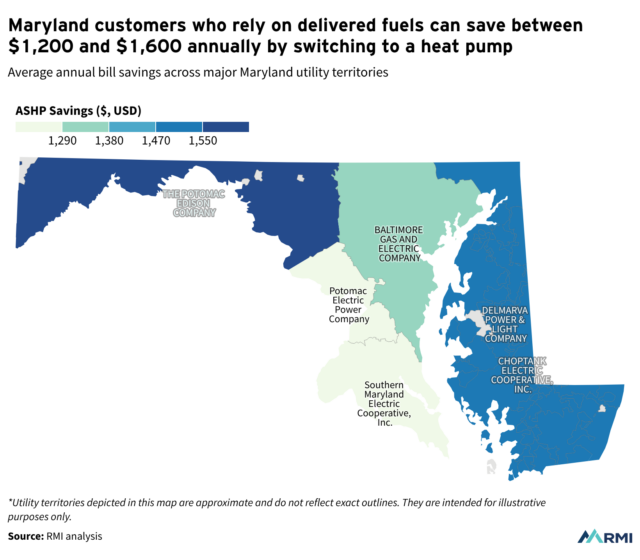
Delivered Fuel Customers in Maryland See Strong Energy Bill Savings in a Switch to Heat Pumps
Help build the clean energy future. Donate today.
Independent research. Real-world solutions. Supported by donors.
RMI can pursue the highest-impact climate and energy solutions because we’re supported by people who believe change is possible. Every gift helps advance the work needed to make clean energy the default choice worldwide.
For other ways to give to RMI, including checks or gifts of stock, please visit Other Ways to Give.
