

Learn how we are working to transform how we use and produce energy.
We Need to Enhance Property Assessed Clean Energy Instead of Bringing It to a Standstill
Why we share this work for free
RMI is an independent nonprofit working to accelerate the clean energy transition. We publish research like this to inform decision-makers and drive real-world impact.
Our work is supported by philanthropy as well as partnerships, including fee-for-service engagements. This support makes it possible for us to share our independent insights for free.
If you find this work valuable, you can support it anytime.
Get more insights like this
Stay up to date with the latest research, analysis, and tools from RMI by opting in to receive occasional emails below. You’ll get new reports, event invitations, and practical insights to help us all accelerate the clean energy transition.
Loading form...
Your download should start automatically. If it doesn’t, click the download button below.
This work is made possible by philanthropy
RMI is a nonprofit supported by donors and partners. Philanthropy enables us to produce independent research and make resources like this freely available.
If you find this report valuable, please consider supporting our work. You can also explore how we partner with organizations to drive impact.
Jump to Section
The unique characteristics of Property Assessed Clean Energy (PACE) make it an important market enabler for home performance solutions that deliver myriad homeowner and broader societal and economic benefits.
Recently, Senator Tom Cotton (R-AR), Senator Marco Rubio (R-FL), and Senator John Boozman (R-AR) introduced the Protecting Americans from Credit Exploitation bill in the U.S. Senate. This bill aims to amend the Truth in Lending Act, requiring PACE lenders to follow the same regulations as banks and mortgage lenders.
While the intent to promulgate a set of strong national consumer protection standards for PACE financing is commendable, there are major concerns about the statutes of the proposed legislation for PACE. Treating a limited assessment created through a legislatively enabled public-private partnership as a mortgage product is—at best—ill-informed.
RMI believes that this bill could specifically:
- Jeopardize the fundamental and unique attributes of PACE that allow homeowners to pay for home improvements that deliver energy and safety benefits through a mechanism that effectively aligns the payment obligations with the benefit realization—while also delivering an array of benefits to homeowners, businesses, contractors, policymakers, and the general public;
- Undermine existing robust consumer protection standards already enacted for this financing in the state of California;
- Inhibit homeowners from making valuable home improvements that increase the affordability, asset value, health, comfort, and safety of America’s housing stock; and
- Prevent significant local economic development and job creation for home improvements that PACE enables.
PACE is tackling a significant market failure by increasing American households’ access to financial resources so that they can afford cost-saving energy performance retrofits—a need that has largely been unfulfilled by any other financing instrument. PACE not only removes the upfront cost of energy efficiency, renewable energy, and water efficiency investments for homeowners, but also provides them with a far more affordable financing alternative by offering longer payback terms and low repayment costs that (along with the benefits of the home improvements) are transferable upon a home’s sale. PACE, like any other assessment, is attached to the property—not the individual—which makes it an innovative and unique green financing instrument.
PACE should be subject to regulation that protects the interest of the consumer, while being regulated by policies that are designed in accordance with the true nature and definition of the PACE mechanism. Imposing protections appropriate for mortgages on PACE—which is not a mortgage but an assessment—will only serve to diminish PACE’s utility to consumers and obliterate its nascent growth by overwriting its structure.
DEVELOPING MORE THOUGHTFUL APPROACHES
Lawmakers should consider California’s thoughtfully implemented approach to regulate PACE and protect the interests of the consumer. PACE has been in California for almost a decade, and the state has adopted a set of robust and consistent consumer protection norms that go beyond the Truth in Lending Act and Real Estate Settlement Procedures Act disclosure requirements in the key areas relevant to PACE, while also comprehensively accounting for the unique attributes of PACE.
It’s also crucial that lawmakers, consumer advocacy groups, financiers, contractors, and nongovernmental organizations collectively discuss, design, and support a new set of national consumer protection standards that are well aligned to the nature of the mechanism. Meanwhile, there is an equally significant need to appropriately represent the value of home energy performance during the mortgage underwriting process to bring greater transparency, awareness, and value to homeowners.
When implemented in tandem, these policies will ensure enhanced consumer protection, greater stability to housing markets, and—as activity grows—increased job opportunities for contractors and a boost to local economic development nationwide.
Image courtesy of iStock.
Authors

Iain Campbell
Related Insights



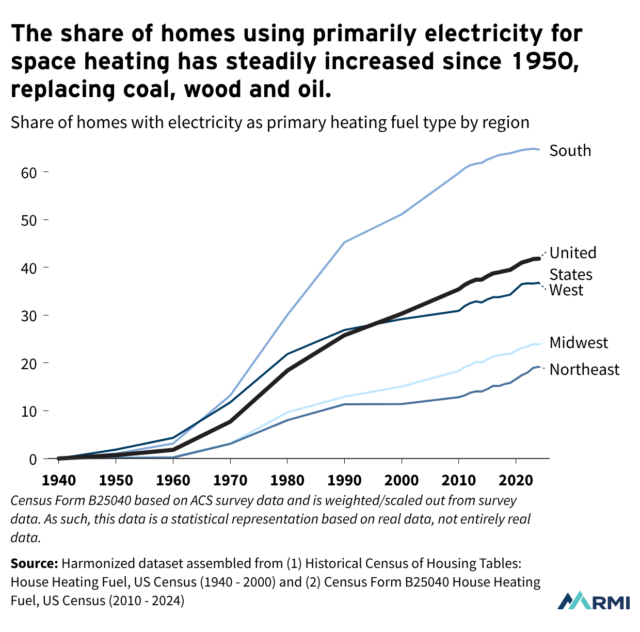
More Americans Are Heating Their Homes with Electricity than Ever Before
Help build the clean energy future. Donate today.
Independent research. Real-world solutions. Supported by donors.
RMI can pursue the highest-impact climate and energy solutions because we’re supported by people who believe change is possible. Every gift helps advance the work needed to make clean energy the default choice worldwide.
For other ways to give to RMI, including checks or gifts of stock, please visit Other Ways to Give.