The Northeast Freight Corridor Charging Plan (NFCCP) is a roadmap for developing a highway corridor charging network to support electric MHDV adoption in Connecticut, Maine, Massachusetts, New Hampshire, New Jersey, New York, Pennsylvania, Rhode Island, and Vermont. This roadmap will help states, utilities, charging infrastructure providers, and industry align on key priority sites for development; coordinate site planning and associated grid upgrades; and implement several measures to accelerate corridor charging in the region. The NFCCP study is developed by National Grid with support from RMI, NESCAUM, and NREL, along with additional input from Clean Communities of Central New York, CALSTART, and advisory committees composed of states, utilities, and industry stakeholders.
The study evaluated 140 potential sites and identified 39 priority locations that balance cost-effectiveness, grid readiness, truck parking availability, local impacts, and projected demand. Together, these sites form the foundation for a reliable corridor network spanning 3,000 miles of the region’s most heavily traveled freight routes. The plan also highlights the unique role of the Port of New York and New Jersey, one of the nation’s busiest gateways, where thousands of drayage trucks contribute to concentrated traffic and emissions and will increasingly rely on nearby corridor charging as electrification accelerates.
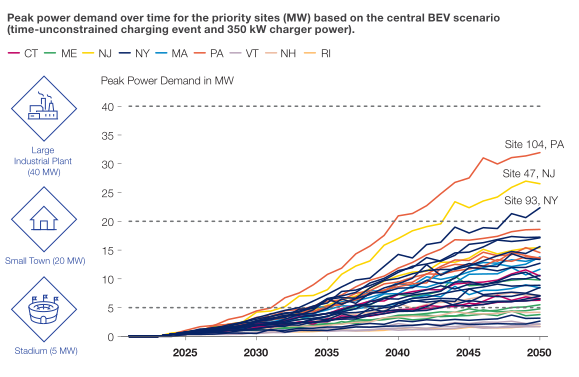
Analysis shows that power requirements at the priority sites will grow sharply. By 2030, half are expected to exceed 2 megawatts of peak demand; by 2050, most will surpass 5 megawatts, with some hubs near the port reaching 20–30 MW. Meeting these needs will require major grid upgrades that often take years to plan and build, making early investment and coordination essential. The NFCCP underscores these challenges and provides clear recommendations for states, utilities, fleets, and infrastructure providers to align grid and charging infrastructure planning and development. Early action at these identified sites can catalyze the transition to electric freight in the Northeast and set a model for corridor electrification nationwide.