

Learn how we are working to transform how we use and produce energy.
Maharashtra’s Pathway to Become a Green Hydrogen Hub
Why we share this work for free
RMI is an independent nonprofit working to accelerate the clean energy transition. We publish research like this to inform decision-makers and drive real-world impact.
Our work is supported by philanthropy as well as partnerships, including fee-for-service engagements. This support makes it possible for us to share our independent insights for free.
If you find this work valuable, you can support it anytime.
Get more insights like this
Stay up to date with the latest research, analysis, and tools from RMI by opting in to receive occasional emails below. You’ll get new reports, event invitations, and practical insights to help us all accelerate the clean energy transition.
Loading form...
Your download should start automatically. If it doesn’t, click the download button below.
This work is made possible by philanthropy
RMI is a nonprofit supported by donors and partners. Philanthropy enables us to produce independent research and make resources like this freely available.
If you find this report valuable, please consider supporting our work. You can also explore how we partner with organizations to drive impact.
Jump to Section
Maharashtra’s Green Hydrogen Policy 2023 signaled a bold step toward decarbonizing its industries and building a green economy. With a target to produce 500 kilotons of green hydrogen annually by 2030, the state is aiming to become a national hub for green hydrogen development.
However, unlocking this opportunity depends on addressing systemic challenges around production cost, infrastructure, and governance. This report assesses Maharashtra’s green hydrogen production competitiveness while assessing the impact of policy incentives on reducing the gap in grey and green hydrogen price points.
Green hydrogen in Maharashtra is not yet cost-competitive with grey hydrogen, but targeted incentives are closing the gap. The report finds that:
- On-site projects offer the lowest current cost (~$4/kg), but face land constraints; third-party models improve utilization but come at a premium.
- State capital expenditure subsidies have the potential to lower the levelized cost of hydrogen by 21–25 percent, bringing it down from $4.5 per kg to under $3.5 per kg
- Anchor units and projects connected to India’s Central Transmission Utility can reduce costs by up to 30 percent with capital and operational subsidies.
The report lays out a framework based on physical infrastructure, market creation, policy commitment, research and innovation, and financial assistance for scoping green hydrogen hubs in the state.
Our findings highlight that Raigarh and Ratnagiri could be potential early-mover green hydrogen hubs.
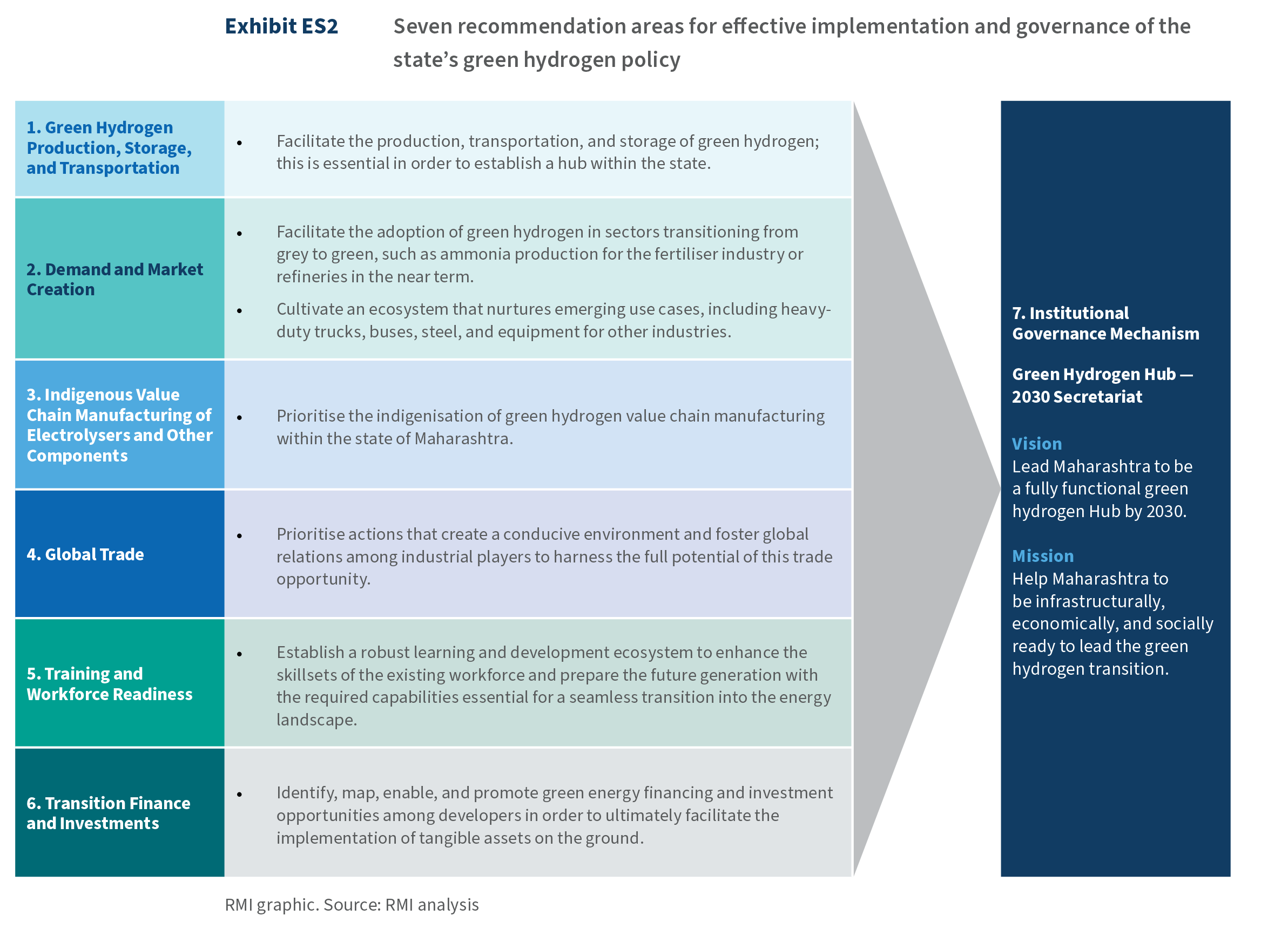
Based on the analytical findings, hubs scoping and need assessment, the report outlines a Green Hydrogen Readiness Plan focusing on seven impact areas from across the value chain. A right balance of incentives and governance can lead Maharashtra to be the national benchmark for a scalable, fully functional green hydrogen ecosystem.
Authors

Related Insights

India’s Used EV Battery Market Needs Trust. Battery Aadhaar Can Help.
Help build the clean energy future. Donate today.
Independent research. Real-world solutions. Supported by donors.
RMI can pursue the highest-impact climate and energy solutions because we’re supported by people who believe change is possible. Every gift helps advance the work needed to make clean energy the default choice worldwide.
For other ways to give to RMI, including checks or gifts of stock, please visit Other Ways to Give.
